Lenses - exam practice
Lenses
Question 1 of 9
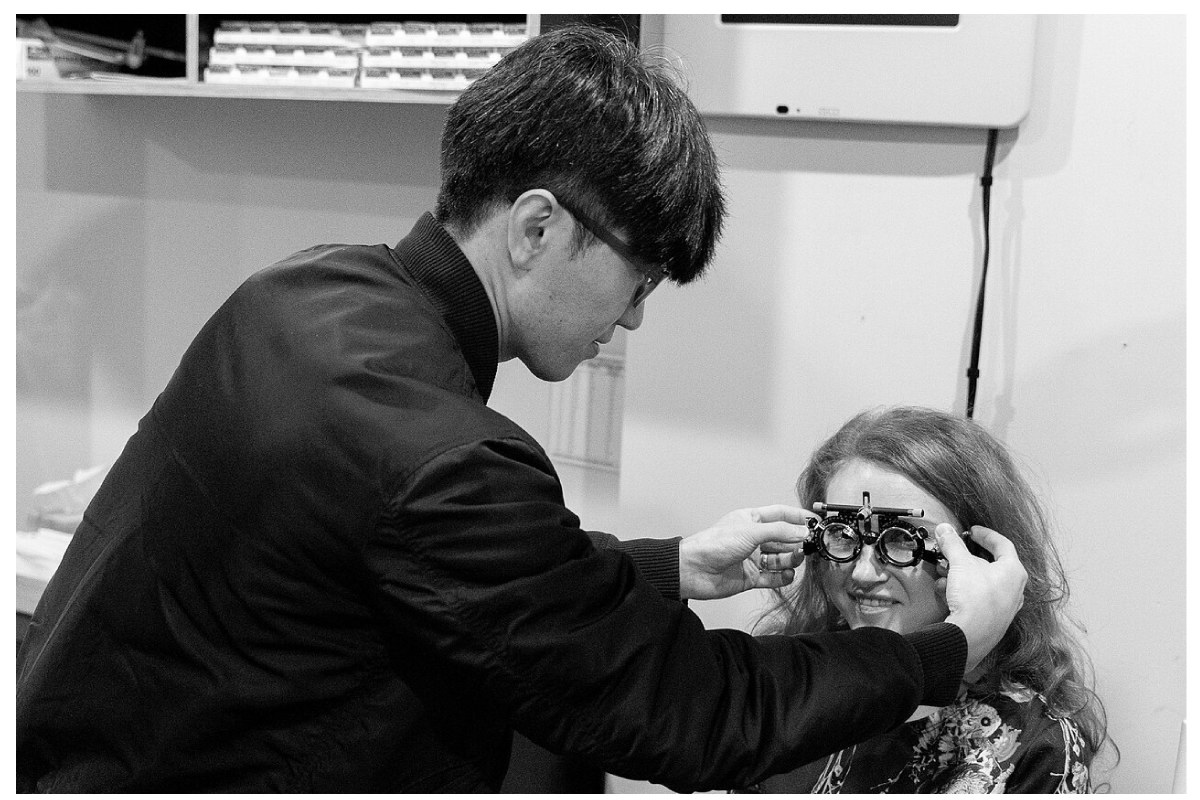
Lenses are used in glasses to correct vision for long-sightedness and short-sightedness.
The diagram below shows light about to pass through a lens.
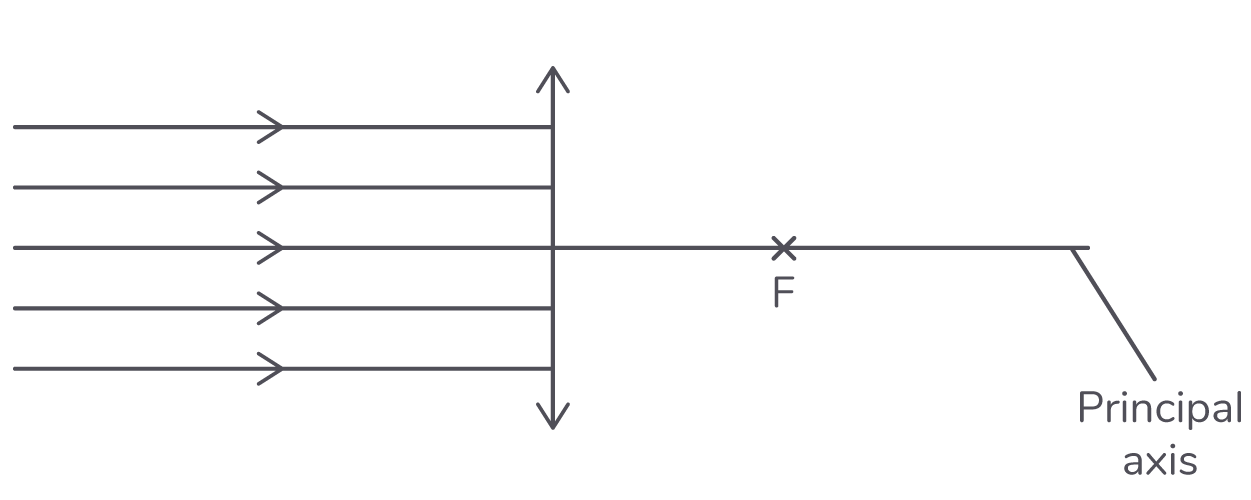
State the name of the point labelled F.
Complete the diagram to show the rays of light as they pass through the lens.
State the name of this type of lens.
The focal point of the lens is 20 cm from the centre of the lens.
Calculate the power of the lens.
This question is about magnification of objects using lenses.
A student uses a lens to read the small details on a map.
The letters on the map are 6 mm in height.
The student uses a lens which has a magnification of 3.0.
Calculate the image height of the letters.
The diagram below shows the lens and letters on the map, drawn here as an arrow.
Complete the diagram to find the location of the image formed.
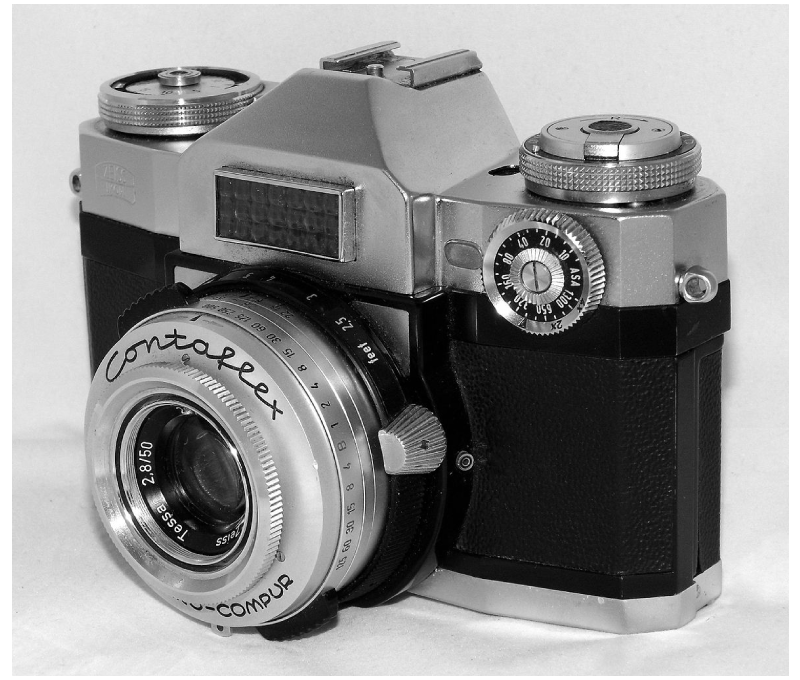
Converging lenses are used in cameras to focus light on a film where an image is formed.
The diagram below shows an object and a converging lens.
Complete the diagram to show the location and size of the image produced.
State the equation for magnification.
The height of the image was 2 cm and the height of the object was 3 cm.
Calculate the magnification of the image.
The photographer stacks a lens with a focal distance of 40 cm with a lens of power 6 D.
Calculate the overall power of the lens combination.
Lenses can be used to produce magnified or diminished images.
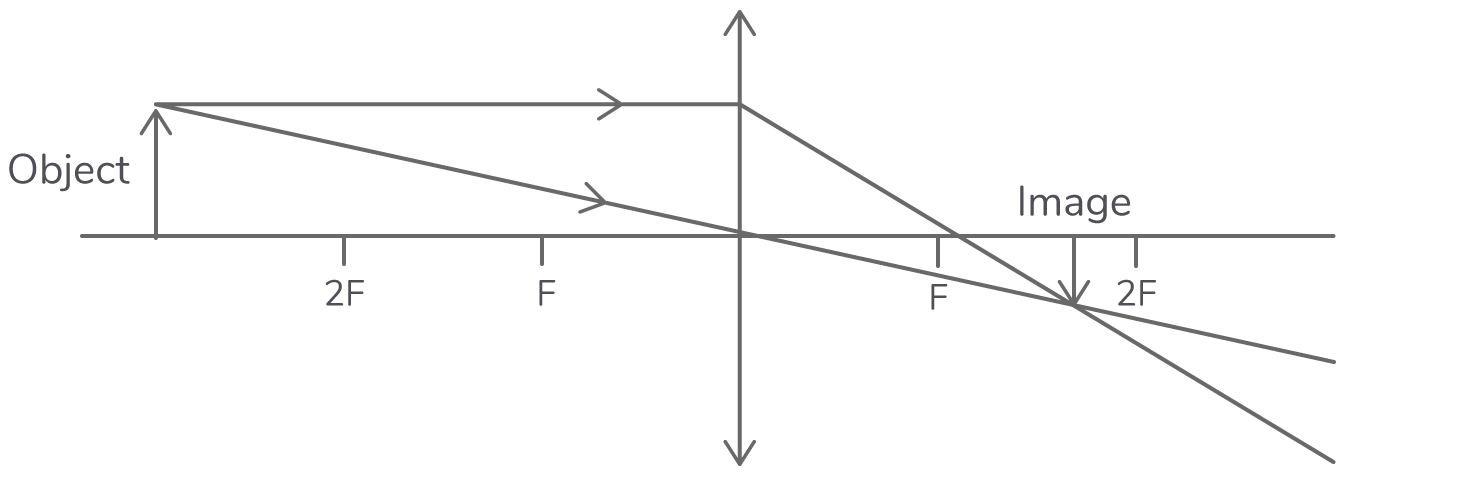
Describe the image formed by the converging lens.
The object is brought closer to the lens.
Draw rays of light to show the location of the image formed.
Describe the image formed when the object is closer than the focal point.
An object is placed at three times the focal length of a convex lens.
How will the image of the object appear when light rays pass through the convex lens?
Which of the following describes how light behaves as it passes through a convex lens?
Which of the following is the equation for magnification of a lens?
When is a virtual image formed by a convex lens?
Optometrists use different power lenses to correct for varying levels of vision defects.
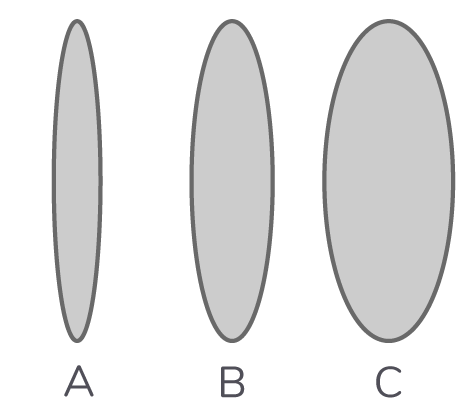
Which lens is the most powerful?
The diagram below shows light as it passes through a convex lens to form an image.
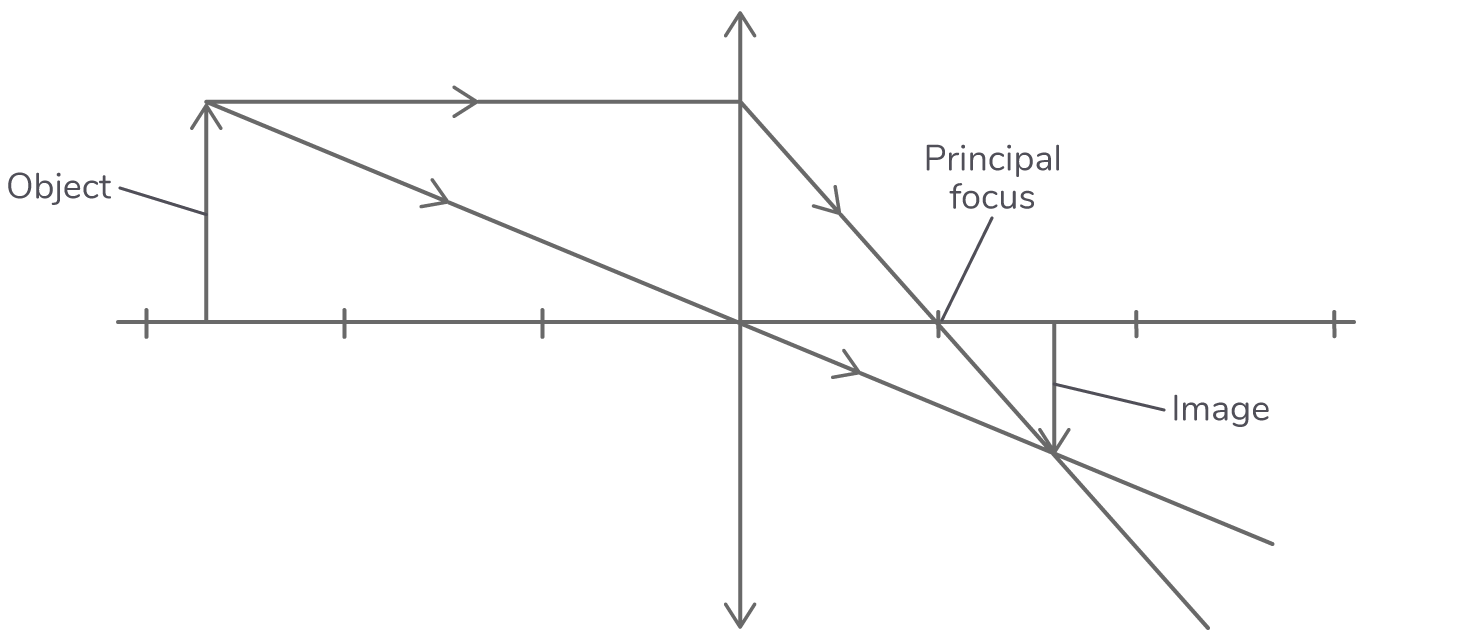
Complete the table below by putting a tick in the rows which correctly describe the image formed by the light as it passes through the convex lens above.
The image height is 2 cm and the object height is 3.5 cm.
Calculate the magnification of the image.
Concave lenses cause light rays to disperse as they pass through the lens.
Convex lenses cause light converge at the principal focus of the lens.
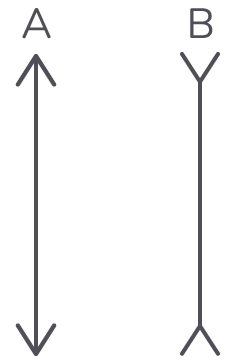
Which of the following lenses is a concave lens?
The diagram below shows an object and a concave lens.
Complete the diagram by drawing two rays of light to identify the location of the image formed.
Describe the image formed.
1 small square on the grid is 1 cm.
Calculate the magnification of the lens.
This question is about using lenses to produce magnified images of objects.
A student is using a magnifying glass to view small text in a book.
They notice that the size of the text changes as the distance from the lens to the book varies.
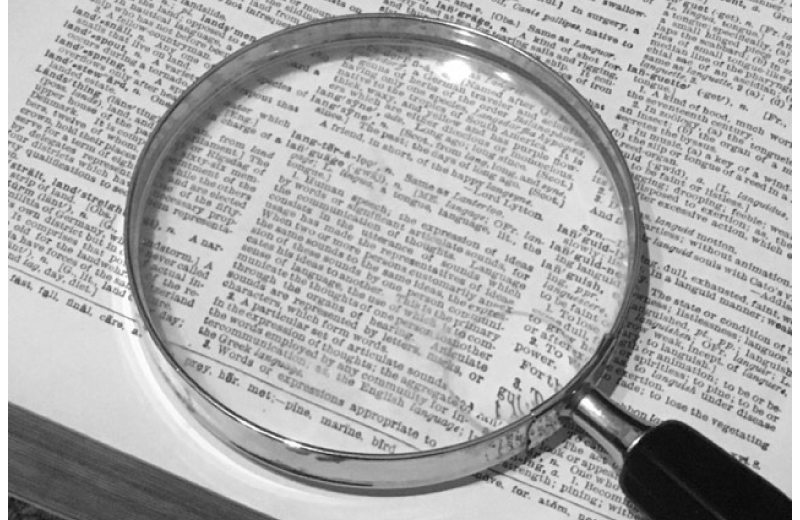
When the text appears larger than the original text, the image is and the magnification is greater than .
If the text appears smaller than the original text, the image is .
The image formed by a magnifying glass is .
The diagram below shows the image formed by the magnifying glass at one particular distance.
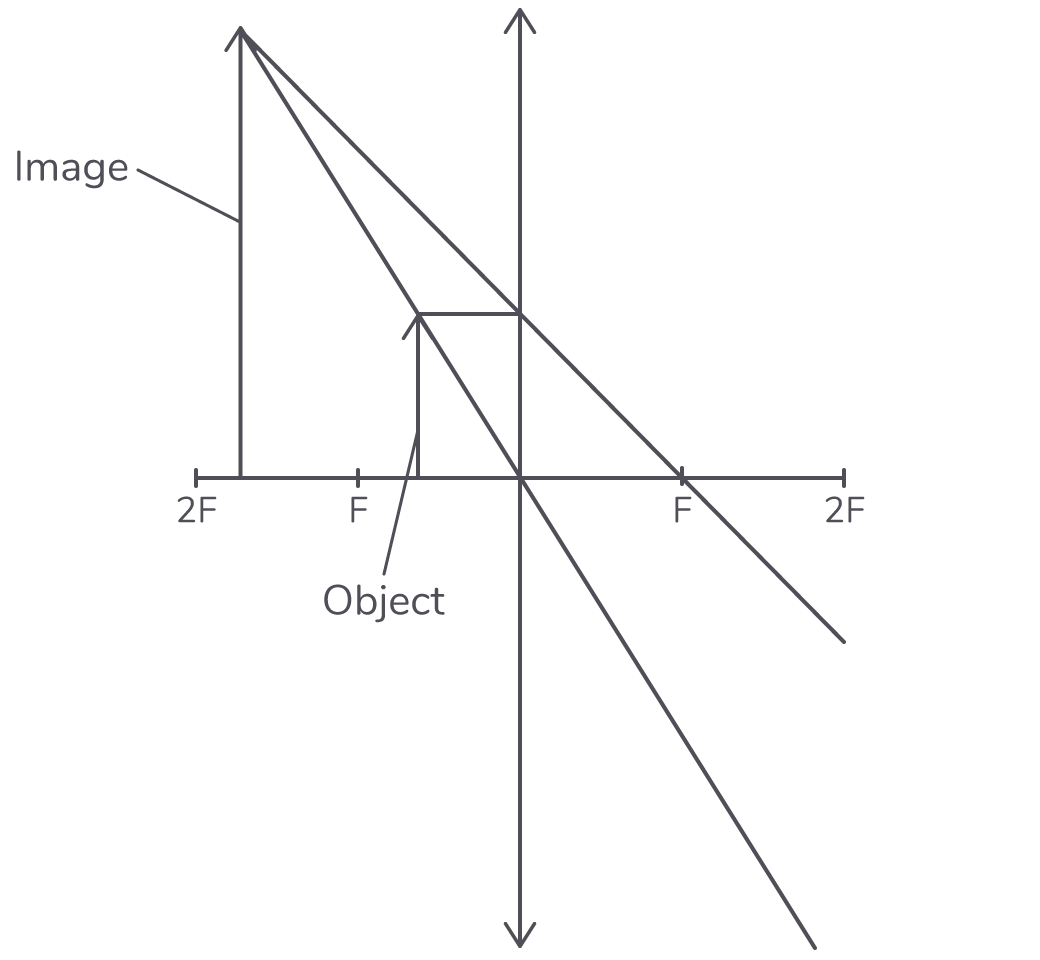
Describe the image formed.
The student wants to make the image larger.
Describe how they should vary the distance between the lens and the object.
A converging lens can be used to produce a real image on a screen.
A convex lens with a focal length of 15 cm is used in a series of experiments.
An object is placed 30 cm from the lens.
Calculate the position of the image formed by the lens.
State whether the image formed is real or virtual.
The lens from part a) is combined with a diverging lens with a power of 4 D.
Calculate the overall power of the lens system.