Density - exam practice
Density
Question 1 of 7
A wooden cube has a side of length 2 cm. The density of the wood is 600 kg m-3.
Calculate the weight of the cube.
The wooden cube is placed in a beaker of water.
The wooden cube causes the water level in the beaker to rise.
The weight of water displaced is equal to the weight of the cube.
Water has a density of 1000 kg m-3.
Calculate the volume of water displaced by the wooden cube.
The wooden cube is now replaced with another cube also with the same volume.
The cube is now made from ice containing a small piece of iron.
The mass of water now displaced is 12.86 x 10⁻³ kg.
The density of ice is 920 kg m-3.
The density of iron is 7,800 kg m-3.
Calculate the volume of the small piece of iron.
A student is investigating the effects of upthrust on an inflatable buoy.
The student attaches a one end of a rope to newton metre attached to the bottom of a tank. The other end of the rope is attached to the buoy.
The container is slowly filled with water until the buoy is completely submerged. The graph below shows the reading on the newton-meter.
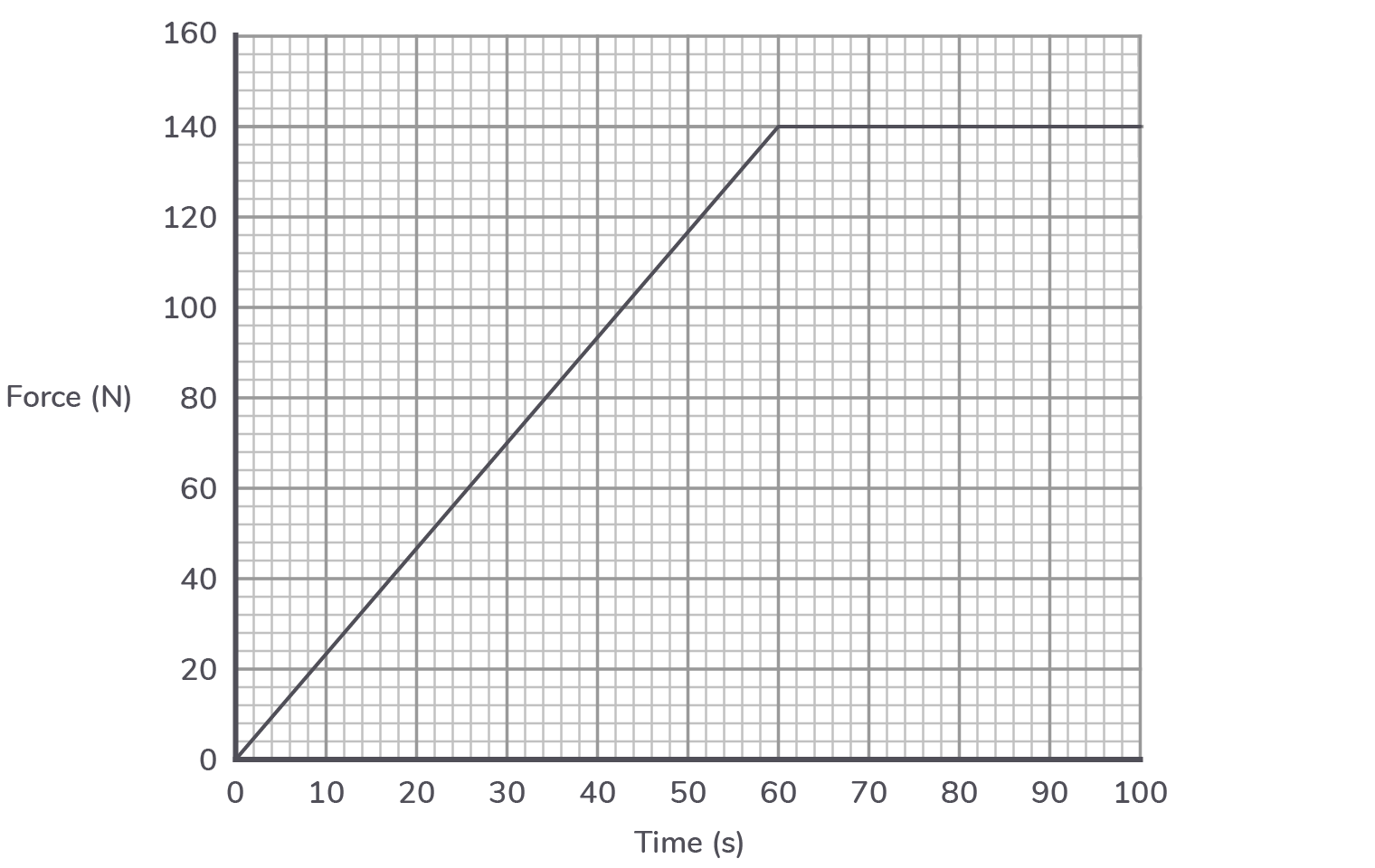
Explain the shape of the graph using ideas about forces acting on the buoy.
The rope is cut and the buoy accelerates towards the surface of the water.
The mass of the buoy is 8 kg.
Calculate the initial acceleration of the buoy when the rope is cut.
Give one reason why the acceleration of the buoy decreases as it travels vertically upwards through the water.
Peter finds a piece of metal which he suspects is gold.
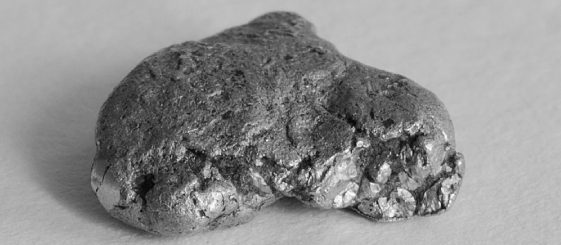
He decides to find the density of the metal.
Describe a method Peter could follow to find the density of the metal.
Peter records the mass of the metal to be 232 g and the volume of water displaced to be 12 ml.
Calculate the density of the metal in kg m-3.
1 ml = 1 x 10⁻⁶ m3.
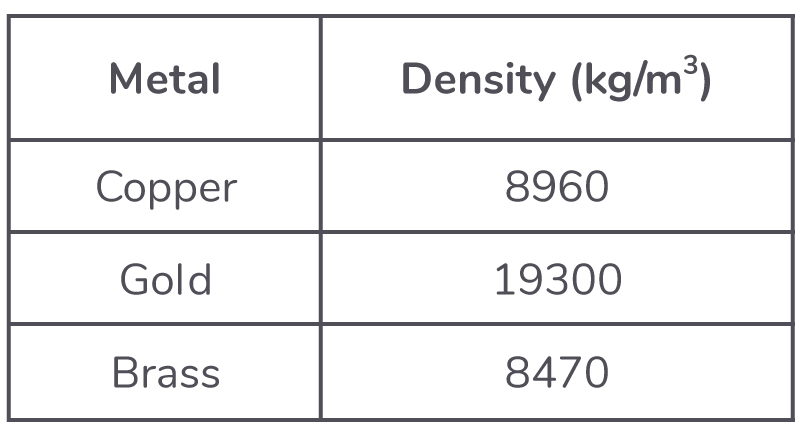
The table below shows the density of some metals.
State the metal that Peter's sample is likely to be.
A student has been asked to find the density of a cube.
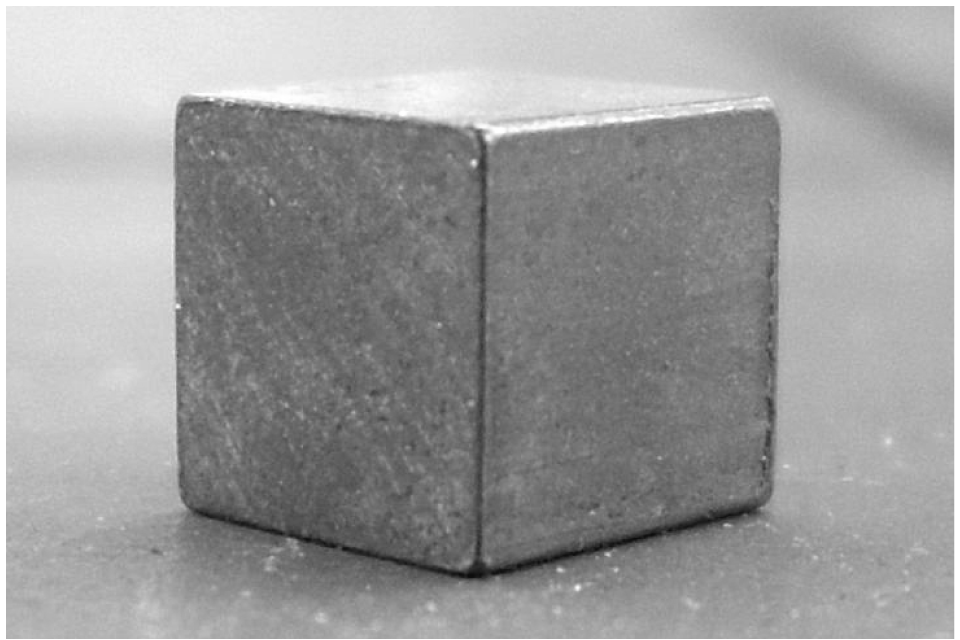
The student uses a micrometer to measure the dimensions of the cube.
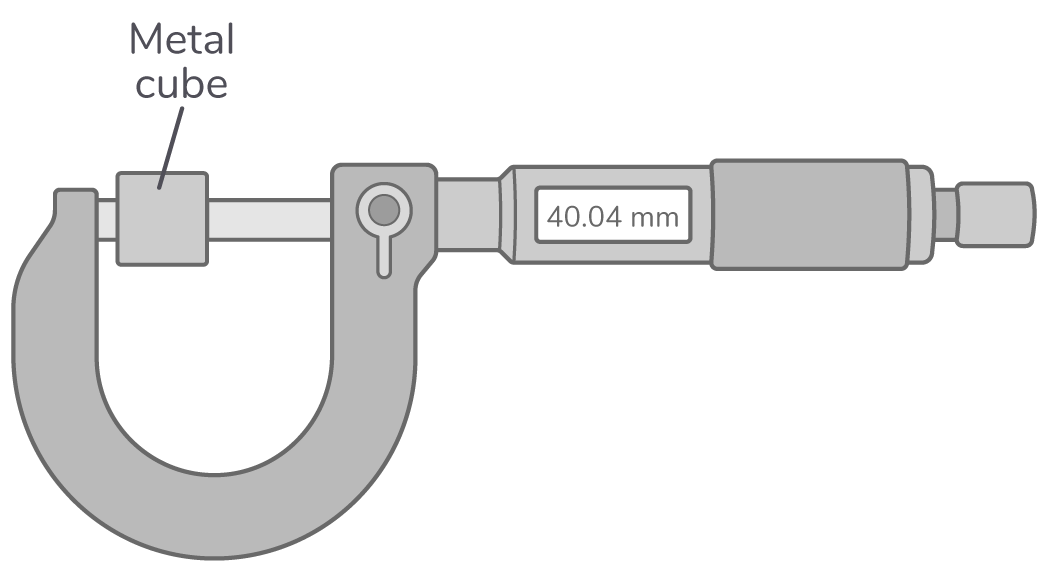
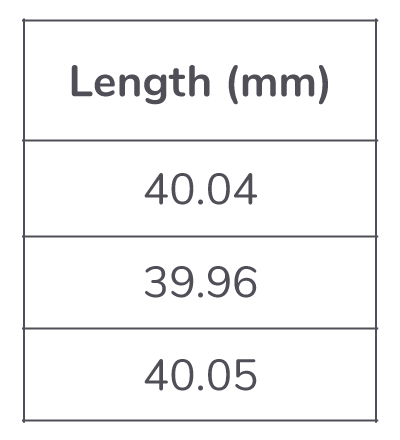
The table below shows the repeat measurements taken.
Calculate the average of the 3 length measurements.
Give your answer in mm to 2 decimal places.
State the name of the piece of equipment the student should use to find the mass of the metal block.
The student turns on the balance and they read -0.23 g before the metal cube is added.
State the name of this sort of error.
The student forgot to press the zero button on the balance and proceeded to record a mass of 539.08 g.
Calculate the true mass of the metal block.
Calculate the density of the metal cube.
Give your answer to 1 decimal place in kg m-3.
A student finds an old key and wants to know what it is made from.
She decides to find it's density.
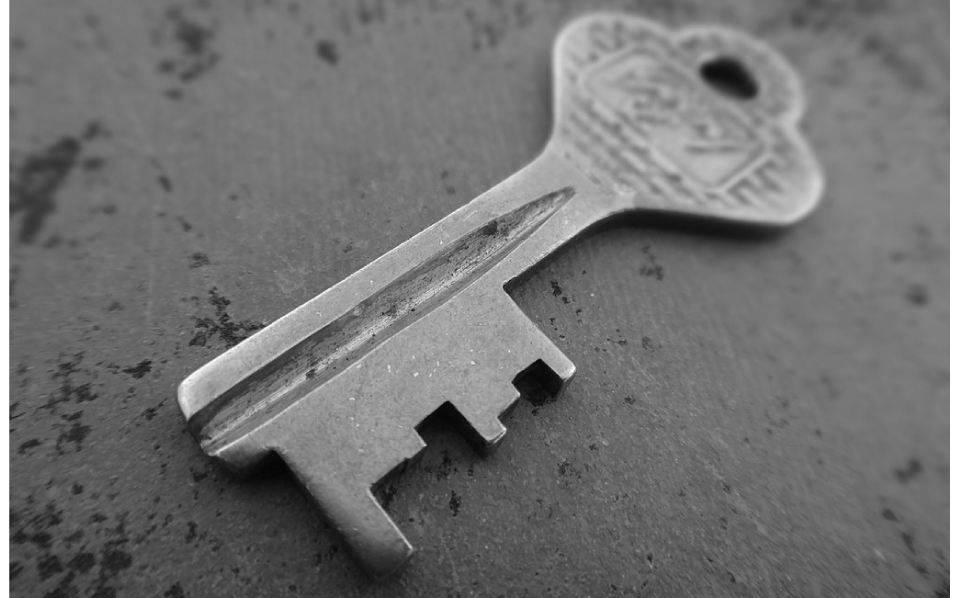
Describe a method that the student could follow to find the density of the key using a eureka can.
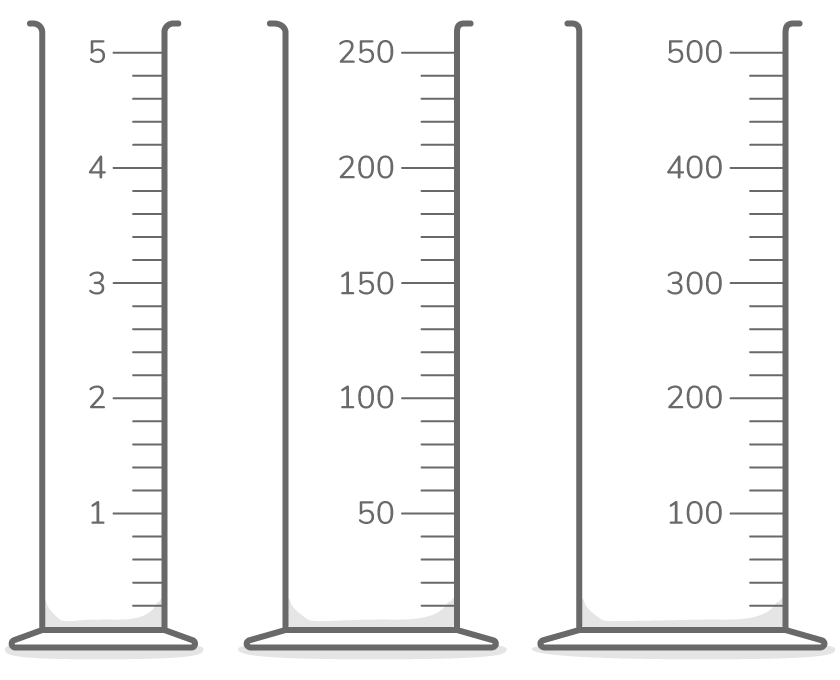
The student has three different measuring cylinders to choose from.
Explain which of the measuring cylinders the student should use and why.
Describe two precautions the student should take to ensure they obtain accurate results.
The diagram below shows the reading on the measuring cylinder.
Record the volume shown on the measuring cylinder.
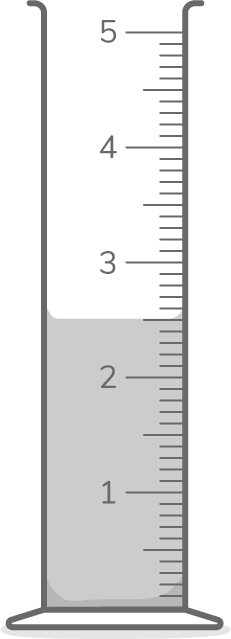
The student recorded the mass of the key to be 21.2 g using a top pan balance.
Calculate the density of the key. Give your answer to 1 decimal place in g/cm3.
1 ml = 1cm3
This question is about the density of liquids.
The table below shows the mass, volume, and density of different liquids.
Complete the table for the missing density and mass values.
The three liquids are poured into a large measuring cylinder and left to settle.
The liquids separate and sit on top of each other.
Explain why.
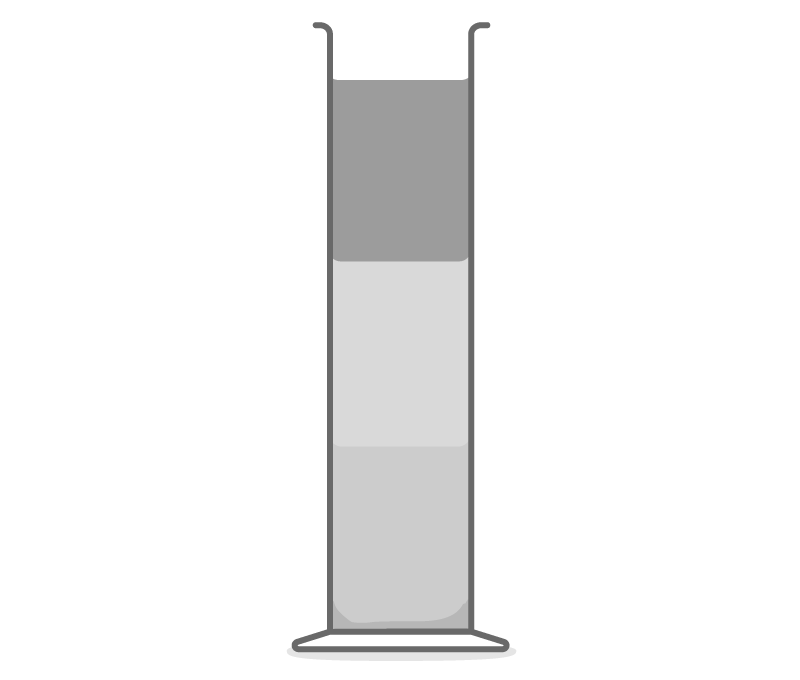
Label the diagram below to show the order of the three liquids in the measuring cylinder.
This question is about the density of objects and archimedes principle.
State archimedes principle.
A wooden cylinder of diameter 5 cm and height 100 mm is placed into a container of water. The density of water is 1,000 kg m-3.
A downwards force F is applied to fully submerge the cylinder.
Calculate the weight of the cylinder given that the force required to submerge the cylinder is 770.6 mN.
Calculate the density of the wooden cylinder.
Describe how the size of the applied force would vary if the cylinder is submerged in oil.
The density of oil is 750 kg m-3.