3.4 - Superposition Of Waves
- 1
Superposition principle in wave combination
- 2
Types of wave interference: constructive and destructive
- 3
Phase difference
- 4
Impact of path difference on interference
Superposition principle
Superposition occurs when two or more waves overlap, resulting in a combined wave. The superposition principle states that this combined wave's displacement is the vector sum of the individual waves' displacements.
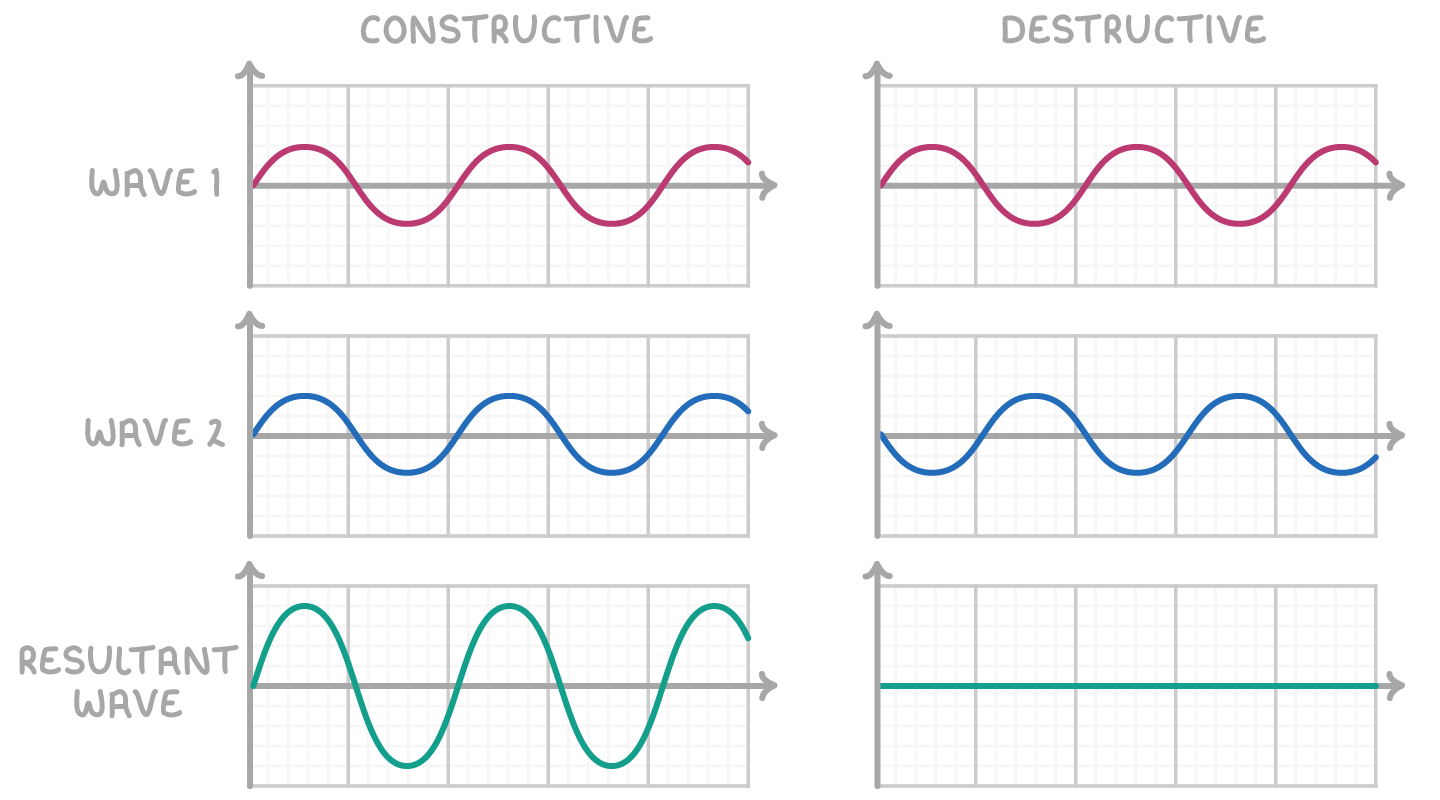
Constructive Interference - Constructive interference occurs when the waves are in phase and a crest of one wave meets the crest of another wave.
Destructive Interference - Destructive interference occurs when the waves are out of phase and the crest of one wave meets the trough of another wave.
Phase difference
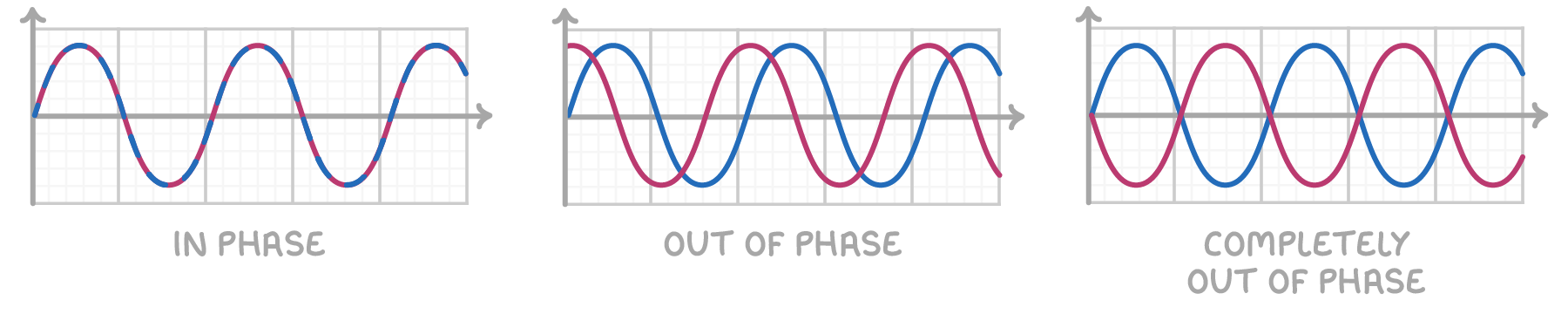
Phase difference is a measure of how much one wave is shifted or lagged relative to the other, measured in degrees or radians.
**In phase -**If both waves are at the same cycle stage and moving identically, they are said to be in phase with a phase difference of 0°.
Out of phase - When waves are completely out of phase, the crest of one wave meets the trough of another wave. This happens when they are half a cycle apart, corresponding to a phase difference of 180° or rad.
Role of path difference in interference
Path difference, the varied distances waves travel, influences whether interference is constructive or destructive.
Constructive interference - occurs when the path difference is an integer number (n) of wavelengths .
Destructive interference - occurs where there is a path difference equal to an odd number of half wavelengths.