8.12 - Challenges to National Identity
Foreign ownership and national identity
Globalisation involves the increasing interconnectedness of economies, cultures, and societies across the world. This process has made it simpler for individuals and companies to invest in businesses, property, and land beyond their own borders. As a result, a growing number of assets in one country may be owned by foreign nationals or entities, which can raise questions about what defines national identity.
Key aspects of foreign ownership
- Transnational corporations (TNCs) - The expansion of these large companies facilitates foreign investment and can blur national boundaries.
- Challenges to national identity - When foreign entities own local businesses or landmarks, it can complicate notions of what is truly 'national'. For instance, products labelled as 'Made in Britain' might be produced by foreign-owned firms, leading to debates about authenticity and cultural significance.
Case study: Jaguar Land Rover
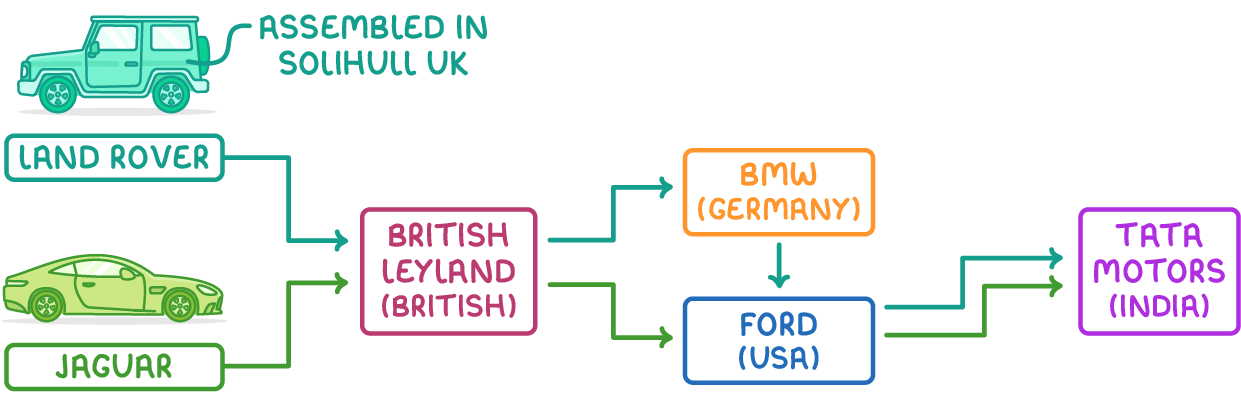
Jaguar and Land Rover are often viewed as emblems of British engineering and manufacturing prowess. However, their ownership history illustrates how globalisation can alter perceptions of national brands.
Ownership history and changes
- Jaguar and Land Rover have each passed through various owners, including British Leyland (UK), BMW (Germany), and Ford (USA).
- In 2008, Tata Motors Ltd, an Indian company, acquired both brands and formed Jaguar Land Rover.
- Manufacturing has partially shifted overseas to countries like India, China, and Slovakia, though some production remains in the UK, such as Range Rover assembly in Solihull.
Debates surrounding foreign ownership
- Concerns about loss of Britishness - Some argue that foreign control diminishes the brands' British identity, especially with production moving abroad and parts sourced globally.
- Economic benefits - Foreign investment rescued the companies from financial difficulties, sustaining around 30,000 jobs in the UK. However, fears persist that further relocation could cause job losses.
- Marketing and identity - Jaguar Land Rover continues to highlight its British roots in advertising, often featuring prominent British figures, despite Indian ownership. This raises questions about the authenticity of the 'British' label when assembly involves international components.
Foreign ownership of property in London
In major cities like London, foreign investment in property has surged, driven by globalisation. Wealthy individuals and companies from abroad purchase high-value assets as investments, often to generate rental income or avoid taxes in their home countries.
Key investors and examples
- Qatar's role - As a wealthy Middle Eastern nation, Qatar has invested heavily through entities like the Qatar Investment Authority, which owns or majority-owns landmarks such as the Shard, the Queen Elizabeth Olympic Park, and Harrods. A Qatari firm is jointly involved in London's largest landowning company.
- Russian investments - Over 200 properties in Westminster are Russian-owned. Following Russia's 2022 invasion of Ukraine, the UK imposed sanctions on owners linked to political figures like Vladimir Putin.
Impacts on housing and national identity
- Rising house prices - Foreign purchases, particularly in affluent areas like Kensington and Mayfair, increase demand and push up costs, adding pressure to the housing market.
- Tax avoidance concerns - Properties are sometimes bought via companies in tax havens, reducing tax revenue for the UK.
- Challenges to national identity - Iconic British landmarks under foreign ownership may feel less inherently 'British'.
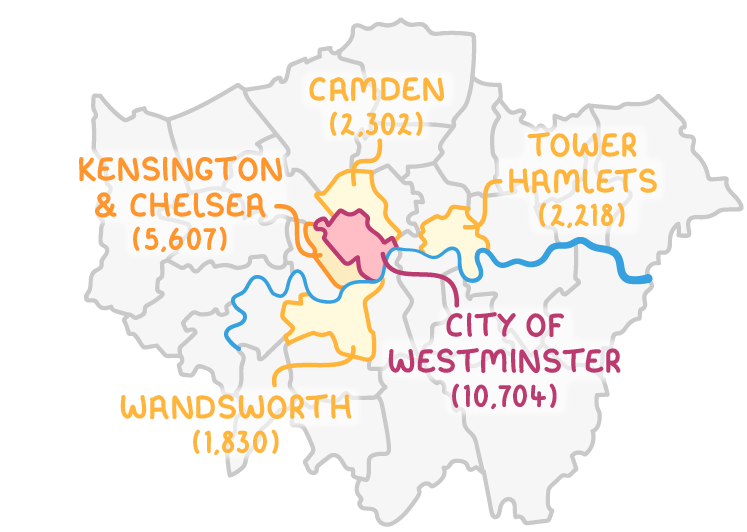
Properties owned by foreign companies in London boroughs (2022)
| London Borough | Number of properties owned by foreign companies |
|---|---|
| City of Westminster | 10,704 |
| Kensington and Chelsea | 5,607 |
| Camden | 2,302 |
| Tower Hamlets | 2,218 |
| Wandsworth | 1,830 |
Western culture through global corporations
Globalisation has accelerated westernisation, which is the spread of Western, particularly US, culture, values, and lifestyles around the world. This includes ideals like democracy, capitalism, and the dominance of English. Westernisation acts as a form of soft power, where influence is exerted through attraction rather than force.
Role of corporations in westernisation
- Entertainment companies - Firms like Disney promote Western lifestyles through films, music, TV, and literature, encouraging global audiences to adopt similar cultural elements.
- Retail corporations - Brands selling food, clothing, and electronics foster consumer culture by marketing products seen in Western media, urging people to emulate those lifestyles.
- Promotion of capitalism - These companies portray consumerism positively, boosting profits by expanding markets. This can lead to a global embrace of capitalist values, where buying and consuming become central to identity.
Criticisms of westernisation
- Loss of traditional culture - Critics argue that westernisation erodes local values, languages, and customs, challenging national identities as traditional elements are replaced.
Glocalisation
Glocalisation involves adapting Western influences to fit local contexts, creating hybrid cultures. For example, global brands might modify products to align with regional tastes, blending foreign and native elements.
Case study: McDonald's global expansion
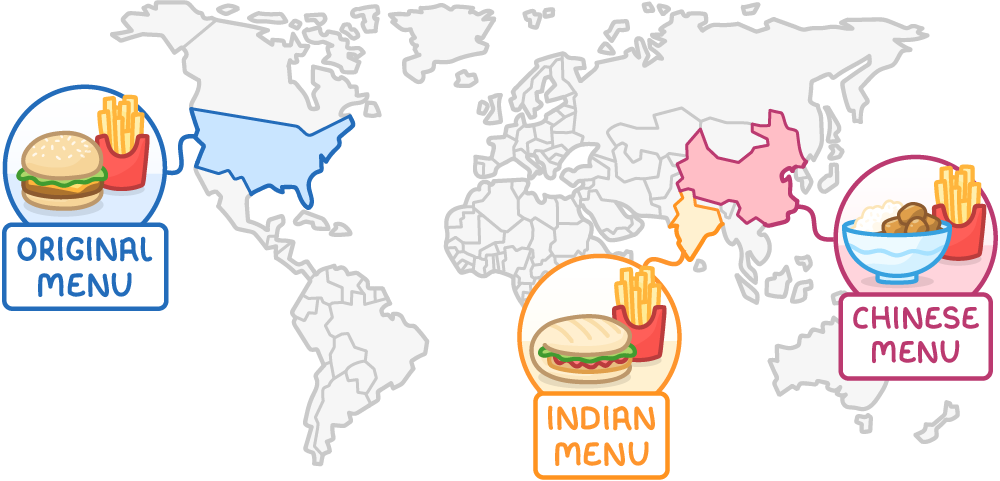
McDonald's exemplifies how Western corporations drive westernisation through worldwide growth. Starting in the USA in 1940, it has become a symbol of US consumer culture.
Global reach and recognition
- McDonald's operates over 38,000 restaurants in over 100 different countries, showcasing globalisation's role in brand expansion.
- Other prominent Western brands include Netflix, Nike, and Apple, which have achieved similar global footprints.
Impacts on culture and identity
- Spread of US culture - Restaurants introduce American-style fast food and consumerism, often influencing local eating habits and lifestyles.
- Glocalisation examples - In places like China, menus adapt to local preferences, such as incorporating regional flavours, which helps integrate the brand while preserving some cultural elements.
- Challenges to national identity - The ubiquity of McDonald's can overshadow traditional foods and values, leading to concerns about cultural homogenisation. However, adaptations through glocalisation may mitigate this by creating localised versions of global trends.