8.4 - Government & Development
Government types and their impact on development
Governments play a central role in determining how a country's economic growth translates into broader improvements in living standards. The type of government influences decisions about resource allocation, which in turn affects areas like education, healthcare, and infrastructure.
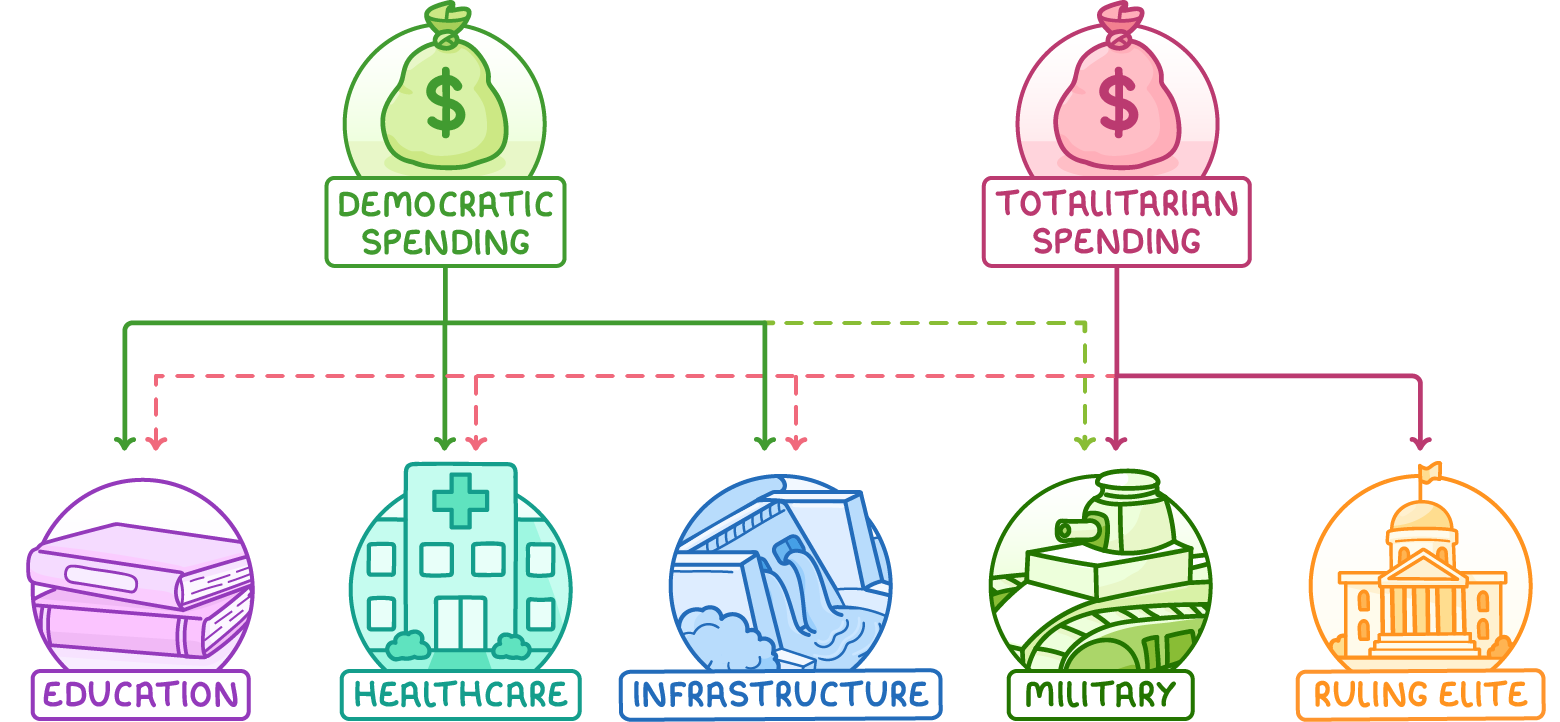
Key differences between government types
- Governments vary based on the level of citizen involvement and the emphasis placed on social development.
- These differences shape how national wealth is used to enhance human well-being.
- This refers to the extent to which ordinary people can influence government decisions, such as through voting or public input.
- Human development involves improving people's quality of life through investments in education, health, and basic services; some governments prioritise this more than others.
Characteristics of democratic governments
- In democratic systems, leaders are elected by citizens, giving people a voice in policy-making. These governments often focus on social welfare.
- Welfare states are democratic governments that invest heavily in social development, funded by taxes. For example, they allocate resources to education, healthcare, and infrastructure to promote equality and well-being.
- A significant portion of the budget supports public services, helping to ensure that economic growth benefits society as a whole.
Characteristics of totalitarian governments
- Totalitarian states, also known as dictatorships, are controlled by a small elite with absolute power, leaving citizens without influence over decisions.
- Leaders may direct funds towards military strength or personal gains rather than public services like education or healthcare.
- Without citizen input, there is little accountability, which can hinder social progress even if the economy grows.
Variations in government spending
Most governments fall between pure democracy and totalitarianism, but they differ in overall expenditure and the share dedicated to social development.
Examples of education spending as a percentage of GDP in 2019:
| Country | Education spending | Indication |
|---|---|---|
| Sweden (democracy) | 7.6% of GDP | Reflecting a strong commitment to social investment. |
| UK (democracy) | 5.2% of GDP | Showing moderate but still significant focus on education. |
| Turkmenistan (dictatorship) | 3% of GDP | Indicating lower priority for social development. |
These differences demonstrate how government type affects the balance between economic and social priorities, with democracies often spending more on human development.
Role of IGOs in development
Intergovernmental organisations (IGOs) are bodies formed by multiple countries to collaborate on global issues. They influence development by creating policies, providing funding, and offering advice to national governments.
Functions of IGOs in economic and social development
- IGOs work alongside governments to promote stability and growth, often redistributing resources from wealthier to poorer nations.
- They establish international rules that guide how countries manage their economies.
- They offer loans, grants, and advice to support investments in key areas like infrastructure.
Major IGOs involved in development
Three key IGOs play prominent roles in global development efforts.
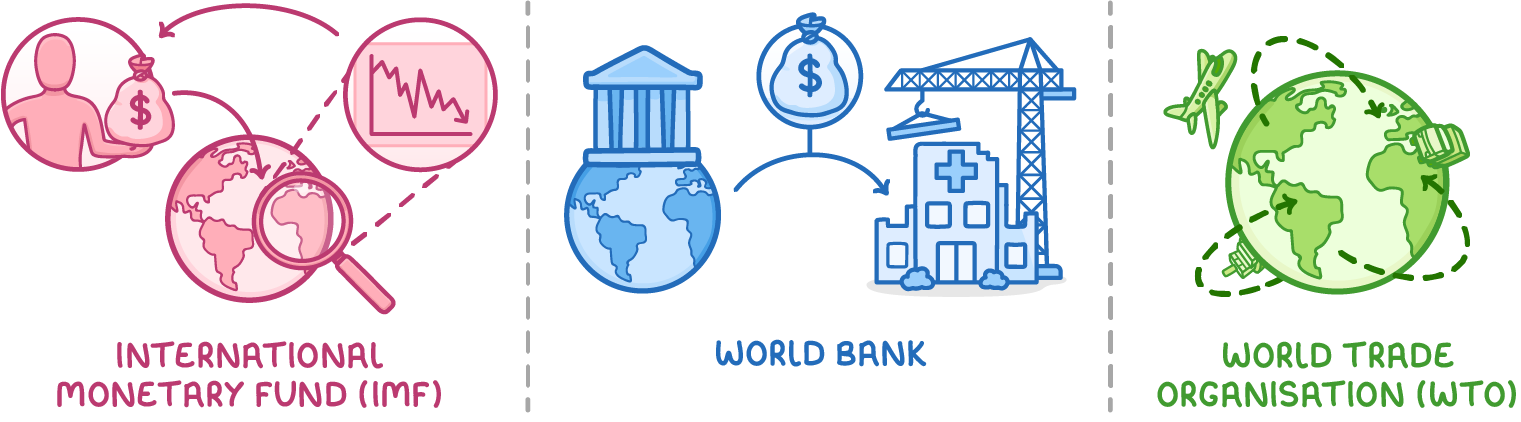
International Monetary Fund (IMF):
- Aims to maintain global financial stability by monitoring economies worldwide.
- Provides advice on economic policies to help countries improve their financial situations.
- Offers loans to nations facing economic difficulties.
World Bank:
- Supplies loans and grants to developing countries for projects in health, education, and infrastructure.
- Funding comes from member countries' contributions, effectively transferring resources from developed to less developed nations.
- Loans must be repaid, encouraging long-term economic planning.
World Trade Organisation (WTO):
- Focuses on facilitating international trade by negotiating agreements and resolving disputes between members.
- Establishes rules to promote free trade, such as reducing barriers like unfair tariffs.
- Encourages open markets to boost economic growth through increased competition and access.
These organisations help shape national strategies, ensuring that economic development aligns with global standards.
Historical promotion of neoliberalism by IGOs
In the past, IGOs emphasised economic growth through neoliberalism, a philosophy that advocates limited government intervention in the economy. This approach assumes that free markets generate wealth that eventually benefits all levels of society, reducing the need for state-led social programmes.
Core principles of neoliberalism
Neoliberalism promotes conditions where businesses can operate freely to maximise profits, with the idea that this wealth will trickle down to improve living standards.
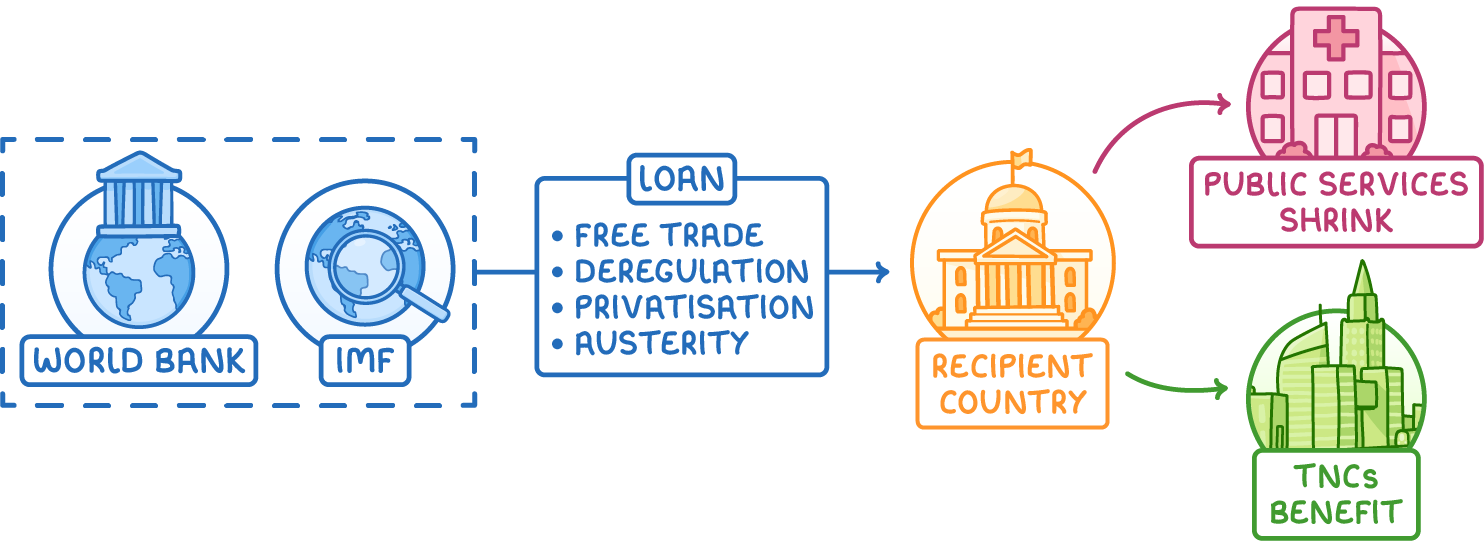
The conditions promoted by neoliberalism include:
| Condition | Description |
|---|---|
| Free trade | Involves removing barriers like tariffs that protect domestic industries from foreign competition, allowing goods to flow more easily across borders. |
| Deregulation of financial markets | Means eliminating restrictions on financial activities, such as limits on risky investments by banks, to enhance economic efficiency. |
| Privatisation | Transfers control of state-owned assets or services (e.g. hospitals or resources) to private companies, aiming to improve performance through competition. |
Structural Adjustment Programmes (SAPs)
- From the 1980s, the IMF and World Bank attached conditions to their loans, requiring recipient countries to adopt neoliberal reforms.
- These were known as Structural Adjustment Programmes (SAPs).
- Countries had to implement free trade, reduce government spending, privatise industries, and deregulate markets.
- Nations like Bolivia in the 1990s sold state-owned resources and lifted trade restrictions as part of SAPs.
- Austerity policies are measures to cut public spending, such as reducing healthcare budgets or public sector wages, to lower national debt.
Criticisms of neoliberal policies
- Increased poverty and inequality - Austerity often leads to reduced access to essential services, widening gaps between rich and poor.
- Benefits to transnational corporations (TNCs) - Critics argue that policies favour large international companies over local human development needs.
This historical focus prioritised economic liberalisation but often overlooked broader social consequences.
Shifts towards sustainable and social development
In recent years, IGOs have moved away from a purely neoliberal focus, incorporating environmental and social goals into their programmes. This change addresses criticisms by emphasising sustainability, health, education, and human rights alongside economic growth.
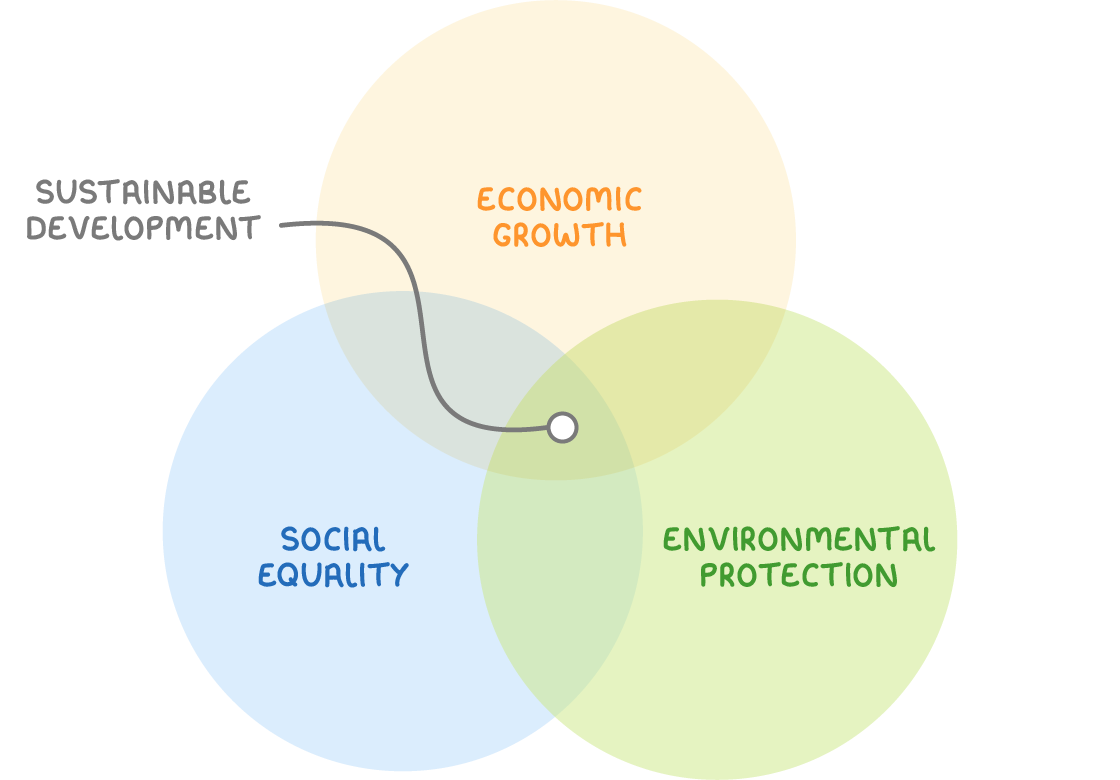
Evolving priorities of IGOs
- The IMF has begun questioning strict neoliberalism, while other IGOs integrate broader development aspects into their loan conditions and initiatives.
- Programmes now encourage practices that promote environmental sustainability and protect natural resources for long-term viability.
- Greater emphasis on improving quality of life through education, health, and equity.
World Bank initiatives promoting sustainability and human capital
| Initiative | Purpose |
|---|---|
| Global Platform for Education Finance | Helps low-income countries secure and manage funding for education efficiently, ensuring resources reach those in need. |
| Human Capital Project | Invests in people's skills, knowledge, and health to boost productivity, reduce extreme poverty, and drive economic growth. |
| Global Program on Sustainability | Provides advice and incentives to governments and companies for creating policies that support environmental protection and sustainable investments. |
These efforts reflect a more holistic approach, balancing economic development with social and environmental well-being.