8.13 - Consequences of Disunity within Nations
Nationalist movements and separatism
Nationalist movements emerge when groups within a country seek greater autonomy or full independence, often based on ethnic, linguistic, or historical differences. These movements aim to form new nation states separate from the existing one. While pursuing independence, many such groups still wish to maintain ties with larger organisations like the European Union (EU) to preserve economic benefits such as trade access and political alliances.
Key drivers of nationalist movements
- Ethnic and cultural distinctions - Groups may have unique languages, traditions, or histories that differ from the rest of the nation, fostering a desire for self-governance.
- Historical grievances - Regions that were once independent or part of different kingdoms may campaign to restore their former status.
Case study: Catalonia's push for independence
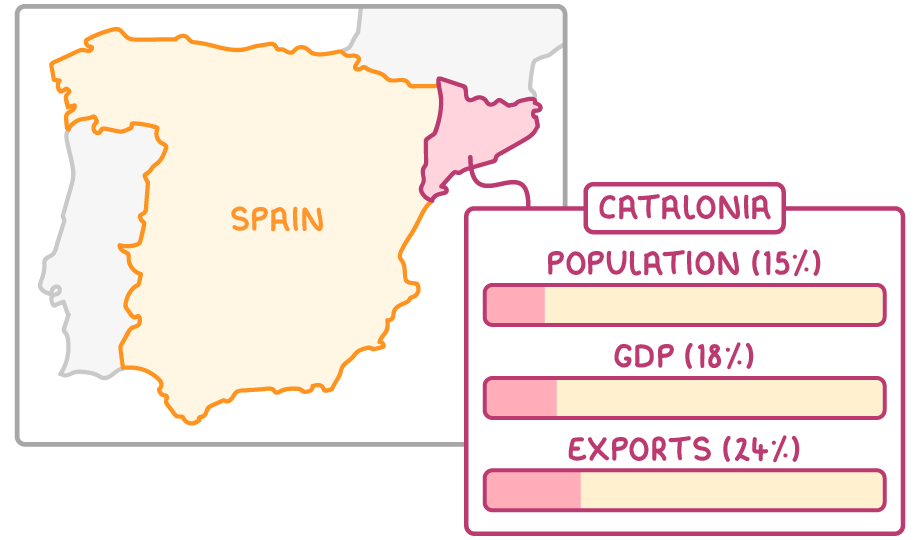
Catalonia, a region in northeast Spain, exemplifies how nationalist sentiments can lead to separatist campaigns. Home to approximately 15% of Spain's population, it has a distinct culture and its own language, Catalan. This area was historically part of the Kingdom of Aragon before integration into Spain, and independence efforts date back to the 17th century.
Economic factors in Catalonia's separatism
Catalonia generates approximately 18% of Spain's gross domestic product (GDP) and more than 24% of its foreign exports, yet nationalists argue it receives insufficient returns, especially after the 2008 financial crisis when Spain faced debt repayment challenges.
Political factors in Catalonia's separatism
- Autonomy status - In 1979, Spanish regions gained autonomous community status, allowing more local control over governance. However, this falls short for many Catalan nationalists who demand full political and economic independence.
- Referendum outcomes - A non-binding referendum in 2014 and a binding one in 2017 saw majorities vote for independence (a significant majority of over 85% in 2017), but Spain's government rejected these, claiming Catalonia lacks the legal right to secede. Binding referendums are legally enforceable, unlike non-binding ones.
Challenges and EU considerations
Despite strong support, not all Catalans favour independence due to deep ties with Spain, such as migration from regions like Andalusia. For success as an independent state, Catalonia would likely need EU membership to retain the euro currency and export markets, as most exports go to EU countries. However, as a new nation, it would require approval from all EU members, which could be complicated by Spain's opposition or concerns from other countries with separatist issues.
Globalisation tensions in emerging countries
In emerging countries, such as the BRICS nations (Brazil, Russia, India, China, and South Africa), globalisation has driven rapid changes by attracting manufacturing and industries from developed countries. This brings benefits like economic growth but also creates uneven impacts, leading to political divisions.
Uneven impacts of globalisation
- Benefits for some groups - Foreign investment has created a new middle class with higher disposable income, boosting the wider economy through increased consumption.
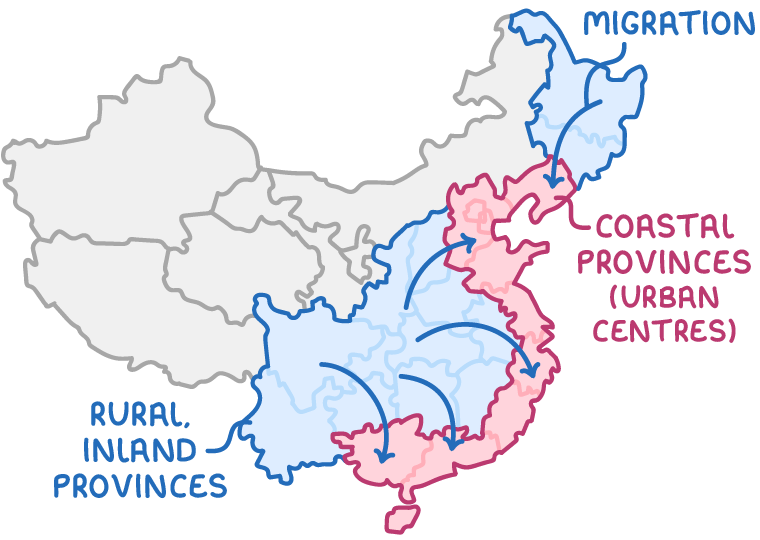
- Costs for others - Rural or inland areas, such as China's provinces, have seen little improvement, prompting migration to urban centres for jobs. This can cause economic decline in abandoned regions.
- Feelings of exploitation - People may resent land seizures for development projects or low wages from transnational corporations (TNCs).
Political consequences
These disparities erode trust in governments, sparking protests, criticism, or political polarisation. For instance, Brazil's 2022 election was closely divided, with a narrow majority (50.9%) supporting left-wing candidate Lula da Silva and just under half (49.1%) backing far-right Jair Bolsonaro, culminating in violent protests by Bolsonaro's supporters who stormed Congress in 2023.
Weak national identity in fragile states
Governments influence national identity through policies and control, but in fragile states – countries where the government cannot maintain authority, secure borders, or provide basic services – national identity weakens. This often stems from conflict, inequality, or weak governance, exacerbated by globalisation's effects, such as divisions between a wealthy elite and the broader population.
Factors contributing to state fragility
- Conflict and instability - Ongoing violence or civil unrest erodes government control and fosters divisions between social groups.
- Inequality and poverty - Gaps between rich and poor, often widened by foreign investment, undermine trust in institutions.
- Globalisation's role - The combination of weak governance and globalisation can create significant differences between a powerful, wealthy elite and the broader population.
Case study: Weak national identity in Somalia
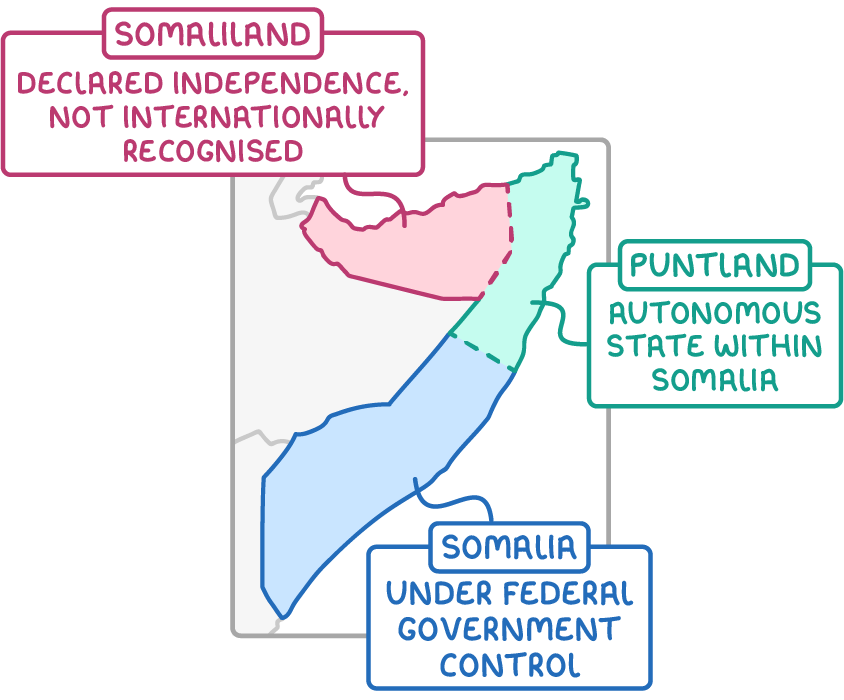
Somalia illustrates the characteristics of a fragile state, with weakened national identity due to prolonged instability. Following the overthrow of a dictatorial government in 1991, decades of conflict ensued, including the declaration of independence by Somaliland and the emergence of autonomous territories like Puntland in the 1990s, which operate independently but lack international recognition.
Socio-economic challenges in Somalia
- Poverty and inequality:
- As one of the world's poorest countries, around 68% of Somalis live in poverty.
- Only around 58% have access to clean water and approximately 8% have sanitation.
- While most rely on subsistence farming or small-scale trade, a small elite of businessmen and politicians profits from property and international trade, widening the wealth gap.
- Conflict impacts:
- Fighting between government forces and clan-based groups has caused civilian casualties, human rights abuses, and mass displacement, further fragmenting society.
Role of globalisation and FDI
Somalia received around US $440 million in FDI in 2020, but ongoing conflict, corruption, and poor infrastructure limit further investment. TNCs sometimes bribe officials for advantages like lower taxes or protection, perpetuating violence. Disputes over resource profits – whether they benefit TNCs, the government, or locals – add to divisions. These issues erode trust in the government, increase recruitment to armed groups, and challenge a unified Somali identity.