6.9 - Fossil Fuels: Radical Technologies
Radical technologies for energy security
Radical technologies involve innovative engineering designs that either generate new forms of energy or utilise energy in novel ways. These developments help countries achieve greater energy security. Key examples include carbon capture and storage, hydrogen fuel cells, and electric vehicles.
Carbon capture and storage
Carbon capture and storage (CCS) is a technology that captures carbon dioxide produced during fossil fuel combustion, preventing it from entering the atmosphere. This gas is then stored underground.
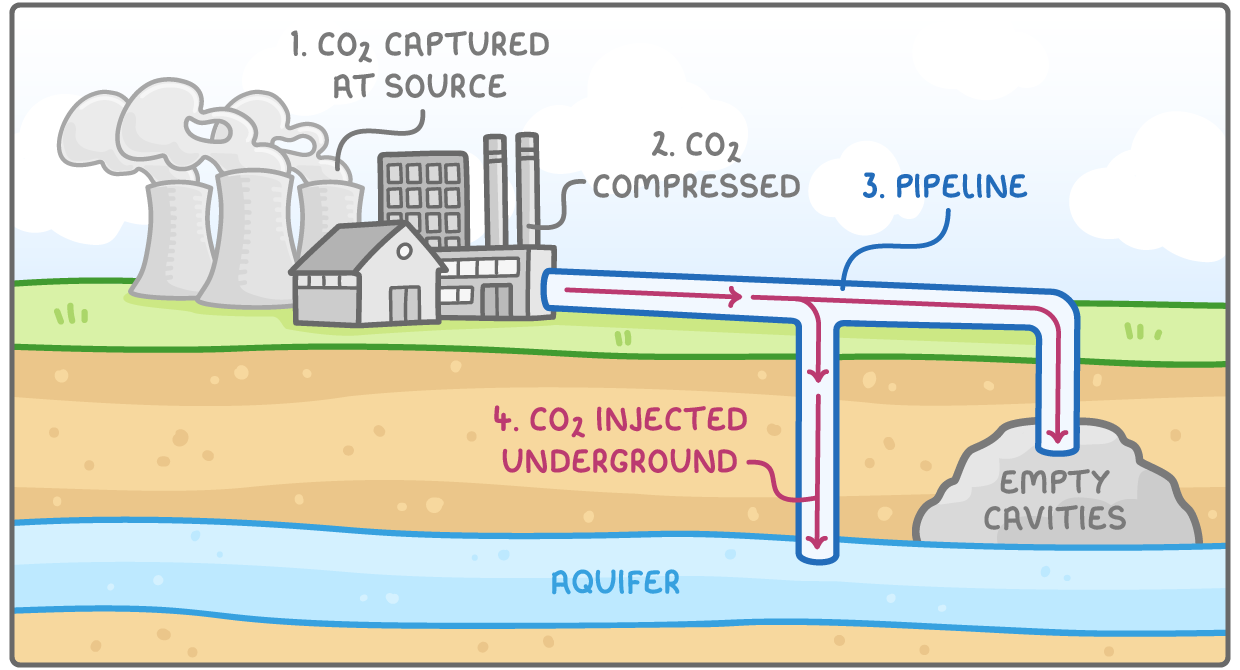
How CCS works
- Carbon dioxide is captured at the source, such as within a power plant or factory, before it is released.
- The captured gas is compressed to make it easier to handle.
- It is then transported via pipelines.
- Finally, it is injected into natural underground formations, such as aquifers (underground layers of water-bearing rock) or empty cavities, for long-term storage.
Advantages of CCS
By trapping carbon dioxide, CCS can slow the enhanced greenhouse effect.
Challenges with CCS
- High costs - Implementing CCS requires significant investment in advanced mechanical engineering and infrastructure.
- Delayed results - While it prevents carbon from entering the atmosphere, the benefits in reducing global warming are not immediate.
- Monitoring issues - There is a risk of leakage from underground storage sites, and monitoring these leaks is not always comprehensive.
Hydrogen fuel cells
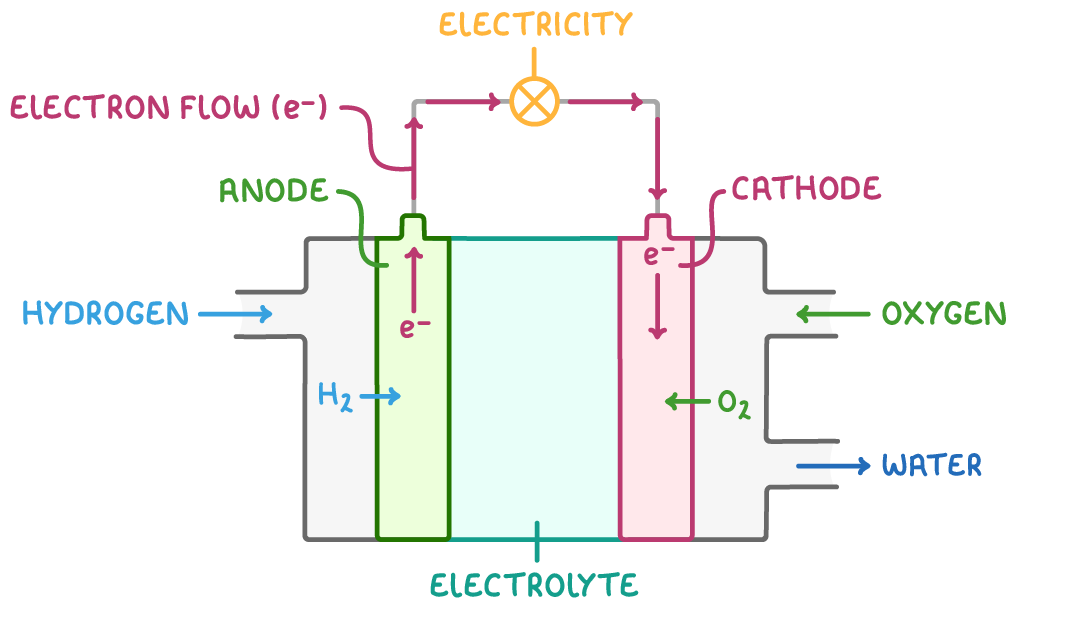
Hydrogen fuel cells are devices that generate electricity through a chemical reaction between hydrogen and oxygen, producing water as the only by-product. This technology serves as a clean alternative to fossil fuels, functioning like battery packs for various applications.
How hydrogen fuel cells work
Hydrogen fuel cells combine hydrogen and oxygen. This reaction forms water and releases energy in the form of electricity that can power homes, vehicles, or other devices.
Advantages of hydrogen fuel cells
Hydrogen fuel cells produce only pure water, avoiding dangerous waste and excluding them from the carbon cycle.
Challenges with hydrogen fuel cells
- Sourcing difficulties - Hydrogen is abundant but does not exist naturally as a free gas; it must be extracted from compounds like water, which is energy-intensive.
- Storage and safety issues - Hydrogen is highly volatile (prone to rapid chemical reactions), making it difficult to store safely and increasing the risk of explosions.
- Infrastructure needs - Widespread adoption requires a network of fuelling stations, such as those already emerging in places like Washington DC.
Electric vehicles
Electric vehicles are powered by rechargeable batteries instead of conventional fossil fuels like petrol or diesel. They represent a shift towards sustainable transport by using electricity, which can be sourced from renewable means.
How electric vehicles operate
Electric vehicles operate using rechargeable electric batteries for power, rather than conventional fuel.
Growth trends in electric vehicles
In Great Britain, the registration of fully electric vehicles has shown significant growth. From 2010 to 2014, numbers remained low and stable, close to zero. A gradual increase occurred until 2018, followed by a sharp rise, reaching over 380,000 by 2021. This exponential growth reflects improving technology and increasing adoption.
Advantages of electric vehicles
- Cost savings - Owners benefit from lower fuel expenses compared to traditional vehicles.
- Environmental benefits - Their quiet operation reduces noise pollution.
- Improving technology - Battery ranges are extending rapidly, making them more practical for longer journeys.
Challenges with electric vehicles
- Limited range and infrastructure - Current batteries offer restricted driving distances, and recharging requires a network of points, which in the UK is limited and concentrated in large cities.
- Environmental concerns - Producing and disposing of batteries can lead to pollution and resource depletion.
- High initial costs - Electric vehicles are expensive to purchase, and converting existing petrol cars to electric power is costly.
- Safety considerations - Their quiet nature raises road safety issues, as pedestrians may not hear them approaching.
Feasibility issues with radical technologies
While radical technologies offer promising alternatives to fossil fuels, their implementation faces broader feasibility challenges. These must be weighed against their potential to enhance energy security.