8.10 - IGOs: Environmental Problems
Intergovernmental organisations
Global environmental issues, such as pollution, biodiversity loss, and climate change, often cross national borders, making international cooperation essential. This has led to the formation of intergovernmental organisations (IGOs) – groups of countries working together through treaties and agreements to manage these problems. While some IGOs have achieved significant results, others face challenges like slow decision-making or non-compliance.
The Montreal Protocol and ozone layer protection
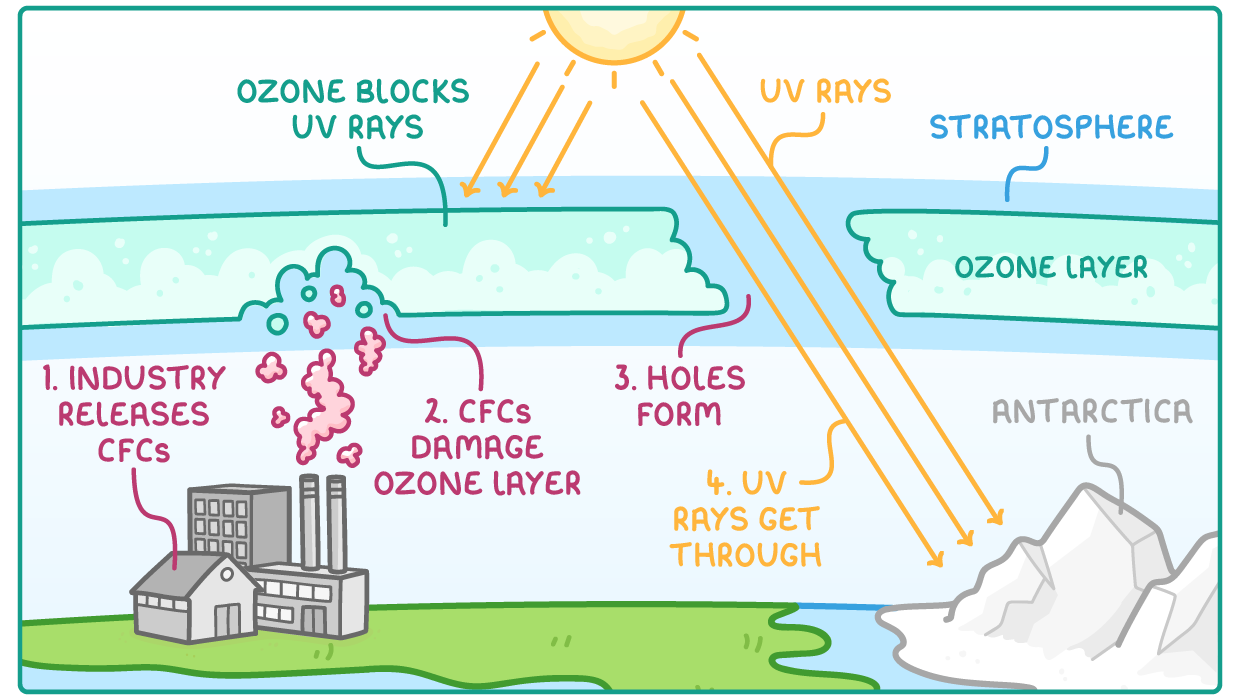
The ozone layer is a region in the Earth's stratosphere – the atmospheric layer above the troposphere – that absorbs harmful ultraviolet radiation from the sun, protecting life on the planet. In the 1970s, scientists discovered that certain chemicals were depleting this layer.
Causes of ozone depletion
Industrial chemicals, particularly chlorofluorocarbons (CFCs), were depleting the ozone layer. This led to the formation of ozone holes, areas with extremely low ozone levels, especially over Antarctica.
The Montreal Protocol agreement
In 1987, the United Nations (UN) established the Montreal Protocol on Substances that Deplete the Ozone Layer, an international treaty signed by every country worldwide. It aimed to phase out the production and use of CFCs and other ozone-depleting substances.
Achievements and ongoing challenges
- By 2010, the protocol had reduced emissions of ozone-depleting chemicals by 98% compared to 1990 levels.
- The Antarctic ozone hole has shown recovery signs, with global ozone levels projected to fully recover by around 2050, though Antarctic recovery may take until around 2066.
- However, violations occurred, such as increased CFC emissions from 2012 to 2017, indicating some countries ignored the ban.
The protocol's success demonstrates how global agreements can reverse environmental damage when widely adopted.
CITES and the trade in endangered species
Biodiversity loss threatens ecosystems worldwide, often due to illegal trade in wildlife. To address this, countries formed an agreement focused on sustainable trade.
Overview of CITES
The Convention on International Trade in Endangered Species of Wild Fauna and Flora (CITES) is an international treaty, effective since 1975, involving over 180 governments. It regulates the trade of around 6,000 animal species and 32,000 plant species, categorising them based on extinction risk.
Categories of protection under CITES
- The most endangered species, like tigers, have the strictest trade bans.
- Less vulnerable species can be traded under regulated conditions with monitoring.
CITES supports enforcement through training workshops and national laws to combat illegal trade.
Successes
- CITES has promoted sustainable trade and aided species recovery.
- The vicuña – a South American camelid whose population grew from endangered levels in the 1970s to over 450,000 by 2020 – is an example of recovery due to fur trade restrictions.
Limitations
- Sanctions are rare, membership is voluntary, and actions can be slow.
- For example, pangolins – scaly mammals heavily poached for scales and meat – were recognised as threatened in 2014 but only added to the highest protection list in 2017, with around 1 million illegally traded between 2010 and 2013.
Despite these limitations, CITES has made trade more sustainable for many species.
UNCLOS and the protection of marine environments
Oceans cover most of the Earth's surface and face threats from overfishing, pollution, and resource exploitation. International law is needed to manage these shared resources.
Key provisions of UNCLOS
The United Nations Convention on the Law of the Sea (UNCLOS), established in 1982, is a treaty governing ocean use, including environmental protection.
Signed by most countries, it requires nations to:
- Protect marine environments and cooperate on conservation.
- Fish sustainably within limits to prevent depletion.
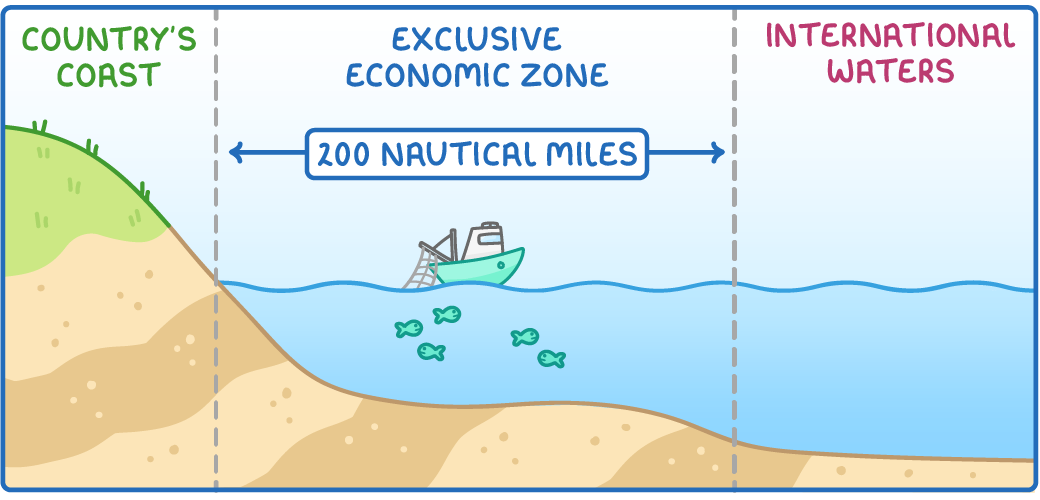
- Establish exclusive economic zones (EEZs) – areas extending 200 nautical miles from a country's coast where it has sole rights to resources like fish and minerals.
Strengths of UNCLOS
UNCLOS provides a legal framework for sustainable marine resource use, giving countries clear rights and responsibilities over ocean resources within their EEZs.
Weaknesses of UNCLOS
- UNCLOS does not cover all aspects of marine management, such as whaling, which is managed by the International Whaling Commission.
- Enforcement is difficult; for instance, some countries evade fishing limits by transferring catches to other vessels in international waters.
- Critics argue for a comprehensive overarching treaty to fully address marine conservation.
The Helsinki Water Convention
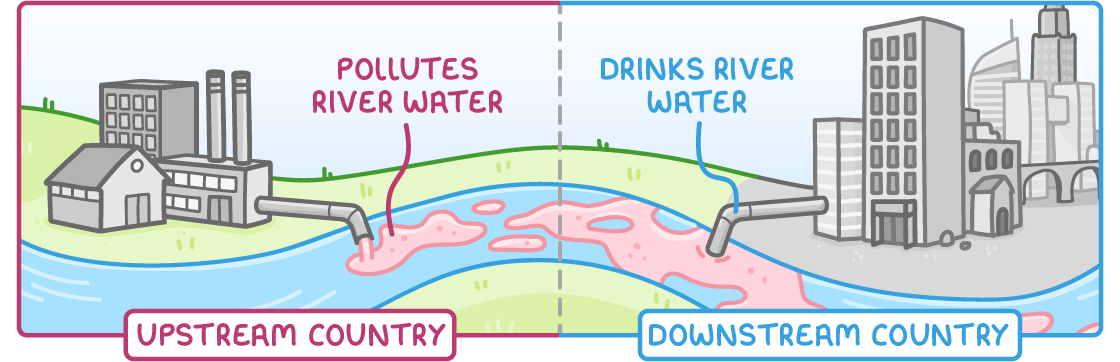
Rivers and lakes often span multiple countries, leading to potential conflicts over use and pollution. Shared management is crucial for sustainability.
Purpose and scope
The Convention on the Protection and Use of Transboundary Watercourses and International Lakes, known as the Helsinki Water Convention, entered force in 1996. Created by the UN, it helps countries manage shared water resources sustainably, promoting cooperation on issues like water quality and allocation.
Examples of implementation
It has facilitated specific agreements, such as the Convention on the Protection of the Rhine, involving five countries and the European Union (formerly European Community). This has supported monitoring, like tracking chloride levels, and research to improve water quality.
Achievements and limitations
The convention aids in achieving Sustainable Development Goals (SDGs) – UN targets for global issues like clean water. However, participation is limited; by 2022, only 47 countries had ratified it, reducing its global impact.
The Millennium Ecosystem Assessment
To understand and address widespread environmental degradation, comprehensive assessments are needed to inform policy.
Establishment and goals
In 2001, the UN launched the Millennium Ecosystem Assessment (MA), a global study involving over 1,360 scientists to evaluate ecosystem health and human impacts. Published in 2005, it aimed to provide scientific evidence for tackling problems affecting human wellbeing.
Key findings
The MA revealed that most Earth ecosystems are degraded due to human activities, causing significant biodiversity loss. These insights have influenced policies, such as the Convention on Biological Diversity.
Impact and constraints
While the assessment informed environmental strategies, it lacks legal power, leading some countries and organisations to ignore its recommendations. It serves as a summary rather than an enforceable tool.
The Antarctic Treaty System
Antarctica's unique ecosystems face risks from exploitation and climate change. International governance prevents territorial disputes and promotes conservation.
The Antarctic Treaty of 1959
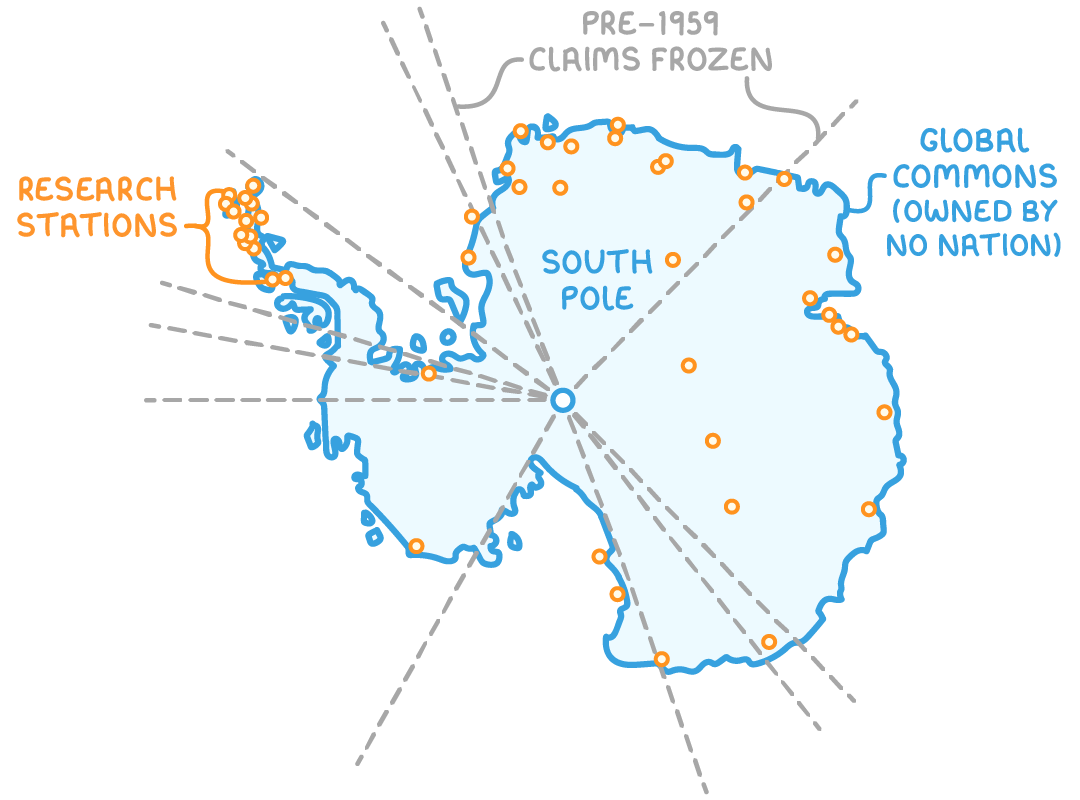
Signed by 55 countries, this treaty designates Antarctica as a global commons – areas not owned by any nation but shared for peaceful purposes.
Key rules:
- Peaceful use only, banning military bases and weapons.
- Cooperation in scientific research, with sharing of plans, personnel, and findings.
- No new territorial claims, freezing pre-1959 claims.
Inspections of bases ensure compliance, though they are infrequent.
The 1991 Protocol on Environmental Protection
This addition strengthens conservation by:
- Banning mining.
- Requiring Environmental Impact Assessments (EIAs) – evaluations of potential harm – for new activities.
- Regulating waste, pollution, and protection of native species.
Overall success
The system has prevented exploitation, ended new claims, and fostered scientific collaboration.
Challenges
- Decision-making requires consensus, slowing responses – for example, proposals for marine reserves failed from 2012 to 2016 due to opposition from Russia and China.
- The treaty cannot address external threats like climate change, which causes warming and invasive species.
- Disputes are resolved through negotiation or the International Court of Justice if needed.