12.1 - Properties of the Alkanes
- 1
The general formula and bonding of alkanes
- 2
The tetrahedral geometry of alkanes
- 3
How alkane structure affects boiling point
Alkanes are saturated hydrocarbons
Alkanes are a class of hydrocarbons that have the general formula CnH_2n+2_, where 'n' represents the number of carbon atoms.
Key features of alkanes include:
- They consist solely of carbon and hydrogen atoms (thus called hydrocarbons).
- Each carbon atom forms four single bonds, known as sigma bonds (σ-bonds).
- σ-bonds are formed by the direct overlap of atomic orbitals between the bonding atoms (C–C and C–H).
- Alkanes are fully "saturated" with hydrogen, meaning they contain no double or triple bonds.
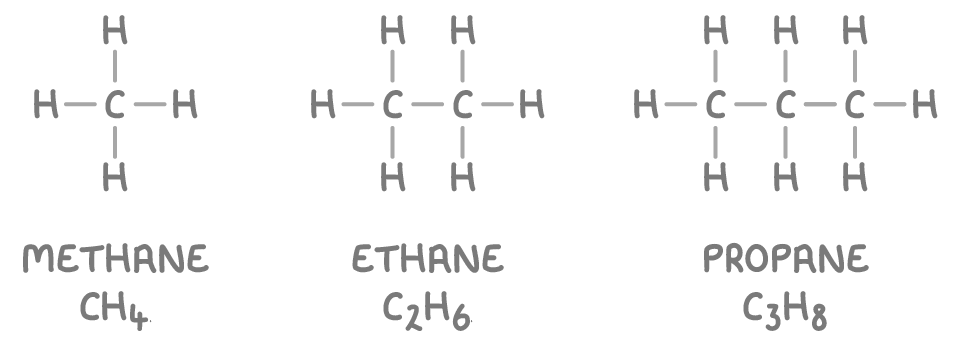
Examples of alkanes:
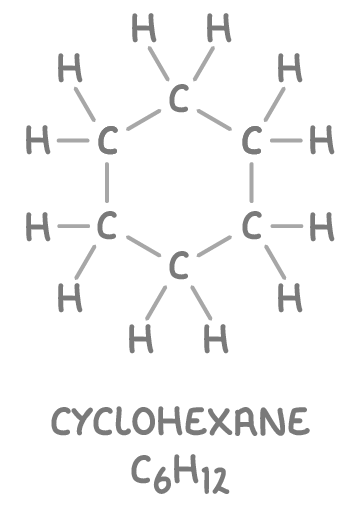
Cycloalkanes are a type of alkane in which the carbon atoms form a ring structure. Their general formula is CnH_2n_, where 'n' is the number of carbon atoms in the ring. Despite the ring structure, cycloalkanes remain saturated.
Tetrahedral geometry of carbon
In alkanes, each carbon atom has:
- Four bonding pairs of electrons.
- These electron pairs are arranged in a tetrahedral geometry due to the equal repulsion the electron pairs.
- The bond angles are approximately 109.5°.
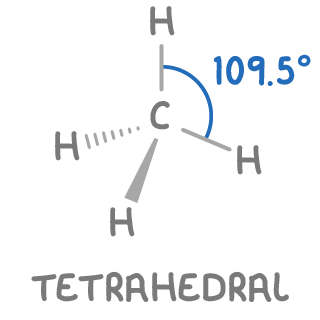
Methane (CH_4_) is a prime example, forming a perfect tetrahedral shape.
How structure affects boiling points
The boiling point of an alkane is influenced by the strength of its intermolecular induced dipole-dipole forces, which vary based on the length of the carbon chain and the extent of branching.
- Carbon chain length
- A longer carbon chain means more electrons are present, creating stronger temporary inducible dipoles.
- These stronger dipoles result in stronger induced dipole-dipole forces between molecules.
- Consequently, more energy is needed to overcome these forces and boil the alkane.
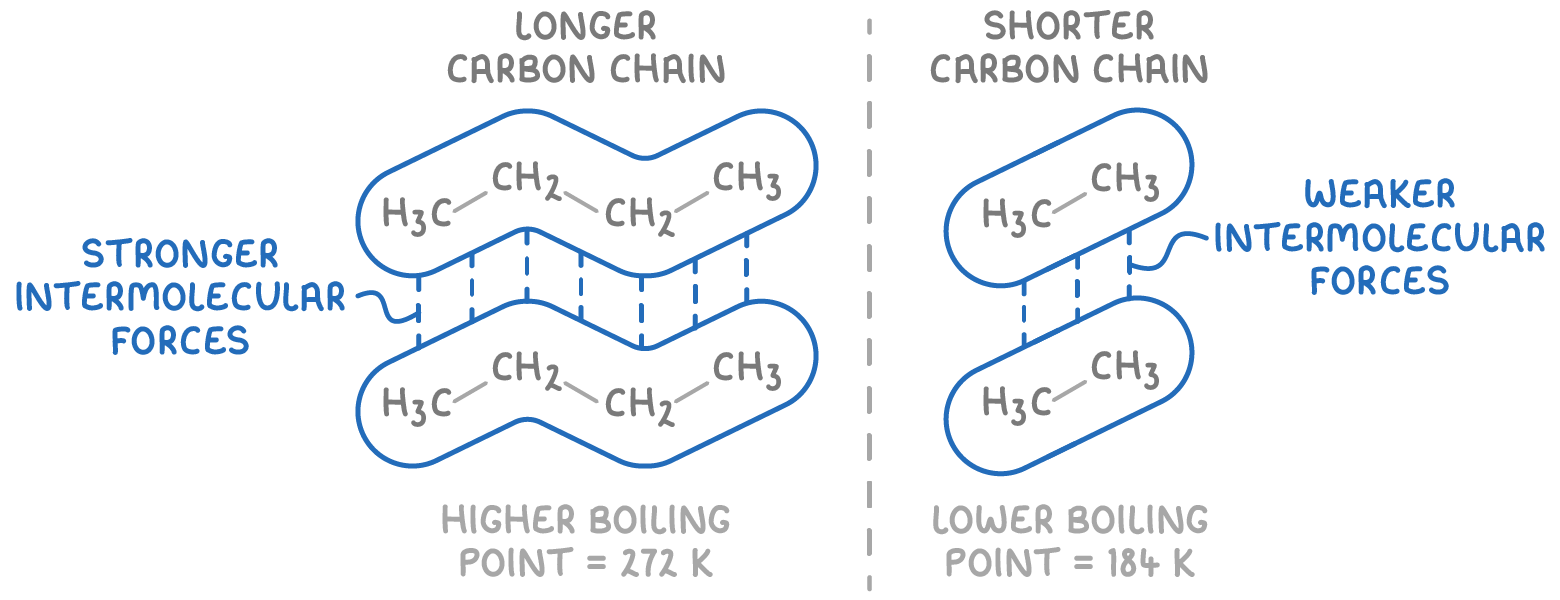
The example above shows that butane (C4H10) has a higher boiling point than ethane (C2H_6_) due to butane's longer chain which contains more electrons, creating stronger intermolecular forces.
- Branching:
- Straight chain alkanes can pack together more closely, maximising interaction between their electron clouds. Conversely, branched alkanes have a less efficient packing, reducing electron cloud contact.
- This leads to stronger induced dipole-dipole forces in straight chain alkanes.
- Therefore, more energy is required to separate these molecules.
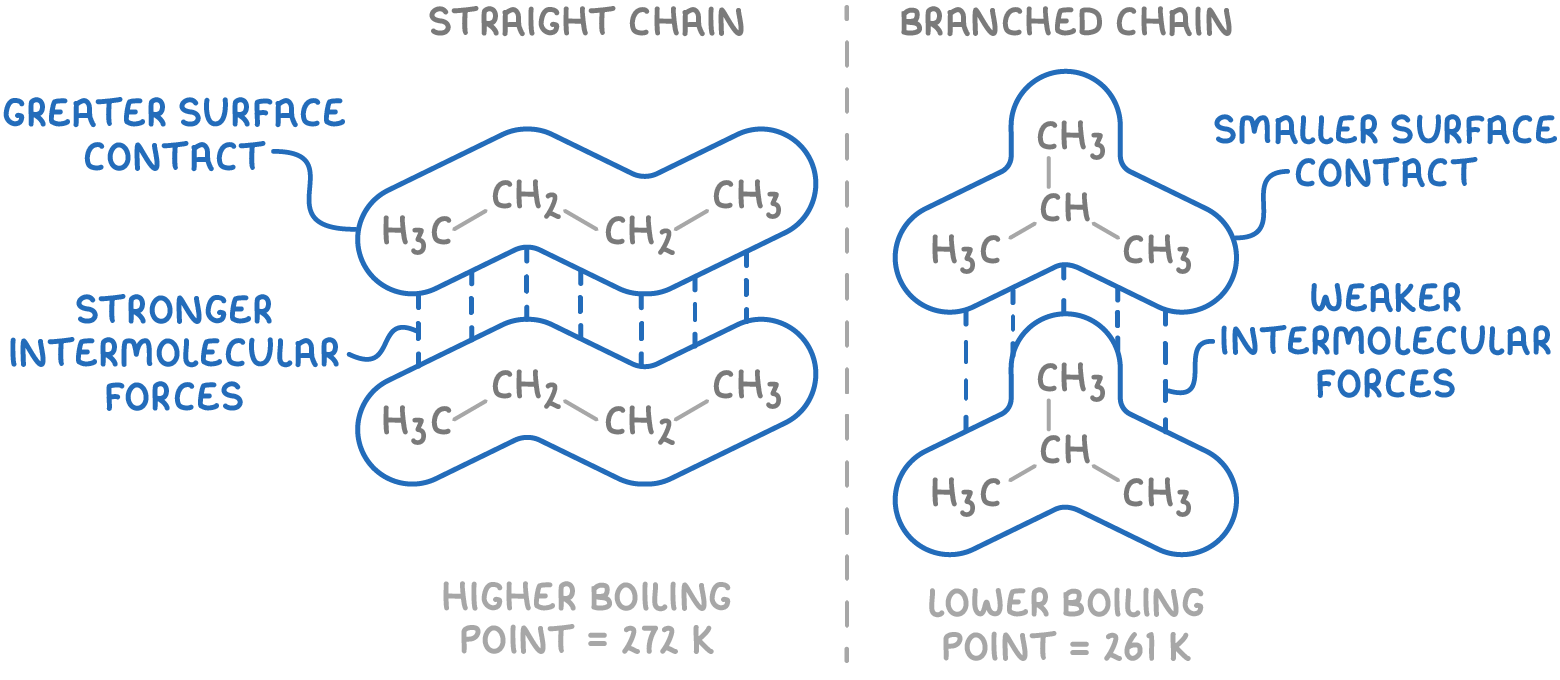
The example above shows that butane has a higher boiling point than its branched isomer, methylpropane due to butane's straight chain, which allows for greater surface contact between molecules, creating stronger intermolecular forces.