Basic Concepts of Organic Chemistry - exam practice
Basic Concepts of Organic Chemistry
Question 1 of 5
Crude oil undergoes fractional distillation to produce a number of different fractions containing saturated hydrocarbons.
Explain the meaning of the term saturated hydrocarbon.
The saturated hydrocarbons obtained from crude oil include the homologous series of alkanes.
State two characteristics of a homologous series.
One example of an alkane is octane which has the molecular formula C8H18.
Explain what is meant by the term molecular formula.
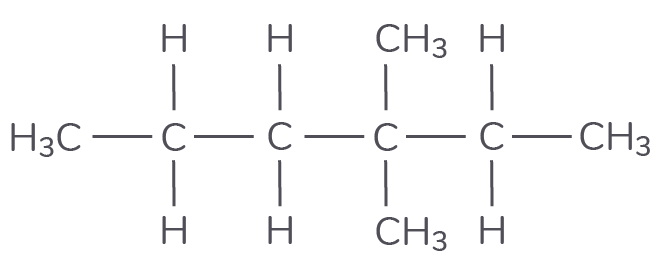
The structure below represents one of the structural isomers of octane.
State the meaning of the term structural isomerism.
Name the isomer shown below.
This question is about reaction mechanisms.
Mechanisms use curly arrows.
What does a curly arrow represent in a mechanism?
The diagram below shows part of a mechanism for the reaction between a halogenoalkane and sodium hydroxide to produce an alcohol.
Add the missing curly arrow and draw the structure of the products that would form in the reaction below.
Use the mechanism in part b) to explain what is meant by the term heterolytic fission.
The halogenoalkane 1-bromo-2-methylpropane reacts with sodium hydroxide to produce an alcohol as shown in the diagram below.

Name the alcohol and draw its skeletal formula.
This question is about halogenoalkanes.
Draw the structure of the alkene that would react with bromine to form 1,2-dibromo-3-methylpentane.
Add curly arrows to the mechanism below to show the reaction of an alkene with bromine to produce a halogenoalkane.
Name the halogenoalkane formed in the reaction.
The halogenoalkane with the molecular formula C4H9Br has four structural isomers. Two of these isomers have been drawn below.
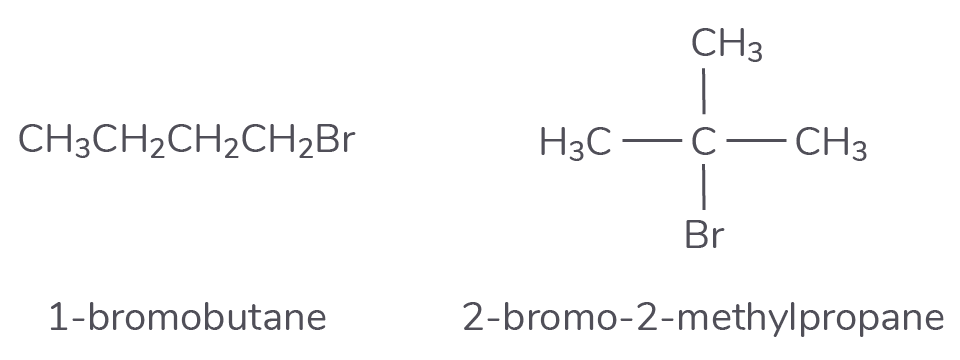
Draw and name the other two isomers.
Explain what is meant by the term displayed formula and draw the displayed formula of 2,3-dichloro-2-methylbutane.
Compound Xis a member of a homologous series and its structure is shown below.
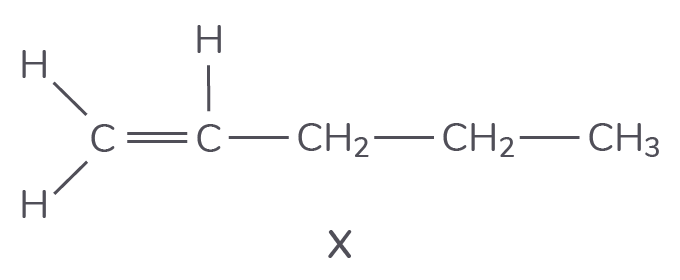
What is the general formula of this homologous series?
Draw and name the position isomer of compound X.
Pentane is a member of the alkane homologous series.
Give the general formula of the alkanes.
One of the structural isomers of pentane is 2,2-dimethylpropane.
Draw the displayed formula of 2,2-dimethylpropane and name the type of structural isomerism shown.
This question is about the alkane hexane.
The general formula of the alkanes is CnH2n+2.
Explain what is meant by the term general formula.
Explain what is meant by the term empirical formula and state the empirical formula of hexane.
The molecular formula of hexane is C6H14.
Determine the number of structural isomers of hexane.
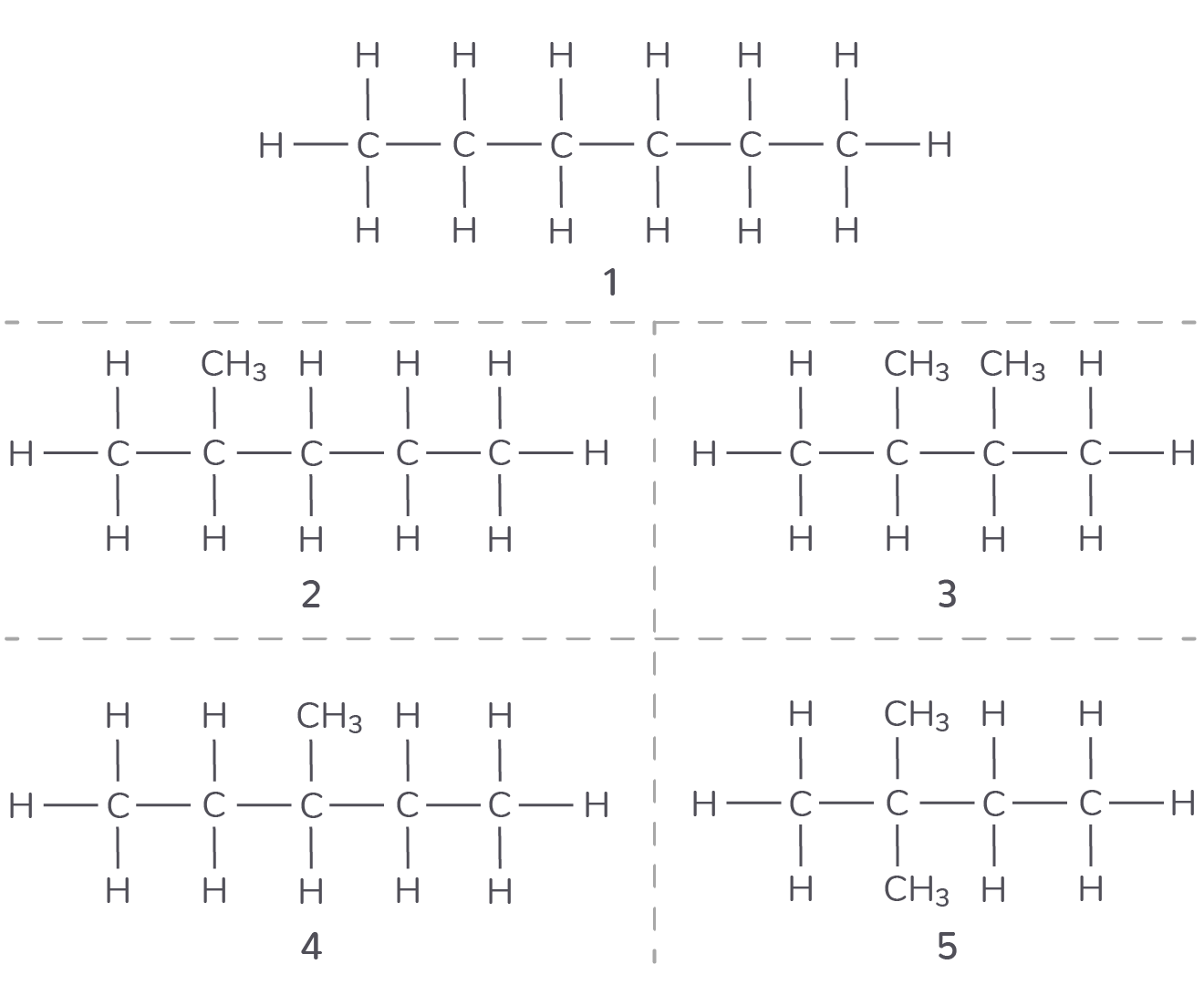
State one type of structural isomerism shown by the isomers of C6H14.