Intermolecular Forces - exam practice
Intermolecular Forces
Question 1 of 6
Element X is a metal.
Explain why element X is malleable whereas a crystal of sodium chloride is not.
Predict two other distinct physical properties that element X exhibits.
Explain your choices in terms of structure and bonding.
Element X is a first row transition element. An atom of element X contains six electrons in the 3d sub-shell.
Deduce the identity of element X.
The solubility of two compounds in different solvents was investigated.
A summary of the findings is shown.
| Compound | Soluble in water | Soluble in hexane |
|---|---|---|
| 2-methylpentane | x | ✓ |
| potassium bromide | ✓ | x |
Explain the findings of the investigation by considering the interactions between the compounds and each of the solvents.
This question is about H2O.
State the strongest type of interaction between molecules of water.
Draw a diagram to show hydrogen bonding between two molecules of H2O.
Include all lone pairs and partial charges in your diagram.
Label the hydrogen bond.
Hydrogen bonding in ice causes ice to have a lower density than water and ice to have a relativity high melting point.
Explain why hydrogen bonding causes ice to have these anomalous properties.
Explain why the O-H and S-H bond lengths are different.
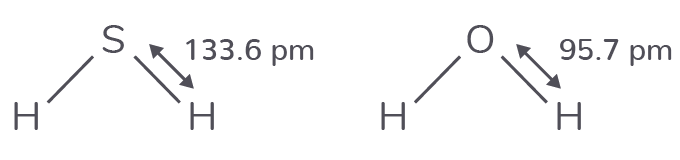
This question is about the element hydrogen and its compounds.
Lithium amide (LiNH2) contains the amide ion, NH2-.
Draw the shape of the amide ion, NH2-
Include any lone pairs and give the value of the bond angle.
Describe the requirements for hydrogen bonding between two molecules, A and B.
The table below shows the boiling points of ammonia, NH3, and hydrogen, H2.
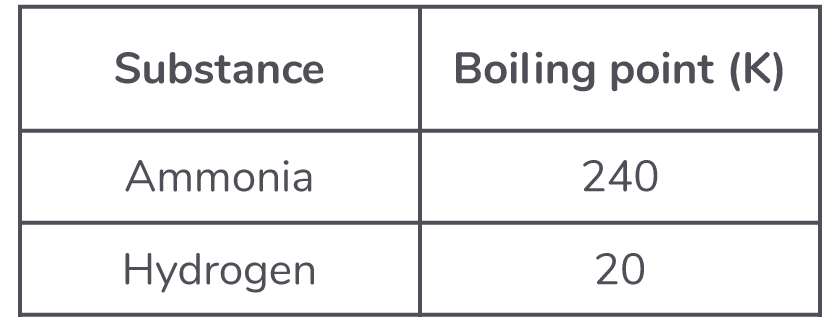
Explain the difference in boiling points.
This question is about intermolecular forces.
The table below shows some electronegativity values of some elements.
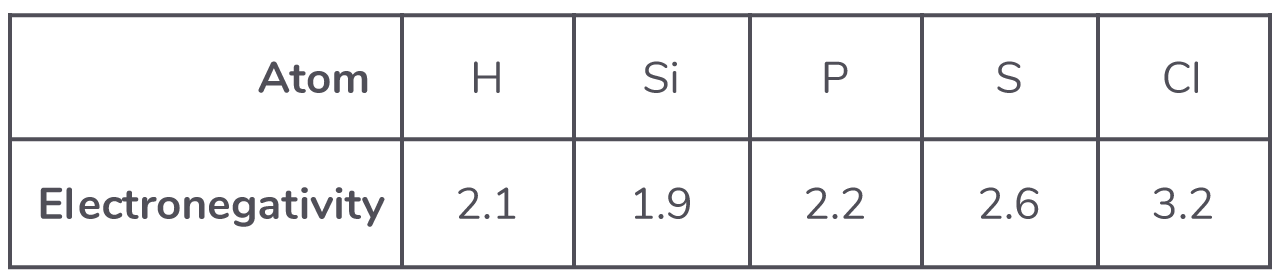
Using the data in the table above, predict the formula of the compound with the most polar bonds formed from two of these elements.
The Si-Cl bond is polar.
Explain why SiCl4 is not a polar molecule.
State the strongest type of intermolecular force that exists between molecules of SiCl4.
Explain how induced dipole-dipole forces arise in a sample of SiCl4.
Suggest, in terms of intermolecular forces, why SiCl4 has a higher boiling point than SiHCl3.
The diagram below represents a molecule of hydrogen peroxide.
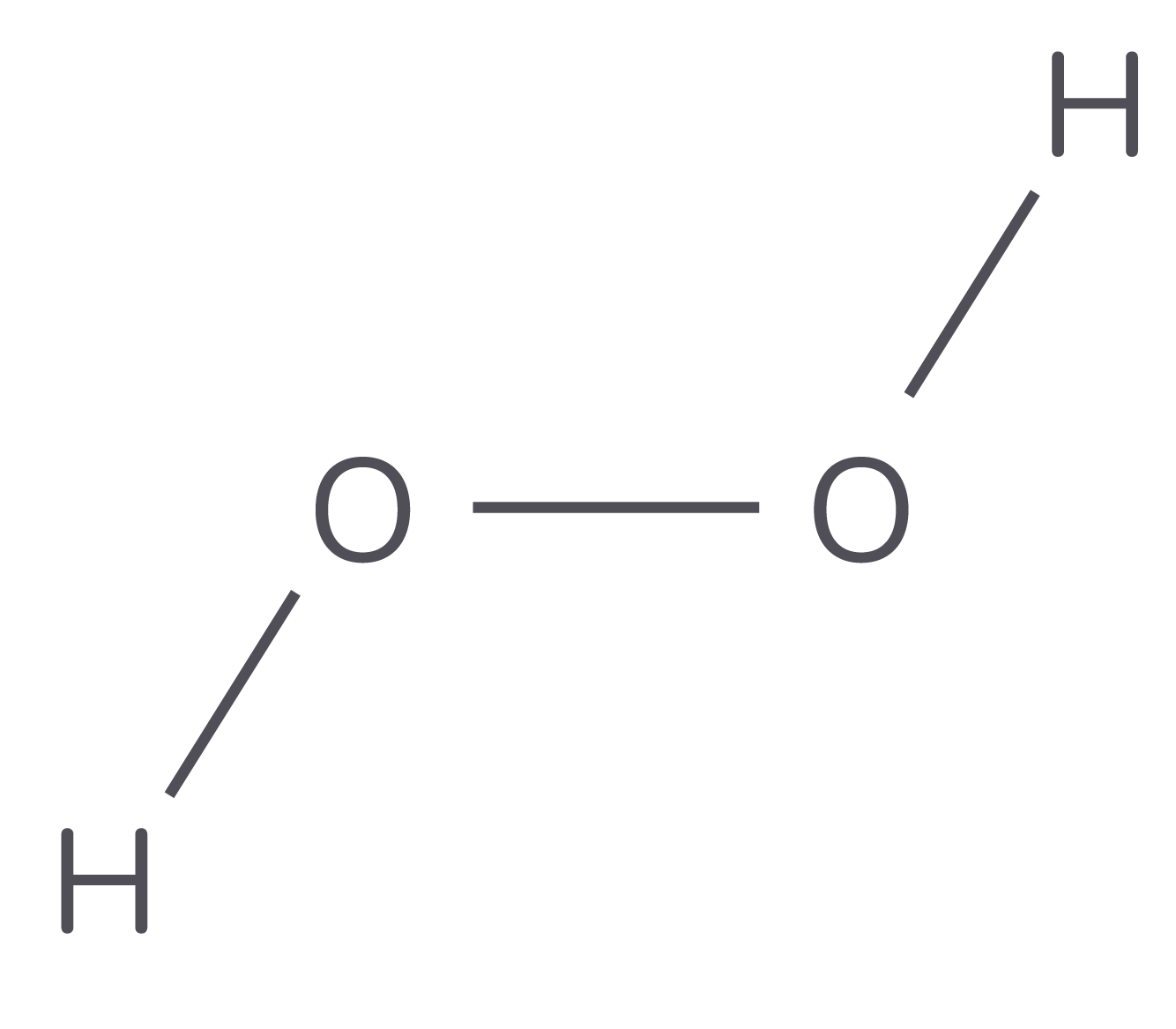
Predict a value for the H-O-O bond angle.
Hydrogen peroxide dissolves in water.
State the strongest type of interaction that occurs between molecules of hydrogen peroxide and water.
Draw a diagram to show how one molecule of hydrogen peroxide interacts with one molecule of water.
Include all lone pairs and partial charges in your diagram.
Explain, in terms of electronegativity, why the boiling point of H2O2 is higher than H2S2.
Trichloroethane, C2HCl3, is a polar molecule.
Annotate the diagram below to show the direction of the dipole in a molecule of trichloroethene.
Include partial charges.
The boiling points of trichloroethene, C2HCl3, and tetrachloroethene, C2Cl4, are shown in the table below.
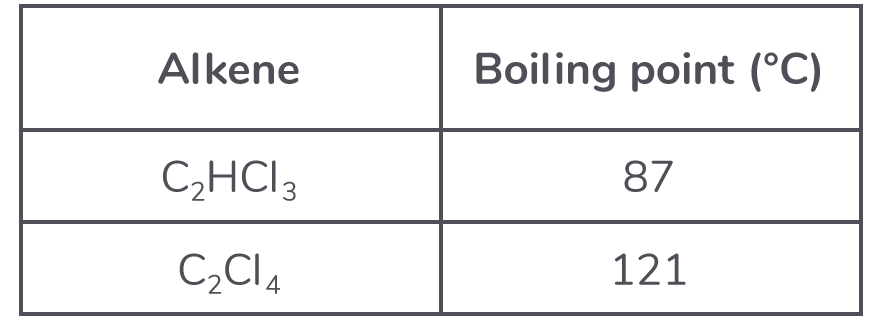
Suggest, in terms of intermolecular forces, why C2Cl4 has a higher boiling point than C2HCl3.