Kinetics - exam practice
Kinetics
Question 1 of 15
1 of 15
These questions concern the Maxwell-Boltzmann energy distribution shown below.
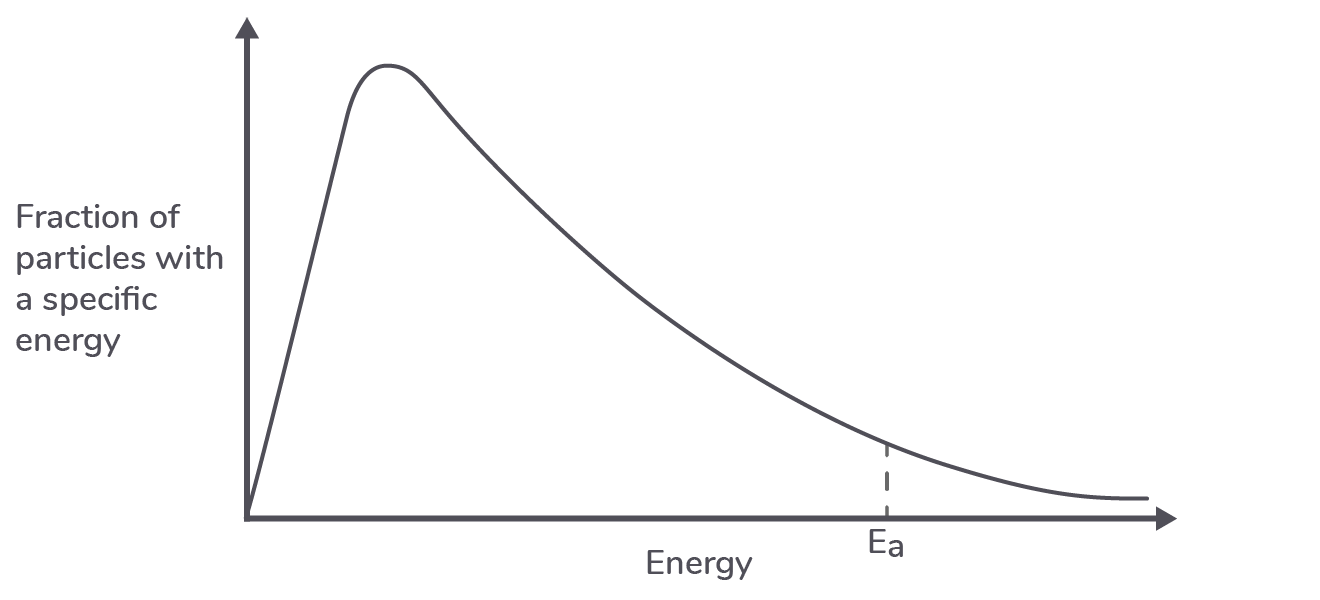
What is the best way to describe the activation energy, Ea, of a reaction?
Question 2 of 15
2 of 15
How does the addition of a catalyst to a reaction affect the shape of the Maxwell-Boltzmann distribution curve?
Question 3 of 15
3 of 15
The reaction pathway diagram below illustrates the energies of the reactants, the products and the transition state of a reaction.
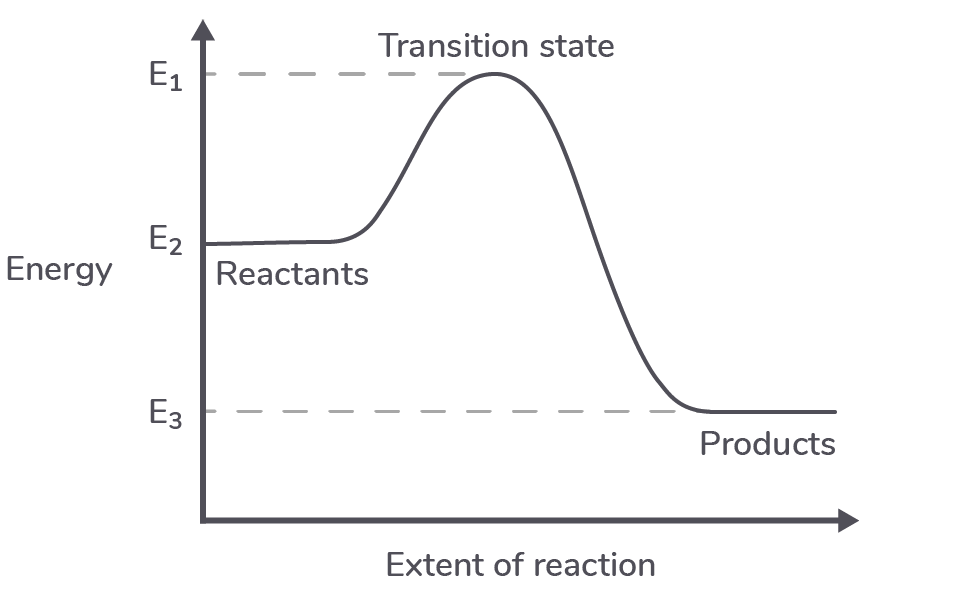
Which expression represents the activation energy of the forward reaction?
Question 4 of 15
4 of 15
In the diagram, curve X was obtained by observing the decomposition of 100 cm3 of 1.0 mol dm-3 hydrogen peroxide, catalysed by manganese(IV) oxide.
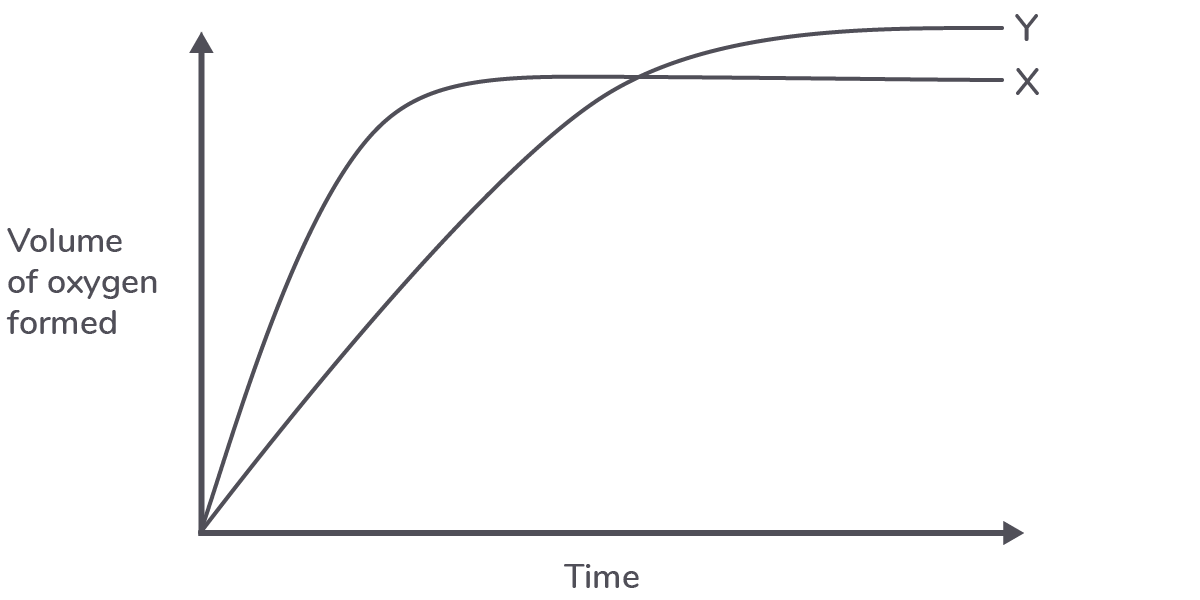
Which alteration to the original experimental conditions would produce curve Y?
Question 5 of 15
5 of 15
The diagram shows the Boltzmann distribution of energies in a gas. The gas can take part in a reaction with an activation energy, Ea. The gas is maintained at a constant temperature.
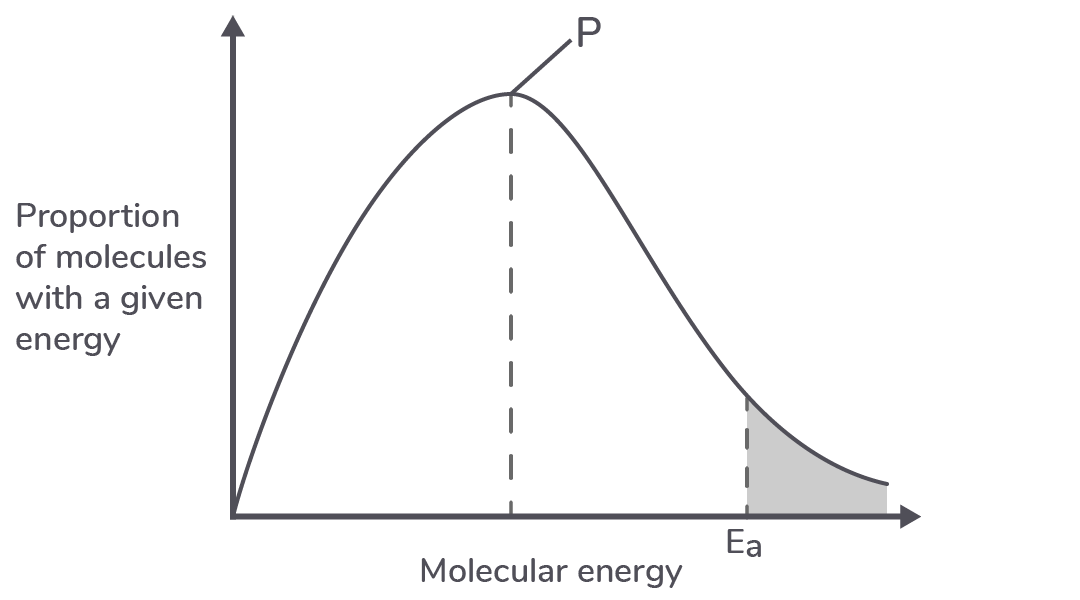
Which statement is correct?
Question 6 of 15
6 of 15
Iodine and propanone react according to the following equation.
I2(aq) + CH3COCH3(aq) ➔ CH3COCH2I(aq) + HI(aq)
If the concentration of propanone is increased, keeping the total reaction volume constant, the rate of the reaction also increases.
What could be the reason for this?
Question 7 of 15
7 of 15
A Maxwell-Boltzmann curve shows the distribution of molecular energies in a reaction system.
When the temperature in this system is increased, the peak is
Question 8 of 15
8 of 15
What is the main reason for the increase in reaction rate with increasing temperature?
Question 9 of 15
9 of 15
The figure shows a typical energy distribution for particles of an ideal gas in a sealed container at a fixed temperature.
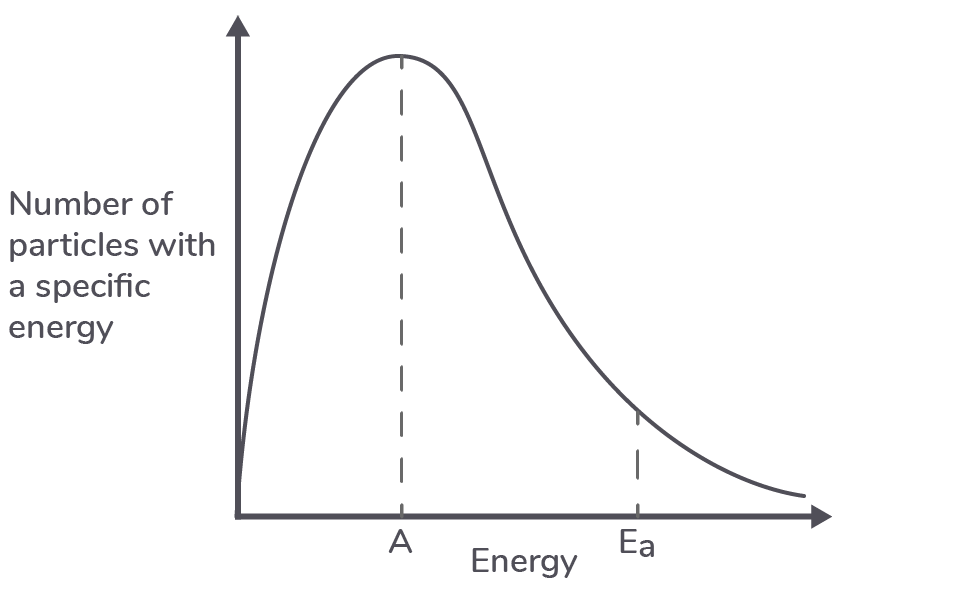
Which of the following statements is true?
Question 10 of 15
10 of 15
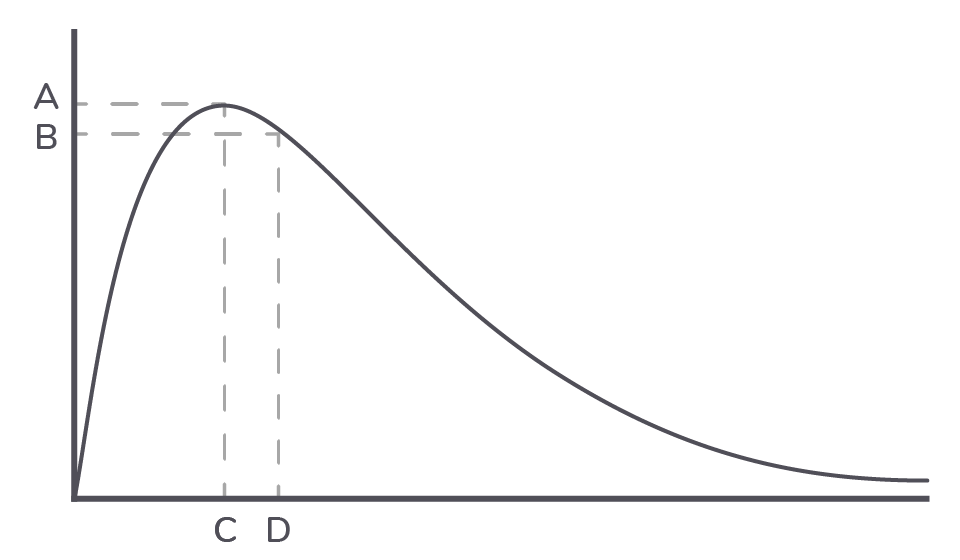
The Maxwell-Boltzmann distribution of molecular energies in a sample of gas at a fixed temperature is shown.
Which letter represents the mean energy of the molecules?
Question 11 of 15
11 of 15
What decreases the activation energy of a reaction?
Question 12 of 15
12 of 15
Samples of sodium carbonate powder were reacted with separate samples of excess hydrochloric acid.
Na2CO3(s) + 2HCl(aq) ➔ CO2(g) + 2NaCl(aq) + H2O(l)
Reaction A: 1.0 g Na2CO3(s) added to 0.50 mol dm-3 HCl(aq)
Reaction B: 1.0 g Na2CO3(s) added to 2.0 mol dm-3 HCl(aq)
What is the same for reactions A and B?
Question 13 of 15
13 of 15
The potential energy profile for the reversible reaction, X + Y ⇌ Z is shown.
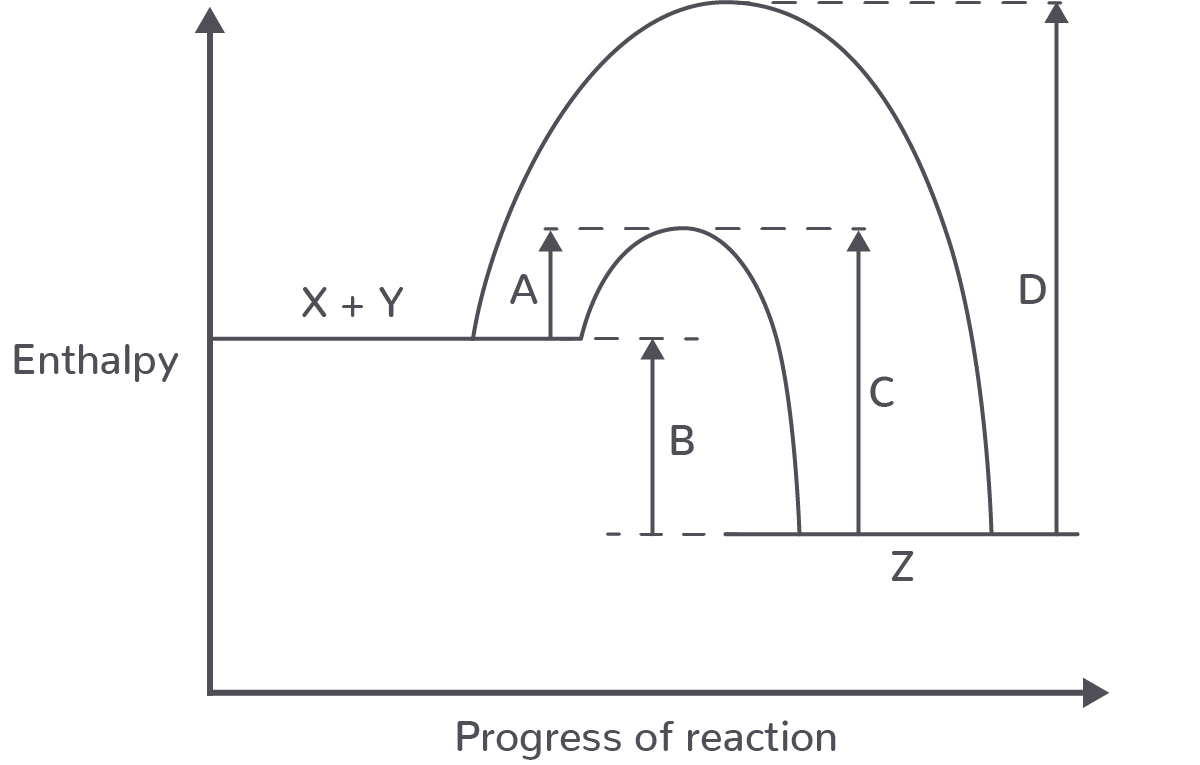
Which arrow represents the activation energy for the reverse reaction, Z ➔ X + Y, with a catalyst?
Question 14 of 15
14 of 15
CaCO3(s) + 2HCl(aq) ➔ CaCl2(aq) + H2O(l) + CO2(g)
Which change does not increase the initial rate of reaction when CaCO3(s) is added to excess HCl(aq)?
Question 15 of 15
15 of 15
Curve 1 shows the mass change when marble chips are added to excess hydrochloric acid in an open beaker.
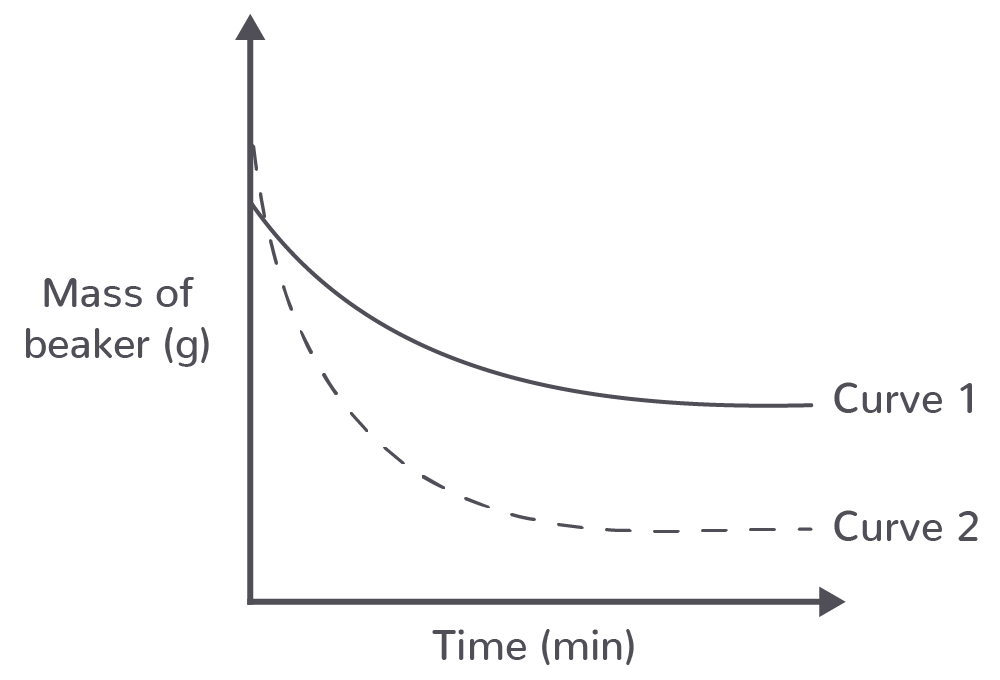
Which changes would produce curve 2?