6.9 - Alkenes
- 1
The general formula and bonding of alkenes
- 2
The components of a carbon-carbon double bond
Alkenes have the general formula CnH2n
Alkenes are a class of hydrocarbons containing carbon-carbon double bonds. Their general formula is CnH2n, where n represents the number of carbon atoms.
Key features of alkenes:
- They consist of carbon and hydrogen atoms (hydrocarbons).
- Each alkene molecule contains at least one carbon-carbon double bond.
- The double bond makes them "unsaturated", enabling them to participate in addition reactions.
Examples of alkenes:
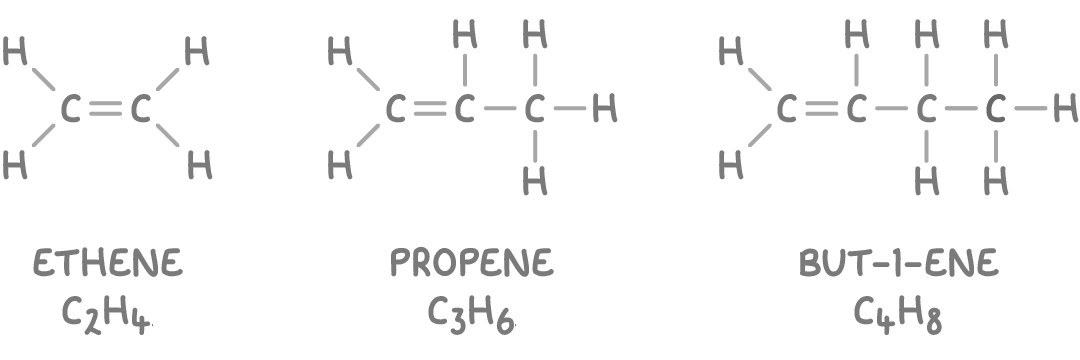
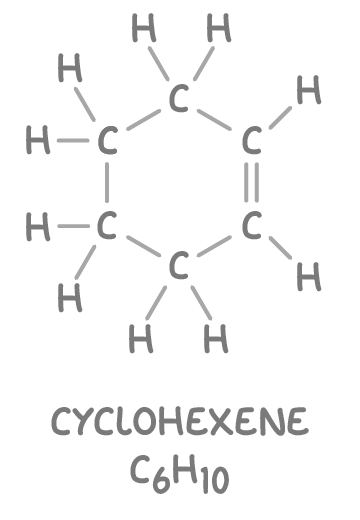
Note that cyclic alkenes such as cyclohexene (C6H10) have two fewer hydrogen atoms compared to acyclic alkenes with an equivalent number of carbon atoms. The general formula of cyclic alkenes is CnH2n-2.
A double bond consists of a sigma bond and a pi bond
The carbon-carbon double bond in alkenes comprises:
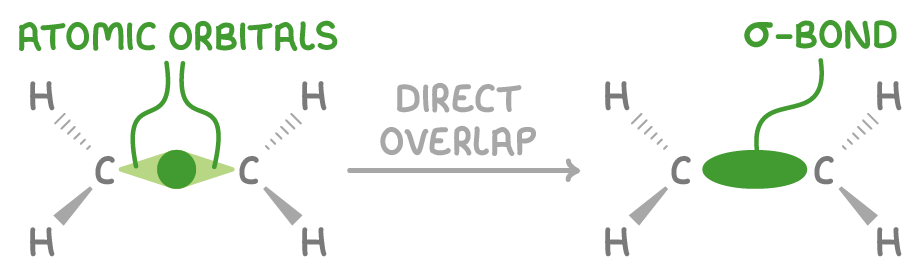
1. A sigma (σ) bond:
- This is a strong bond formed by the head-on overlap of carbon s orbitals.
- It has a high electron density situated directly between the nuclei.
- It is very strong, possessing the highest bond enthalpy among single bonds.
2. A pi (π) bond:
- This bond is created by the sideways overlap of adjacent p orbitals.
- Its electron density is distributed above and below the bond axis.
- It has a lower electron density and bond enthalpy compared to the sigma bond.
- The presence of the pi bond restricts rotation around the C=C bond, as rotation would disrupt the parallel overlap of the p orbitals, leading to a significant increase in energy.

6.10 - E/Z IsomerismNext up
How were these notes?