Organic Synthesis - exam practice
Organic Synthesis
Question 1 of 20
The carbon chain of a compound can be extended by reaction with the cyanide ion, CN-.
Write an equation for the reaction of bromoethane with potassium cyanide.
Outline a mechanism for the reaction of bromoethane with potassium cyanide.
Write an equation for the reaction between propanal and hydrogen cyanide.
Outline a mechanism for the reaction between propanal and hydrogen cyanide.
Organic compounds can be prepared in the laboratory using synthetic routes with one or more stages.
A 2-stage synthesis is used to prepare cyclohexene from bromocyclohexane as shown in the diagram below.
Draw the structure of the intermediate and give the reagent(s)/conditions required for step 2.
Cyclohexene is reacted with bromine to prepare an organic compound.
Name and draw the structure of this product
Outline a 2-stage synthesis of 2-bromobutane from 1-bromobutane.
Draw the structure of the intermediate and give the reagent(s) or conditions required for each stage.
Propene can be converted into propan-2-ol by two different synthetic routes.
Give the reagent(s) and conditions that would be required to convert propene into propan-2-ol using a one-step synthesis.
Write an equation for the one-step synthesis of propan-2-ol from propene.
Complete the reaction scheme below to show the intermediate and the reagent(s) or conditions required for the two-step synthesis of propan-2-ol from propene.
Describe how each of the compounds below can be synthesised from butan-1-ol in one step.
Include equations and reagent(s) or conditions in your answer.
But-1-ene
Butanoic acid
1-Bromobutane
State the reagents, conditions, and give equations for each of the following two-stage organic syntheses.
Propene to propanone
Propan-2-ol to propane
Propene to propane-1,2-diol.
A multi-stage synthesis starting from butan-1-ol is shown in the diagram below.
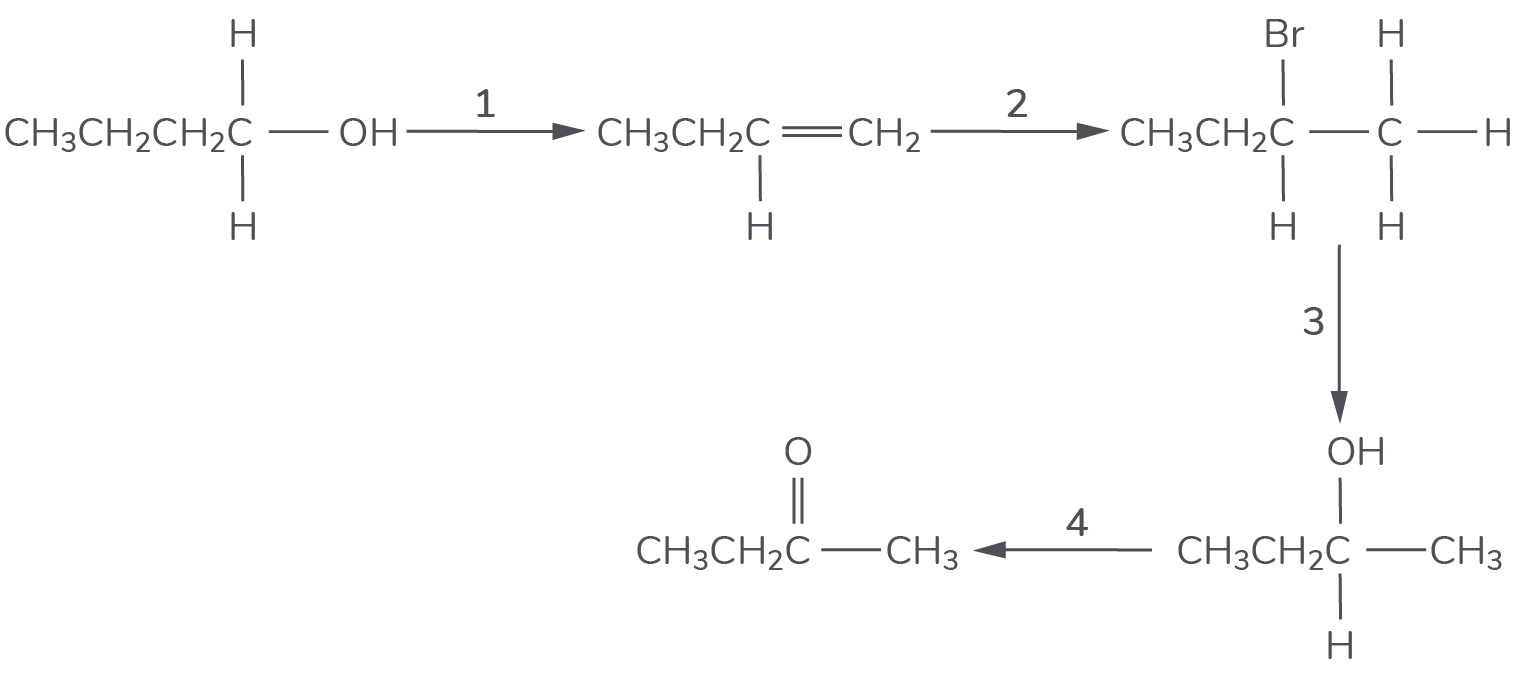
For each step, identify the reagent(s) and conditions required.
State the type of reaction occurring in step 1.
What would be observed in step 4?
How could the product of step 1 be converted into an alkane?
Propanone can be converted into 2-bromopropane in a 3-step synthesis, as shown in the diagram below.

Draw the structure of compound W.
Draw the structure of compound X.
Suggest a reagent for each of the three steps.
Name the mechanism involved in each of the three steps.
The diagram below shows the 4-step synthesis of an amine from an ester.
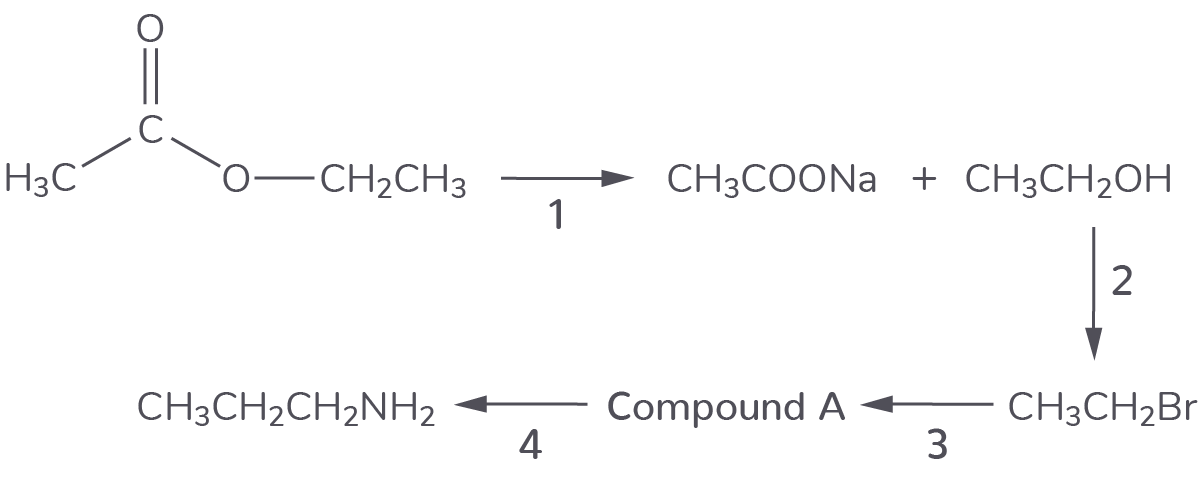
Give a reagent that could be used in step 1.
State a method for separating the alcohol from the mixture of products formed in step 1.
Give the structural formula of compound A.
Give the reagent(s) and conditions required for steps 3 and 4.
Benzene can be used as a starting material in the synthesis of compound M, shown in the diagram below.
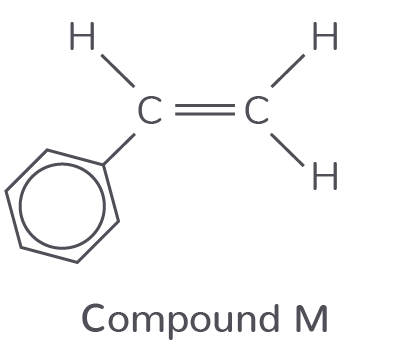
The first step in this synthesis is to form phenylethanone using ethanoyl chloride in the presence of AlCl3.
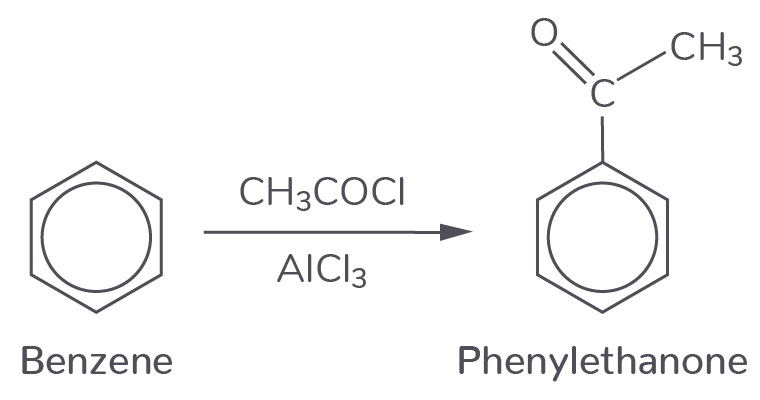
Outline a mechanism for the first step to form phenylethanone from benzene. Do not include the steps involving AlCl3.
Step 2 of the synthesis involves the reduction of phenylethanone using LiAlH4.
Draw the structure of the organic product that would form in this reduction.
Name a reagent that could be used to form compound M from the product in part b).
Draw two repeat units of the polymer that could be formed from compound M.
The diagram below shows the structure of the pain relief drug paracetamol.
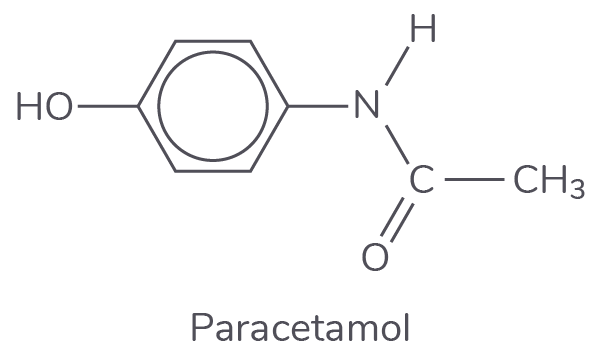
Name the functional groups present in paracetamol.
Paracetamol can be prepared using a two step synthesis using 4-nitrophenol as a starting material, as shown in the diagram below.

Give the reagent(s) required for step 1.
Draw the structure of the intermediate compound.
Suggest why chemists aim to design synthesis methods with a high percentage atom economy.
This question is about the reactions of compound Z, shown in the diagram below.
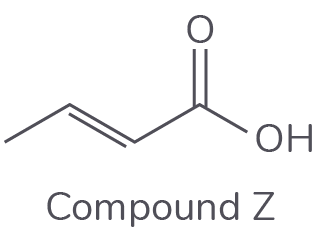
Complete the flowchart in the diagram below to show the structures of the organic products formed in each step.
Outline a mechanism for reaction 1.
The diagram below shows a compound that can undergo both addition and condensation polymerisation.
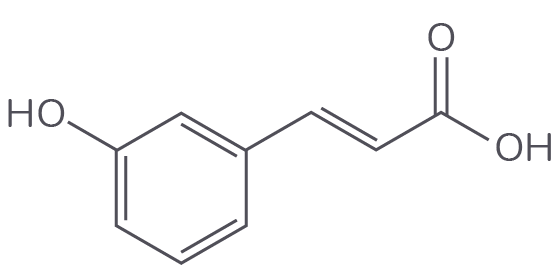
Draw two repeat units of the condensation polymer.
Compound N can be prepared from phenylethanone in a 4-step synthesis as shown in the diagram below.
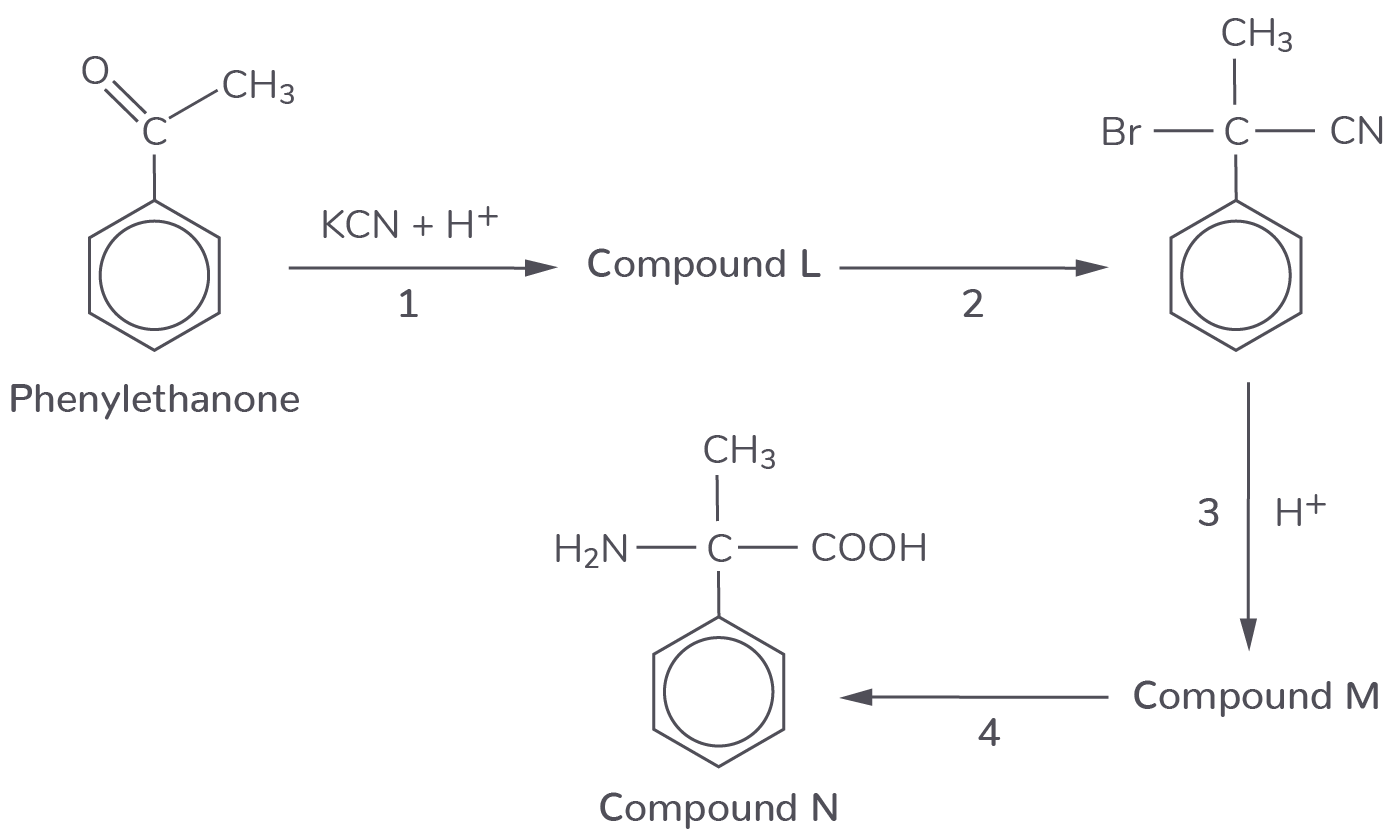
Draw the structure of compound L.
Give the reagents required for step 2.
Draw the structure of compound M.
Give the reagent and condition required for step 4.
Compound M can be prepared from phenylethanone in a 2-step synthesis as shown in the diagram below.
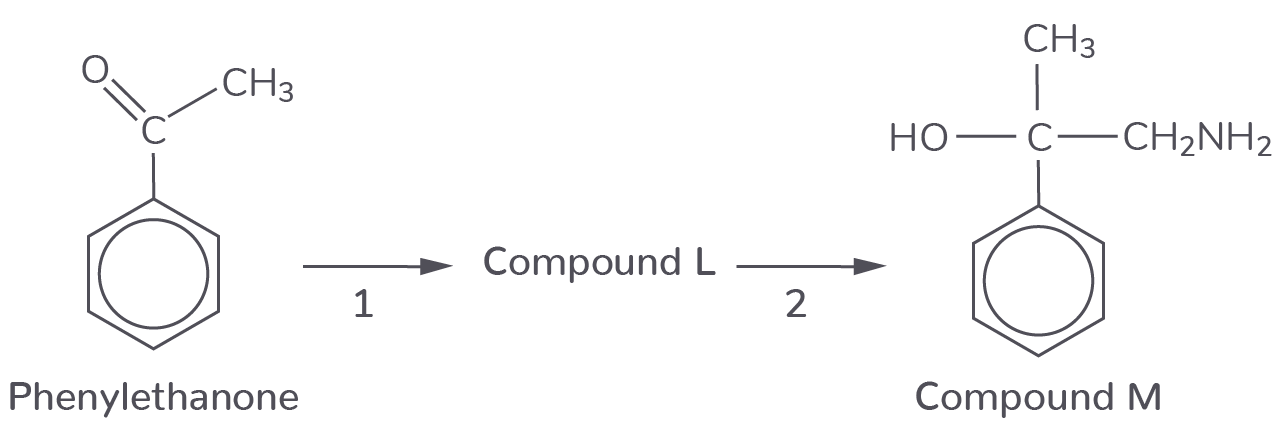
Draw the structure of compound L.
Give the reagents required for step 1.
Give the reagents for step 2.
Suggest why scientists aim to design synthesis methods with as few steps as possible.
The diagram below shows the structures of salicylic acid and mesalazine.
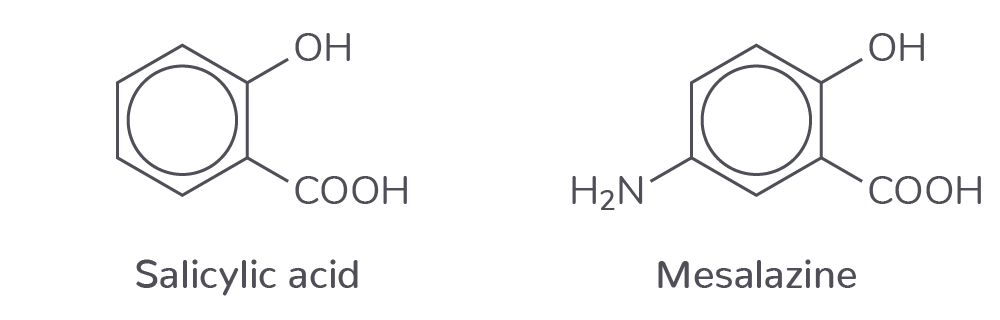
Mesalazine can be synthesised from salicylic acid in a 2-step synthesis.
Devise a 2-step synthesis from mesalazine using salicylic acid as a starting material.
Each step should include:
- the reagent(s) required
- the structure of the product
Salicylic acid can also be reacted with methanol to form compound B.
Draw the structure of compound B.
Give the condition required for the reaction in part b).
The diagram below shows the 3-step synthesis of an N-substituted amide from but-2-ene.

Give a reagent required for step 1.
Draw the structure of the product of step 2.
Give a reagent required for step 3.
Draw the structure of the N-substituted amide formed at the end of the synthesis.
Name the mechanism involved in steps 1 and 2.
The compound 2-phenylethylamine can be prepared from methylbenzene via a 3-step synthesis.
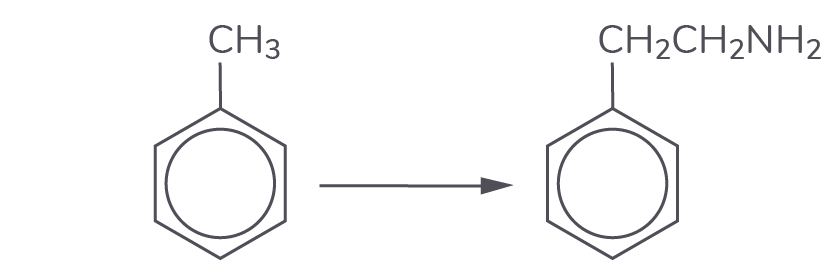
Outline a 3-step synthesis for the formation of 2-phenylethylamine from methylbenzene.
Each step should include:
- the reagent(s) and condition(s) required
- the structure of the product
Write two equations for the propagation steps involved in step 1.
Outline a mechanism for step 2.
Name the type of reaction occurring in step 3.
The diagram below shows the multi-step synthesis of an addition polymer, poly(methyl 2-methylpropenoate) from propanone.
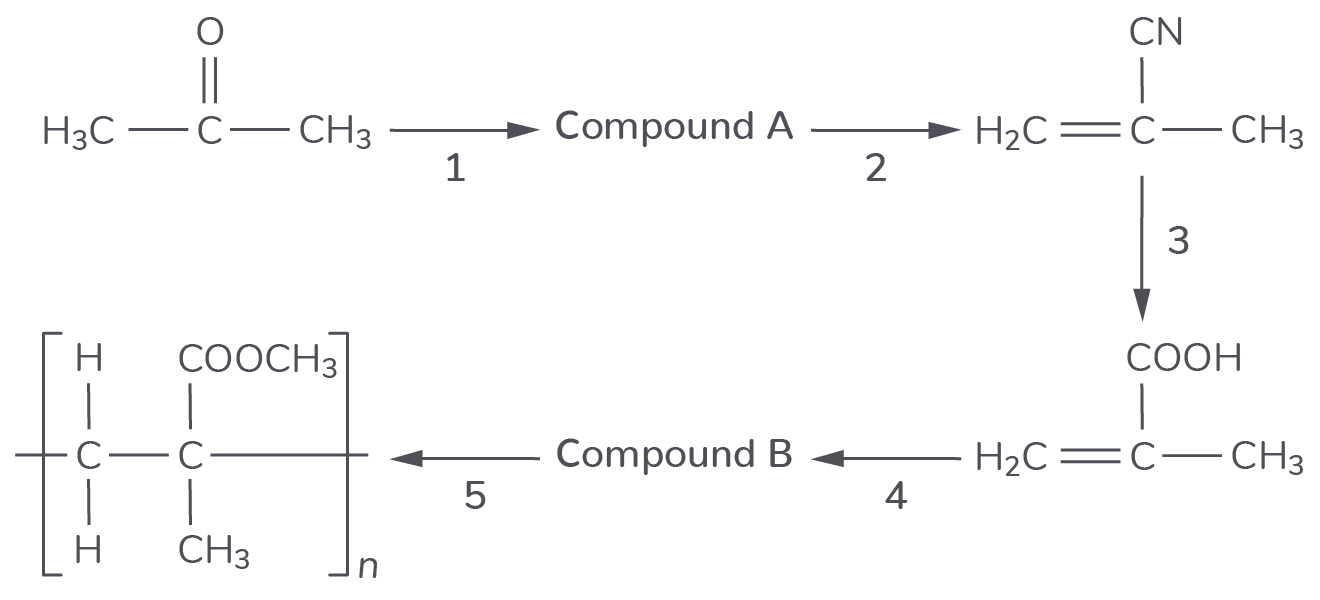
Draw the structure of compound A.
Outline the mechanism for step 1.
Give a reagent(s) required for step 4.
Draw the structure of compound B.
Grignard reagents are used in organic synthesis as a way of increasing the length of the carbon chain in a molecule.
Draw the permanent dipole involving the central carbon atom on the diagram below.
The Grignard reagent in part a) reacts with ethanal.
Name and draw the fully displayed formula of the final organic product of this reaction.
Identify two appropriate terms that describe a Grignard reagent.
The solvent used for Grignard reagents has to be completely dry.
By considering the dipole on the O-H bonds in water, predict the identity of the organic product that forms if water is added to the Grignard compound in part a).
Grignard reagents contain a metal.
Discuss how Grignard reagents are formed and used in adding one or more carbon atoms to the carbon chain in bromoethane to produce primary, secondary and tertiary alcohols and a carboxylic acid.
Include a suitable example for each reaction and give reagents, conditions and products.
Devise a four-step synthesis, involving the use of a Grignard reagent, to convert benzene into benzoyl chloride.
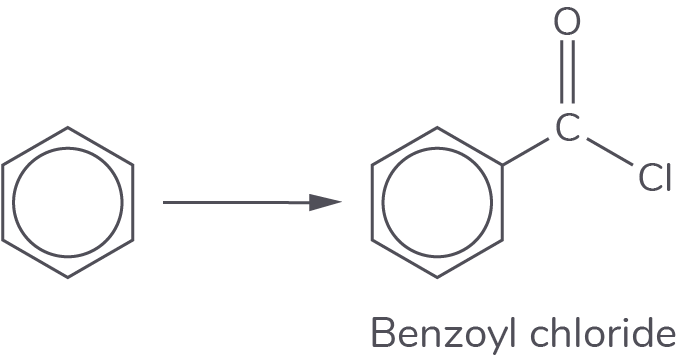
Include the reagents and conditions for each step in the synthesis and the structures of the intermediates.
Devise a reaction scheme to convert butan-2-ol into 1-amino-2-methylbutan-2-ol in three steps.
Include the reagents, conditions and equations for each of the steps.