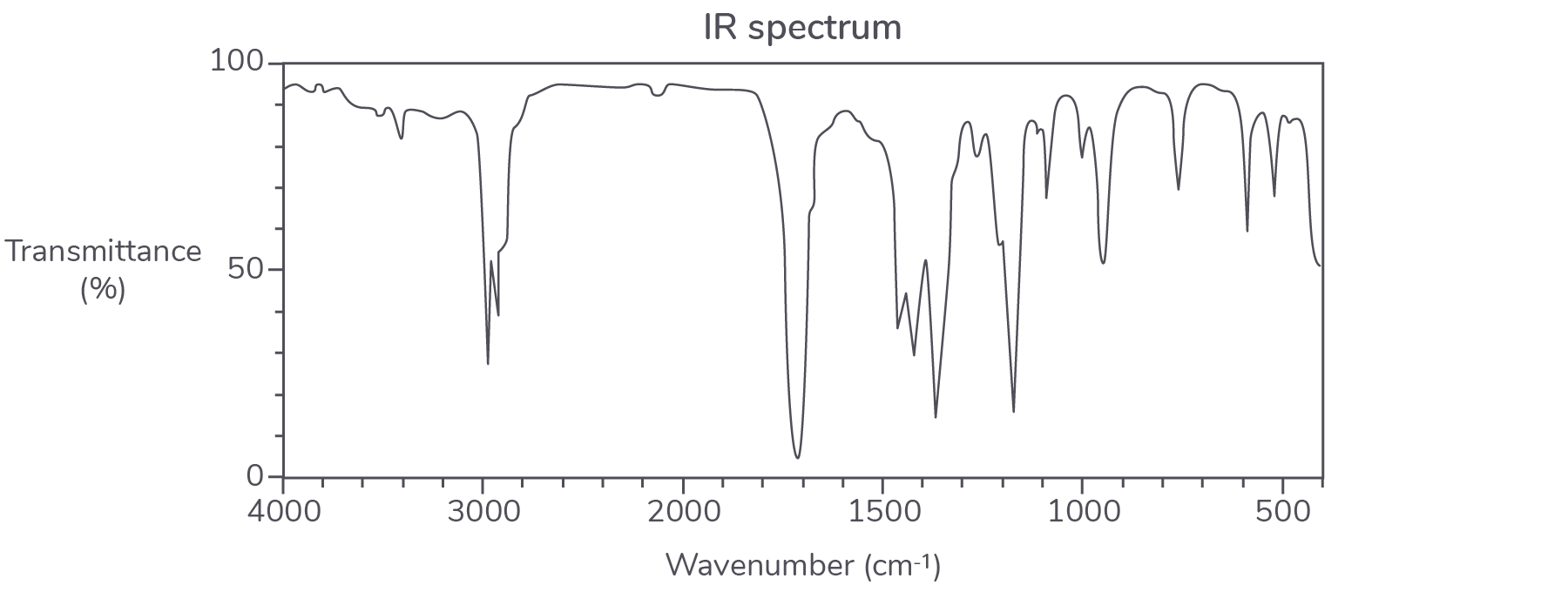
Infrared Spectroscopy - exam practice
Infrared Spectroscopy
Question 1 of 4
A student found 3 unlabelled bottles of liquid each containing a different organic compound. The compounds were known to be butan-1-ol, butanal and 1-bromobutane.
Describe 3 test tube reactions that could be used to identify each compound. Include the name of the reagent(s) and the expected observation for each compound.
The compounds shown below are isomers.
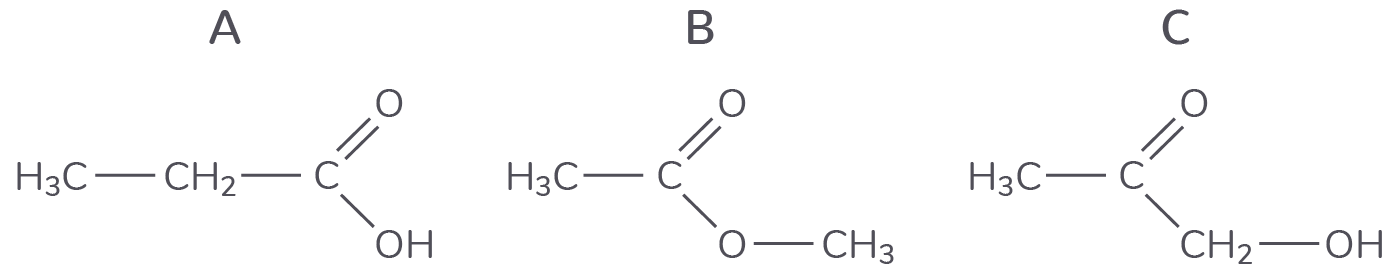
Suggest and explain which of these structures could produce the infrared spectrum shown in the diagram below.
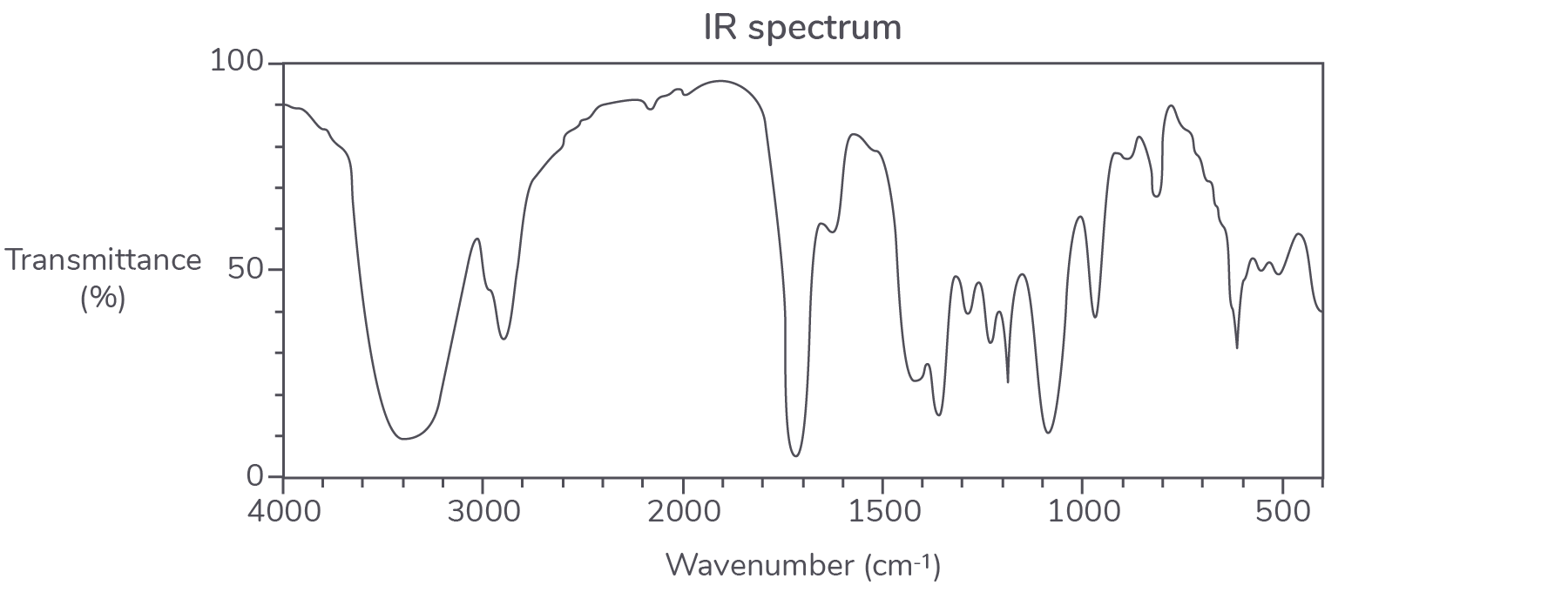
Identify the functional group(s) shown in the infrared spectrum in the diagram below. Justify your answer.
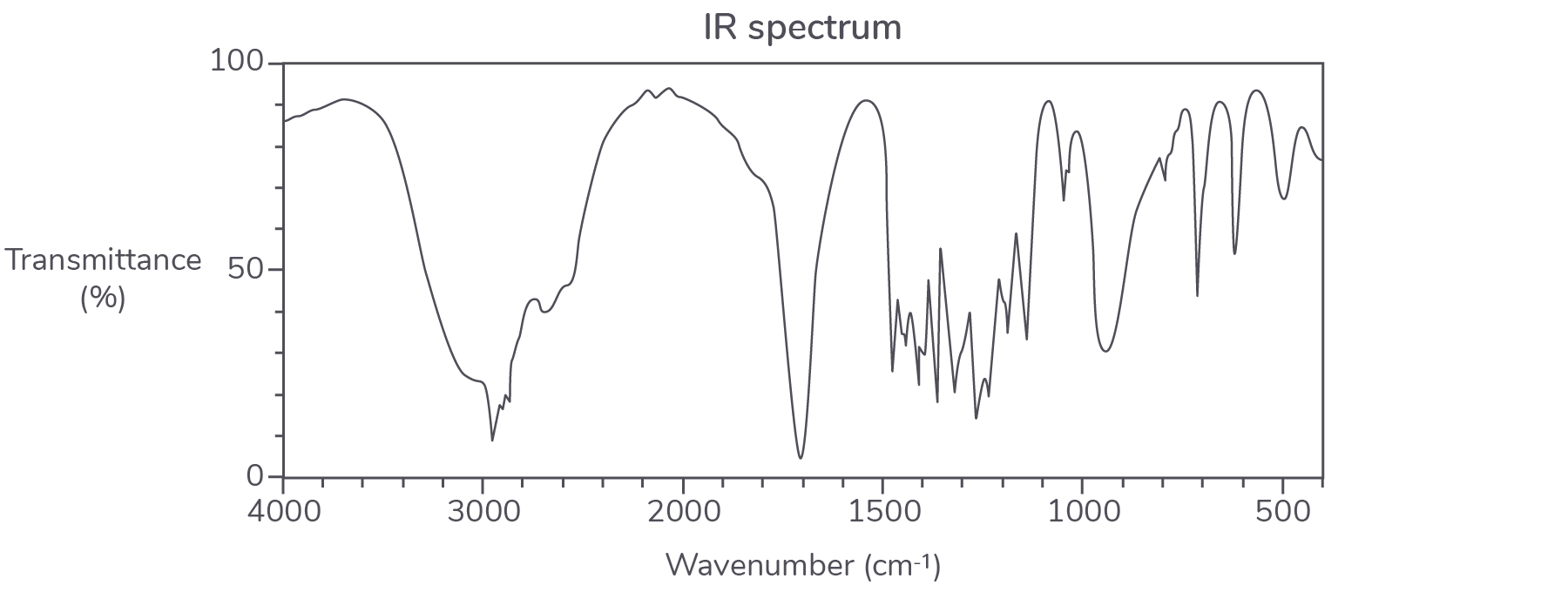
Compound W has the following percentage composition by mass: C 66.7%; H 11.1%; O 22.2%, and produces the infrared spectrum shown in the diagram below.
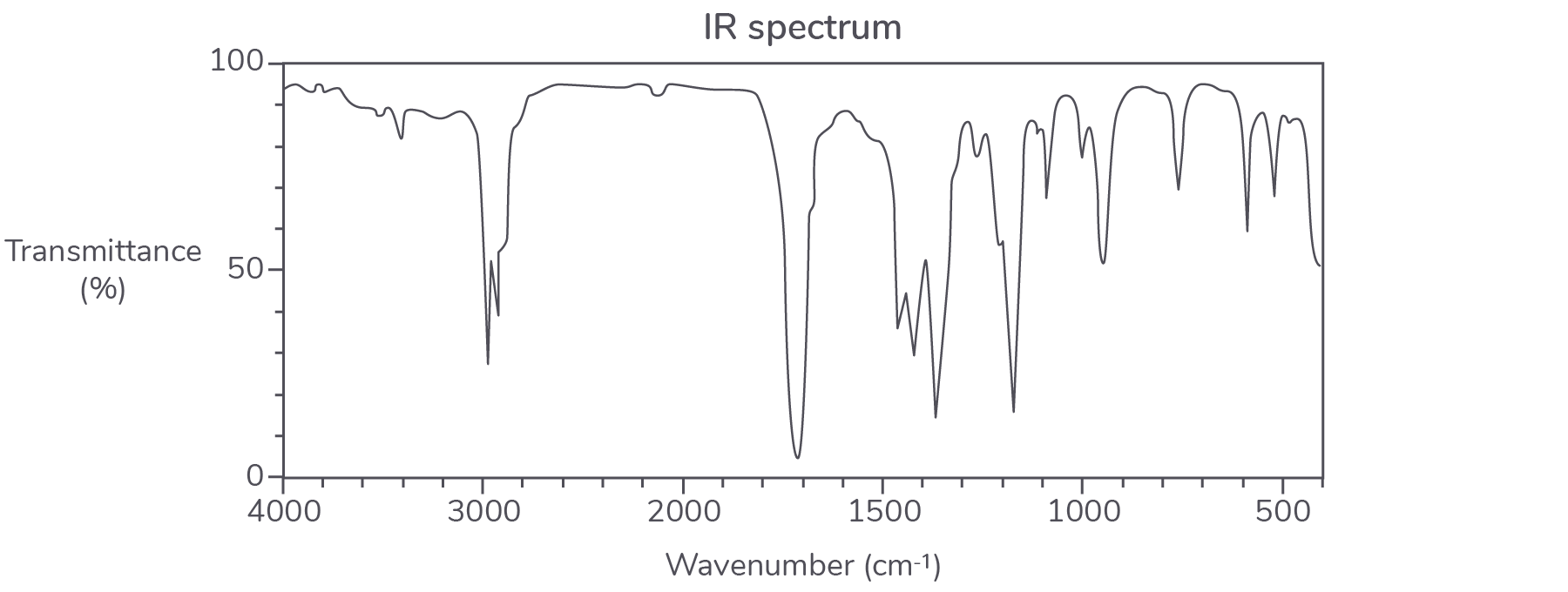
The molecular mass of W is 72.
Suggest two possible structures for compound W.
Compound Z contains only the elements carbon, hydrogen and oxygen, and its mass spectrum is shown in the diagram below.
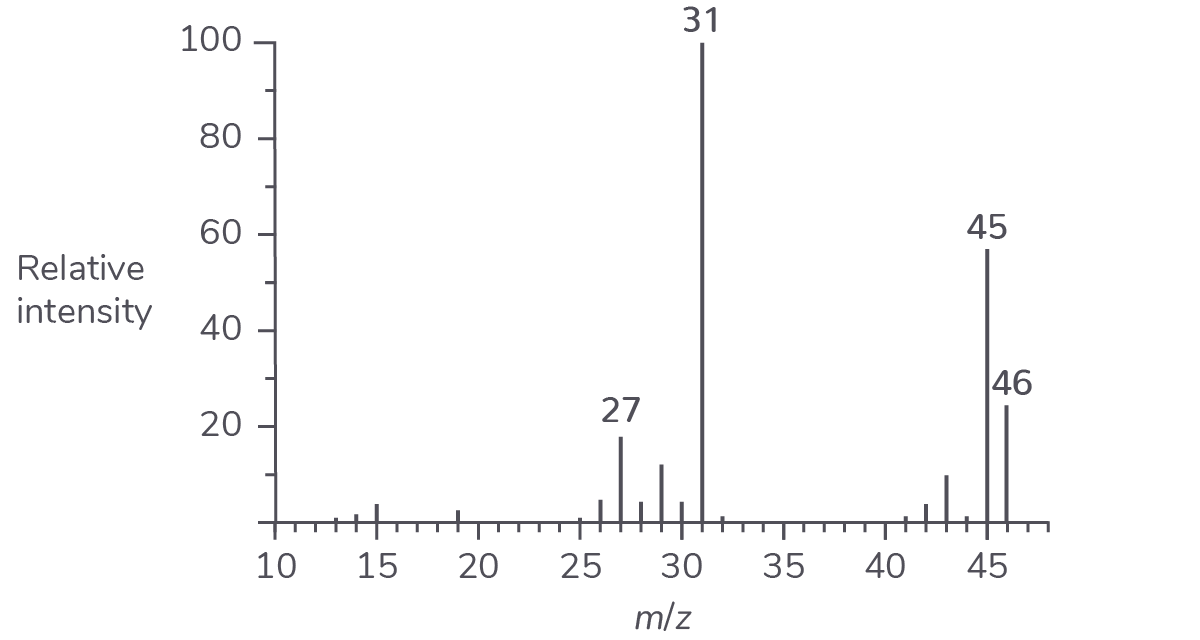
Identify the m/z value of the molecular ion.
Suggest a formula for the ion responsible for the peak at m/z = 31 in the mass spectrum in part b).
Suggest the molecular formula of compound Z using your answers to parts b) and c).
Test-tube reactions can be used as a fast and effective method for distinguishing between organic compounds.
Give a reagent that could be used to distinguish between butane and but-1-ene, and state the observation that would be made with each compound.
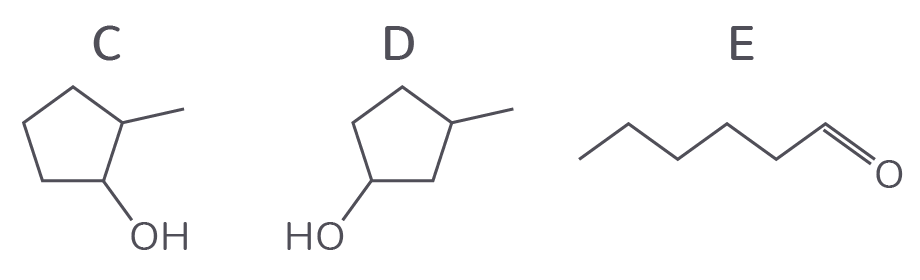
Identify which of the following isomers would react when heated with acidified potassium dichromate(VI), and state the observation that would be made.
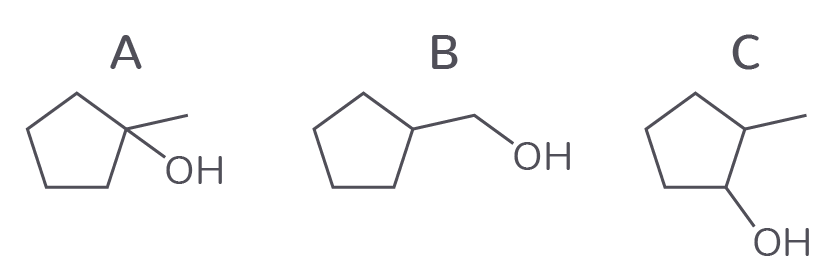
Identify which of the following isomers would react with Tollens' reagent, and state the observation that would be made.
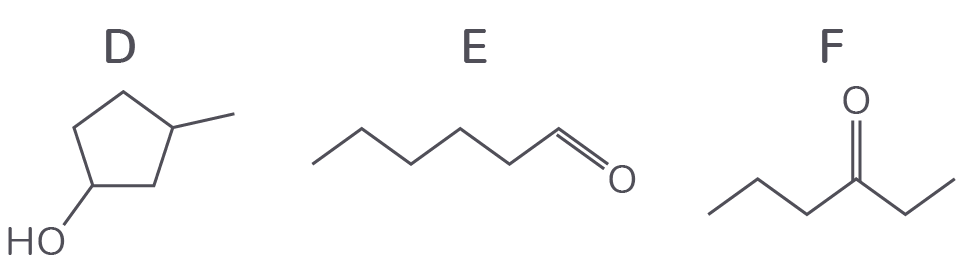
Describe how infrared spectroscopy could be used to distinguish between the following isomers.
Infrared spectroscopy is used to identify the functional groups present in a compound.
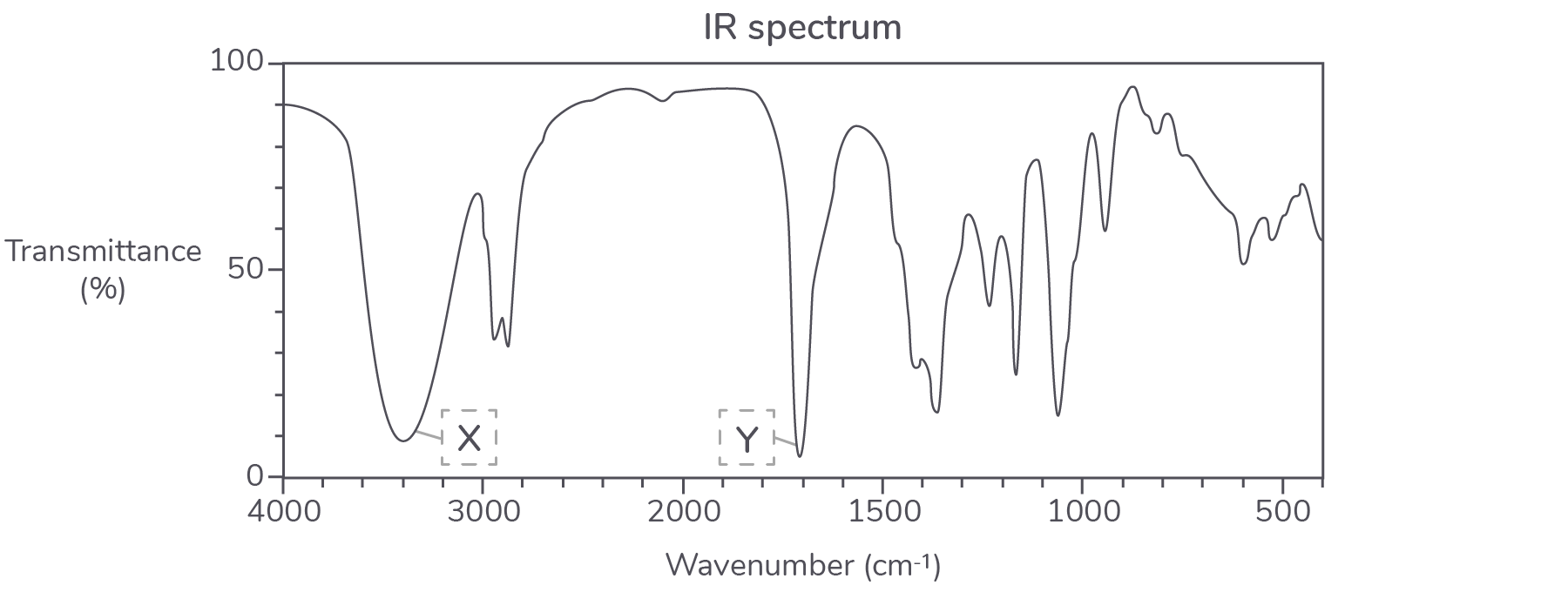
Identify the functional groups responsible for the peaks labelled X and Y.
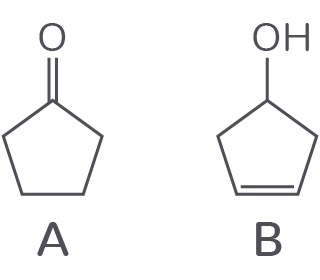
Which of the following compounds could produce the IR spectrum shown in part a)?
Explain how the two isomers shown in the diagram below can be distinguished using IR spectroscopy.
Which functional group is present in the compound whose IR spectrum is shown in the diagram below?