Nuclear Magnetic Resonance - exam practice
Nuclear Magnetic Resonance
Question 1 of 13
1 of 13
In the high resolution proton NMR spectrum of propan-1-ol, CH3CH2CH2OH, there are
Question 2 of 13
2 of 13
The high resolution proton NMR spectrum of ethyl ethanoate, CH3COOCH2CH3 , contains
Question 3 of 13
3 of 13
A compound produces the 13C NMR spectrum below.
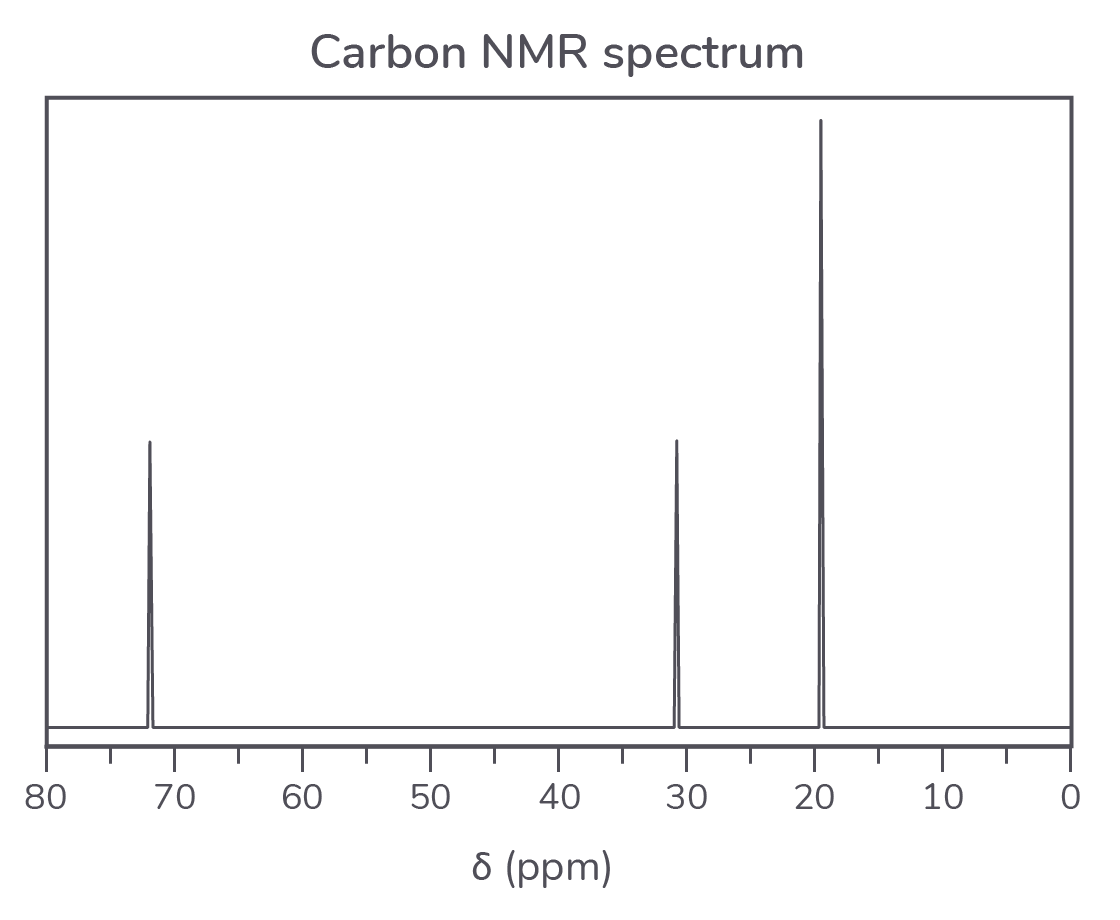
Which compound could have produced this spectrum?
Question 4 of 13
4 of 13
What is the number of peaks in the 1H NMR spectrum of HOOCCH2CHOHCH2COOH?
Question 5 of 13
5 of 13
Which compound is used as a standard for NMR chemical shift measurements?
Question 6 of 13
6 of 13
How many peaks are there in the 13C NMR spectrum of 1,4-dimethylbenzene?
Question 7 of 13
7 of 13
Which amine has only threepeaks in its proton NMR spectrum?
Question 8 of 13
8 of 13
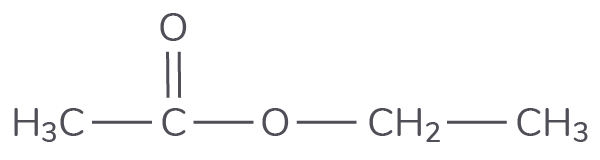
Which statement does notsupport the suggestion that an unknown organic compound is
Question 9 of 13
9 of 13
What is the ratio of the areas of the signals in the 1H NMR spectrum of pentan-3-ol?
Question 10 of 13
10 of 13
What information can be deduced from the splitting pattern of 1H NMR signals?
Question 11 of 13
11 of 13
What is the ratio of areas under each signal in the 1H NMR spectrum of 2-methylbutane?
Question 12 of 13
12 of 13
What can be determined about a molecule from the number of signals in its 1H NMR spectrum?
Question 13 of 13
13 of 13
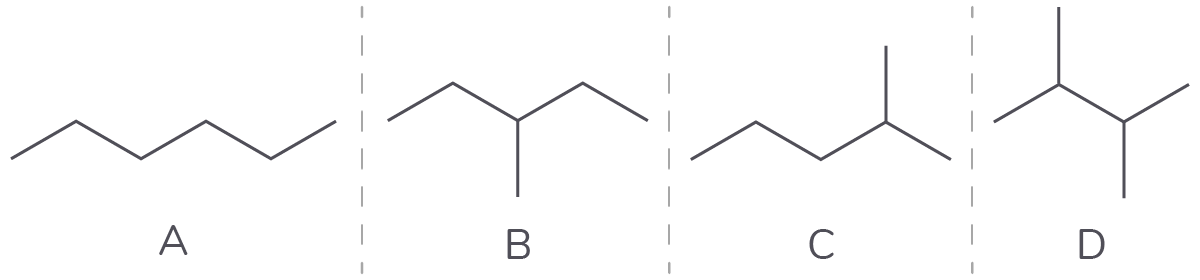
A compound with the formula C6H14 gives a 13C NMR spectrum with four peaks.
Which compound gives this spectrum?