Amines, Amides, Amino Acids and Proteins - exam practice
Amines, Amides, Amino Acids and Proteins
Question 1 of 19
1 of 19
Which of the following could not be formed when methylamine is added to ethanoyl chloride?
Question 2 of 19
2 of 19
Part of the structure of a protein is shown.
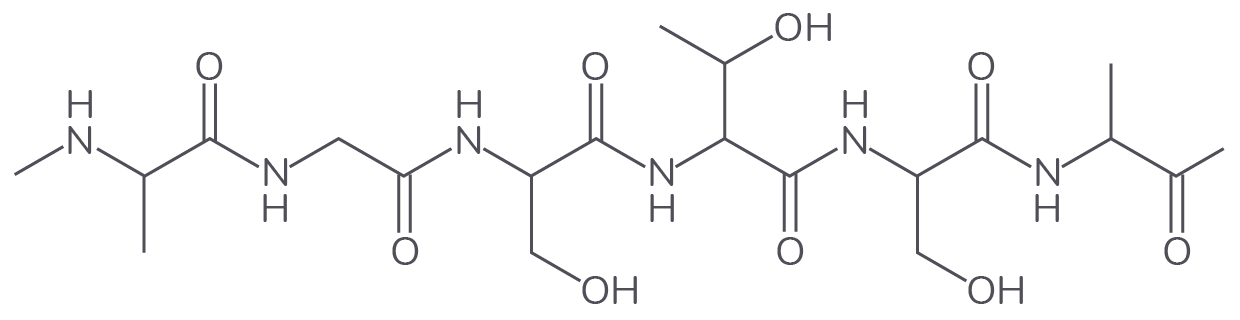
How many different amino acids were used to form this part of the structure?
Question 3 of 19
3 of 19
Glycine and alanine are the two simplest amino acids.
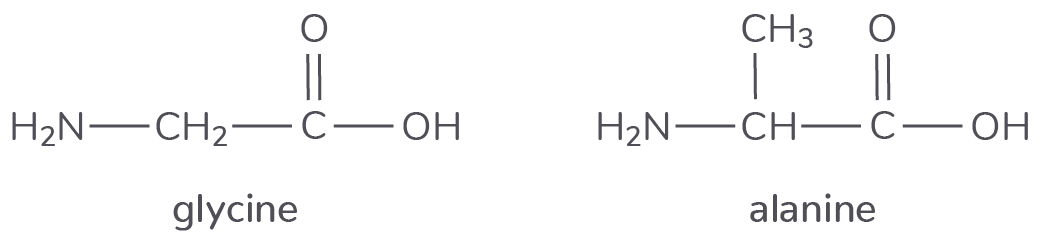
Glycine and alanine combine to form two possible dipeptides.
What are the structures of these dipeptides?
Question 4 of 19
4 of 19
Phenylamine reacts rapidly with dilute sulfuric acid. The reaction is
Question 5 of 19
5 of 19
The best method for separating a mixture of amino acids in solution, for the purpose of identification, is
Question 6 of 19
6 of 19
Chromatography may be used to separate mixtures of amino acids. This is best explained by the fact that different amino acids have different interactions with
Question 7 of 19
7 of 19
The skeletal formula of an organic compound is shown below.
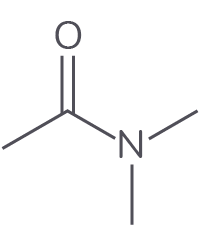
This compound is
Question 8 of 19
8 of 19
Which statement is not correct about amines?
Question 9 of 19
9 of 19
Which reagents could be used to prepare CH3CH2CONHCH3?
Question 10 of 19
10 of 19
Aqueous solutions of ammonia, ethylamine and phenylamine are prepared.
Each solution has the same concentration.
Which is the correct order for the pH values of these solutions?
Question 11 of 19
11 of 19
Methylamine reacts with bromoethane by nucleophilic substitution to produce a mixture of products.
Which is not a possible product of this reaction?
Question 12 of 19
12 of 19
How many isomers are there of C3H9N?
Question 13 of 19
13 of 19
Which compound can react with ammonia to produce propylamine?
Question 14 of 19
14 of 19
Which of these solutions has the highest pH when dissolved in water to form solutions of the same concentration?
Question 15 of 19
15 of 19
The repeat unit of a polymer is shown.

Which monomers react to make this polymer?
Question 16 of 19
16 of 19
In many countries plastic waste is collected separately and sorted. Some of this is incinerated to provide heat for power stations.
Why is PVC, polyvinylchloride, removed from any waste that is to be incinerated?
Question 17 of 19
17 of 19
Which two compounds can react together to form a condensation polymer?
Question 18 of 19
18 of 19
Which compound can polymerise by reaction with itself?
Question 19 of 19
19 of 19
Which forms a polymer with HOOC(CH2)8COOH?