12.2 - Nitrogen Oxides in the Atmosphere
- 1
Natural and man-made sources of nitrogen oxides
- 2
How nitrogen oxides contribute to acid rain
- 3
The role of nitrogen oxides in photochemical smog formation
- 4
Removing nitrogen oxides from car exhaust emissions
Sources of nitrogen oxides
Nitrogen oxides, such as nitrogen(II) oxide (NO) and nitrogen(IV) oxide (NO2), can be produced naturally and through human activities.
Natural sources:
- Lightning strikes - The high temperatures of lightning provide enough energy for nitrogen and oxygen to react.
Man-made sources:
- Formed in vehicle engines - Air enters the engine and the high temperature and pressure allows nitrogen and oxygen to react, producing nitrogen oxides that are emitted in the exhaust fumes.
Nitrogen oxides are pollutants, and can contribute to both acid rain and photochemical smog.
Roles of nitrogen oxides in acid rain
Acid rain is rainfall containing nitric acid (HNO3) and sulfuric acid (H2SO4) that causes harm to plants, animals, infrastructure and bodies of water.
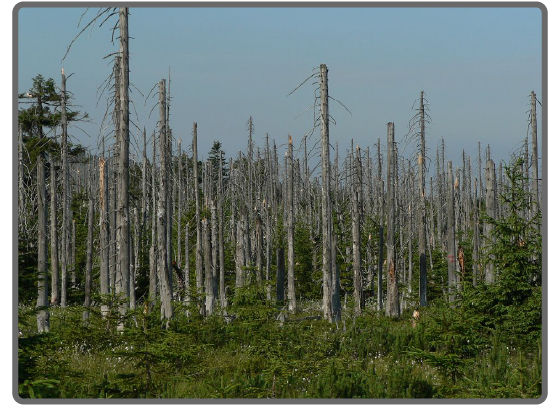
Nitrogen oxides have two roles in the formation of acid rain:
- Direct role of NO In the atmosphere, NO is oxidised to NO2:
-
2NO(g) + O2(g) ➔ 2NO2(g) NO2 dissolves in and reacts with water and oxygen in the atmosphere to produce nitric acid, a component of acid rain:
-
2NO2(aq) + H2O(l) + 1⁄2O2(g) ➔ 2HNO3(aq)
- Catalytic role of NO In the atmosphere, NO catalyses the oxidation of sulfur dioxide (SO2) gas to sulfur trioxide (SO3) gas:
-
SO2(g) + NO2(g) ➔ SO3(g) + NO(g) The NO2 that acted as the catalyst is regenerated from the NO product by reaction with oxygen:
-
NO(g) + 1⁄2O2(g) ➔ NO2(g) This NO2 molecule can then catalyse the oxidation of another SO2 molecule into SO3.
Sulfur trioxide gas reacts with water to produce sulfuric acid, another component of acid rain:
- SO3(g) + H2O(l) ➔ H2SO4(aq)
Role of nitrogen oxides in photochemical smog
Photochemical smog is a visible haze containing secondary pollutants such as peroxyacetyl nitrate (PAN) that causes harm to lungs, eyes and plants.
Secondary pollutants form from chemical reactions between primary pollutants (pollutants emitted directly from human activity) in the atmosphere.
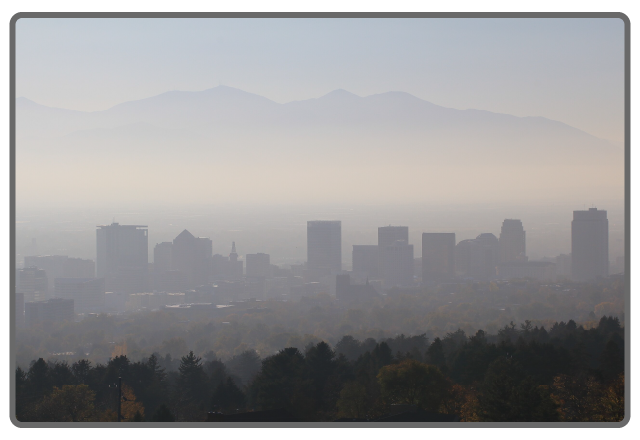
Nitrogen oxides have a key role in the formation of photochemical smog:
- Nitrogen oxides are primary pollutants directly released into the atmosphere from sources like vehicle exhausts and power plants.
- In sunlight, nitrogen oxides can react with other primary pollutants like volatile organic compounds (VOCs) from unburnt fuel hydrocarbons.
- This reaction produces secondary pollutants like PAN which make up photochemical smog.
- Since sunlight provides the energy to drive the chemical reaction that produces PAN and other secondary pollutants, this type of smog is termed "photochemical" smog.
Reducing nitrogen oxides
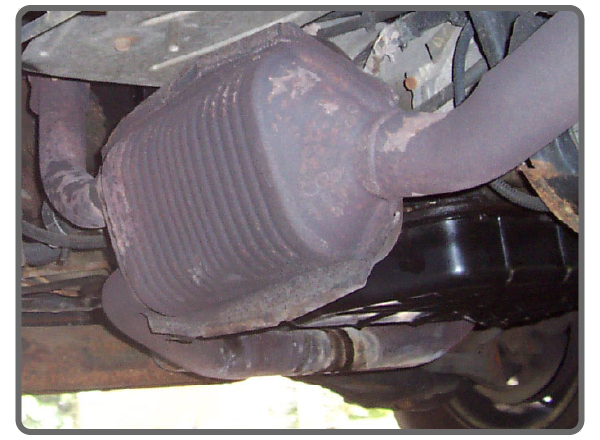
The amount of nitrogen oxides pollution from vehicles is reduced by using catalytic converters containing platinum, palladium, and rhodium catalysts. These convert nitrogen oxides to harmless nitrogen gas before release:
2CO(g) + 2NO(g) ➔ 2CO2(g) + N2(g)