Polymerisation - exam practice
Polymerisation
Question 1 of 11
The diagram below shows the repeat unit of a polyester.
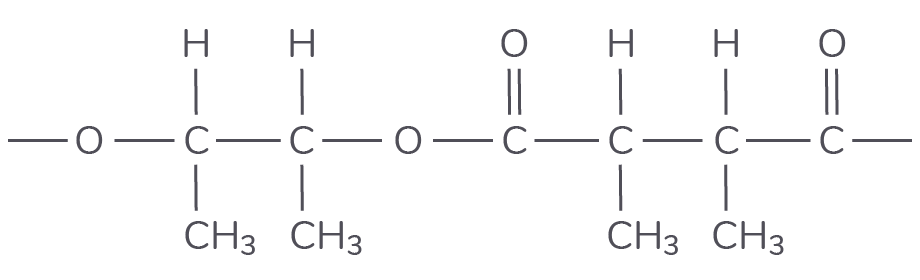
Draw the structures of the two monomers that could form this polyester.
Name this type of polymerisation.
Suggest a compound that could break down this polyester.
Polyamides are produced by the reaction of dicarboxylic acids with diamines.
Draw the repeat unit that would form between the two compounds HOOC-(CH2)2-COOH and H2N-(CH2)2-NH2.
Draw the structure of the compound 2-aminobutanoic acid.
Draw the product formed by the condensation polymerisation of two molecules of 2-aminobutanoic acid.
Name the small molecule that is also formed during the condensation polymerisation in part c).
The diagram below shows the repeat unit of a polyester.
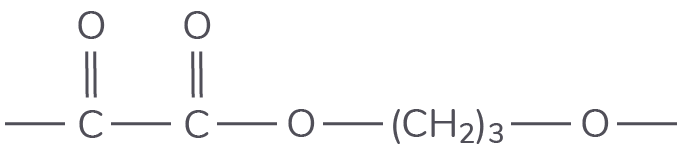
Draw the structure of the acid which could be used to prepare this polyester.
Draw the structure of the alcohol which could be used to prepare this polyester.
Explain why this polyester is biodegradable.
Which of the following compounds can form a polymer without requiring a second reagent?
The diagram below shows the repeat unit of the condensation polymer Terylene.
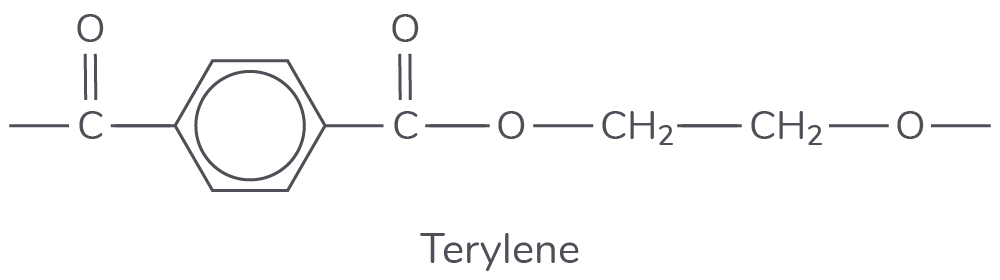
Explain what is meant by the term condensation polymer.
Draw the skeletal formulae of the two monomers that can react together to form Terylene.
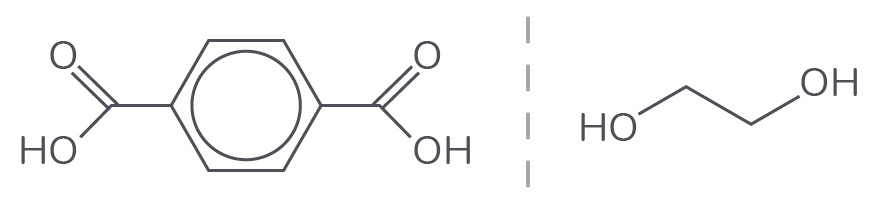
Give one advantage and one disadvantage of recycling objects made from Terylene.
Nylon-6,6 is a polymer made from the monomers hexane-1,6-diamine and hexanedioic acid.
Draw the structures of hexane-1,6-diamine and hexanedioic acid.
Draw the structure of the repeat unit of nylon-6,6.
Give two ways in which chemists contribute to a more sustainable use of such polymers as nylon-6,6.
Wool is a natural polymer. Part of the structure of a wool polymer is shown in the diagram below.
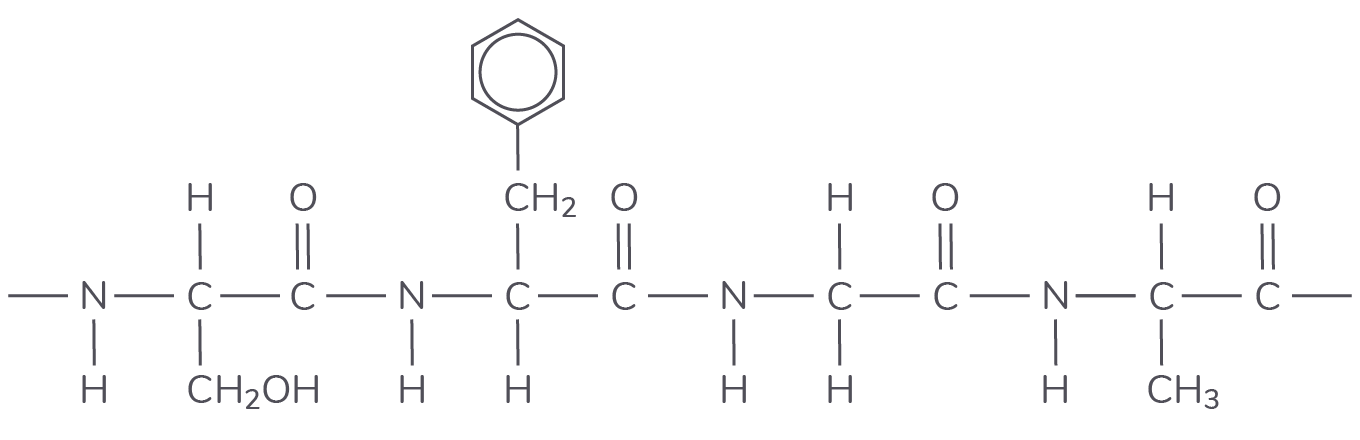
How many monomers make up this section of the wool polymer?
The diagram below shows the structures of glycolic acid and lactic acid.
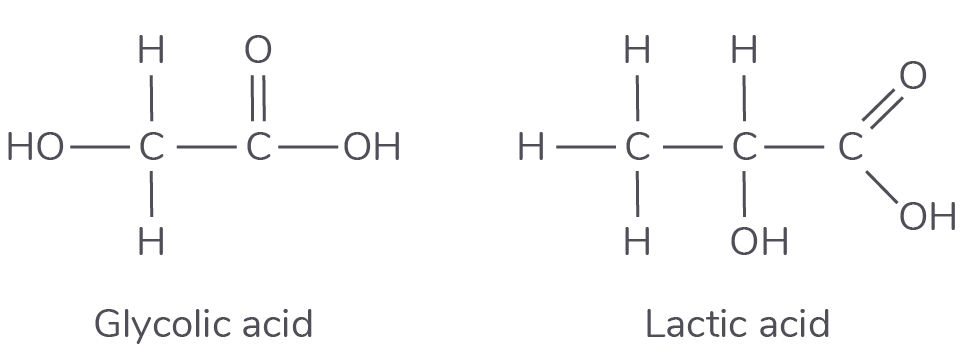
Draw one repeat unit of the polymer that can form between lactic acid and glycolic acid.
Name the type of polymerisation occurring in part a).
Which of the following structures shows the repeat unit of a polyamide?
Which of the following polymers would not be hydrolysed with concentrated aqueous sodium hydroxide?
Amino acids can bond together to form polymers. The diagram below shows the repeat unit of poly(glutamic acid).
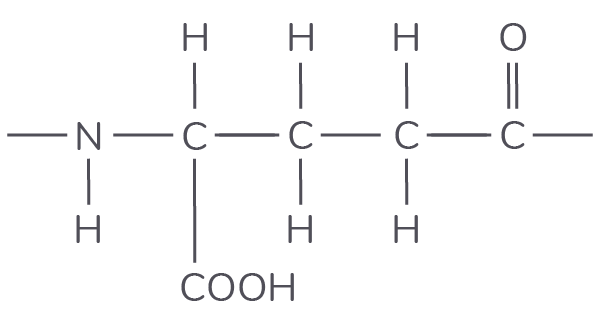
Draw the structure of glutamic acid.
The diagram below shows the amino acid proline.
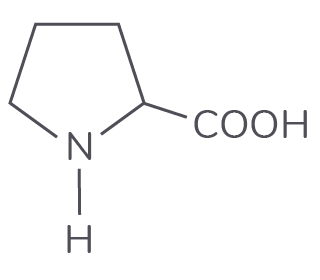
Draw the repeat unit of poly(proline).
Name the additional product formed in the polymerisation of proline.
Name the type of linkage formed between two amino acids in condensation polymerisation.
The polymer Kevlar is formed from two monomers, a diamine and benzene-1,4-dicarboxylic acid. The structure of the diamine is shown below.
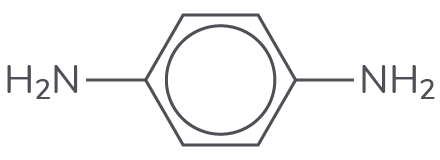
Draw the repeat unit of Kevlar.
Name the strongest type of intermolecular force that exists between chains of Kevlar.
State and explain the difference in biodegradability between Kevlar and a poly(alkene).
The diagram below shows the repeat unit of a polyester.

Draw the skeletal formula of the product formed when the polyester is hydrolysed with aqueous acid.
Nylon-4,6 is a polyamide that can be prepared from 1,4-diaminobutane, NH2(CH2)4NH2, and hexanedioic acid, HOOC(CH2)4COOH.
Draw the skeletal formulae of these two monomers.
Draw the skeletal formula of the repeat unit of nylon-4,6.
The diagram below shows the repeat unit of a condensation polymer.
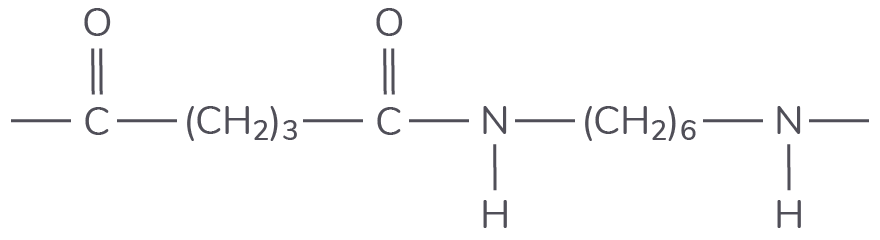
Which monomer, or pair of monomers, could be used to prepare this polymer?
The diagram below shows two organic compounds, a diol and a dicarboxylic acid.
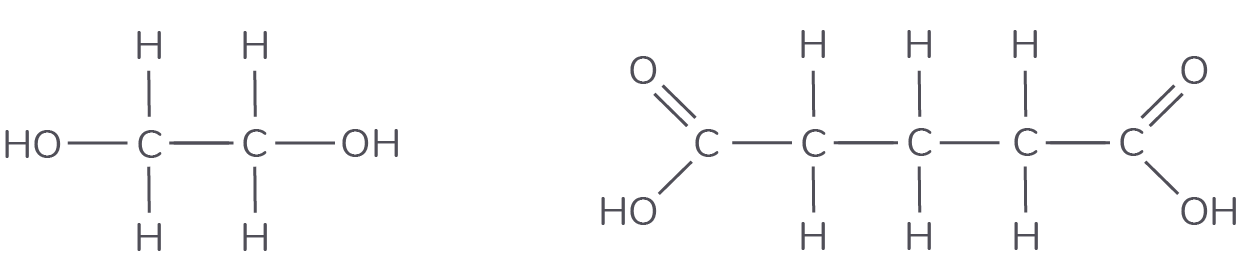
Name the diol.
Draw the repeat unit of the polymer that can form from the reaction between the two compounds.
State the type of reaction that has occurred to form the polymer in part b).
Suggest an environmental advantage of the use of this polymer over a poly(alkene). Justify your answer.
Plastic bags can be made from poly(lactic acid) (PLA), which is biodegradable.
Lactic acid is obtained from corn.
Give one difference between the polymerisation of propene and that of lactic acid.
State the meaning of the term biodegradable.
Give three advantages of biodegradable polymers.