Hydrocarbons - exam practice
Hydrocarbons
Question 1 of 6
The diagram below shows the Kekulé and delocalised models of benzene.
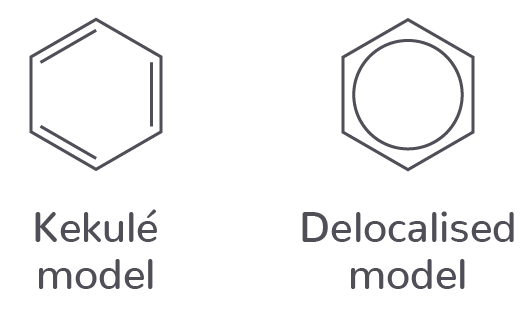
State two similarities and two differences between the bonding in each model.
The diagram below shows data for the enthalpies of hydrogenation of cyclohexene and benzene.
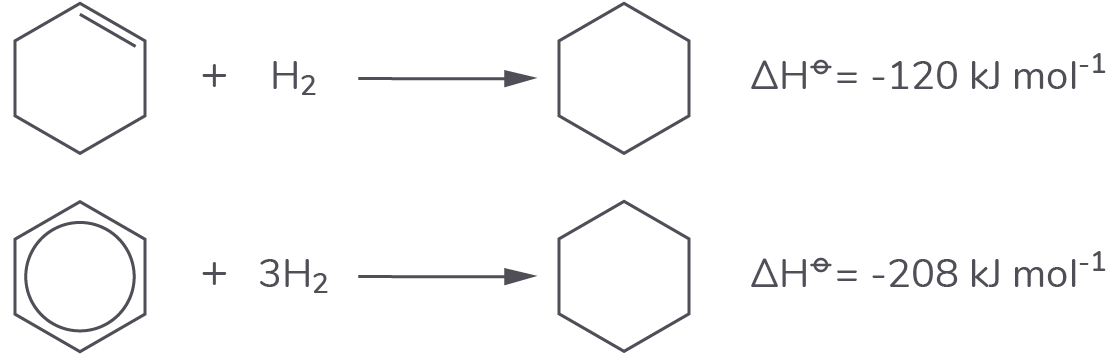
Explain why this data can be used as evidence to support the delocalised model for benzene instead of the Kekulé model.
Describe one further piece of evidence that supports the delocalised model of benzene.
This question is about nitrobenzenes.
Write an equation for the formation of nitrobenzene from benzene.
Name the reagent(s) and condition(s) required for the nitration of benzene.
Write an equation for the formation of the electrophile in the nitration of benzene.
Explain why NO2+ can be described as an electrophile.
Name and outline a mechanism for the nitration of benzene.
The diagram below shows the reaction of benzene with a reactive species formed from ethanoyl chloride, CH3COCl, and AlCl3.
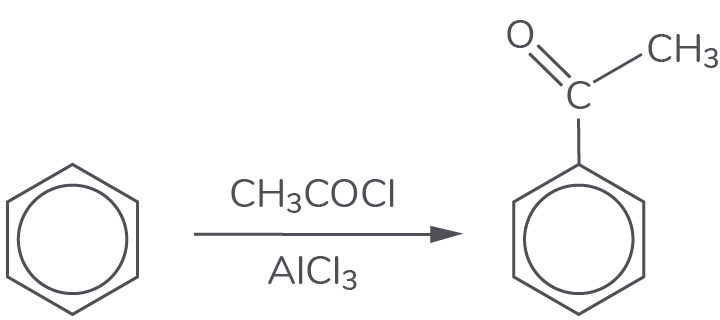
Write an equation for the formation of the reactive species.
Name the mechanism for this reaction.
Outline a mechanism for this reaction.
Write an equation to show the regeneration of AlCl3.
The diagram below shows a substituted benzene molecule that is formed from the reaction between benzene and an electrophile.
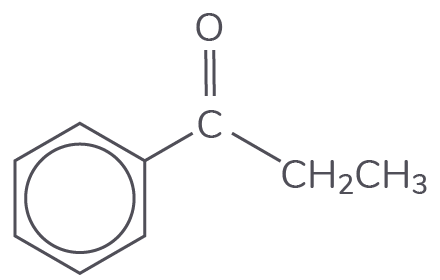
Give the formulae of the two substances that react together to form the electrophile.
Write an equation to show the formation of the electrophile.
Outline a mechanism for the reaction to form the substituted benzene compound.
The diagram below shows two proposed structures for benzene based on the Kekulé model and the delocalised model.
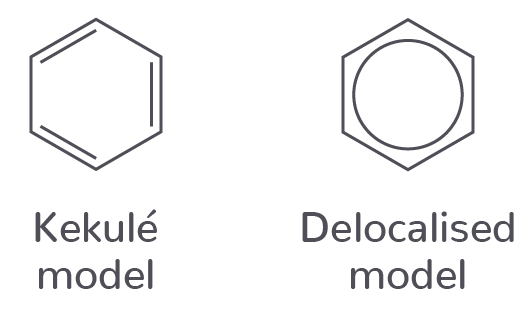
Describe the difference in the π-bonding between the two structures.
Explain how the bond length in benzene provides evidence to support the delocalised model.
The diagram below shows the equation for the formation of phenylethanone from benzene and ethanoyl chloride.

Give the formula of the intermediate compound that reacts with benzene.
Outline a mechanism for the formation of phenylethanone.
The diagram below shows the nitration of phenylethanone.
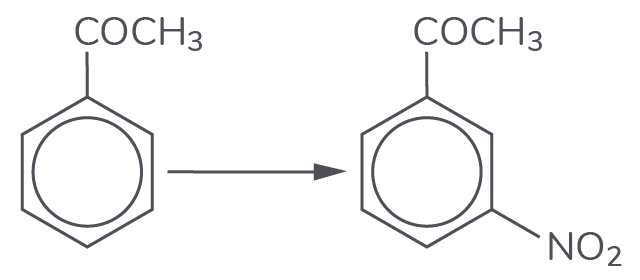
Name the reagents and conditions required for the reaction.
Write an equation for the formation of the reactive intermediate species involved.
Outline a mechanism for the nitration of phenylethanone.