Structure Determination - exam practice
Structure Determination
Question 1 of 6
This question is about 1H NMR spectroscopy.
A compound is mixed with tetramethylsilane (TMS) and CDCl3 before the 1H NMR spectrum is obtained.
State and explain why TMS and CDCl3 are used in NMR spectroscopy.
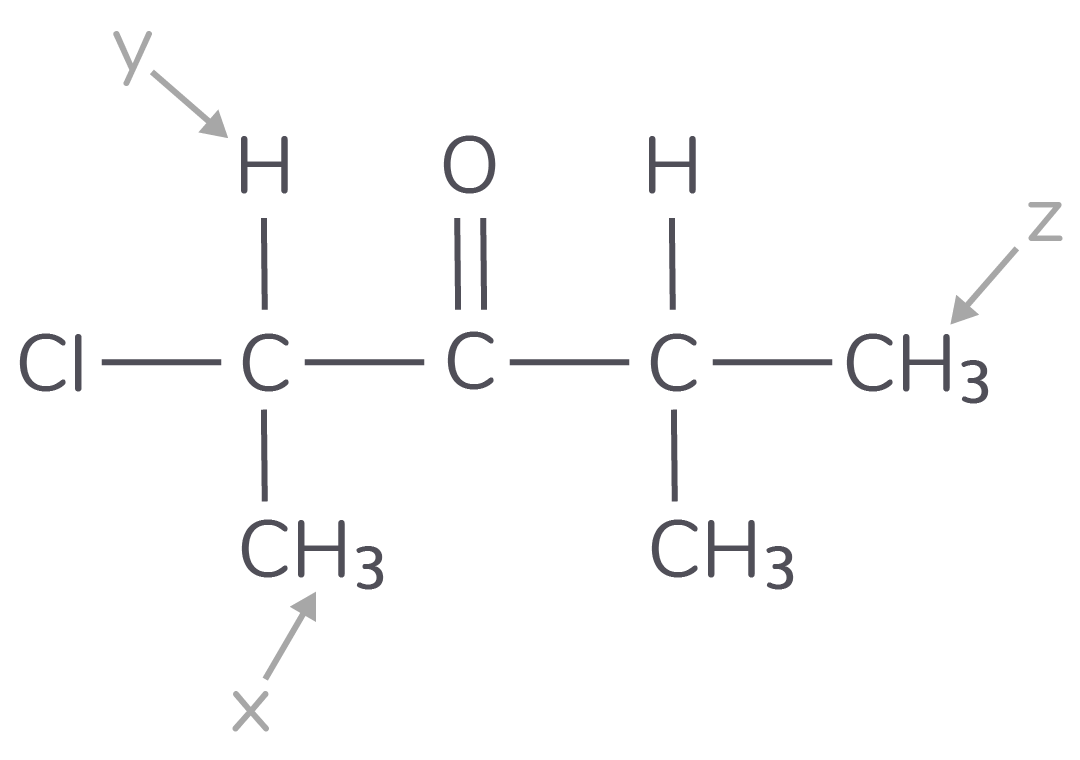
State the splitting pattern that would be observed in the 1H NMR spectrum for each of the peaks given by the hydrogen atoms, labelled x, y and z, of the compound shown in the diagram below.
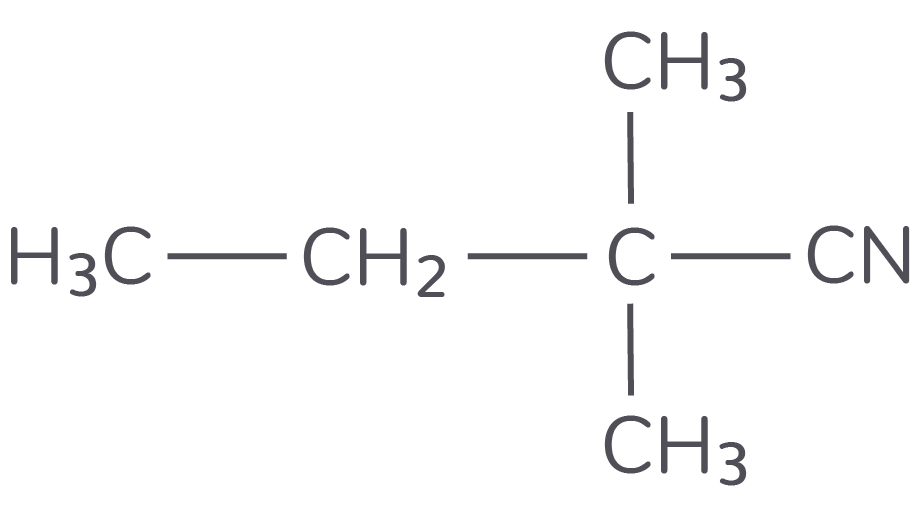
An isomer of the compound in part b) has only two singlet peaks in its 1H NMR spectrum. The integration ratio is 2:9.
Draw the structure of this isomer.
The diagram below shows the structures of four isomers with the molecular formula C6H12O2.
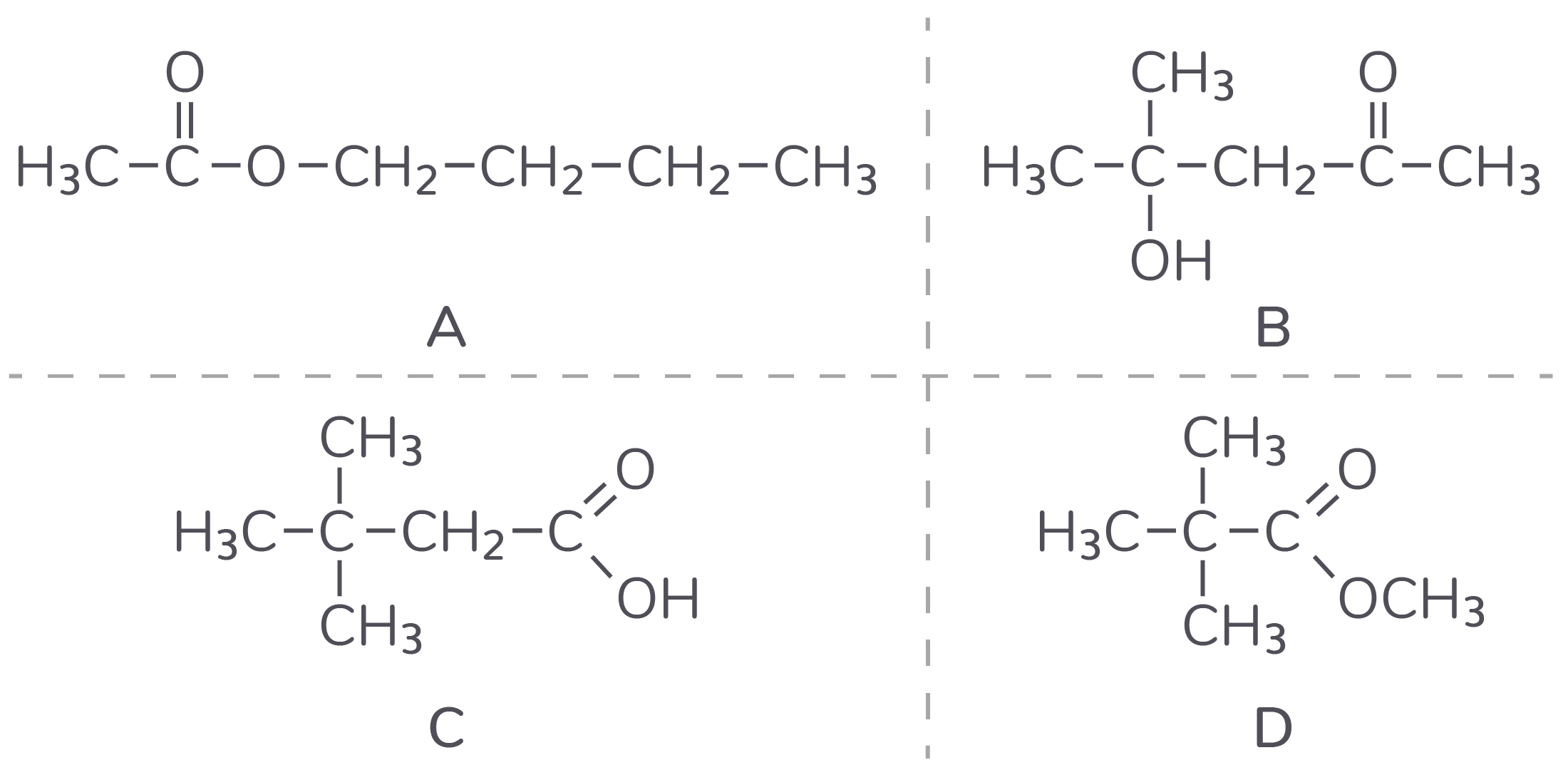
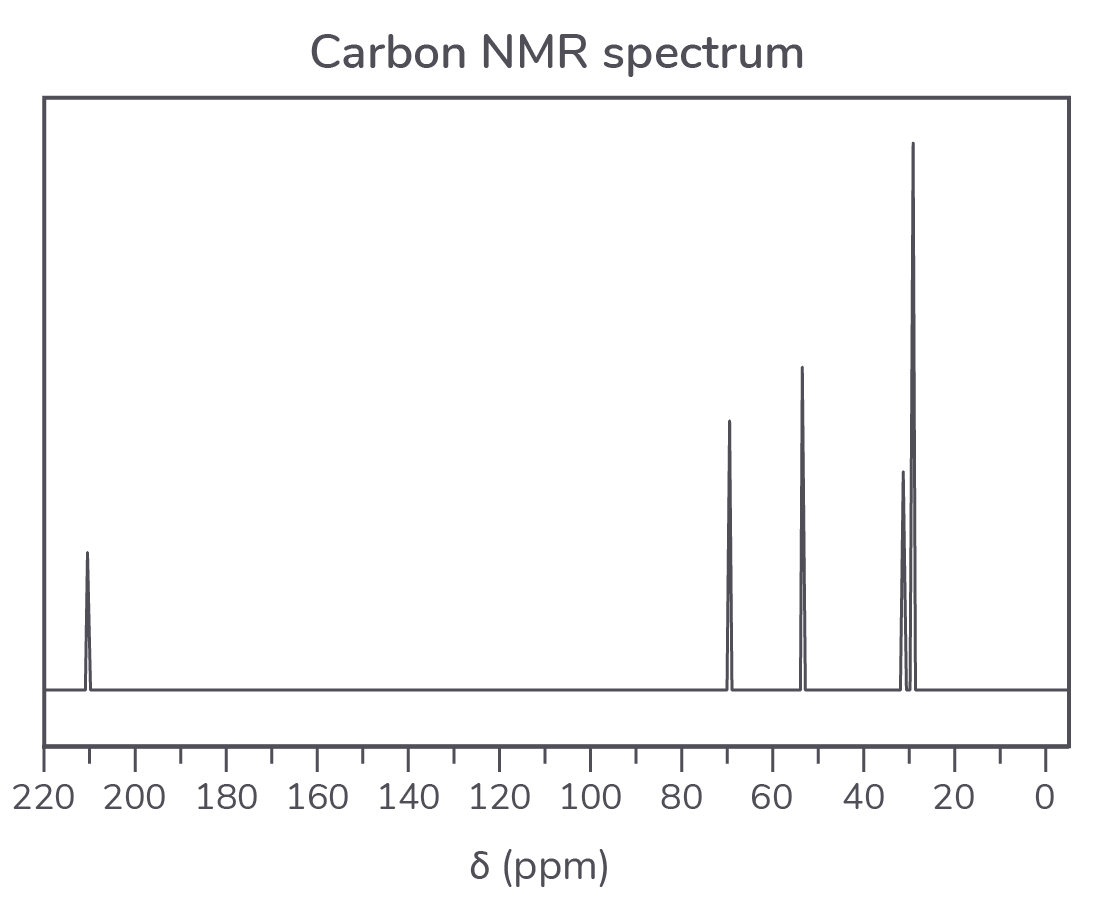
Identify which of the isomers shown in the diagram above would produce the 13C NMR spectrum shown below.
Justify your answer.
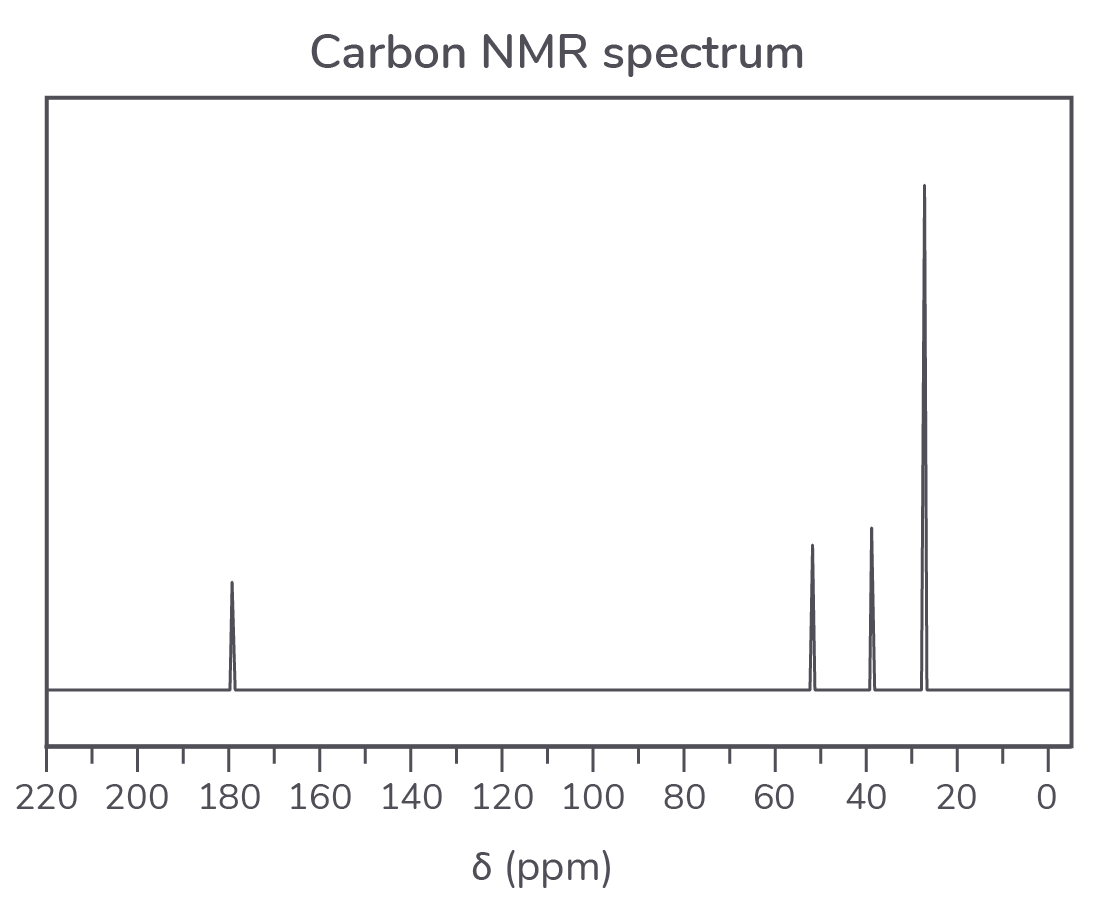
Identify which of the isomers shown in the diagram above would produce the 13C NMR spectrum shown below.
Justify your answer.
How many peaks would be observed in the 13C spectrum of 1,4-dimethylbenzene?
Organic compound X is analysed by a combination of techniques.
Elemental analysis:
C: 56.69%; H: 7.09%; N: 11.02%; O: 25.20%
Mass spectrum:
Molecular ion peak at m/z = 127.0
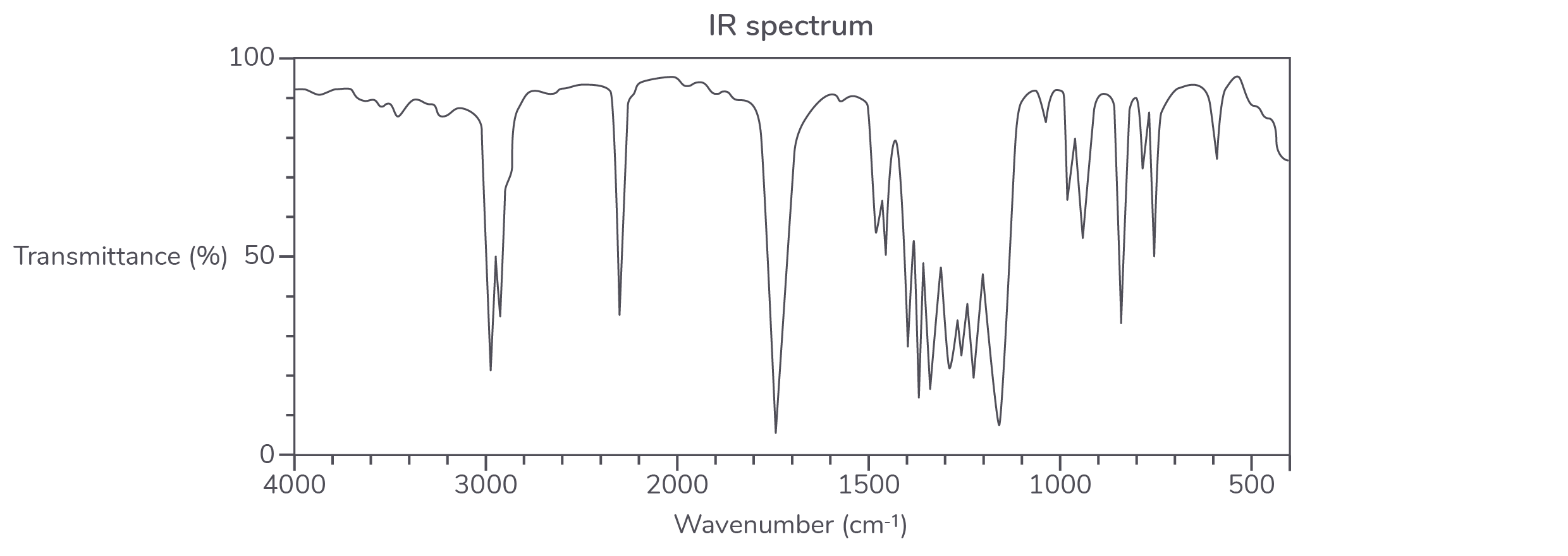
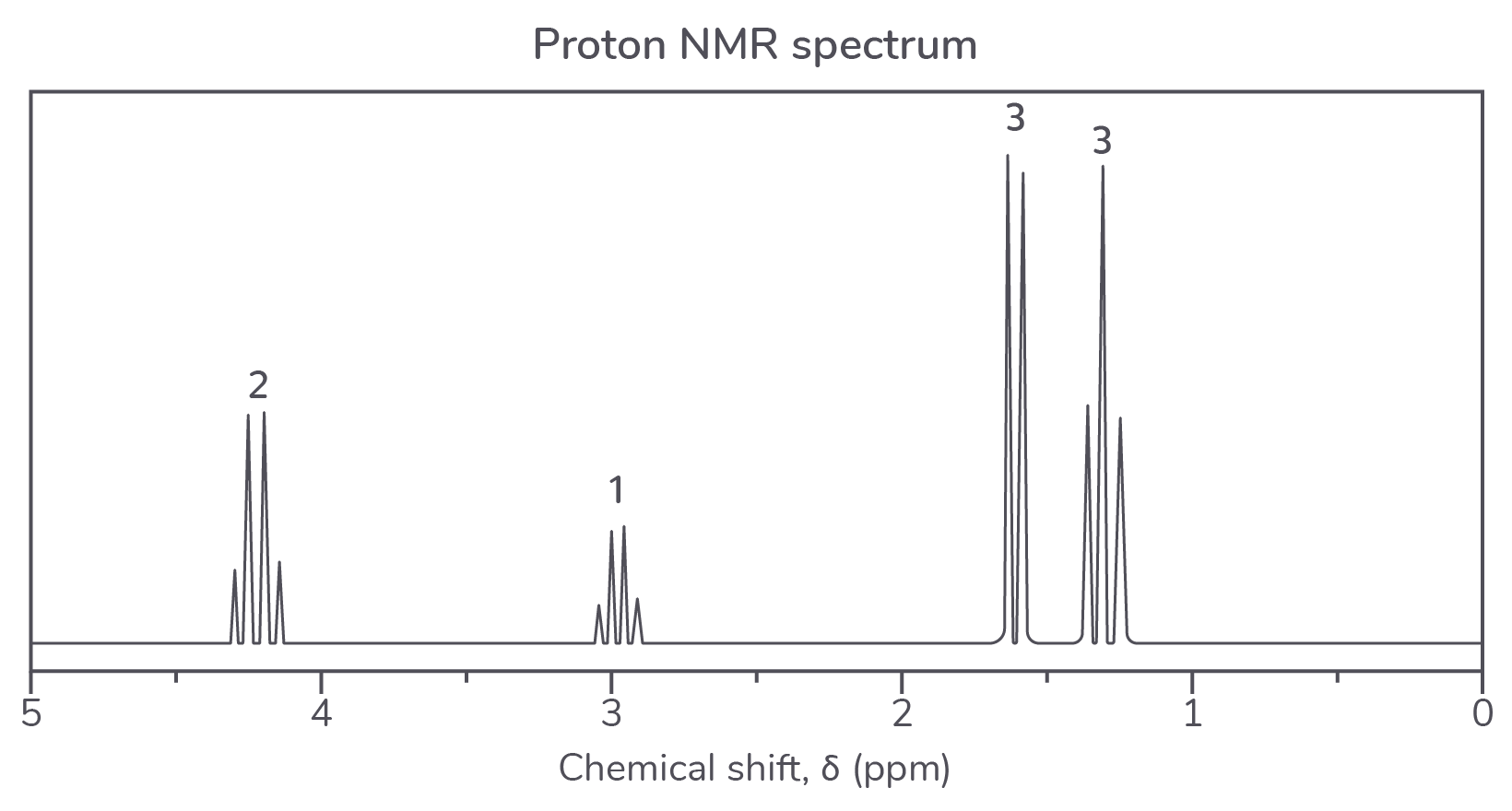
Use all the data to identify compound X explaining your reasoning.
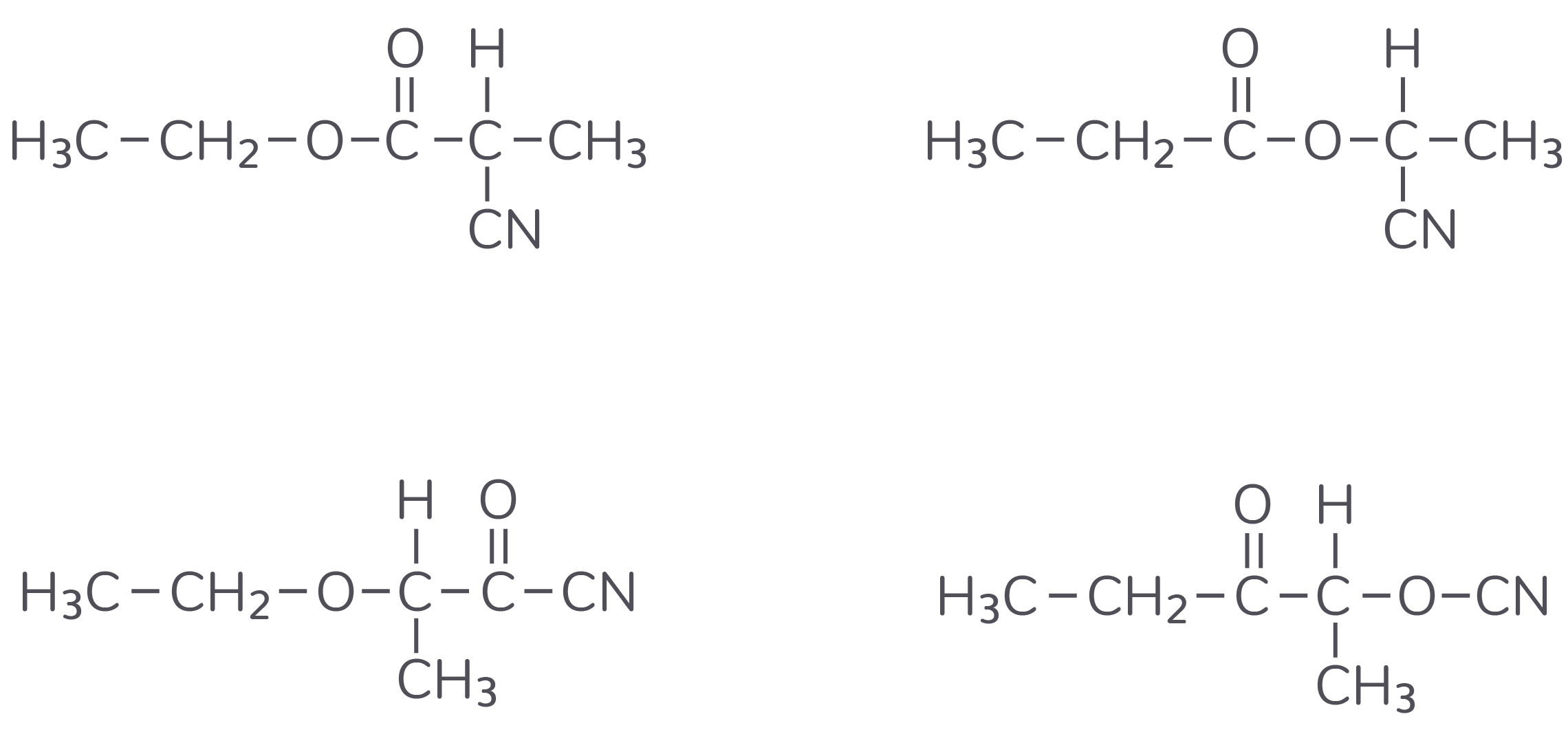
The diagram below shows the structure of an ester with four different carbon environments.
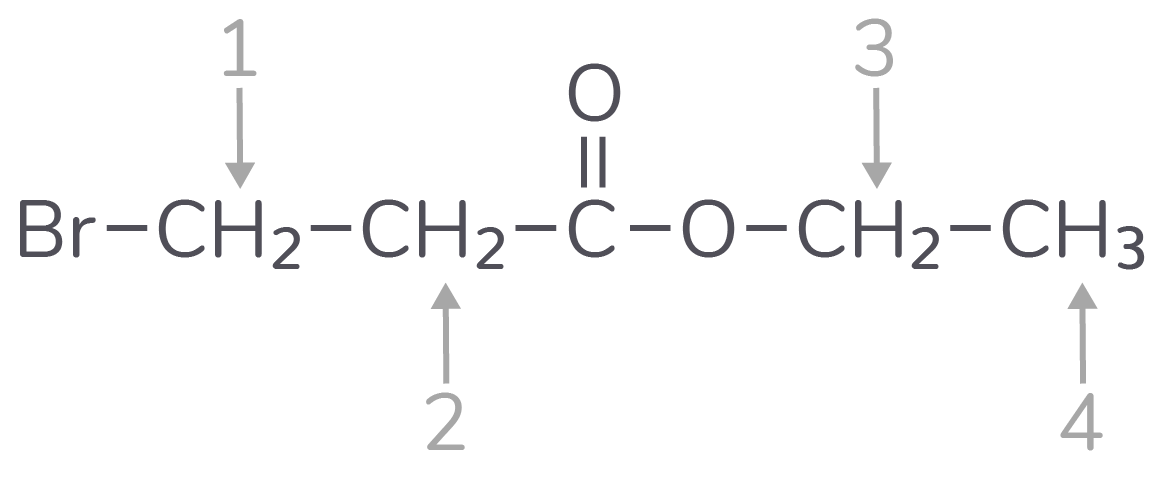
Complete the table below to predict the proton NMR spectrum of the ester.
Compound W is an isomer of the ester in part a). Compound W reacts with aqueous sodium carbonate and its 13C NMR spectrum has 4 peaks.
Draw a possible structure of compound W.
The diagram below shows the 1H NMR spectrum of a compound known to be either propan-1-ol, propanal or propanoic acid.
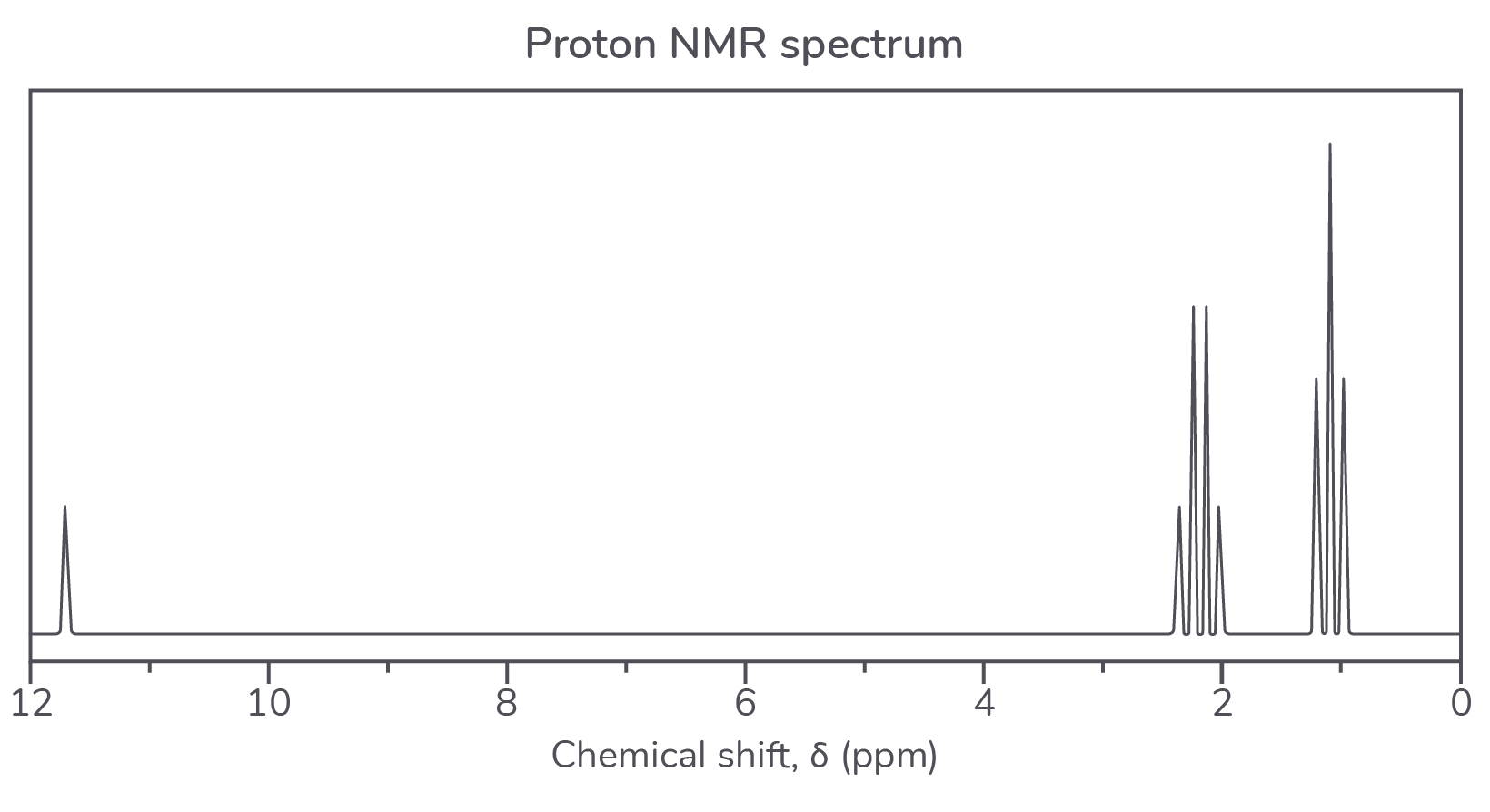
Identify the compound from its proton NMR spectrum, justifying your answer.
The diagram below shows the structures of 2-nitrophenol, 3-nitrophenol and 4-nitrophenol.
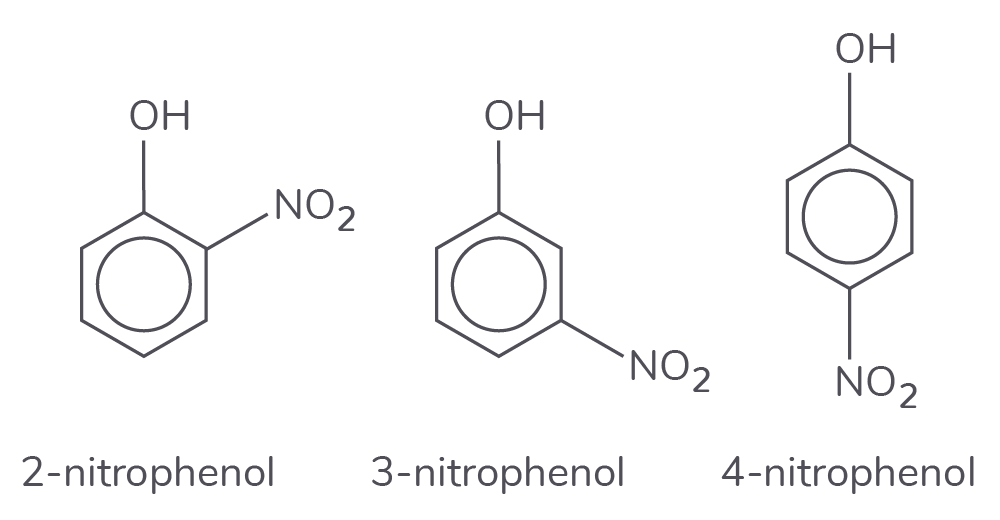
Explain whether 13C NMR spectroscopy can be used to distinguish between these three compounds.
The diagram below shows the structure of the aromatic compound benzocaine.
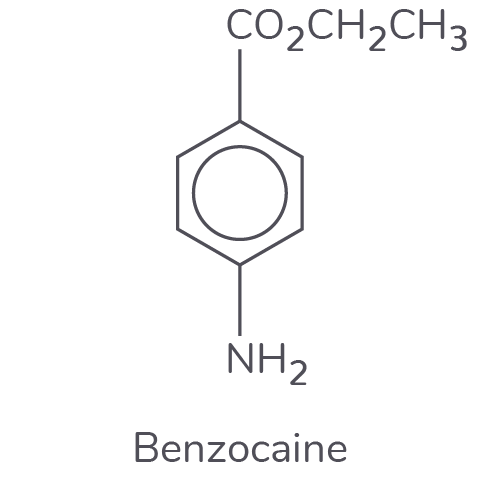
Predict the number of peaks seen in the 13C NMR spectrum.
The diagram below shows the 1H NMR spectrum of benzocaine dissolved in CDCl3.
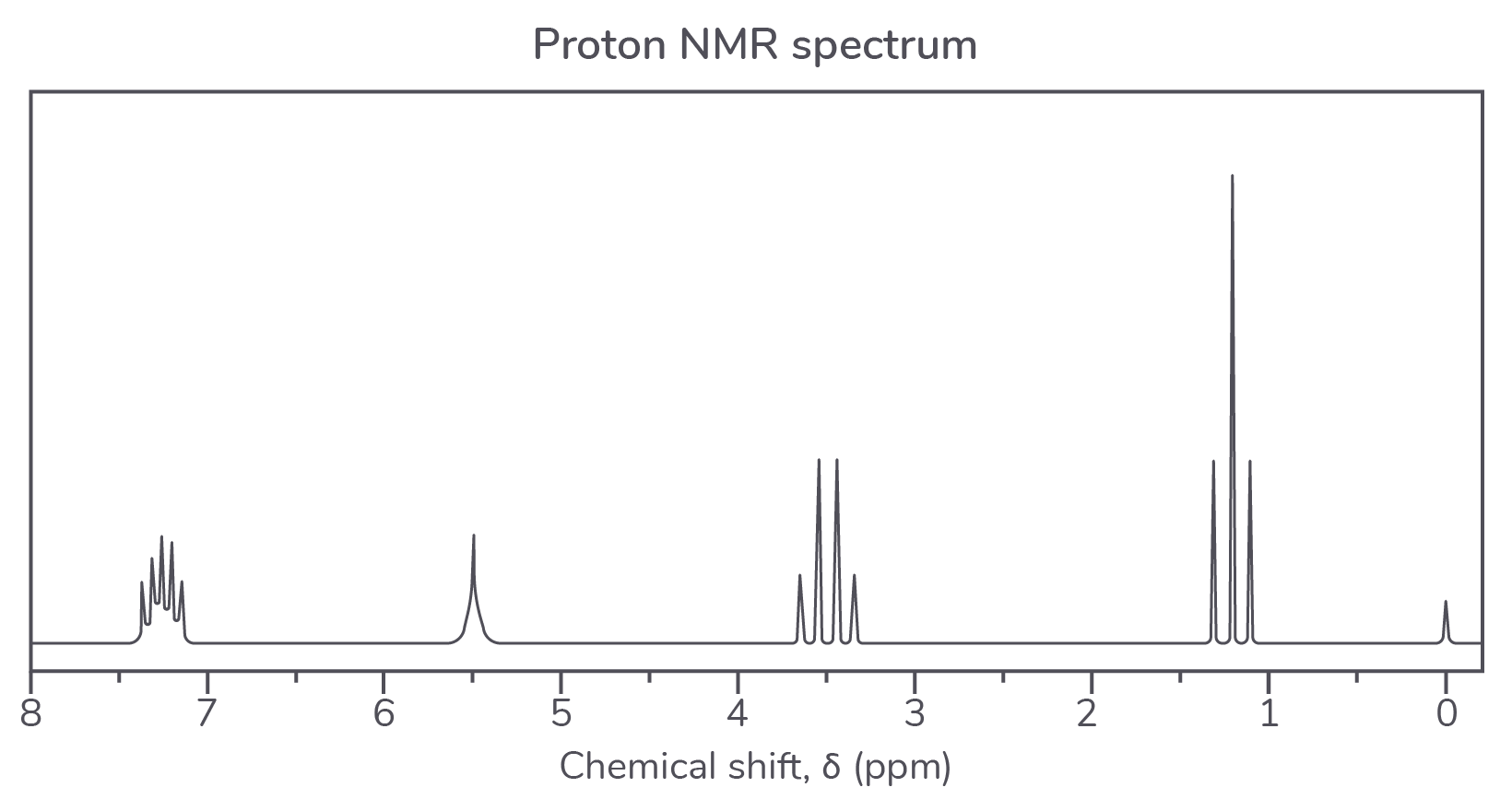
Explain why CDCl3 was used as a solvent to obtain the NMR spectrum.
Complete the table below for the NMR data of benzocaine.
Organic compound X contains only carbon, hydrogen and nitrogen and is analysed by a combination of techniques.
Elemental analysis:
C: 74.17%; H: 11.41%; N: 14.42%
Mass spectrum:
Molecular ion peak at m/z = 97.0
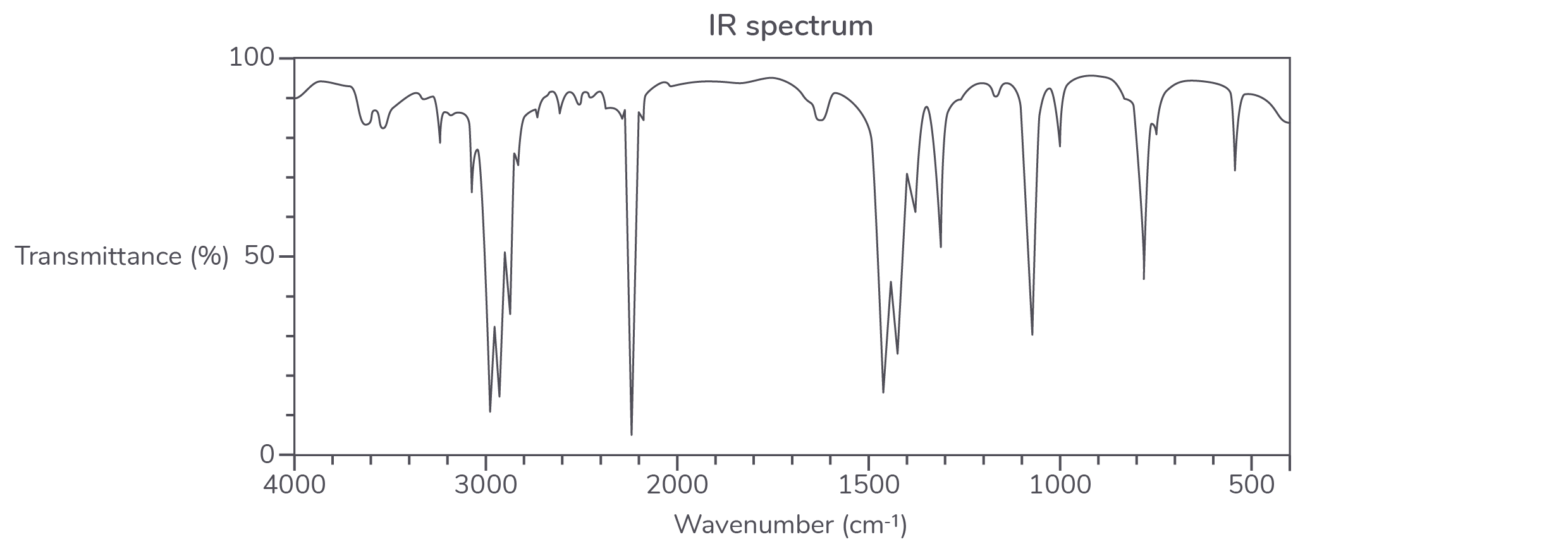
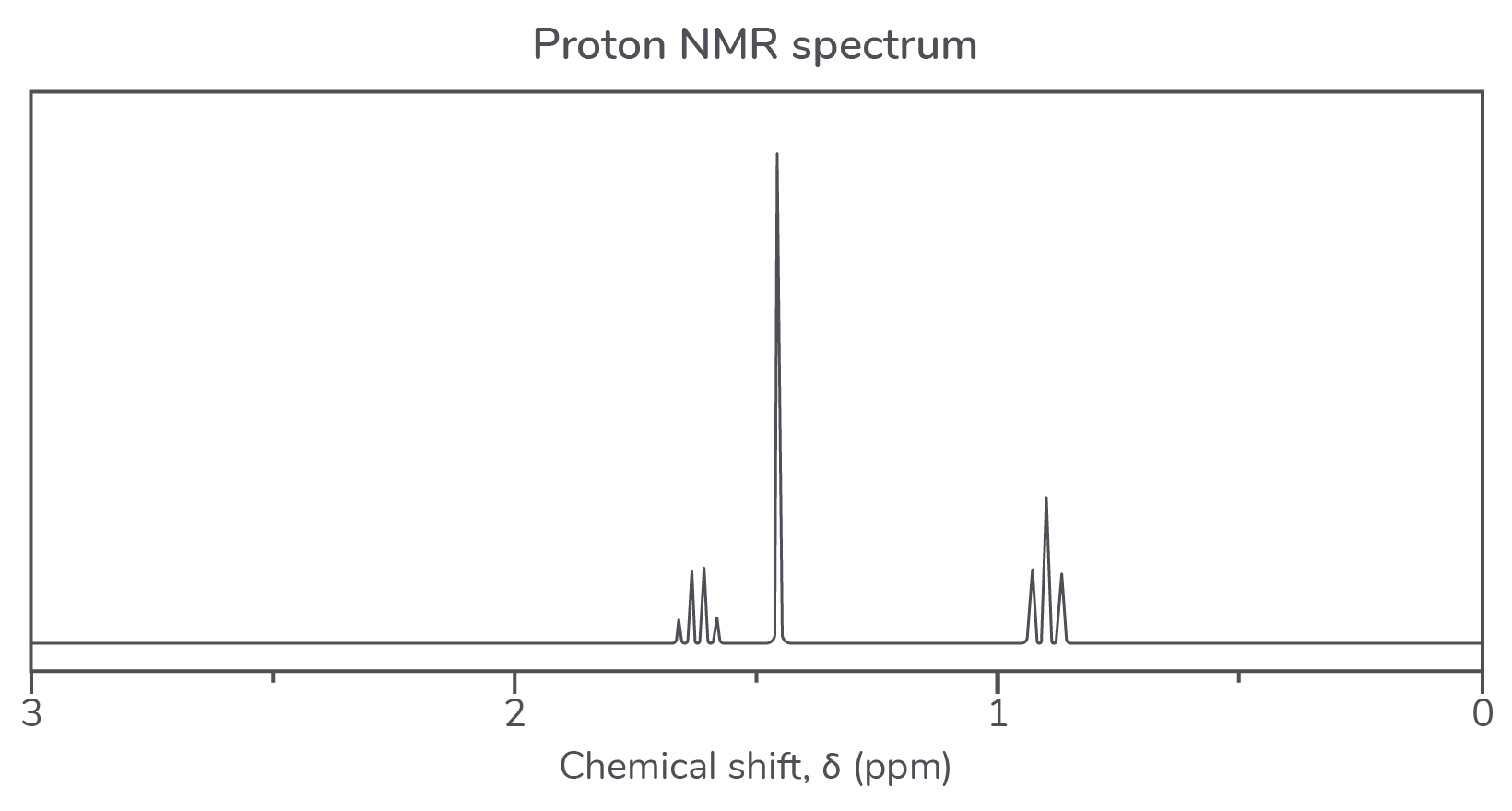
Use all the data to identify compound X explaining your reasoning.