Alcohols - exam practice
Alcohols
Question 1 of 15
1 of 15
Which bond angles are present in a molecule of methanol?
Question 2 of 15
2 of 15
Which alcohol gives only one possible oxidation product when warmed with dilute acidified potassium dichromate(VI)?
Question 3 of 15
3 of 15
In the first commonly used breathalyser, acidified potassium dichromate(VI) was used which was reduced to chromium(III) by alcohol.
The colour change seen when alcohol was present in a motorist’s breath is from
Question 4 of 15
4 of 15
Ethanol is soluble in water. The best explanation for this is...
Question 5 of 15
5 of 15
What is a disadvantage of using biofuels, compared to fossil fuels?
Question 6 of 15
6 of 15
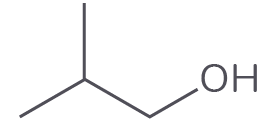
What happens when the compound shown is distilled with acidified potassium dichromate(VI)?
Question 7 of 15
7 of 15
A student says that bio-ethanol is carbon neutral.
Which option provides evidence that disagrees with the student’s statement about bio-ethanol?
Question 8 of 15
8 of 15
What is not a reaction of 2-methylpropan-2-ol?
Question 9 of 15
9 of 15
Which alcohol reacts with an acid catalyst to form E and Z stereoisomers?
Question 10 of 15
10 of 15
Which alcohol will notreact with potassium dichromate(VI) in sulfuric acid?
Question 11 of 15
11 of 15
Which compound can be oxidised to form (CH3)2CHCOCH3?
Question 12 of 15
12 of 15
Which alcohol forms a mixture of alkenes when dehydrated?
Question 13 of 15
13 of 15
Which statement is correct about the production and use of ethanol as a biofuel?
Question 14 of 15
14 of 15
Which compound reacts to form a ketone when warmed with an acidified solution of potassium dichromate(VI)?
Question 15 of 15
15 of 15
In the UK industrial ethanol is now produced by the direct hydration of ethene. This process has largely replaced the fermentation method.
Which is a likely reason for this change of method?