2.12 - Proteins: Globular & Fibrous Proteins
- 1
The difference between globular and fibrous proteins
- 2
Examples of globular proteins
- 3
Examples of fibrous proteins
In this lesson we have sometimes used tubes to represent polypeptides.
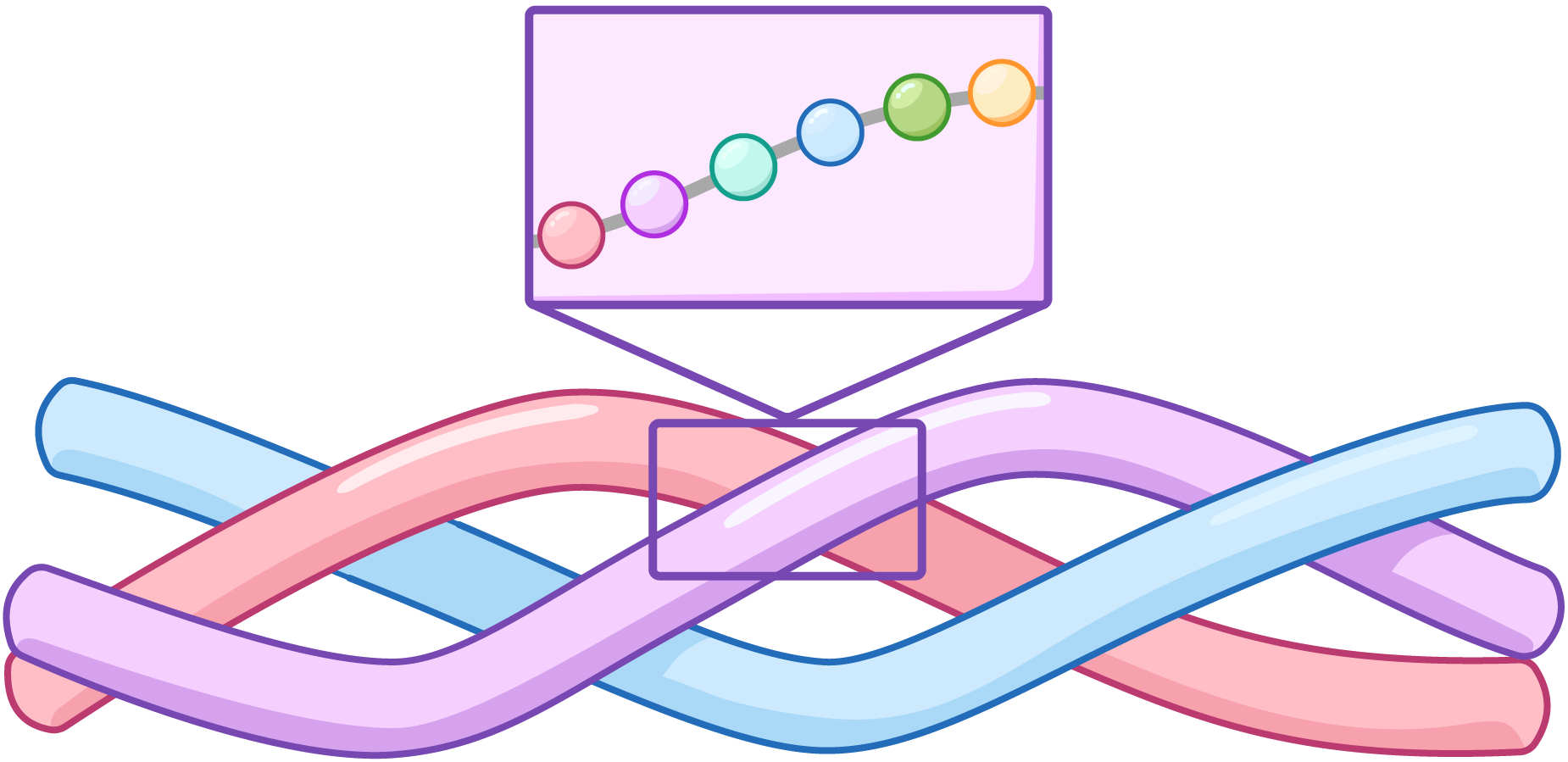
In reality these structures are complex, but for the purpose of understanding, each tube represents a separate polypeptide chain (a chain of amino acids bonded together by peptide bonds).
Types of proteins
Proteins can be grouped into two categories: globular and fibrous proteins.
Globular proteins
Globular proteins are compact, spherical, and soluble proteins.

Globular proteins tend to have metabolic roles in the body, such as:
- Enzymes - These speed up chemical reactions in the body.
- Hormones - These are chemical messengers that travel in the bloodstream.
- Antibodies - These bind to and prevent the spread of pathogens.
Conjugated proteins
Some globular proteins also contain a non-protein known as a prosthetic group.
There are different types of prosthetic groups, including:
- Lipids - These combine with proteins to form lipoproteins.
- Carbohydrates - These combine with proteins to form glycoproteins.
- Metal ions - Such as iron in haemoglobin.
Fibrous proteins
Fibrous proteins form long strands and are not usually soluble in water.

Fibrous proteins tend to have structural roles in the body, such as:
- Keratin - This is found in the skin, hair, and nails.
- Collagen - This is found in connective tissues such as bone and muscle.
- Elastin - This is found in elastic connective tissue.
Examples of globular proteins
Some examples of globular proteins include haemoglobin, insulin, and amylase.
Haemoglobin
Haemoglobin is a globular protein used to carry oxygen around the body in red blood cells. It is made up of four polypeptide chains, meaning it has a quaternary structure.
Two of these polypeptide chains are known as alpha chains and the other two are known as beta chains.
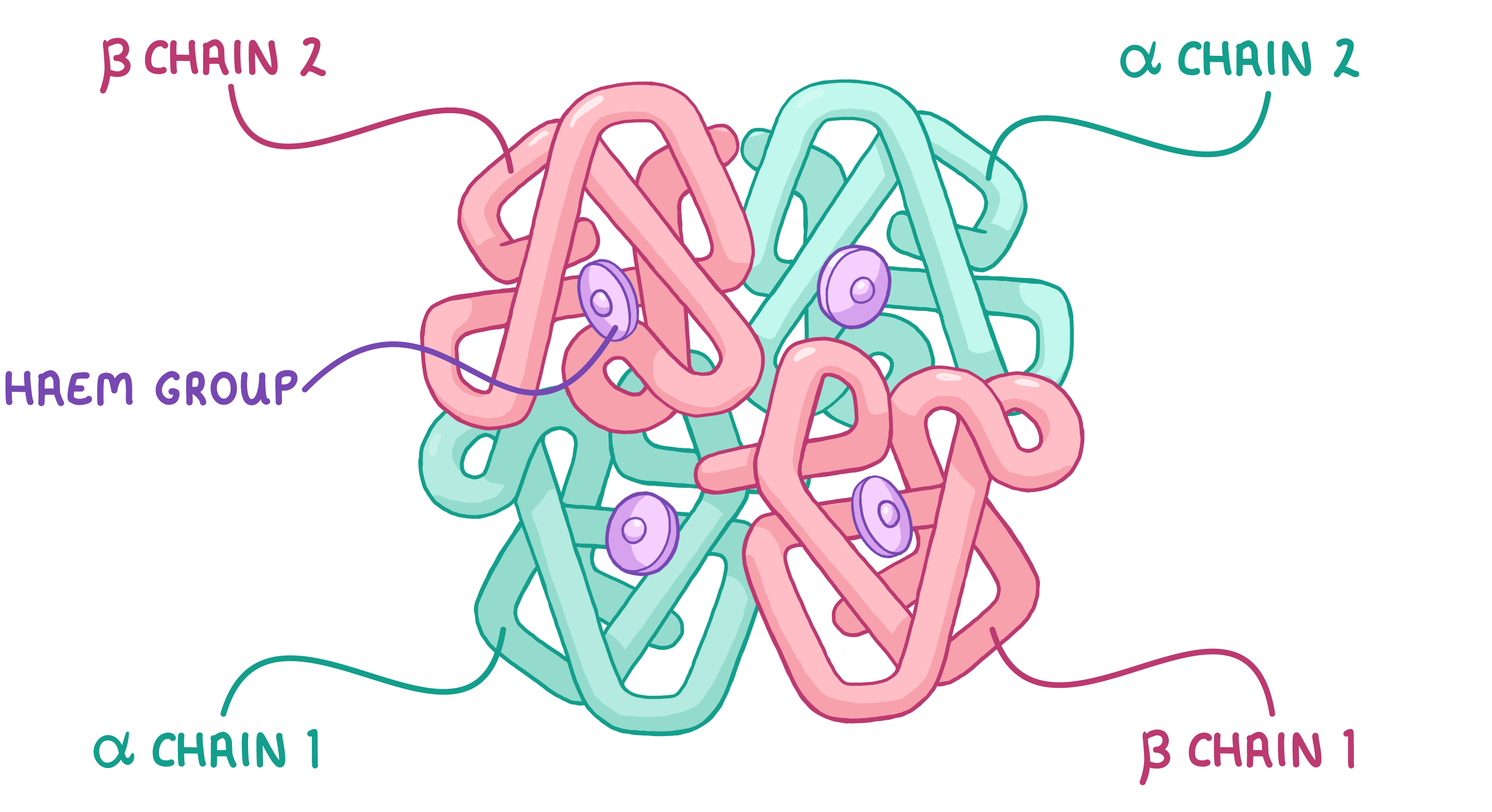
Haemoglobin is an example of a conjugated protein because each polypeptide chain contains a haem group (prosthetic group) which contains an iron atom. Each iron atom can reversibly bind with one oxygen molecule (O2). This means that a molecule of haemoglobin (with four haem groups) can carry four oxygen molecules at a time.
The following features allow haemoglobin to transport oxygen around the body:
- Four polypeptide chains - This means that four molecules of oxygen (O2) can be carried at a time.
- Haem group - This contains iron that reversibly binds to oxygen.
- Compact globular structure - This allows haemoglobin to fit inside red blood cells.
Insulin
Insulin is a globular protein known as a hormone and is used to regulate blood glucose concentration. Hormones travel in the bloodstream and so, need to be soluble. They also need a specific shape to fit with receptors on cell-surface membranes of their target cells.
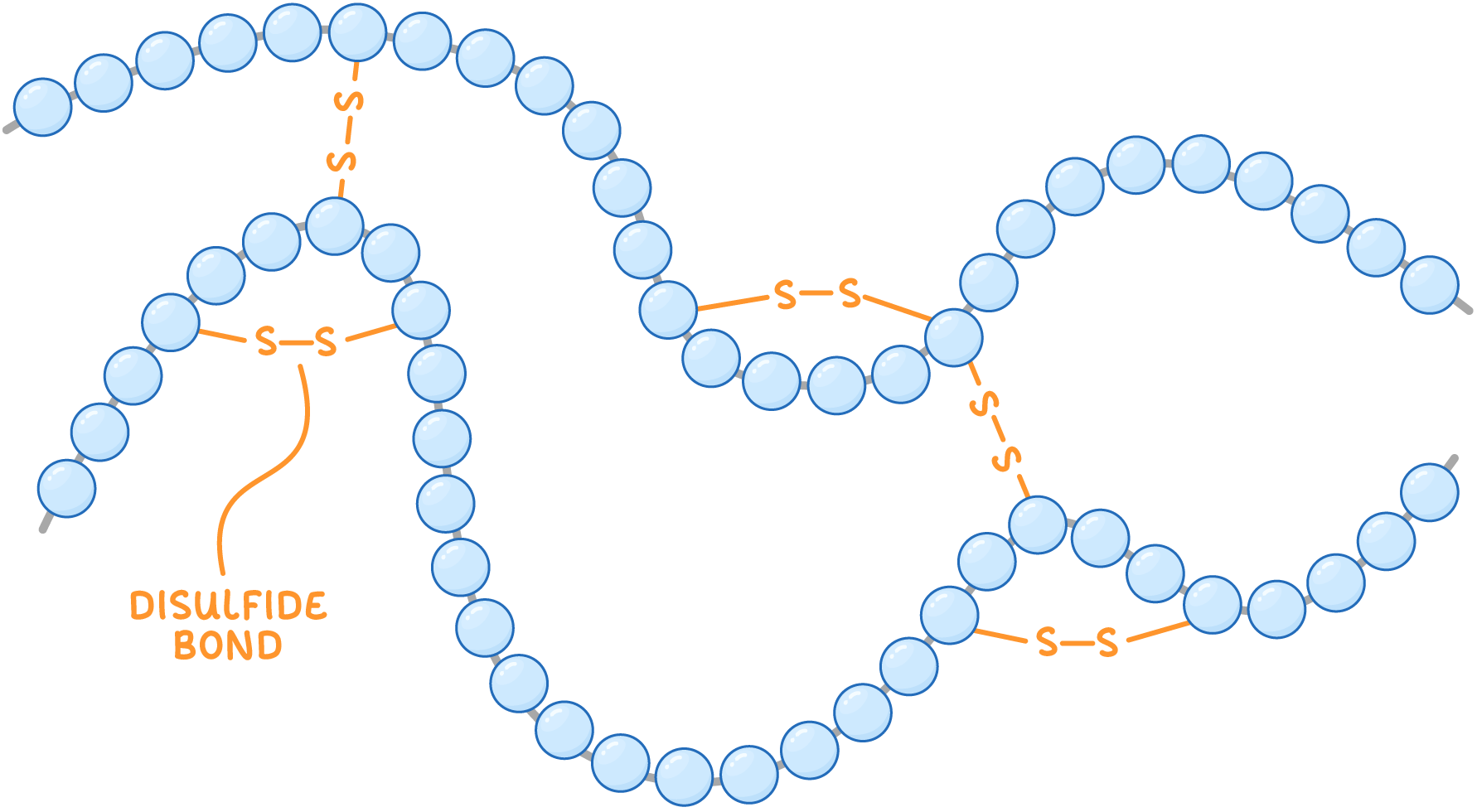
Insulin is made up of two polypeptide chains held together by disulfide bonds.
Amylase
Amylase is a globular protein known as an enzyme. It is responsible for the breakdown of starch into maltose.
This enzyme is made up of a single polypeptide chain folded using both alpha-helixes and beta-pleated sheets.
Examples of fibrous proteins
Some examples of fibrous proteins include collagen, keratin, and elastin.
Collagen
Collagen is a fibrous protein used as a structural component in skin, tendons, cartilage, bones, teeth, and walls of blood vessels.
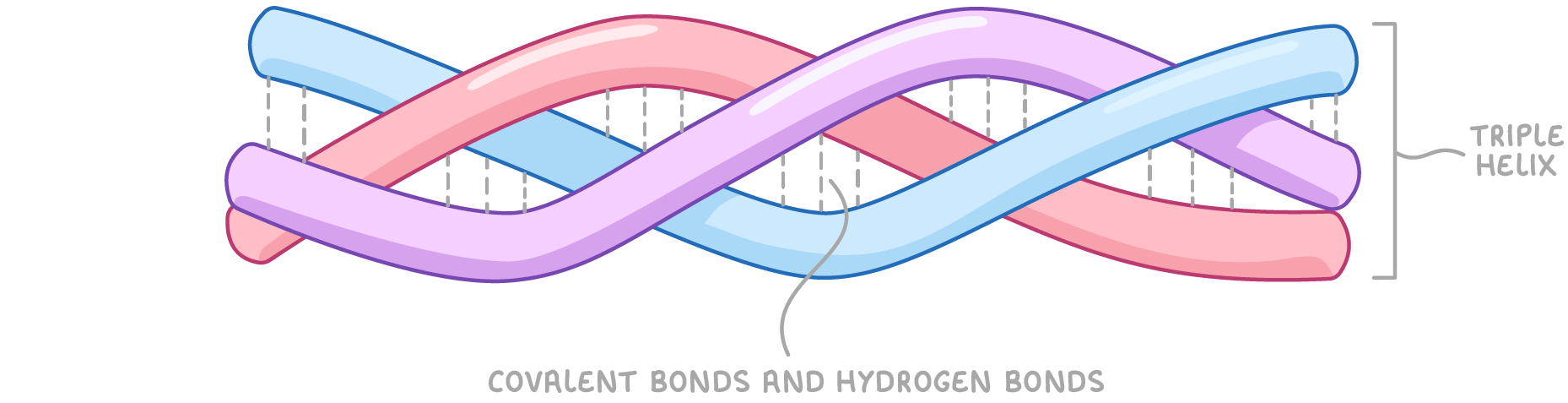
Collagen is made up of three polypeptide chains wound around each other in a rope-like structure. This provides strength and flexibility to the molecule.
Keratin
Keratins are a group of fibrous proteins found in the hair, skin, and nails.
These proteins contain a large number of the amino acid cysteine (contains the element sulphur) which allows disulfide bonds to form. This creates strong and insoluble molecules.
Keratin can be either flexible or rigid, depending on the number of disulfide bonds it contains.
Elastin
Elastin is a fibrous protein found in elastic connective tissue such as in the walls of blood vessels.
It is elastic which allows the tissues to expand and then return to their original shape.