2.9 - Lipids: Triglycerides, Phospholipids & Cholesterol
- 1
The structure and function of triglycerides and phospholipids
- 2
The synthesis and breakdown of triglycerides
- 3
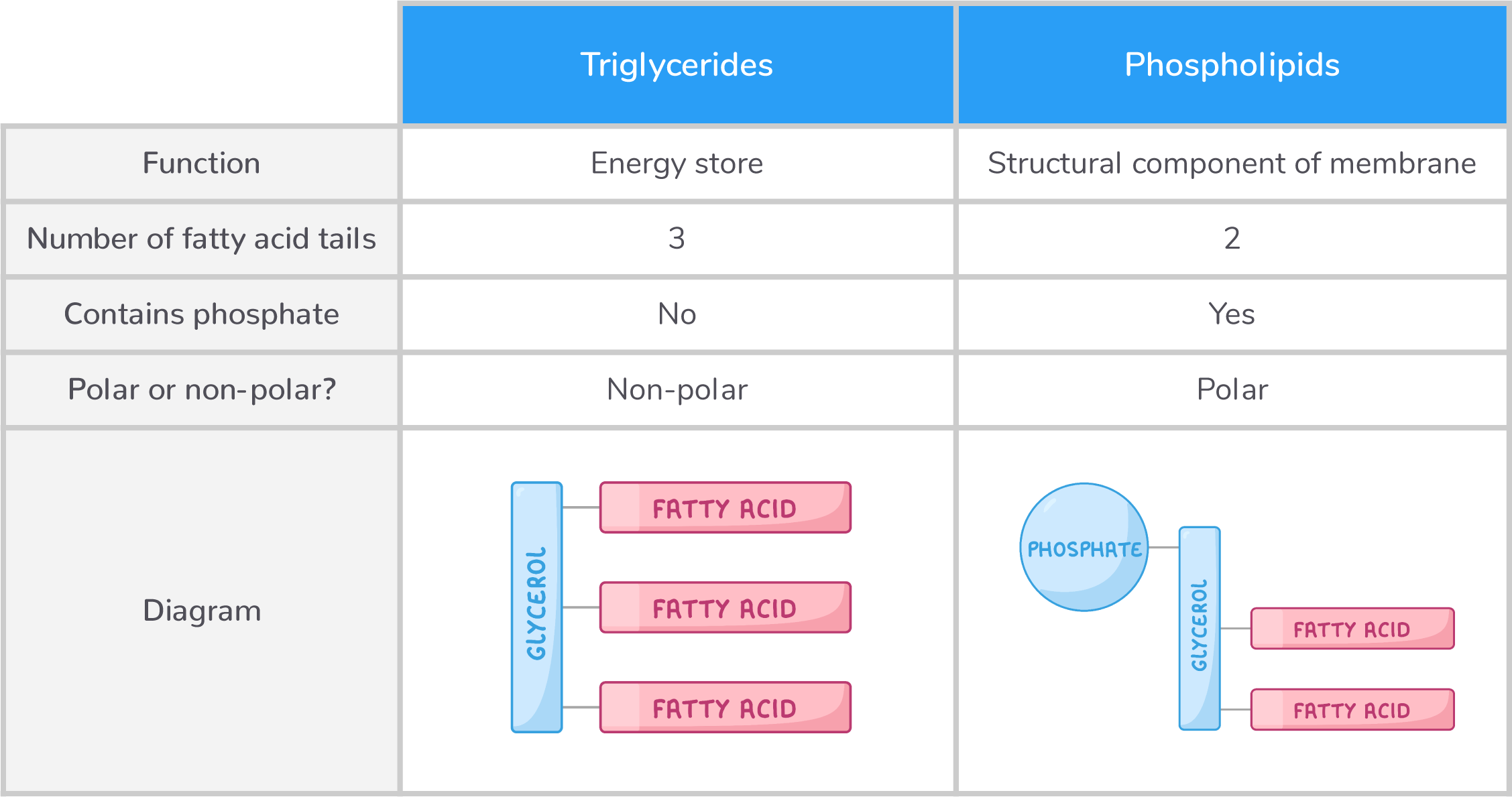
The similarities and differences between triglycerides and phospholipids
- 4
The structure and function of cholesterol
Triglycerides
A triglyceride is a type of lipid used as a store of energy in animals, plants, and some bacteria.
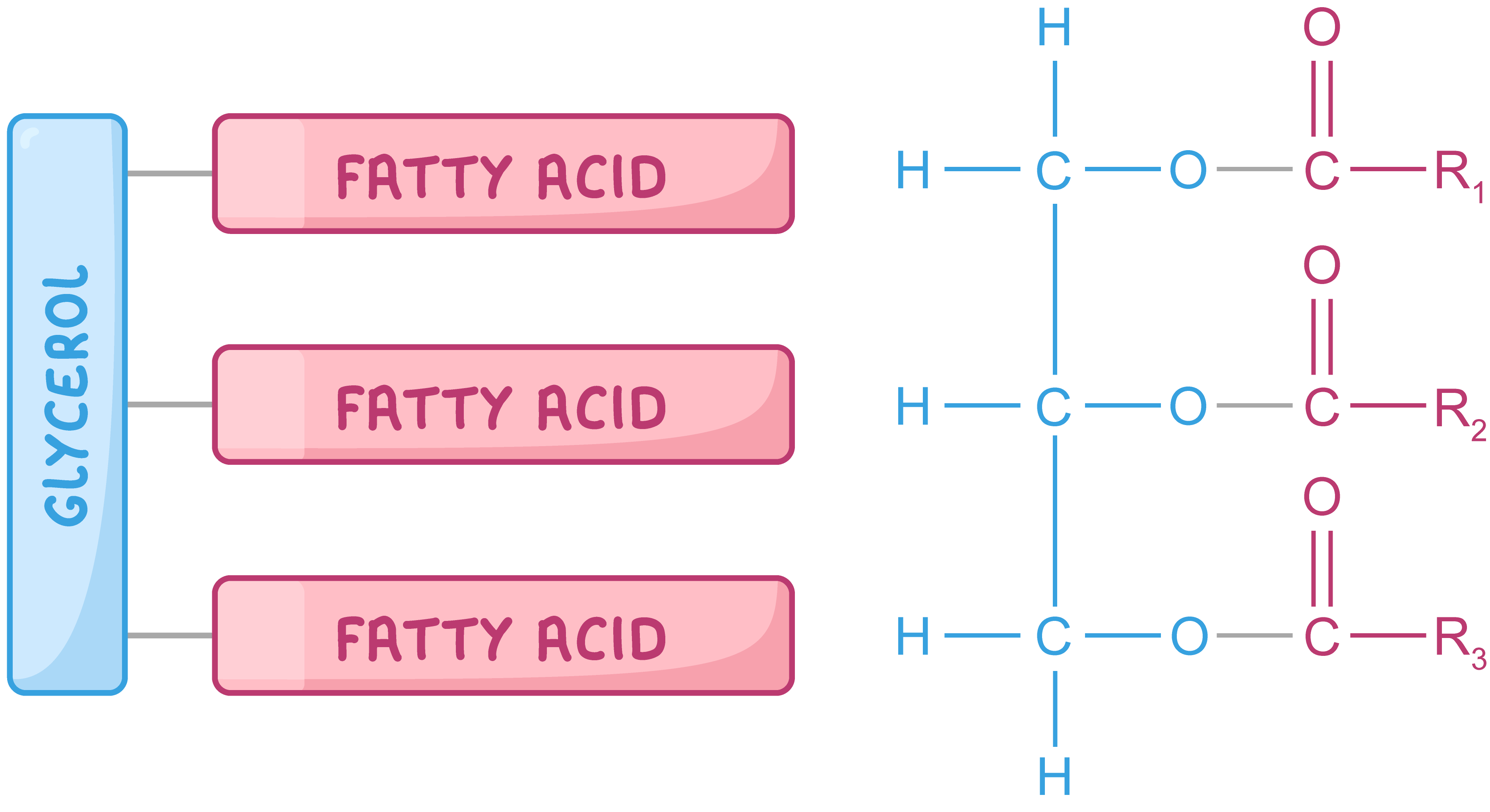
The left diagram is a simplified version of a triglyceride. The diagram on the right shows the atoms a triglyceride is made up of.
A triglyceride consists of a glycerol backbone attached to three fatty acid tails. Each fatty acid tail contains a hydrocarbon chain (R) which can vary in length and may be saturated or unsaturated.
Features that allow triglycerides to store energy efficiently:
- Long hydrocarbon tails - Their many carbon-hydrogen bonds can be broken to release energy.
- Low mass to energy ratio - Lots of energy can be stored in a small volume.
- Insoluble - They do not affect the water potential of cells as they are large and non-polar.
- High ratio of hydrogen to oxygen atoms - Triglycerides will release water when oxidised.
Triglyceride formation and breakdown
Triglycerides are synthesised via condensation reactions and broken down via hydrolysis reactions. These reactions involve the formation or the breakdown of covalent bonds known as ester bonds.
Condensation reaction
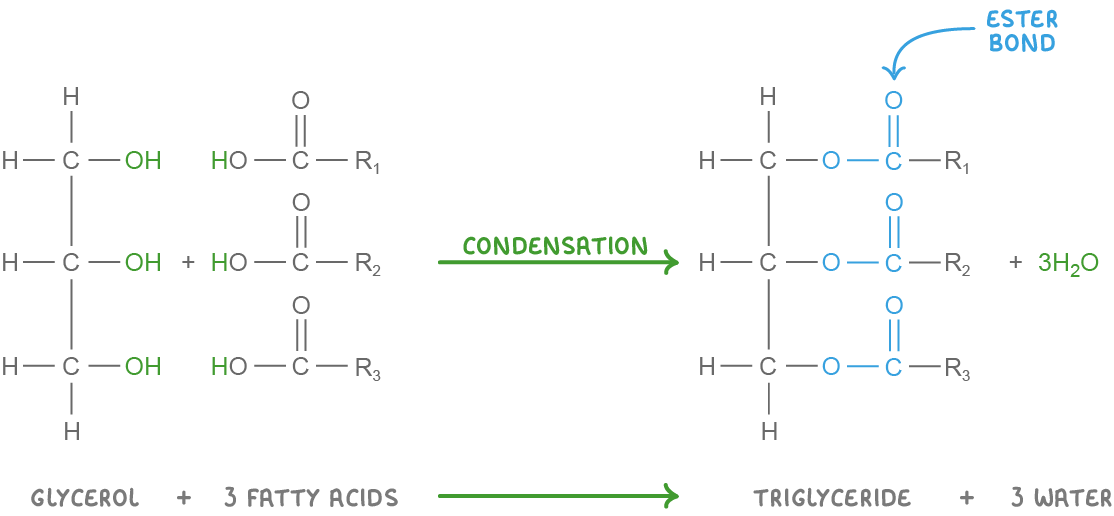
Condensation:
- The hydroxyl groups (OH) on the glycerol and on the three fatty acids react together to release three water molecules (H2O).
- This results in three ester bonds between the glycerol and the fatty acids.
Hydrolysis reaction
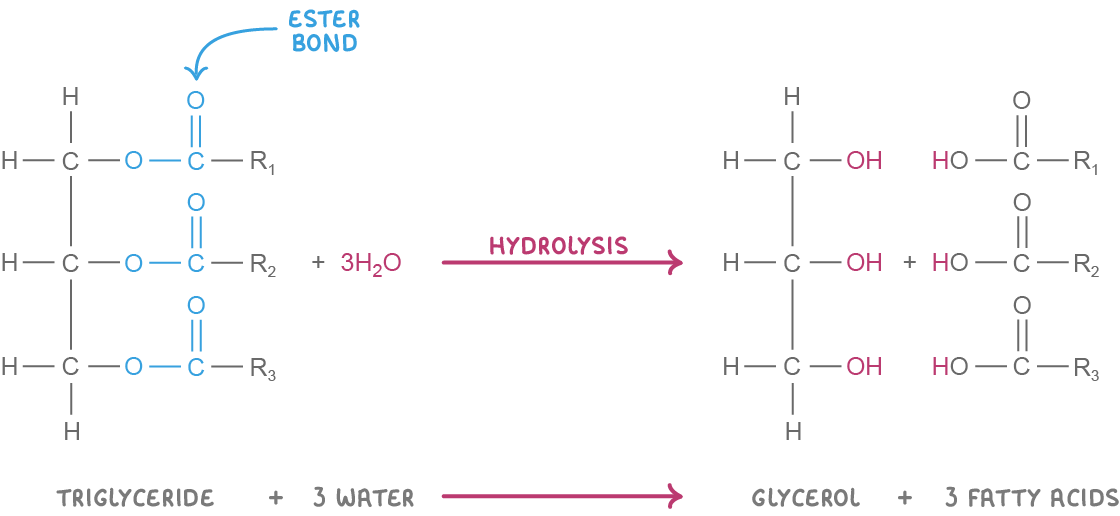
Hydrolysis:
- The addition of three water molecules (H2O) breaks the ester bonds.
- This separates the glycerol and the fatty acids.
Phospholipids
A phospholipid is a type of lipid used as a structural component of the cell membrane.
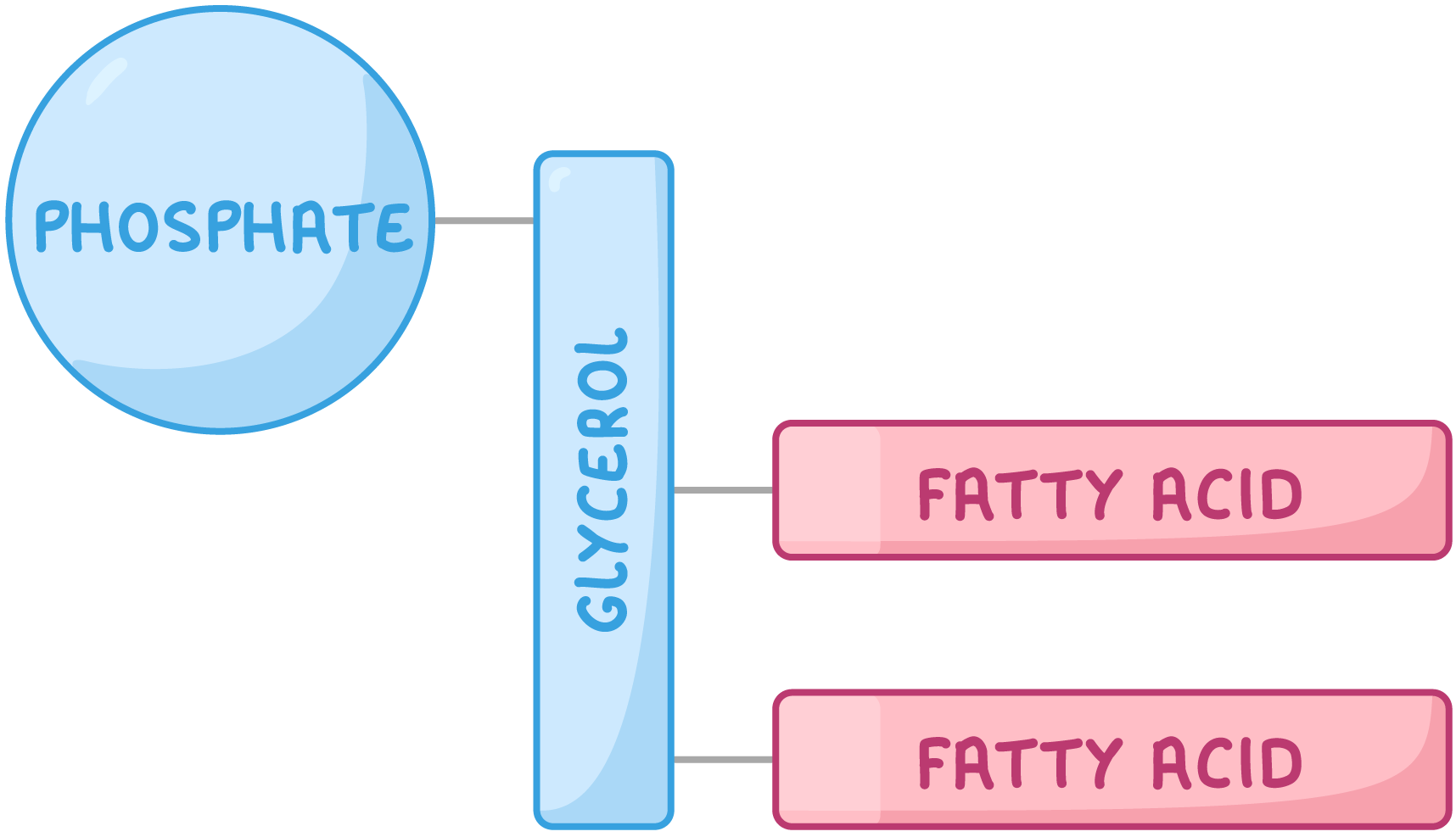
They are similar to triglycerides except one of the fatty acid tails is replaced by a phosphate group.
Phospholipids are polar
A phospholipid is made up of two parts:
- A hydrophilic 'head' - This contains glycerol and phosphate.
- A hydrophobic 'tail' - This contains fatty acids.
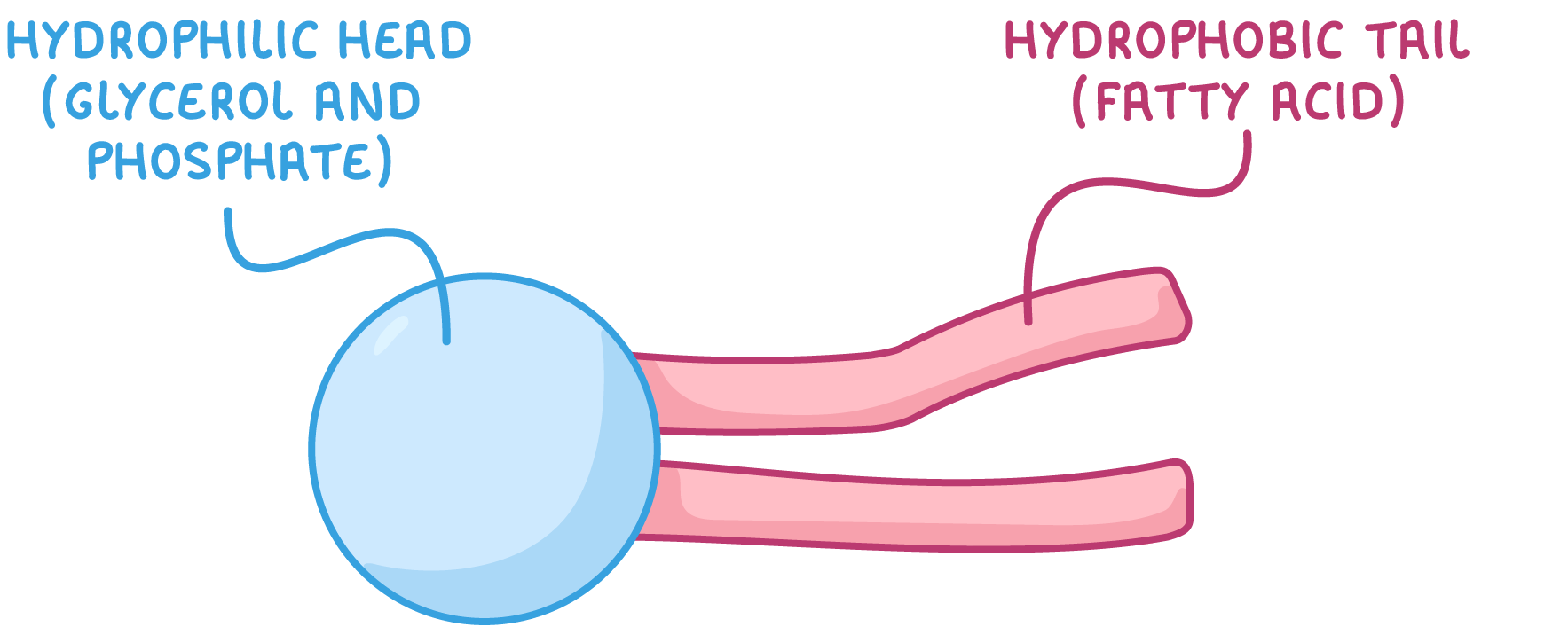
The phosphate group is polar and so attracts water (hydrophilic) whereas the fatty acid tails repel water (hydrophobic).
Phospholipid bilayer
When phospholipids are placed in water, they arrange themselves into a double layer (bilayer) so that the hydrophilic heads are facing out (towards the water) and the hydrophobic tails are facing in (away from the water).
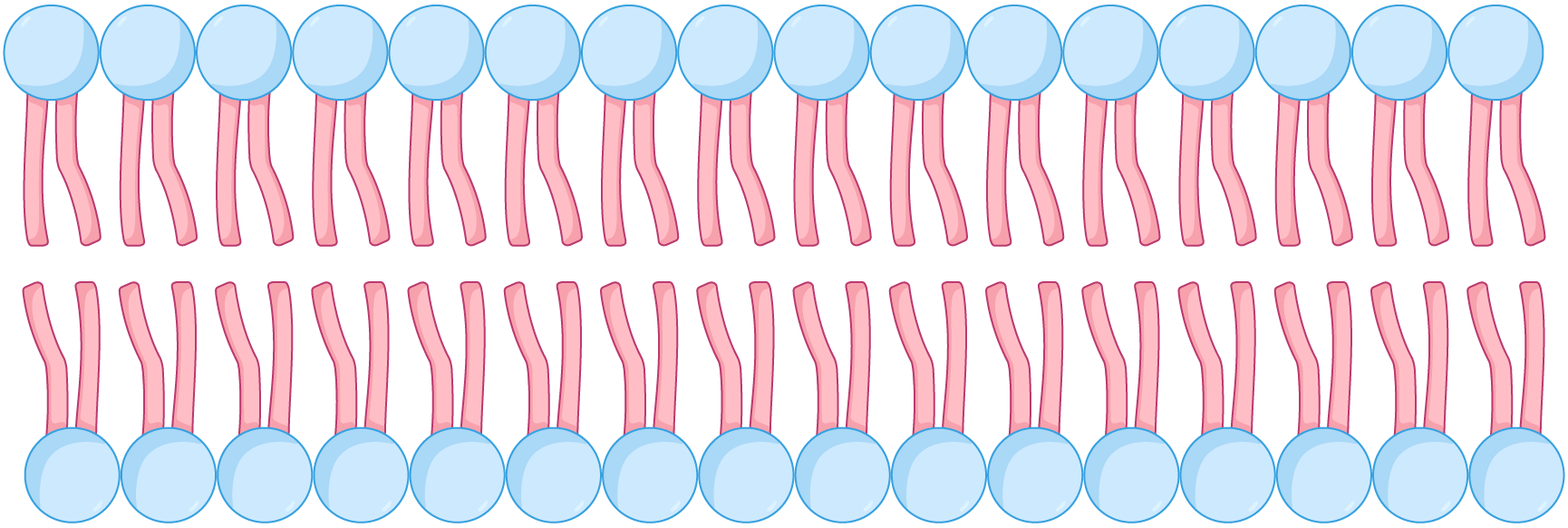
This arrangement creates a hydrophobic centre in the bilayer so that water-soluble substances cannot pass through.
Cholesterol
Cholesterol is a type of lipid known as a sterol and is used by animal cells to increase the stability of the cell membrane.
Cholesterol is also used to make vitamin D, steroid hormones, and bile.
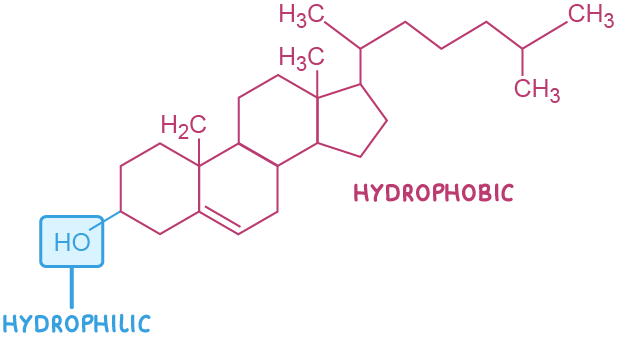
Like phospholipids, cholesterol is a polar molecule. The hydroxyl group (OH) is hydrophilic whereas the rest of the molecule is hydrophobic.
Cholesterol in the cell membrane
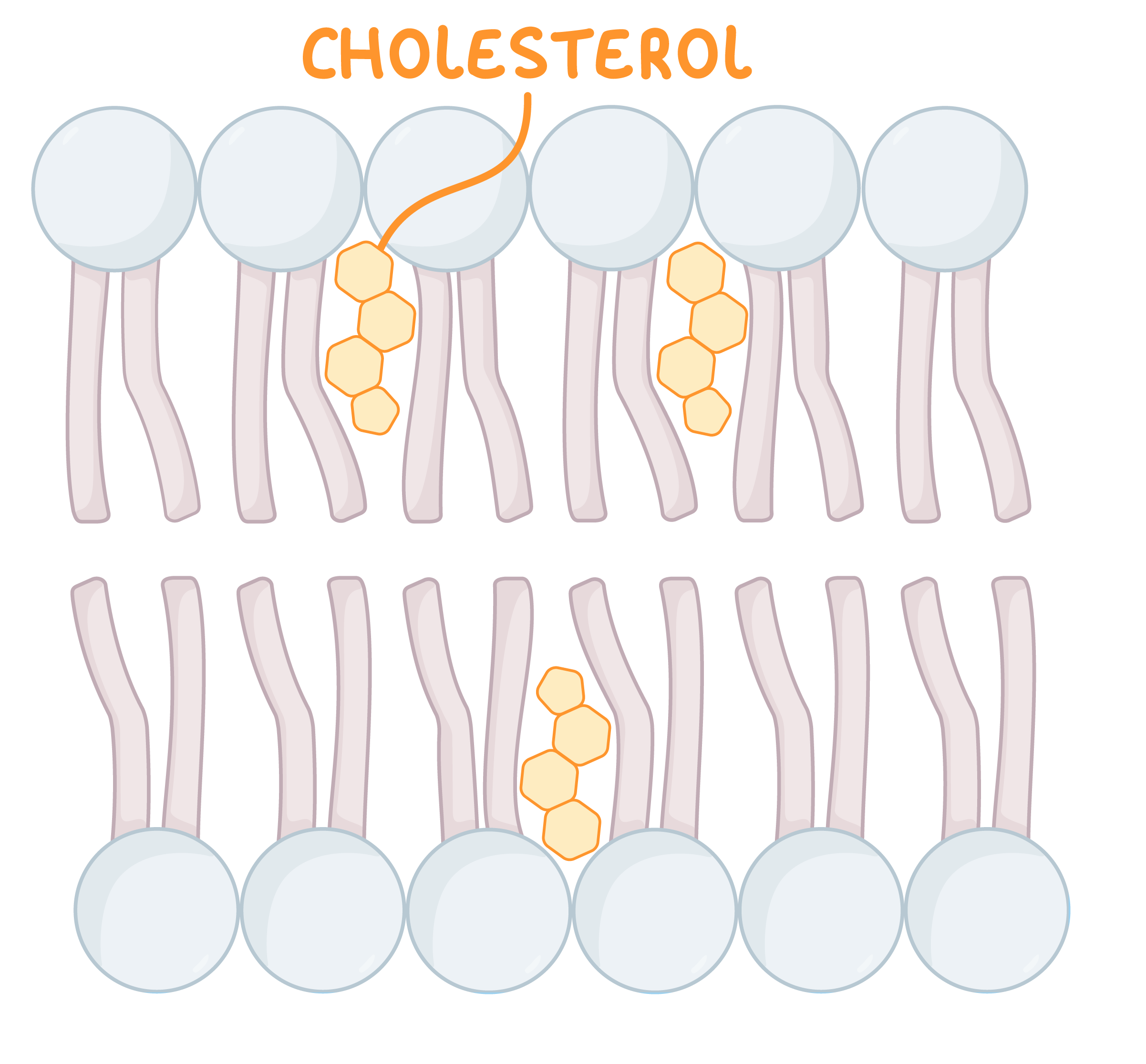
Cholesterol binds to phospholipid fatty acid tails, causing the phospholipids to pack more closely together. This reduces the fluidity of the cell membrane.
Comparing triglycerides and phospholipids