12.5 - Specific Immune System: Cellular Response
- 1
The different types of lymphocytes
- 2
The different types of T cells
- 3
The role of T cells in the cellular response
Specific defence mechanisms
Specific defence mechanisms are slower than non-specific defences, but they produce a unique response for each type of pathogen. They also provide long-term immunity against specific pathogens.
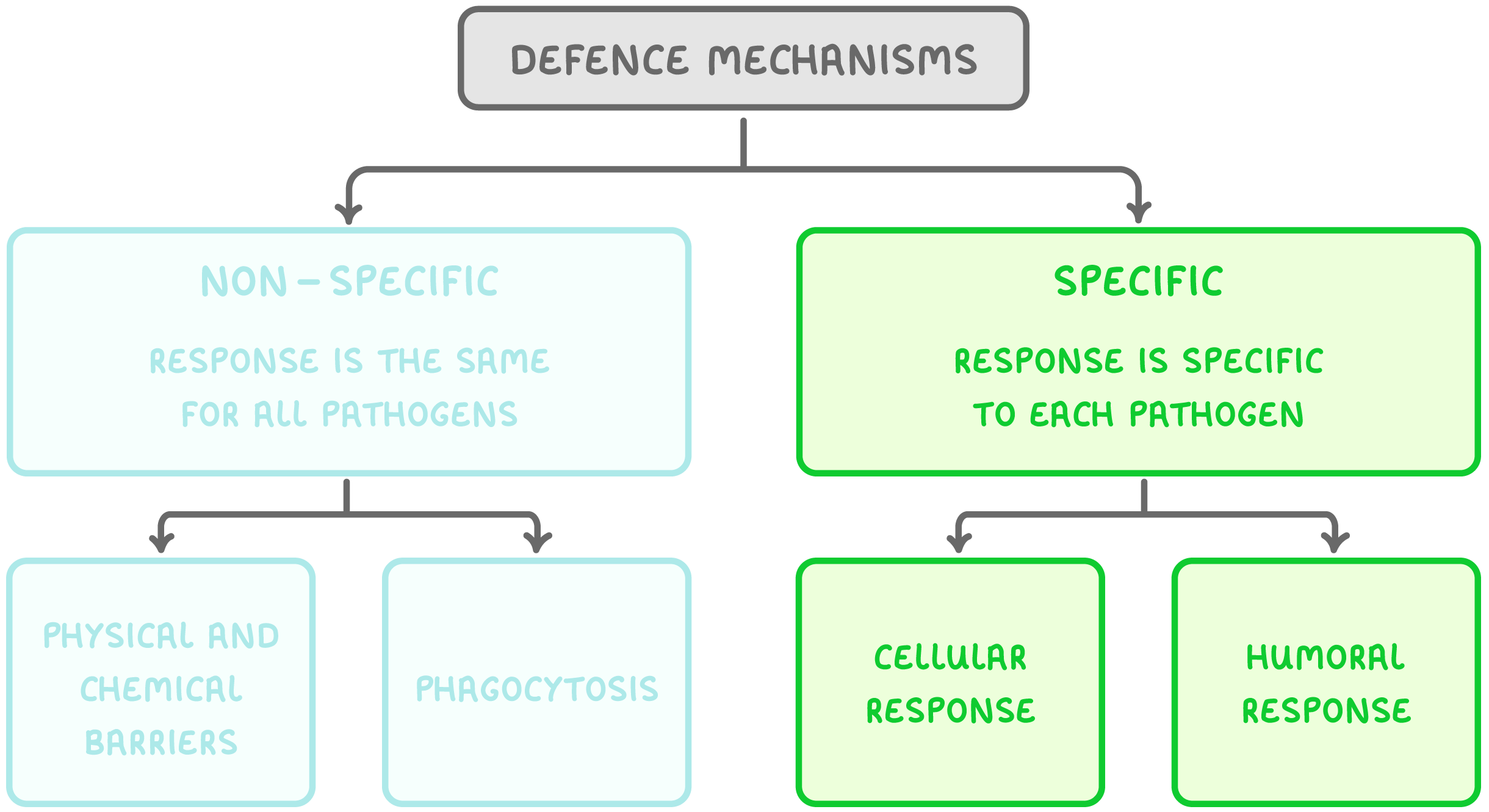
The specific immune response depends on a type of white blood cell known as a lymphocyte. These cells are produced in the bone marrow.
There are two types of lymphocyte:
- T lymphocytes or T cells - T cells mature in the thymus gland. They are involved in the cellular response where they respond to antigens presented on body cells.
- B lymphocytes or B cells - B cells mature in the bone marrow. They are involved in the humoral response where they produce antibodies found in body fluids (or humors).
T cells
You need to know about the following types of T cell:
-
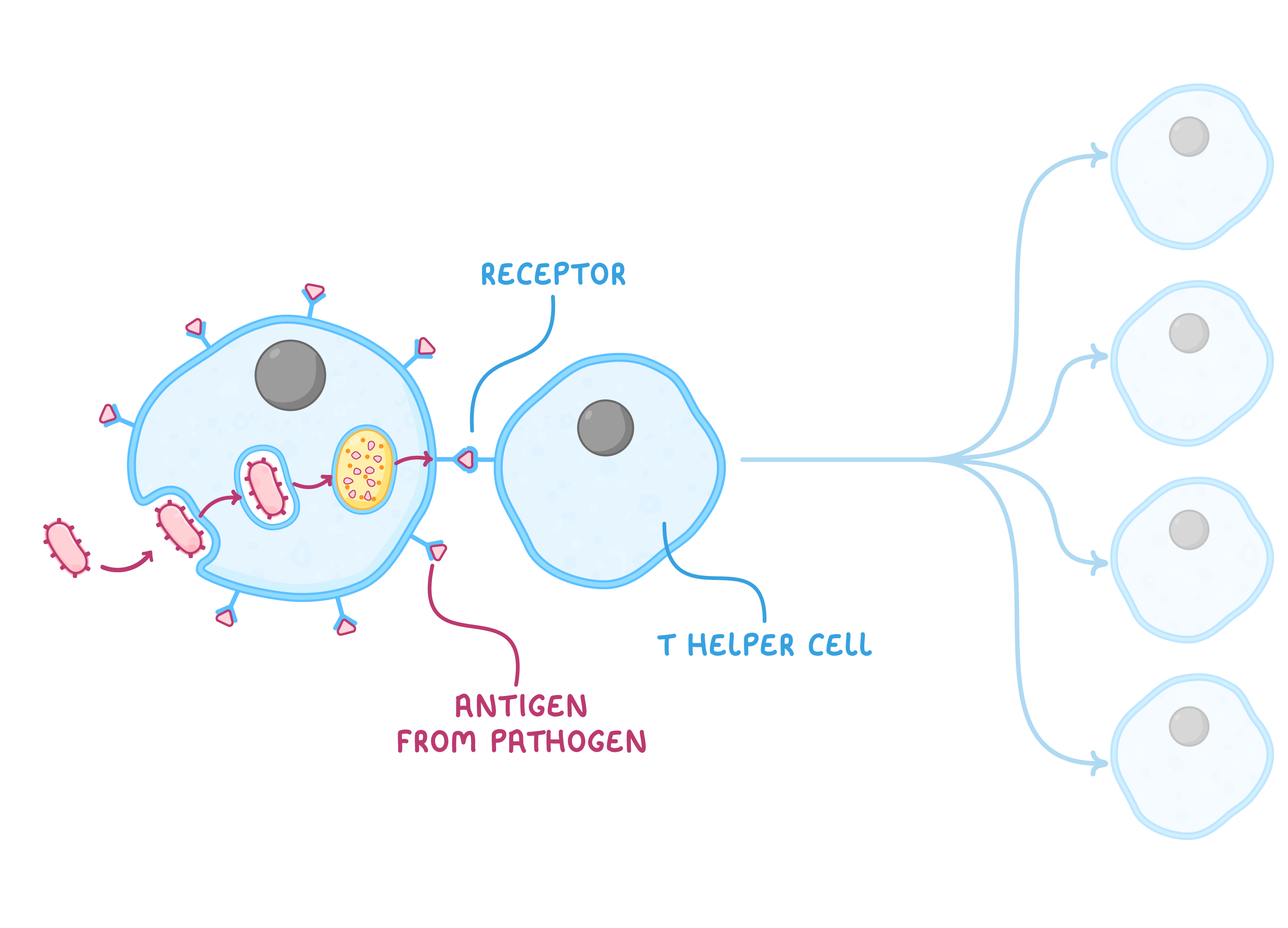
T helper cells These cells have receptors on their cell-surface that bind to complementary antigens on antigen-presenting cells. They produce interleukins (a type of cytokine) which stimulate B cells or phagocytes. T helper cells can also form memory cells or T killer cells.
-
T killer cells These cells kill abnormal and foreign cells by producing a protein known as perforin. This protein makes holes in the cell-surface membrane, causing it to become freely permeable and causing cell death.
-
T regulator cells These cells suppress the immune system after pathogens have been destroyed. This helps to prevent the immune system from mistakenly attacking the body cells.
-
T memory cells These cells provide long-term immunity against specific pathogens. They provide a rapid response if the body is re-infected by the same pathogen.
Stages of the cellular response
The cellular response is so-called because T cells will only respond to antigens presented on body cells rather than antigens within body fluid.
The stages of the cellular response are as follows:
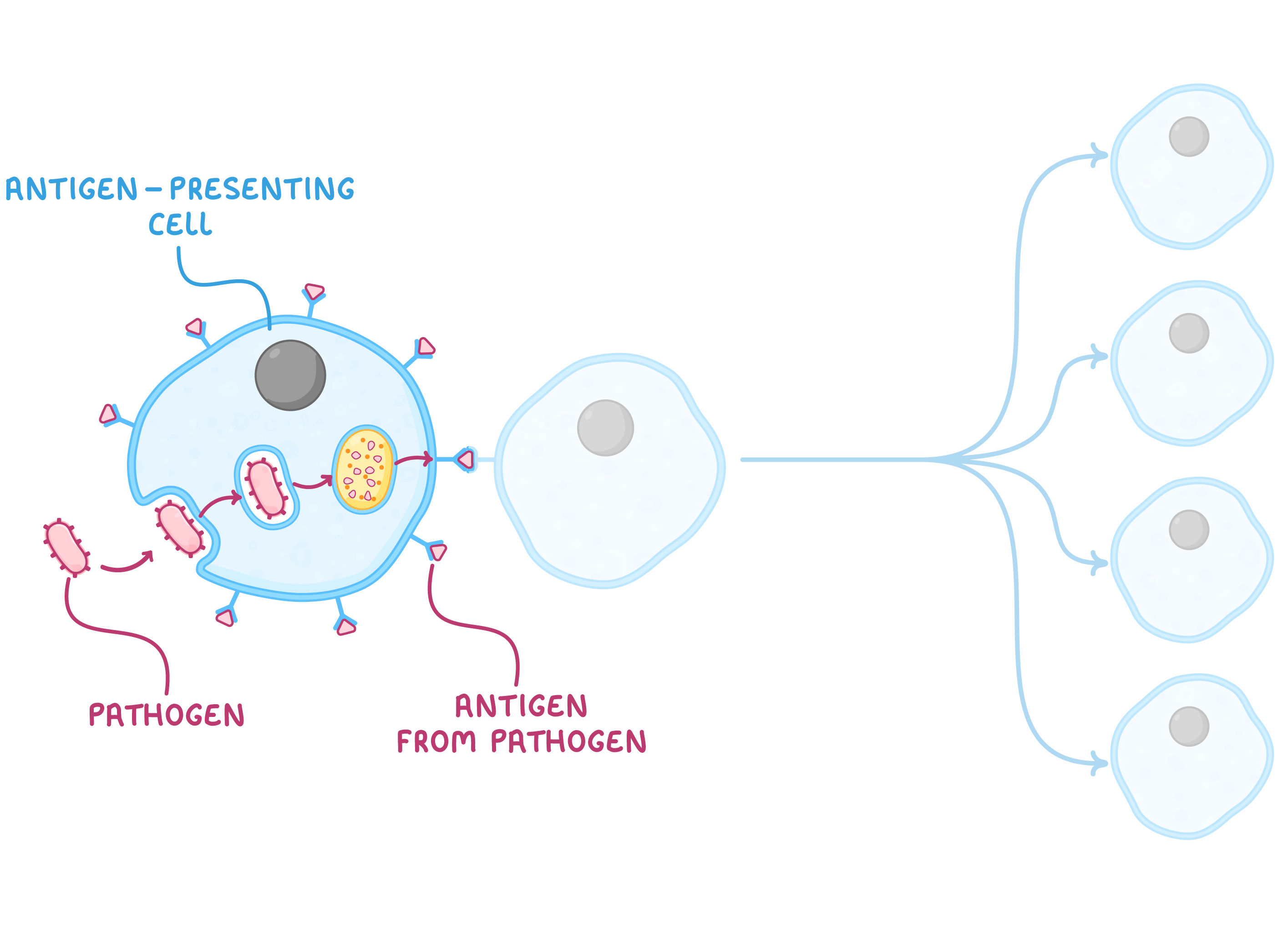
Image 1 of 3: Macrophages engulf pathogens and display their antigens on the cell-surface. They are now known as antigen-presenting cells.
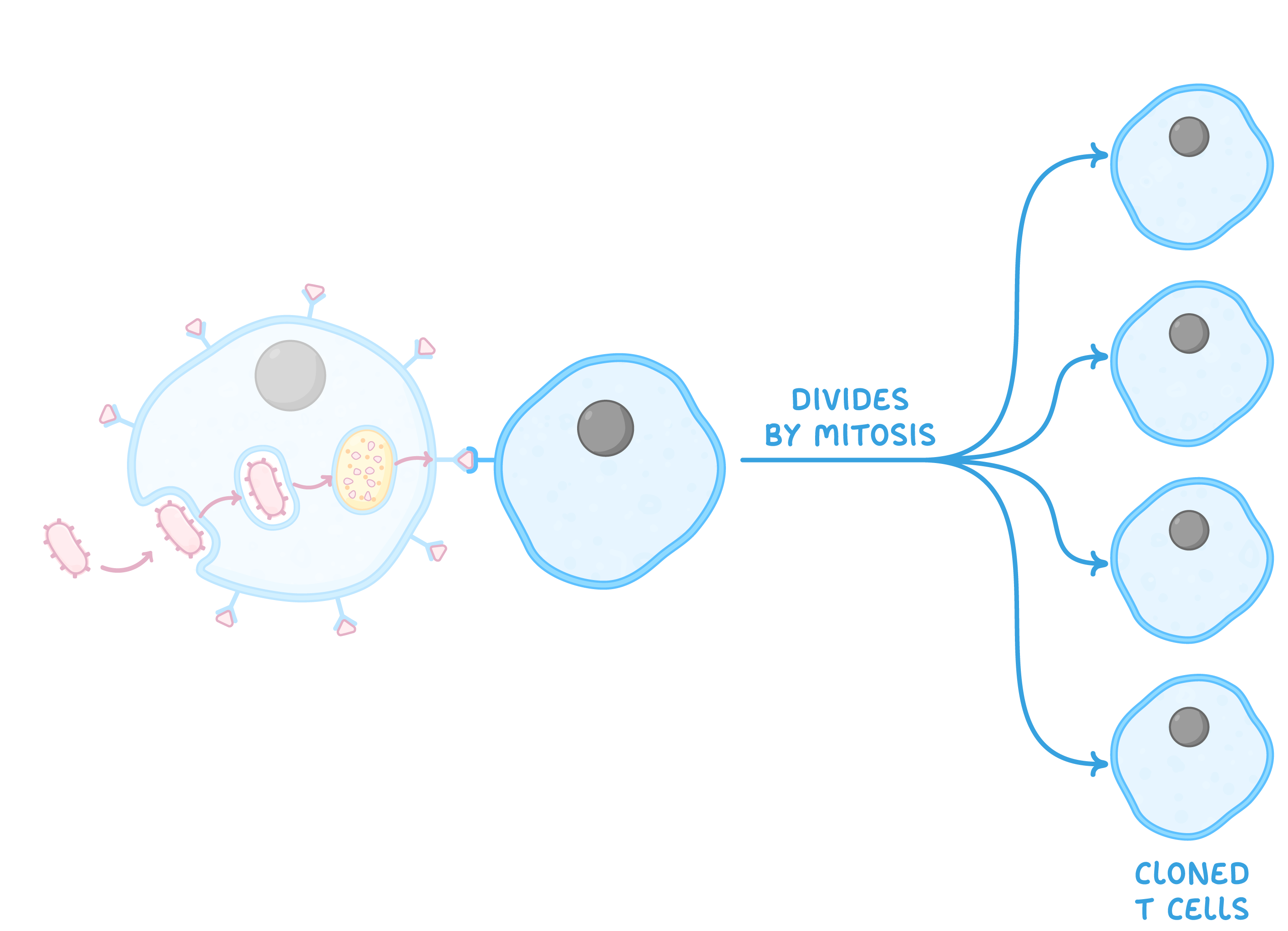
The cloned T cells can carry out different functions:
- Develop into memory cells - These circulate in the body to provide long-term immunity.
- Develop into T killer cells - These destroy infected cells.
- Stimulate phagocytosis - Cells produce interleukins, which stimulate phagocytes to engulf pathogens.
- Stimulate division of B cells - Cells produce interleukins, which stimulate B cells to divide and produce antibodies.