4.2 - Factors Affecting Enzyme Activity
- 1
What happens when an enzyme is denatured
- 2
The effects of temperature and pH on enzyme-catalysed reactions
- 3
The effects of enzyme and substrate concentration on enzyme-catalysed reactions
Enzyme denaturation
Changes in temperature or pH can affect the rate of enzyme-catalysed reactions.
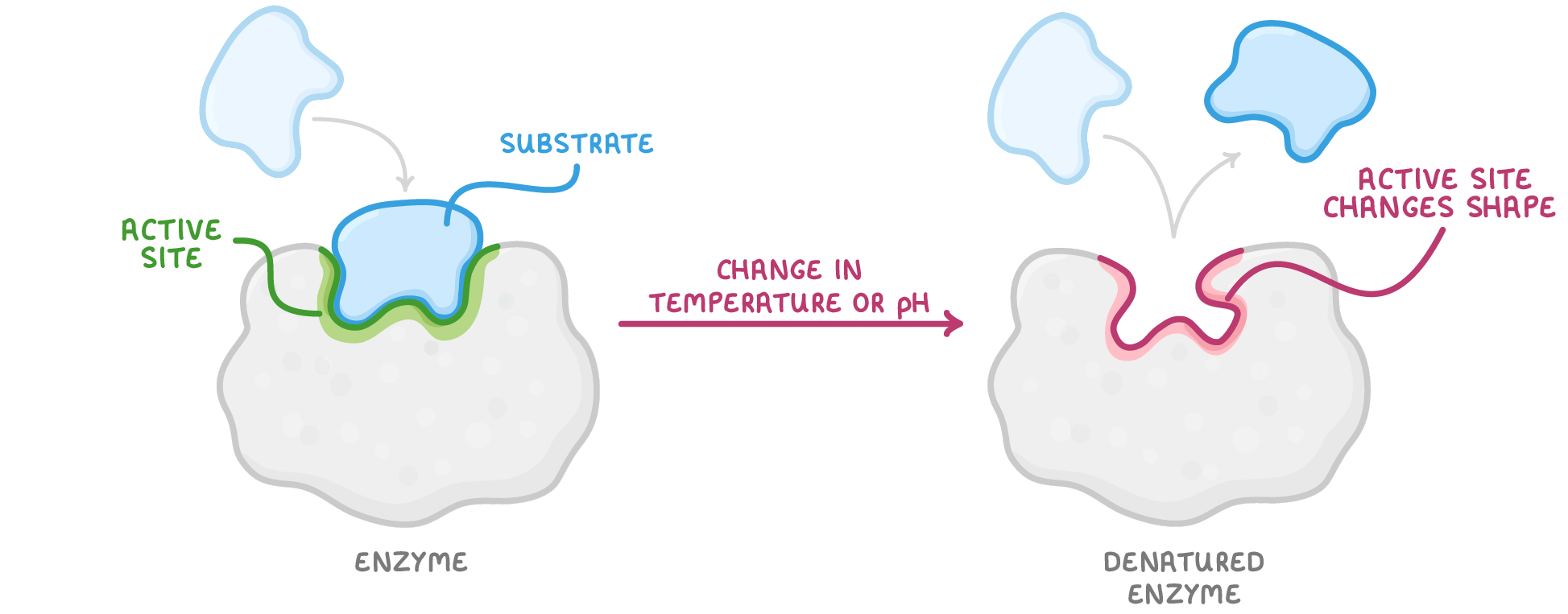
Drastic temperature increases or changes to the pH causes bonds to break, changing the enzyme's tertiary structure.
This causes the active site to change shape so that the substrate no longer fits. This means that enzyme-substrate complexes cannot be formed and the enzyme is denatured.
Different factors affect the rate of enzyme-controlled reactions
You need to be able to describe and explain how the four factors affect enzyme reactions.
These factors are:
- Temperature
- pH
- Substrate concentration
- Enzyme concentration
Temperature
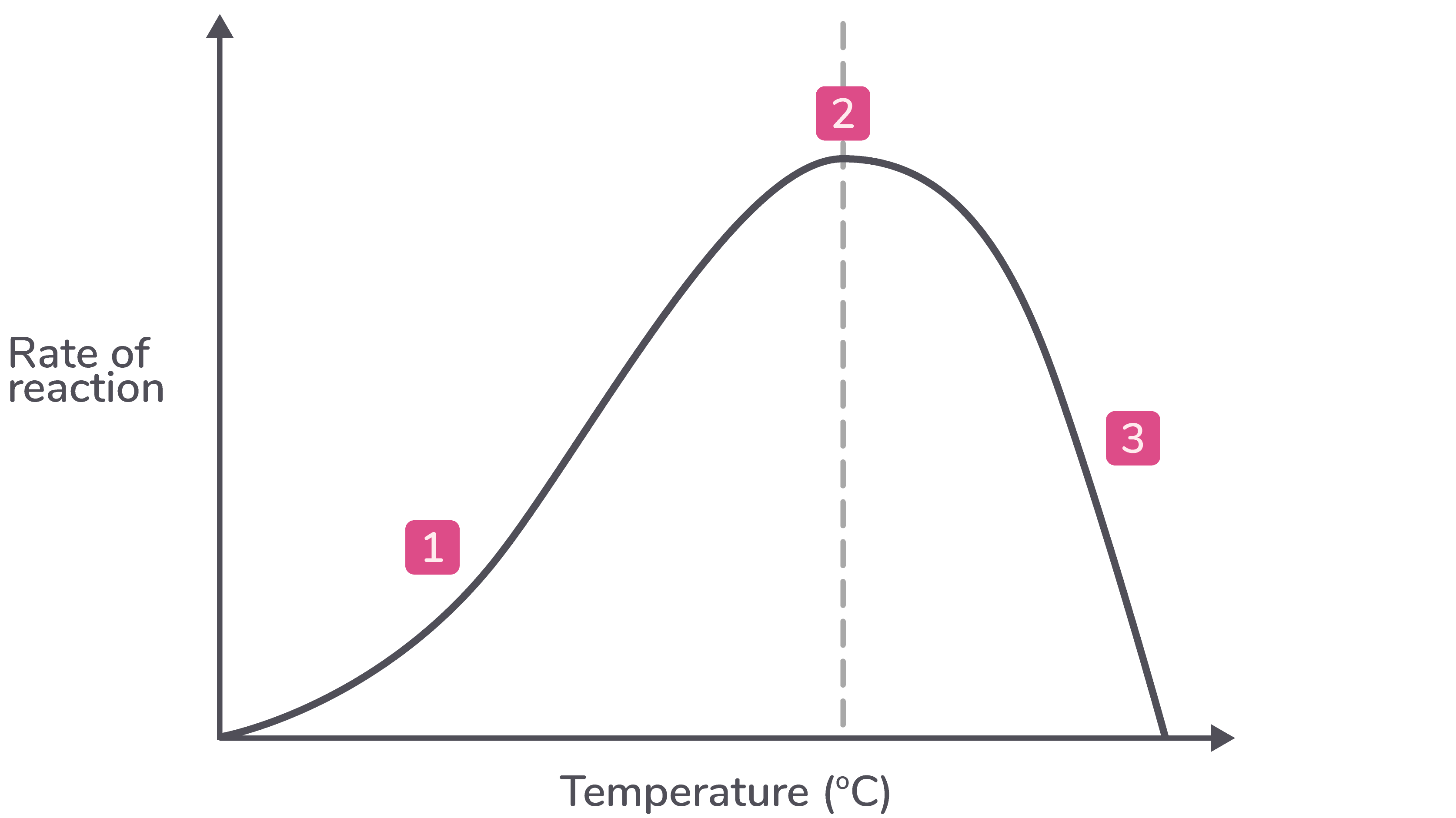
All enzymes have an optimum temperature, but these can vary. The graph below shows how temperature affects the rate of a specific enzyme-catalysed reaction.
Description
- As temperature increases, the rate of reaction increases.
- The maximum rate is reached at the optimum temperature.
- As temperature increases past the optimum, the rate of reaction decreases until the reaction stops.
Explanation
- The molecules have more kinetic energy, causing more collisions and enzyme-substrate complexes.
- The optimum temperature is the temperature this enzyme works fastest at.
- Too much kinetic energy causes the active site to change shape and the enzyme denatures.
Temperature coefficient (Q10)
The temperature coefficient (Q10) is a value that shows how much the rate of reaction changes when the temperature is increased by 10°C.
It can be calculated using this formula:
Where:
- R2 = The rate of reaction at the higher temperature (+10°C).
- R1 = The rate of reaction at the lower temperature.
Worked example - Calculating Q10
Given that at 20°C, the rate of reaction is 5 products produced per minute, and at 30°C, the rate of reaction is 10 products produced per minute, calculate Q10.
Step 1: Equation
Step 2: Substitution and correct evaluation
pH
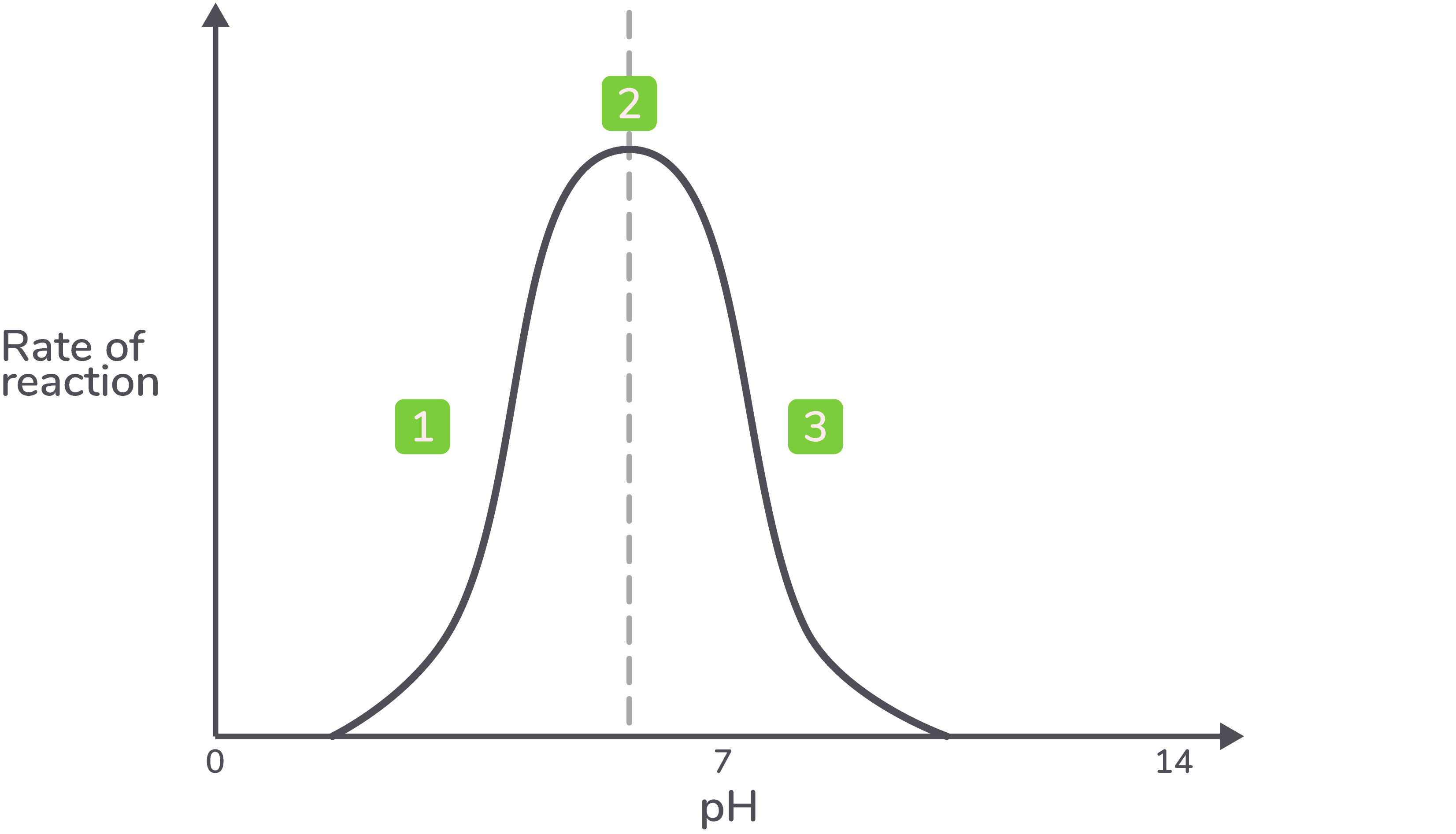
All enzymes have an optimum pH, but these can vary. The graph below shows how pH affects the rate of a specific enzyme-catalysed reaction.
Description
- Below the optimum pH, the rate of reaction is low or zero.
- The maximum rate of reaction is reached at the optimum pH.
- Above the optimum pH, the rate of reaction is low or zero.
Explanation
- In acidic conditions, H+ ions break ionic/hydrogen bonds and denature enzymes.
- The optimum pH is the pH the enzyme works fastest at.
- In alkaline conditions, OH- ions break ionic bonds or hydrogen bonds and denature enzymes.
Substrate concentration
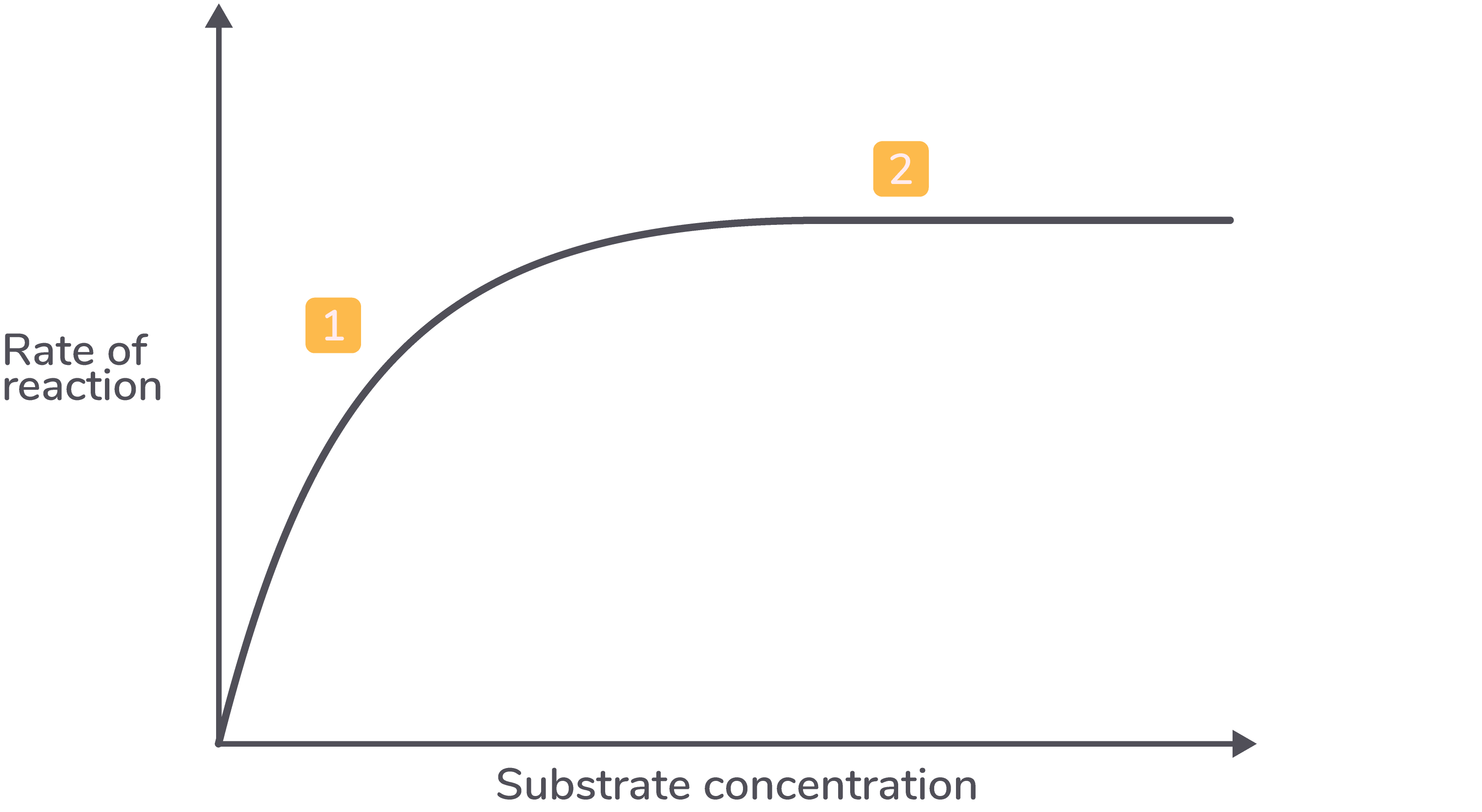
The graph below shows how substrate concentration affects the rate of an enzyme-catalysed reaction.
Description
- As the substrate concentration increases, the rate of reaction increases.
- As the substrate concentration increases further, the rate of reaction plateaus (levels off).
Explanation
- There are more substrate molecules to form more enzyme-substrate complexes.
- This is the saturation point, which is when all active sites are occupied by a substrate and enzyme concentration becomes the limiting factor.
Enzyme concentration
The graph below shows how enzyme concentration affects the rate of an enzyme-catalysed reaction.

Description
- As the enzyme concentration increases, the rate of reaction increases.
- As the enzyme concentration increases further, the rate of reaction plateaus (levels off).
Explanation
- There are more enzyme molecules to form more enzyme-substrate complexes.
- All substrate molecules available are being acted upon and substrate concentration becomes the limiting factor.