6.1 - Cell Cycle
- 1
The phases of the cell cycle
- 2
The processes that take place during interphase
- 3
How checkpoints are used to regulate the cell cycle
Cell cycle
Organisms need new cells to grow and repair tissues in the body. Not all cells in the body are capable of dividing, but those that are follow a sequence of steps known as the cell cycle.
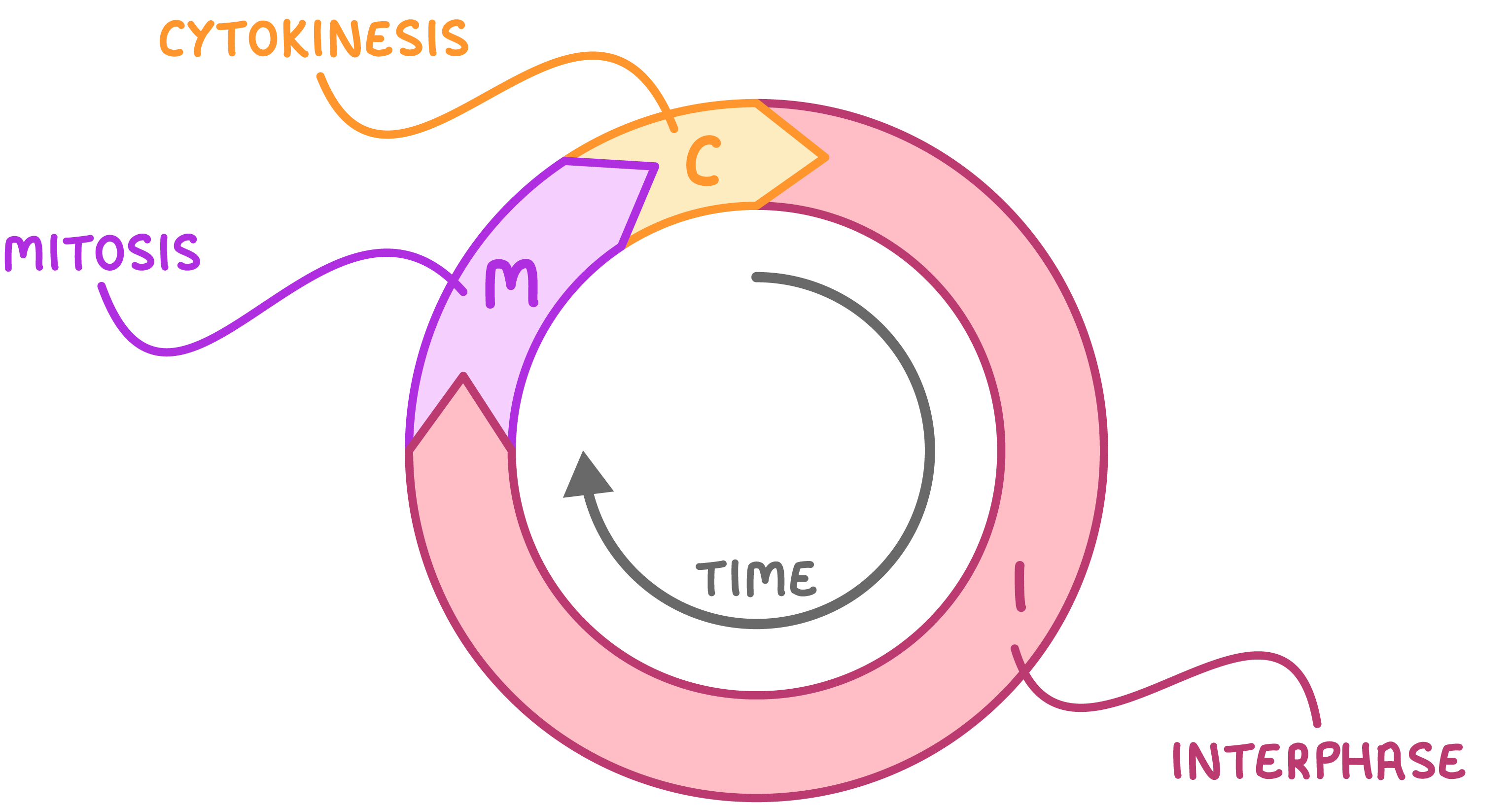
The cell cycle consists of three main phases:
- Interphase - This occupies the majority of the cycle as cells prepare for division.
- Mitosis - This is when the nucleus of the cell divides in two.
- Cytokinesis - This is when the whole cell and cytoplasm divides in two to produce two identical cells.
Interphase
During interphase, cells carry out their usual functions whilst also preparing for cell division. This involves replicating the DNA and organelles.
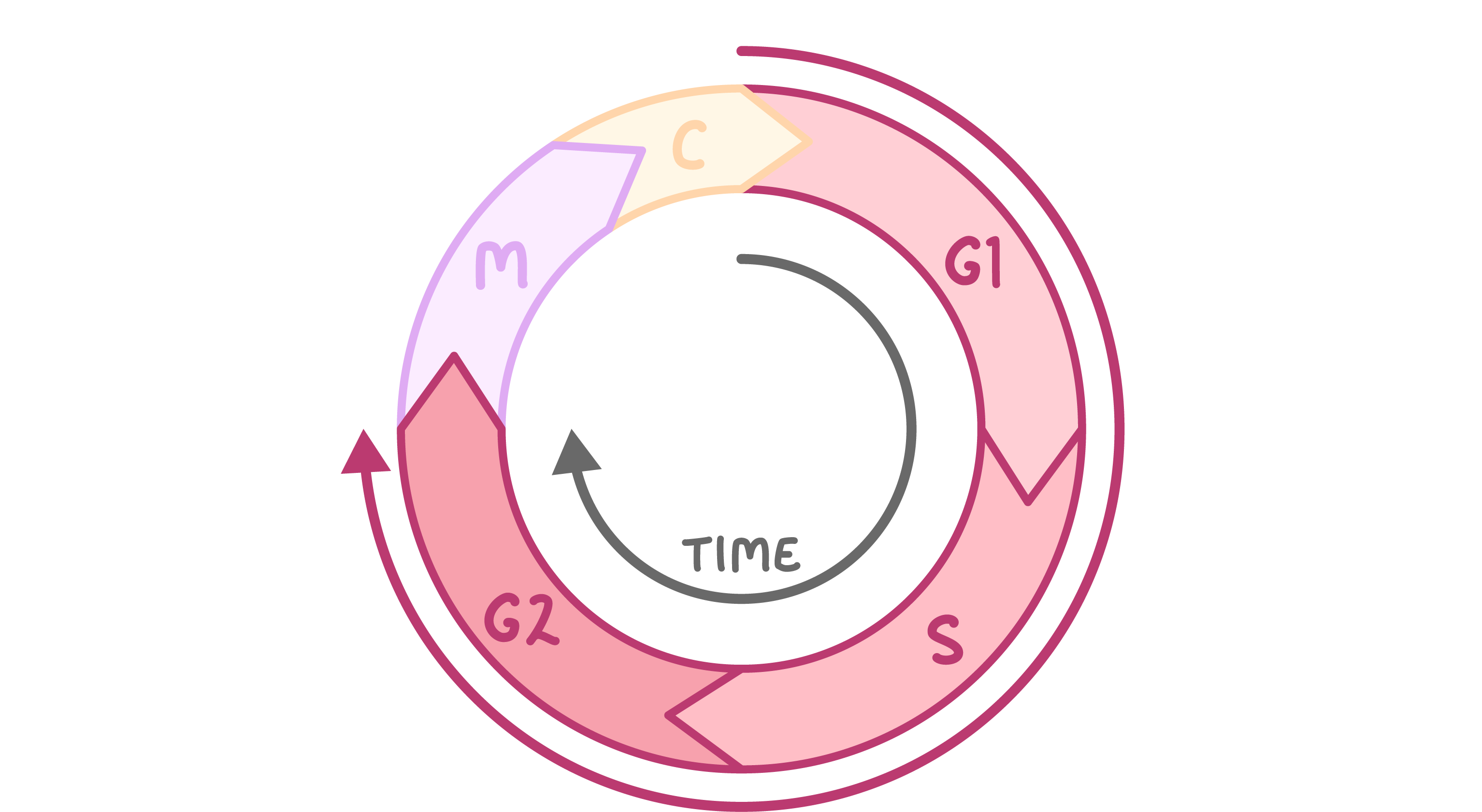
Interphase consists of three phases:
- G1 phase - This is when the cell grows and makes new proteins to replicate organelles.
- S phase - This is when DNA is replicated.
- G2 phase - This is when the cell continues to grow and replicated DNA is checked for errors.
Cell cycle checkpoints
During the cell cycle, the cell must pass various checkpoints in order to progress to the next stage. These checkpoints assess whether the processes at each phase of the cycle have been accurately completed.
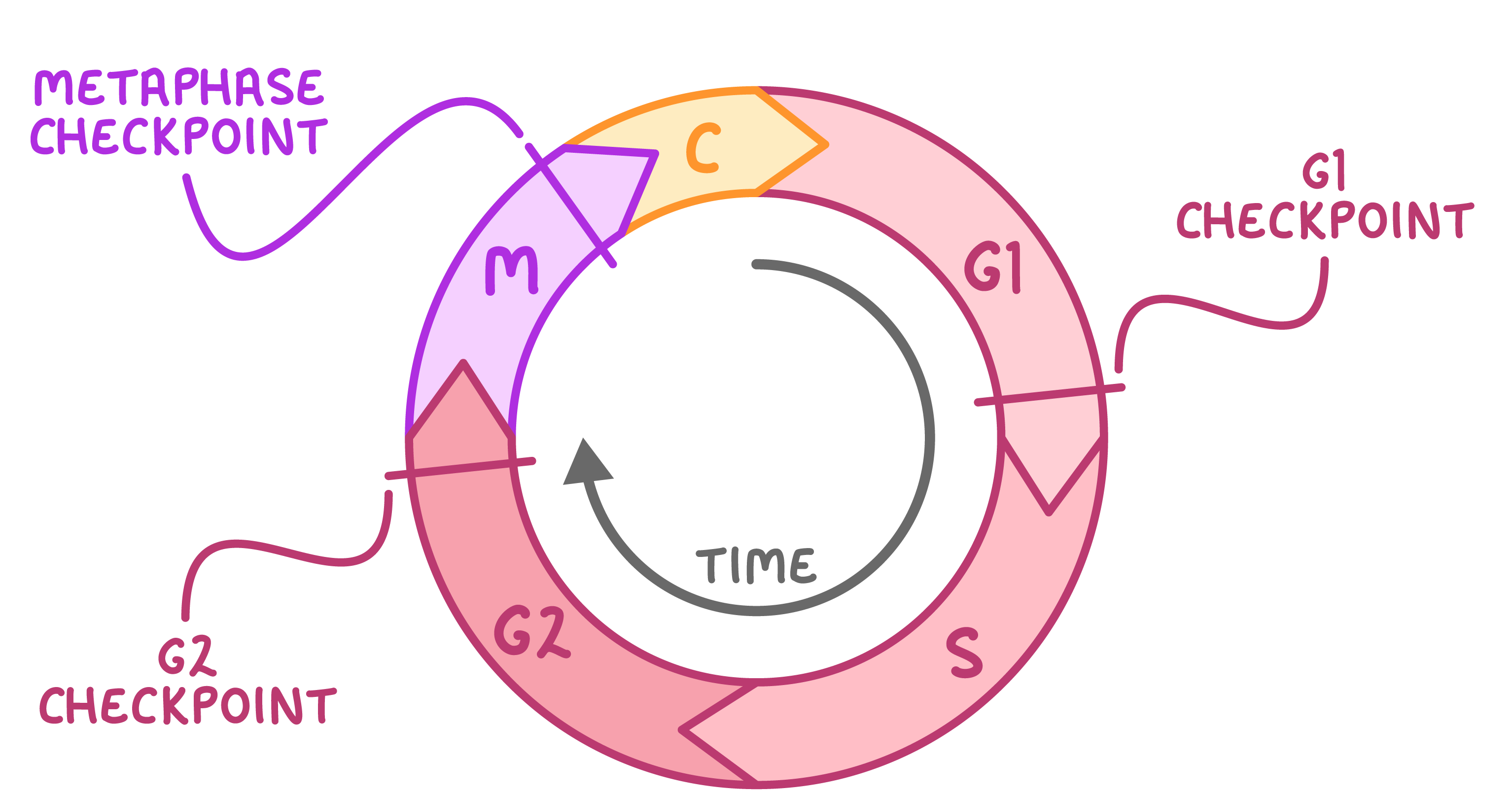
There are three checkpoints you need to be able to describe:
- G1 checkpoint - This checks that the cell has the chemicals needed for replication and for any damage to the DNA.
- G2 checkpoint - This checks that DNA has been replicated without any errors (if errors are found, the cell tries to repair them).
- Metaphase checkpoint - Each chromosome is checked to ensure it is attached to the spindle. This will make more sense when we learn about mitosis in a later lesson.