1.7 - Prokaryotic Cells
- 1
The structure of prokaryotic cells
- 2
The functions of their cell parts
- 3
The similarities and differences between eukaryotes and prokaryotes
Prokaryotes
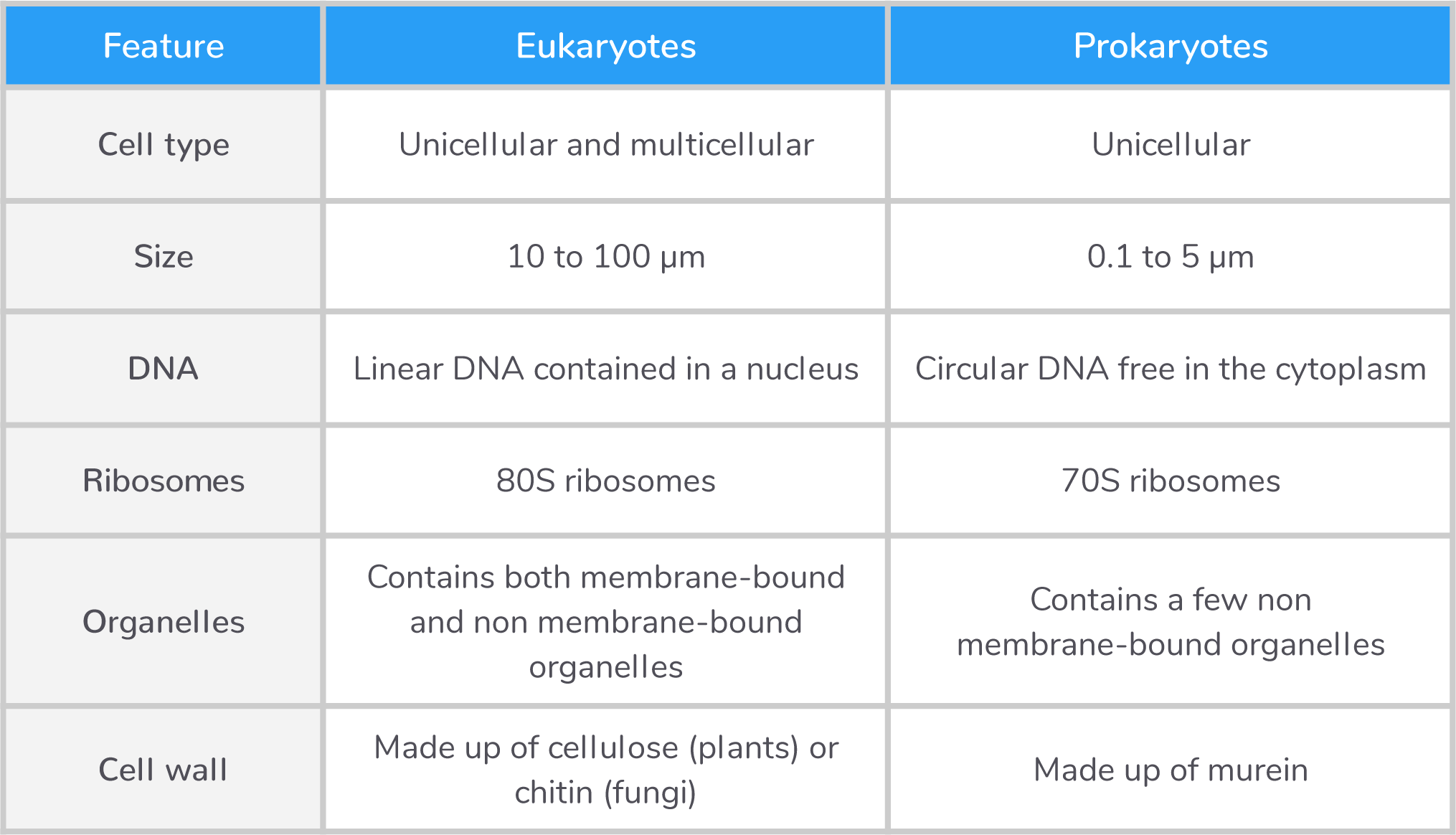
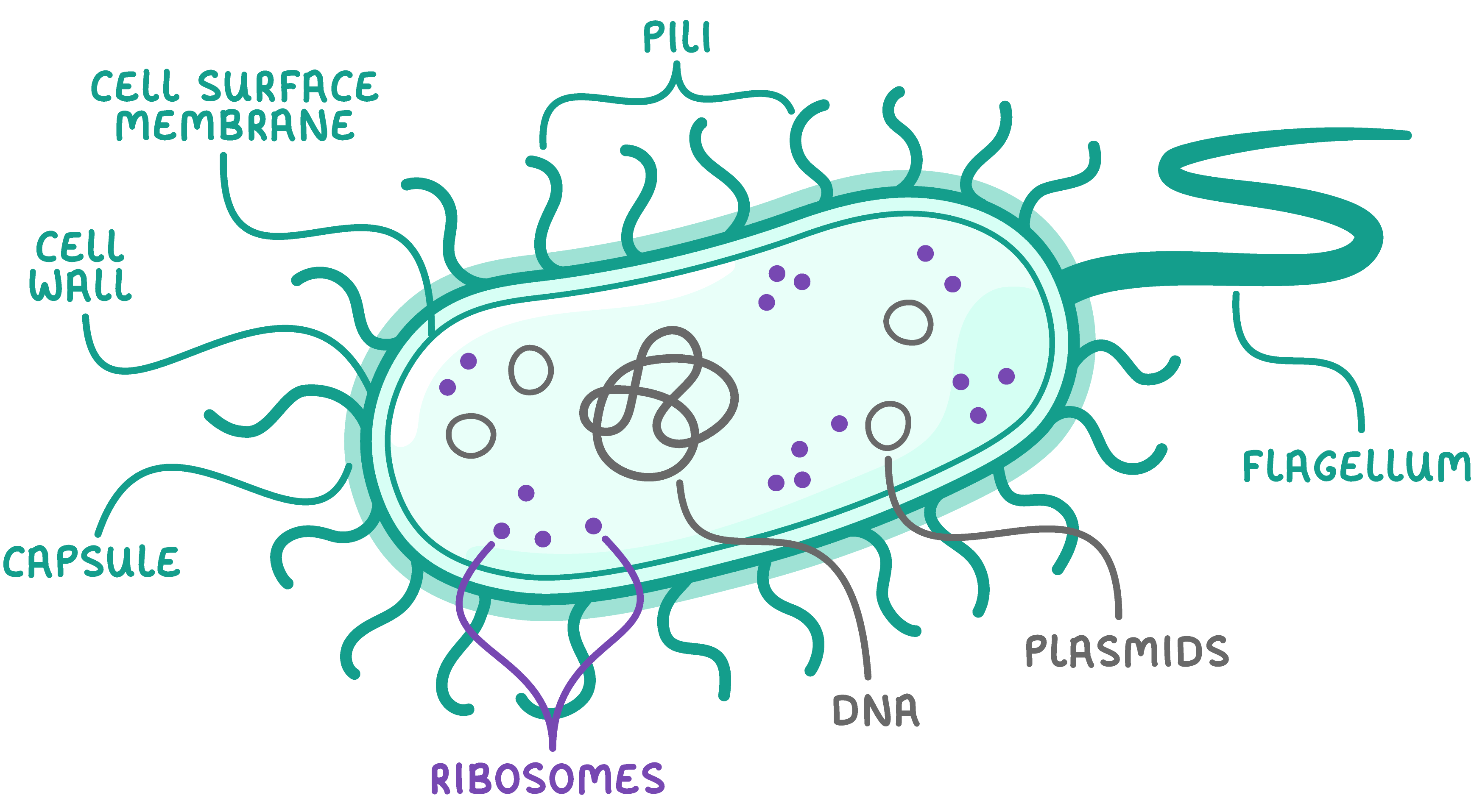
Prokaryotes are single-celled organisms, so consist of a single prokaryotic cell. These cells are much smaller than eukaryotic cells and do not contain a nucleus or other membrane-bound organelles.
The diagram below shows the basic structure of a prokaryotic cell.

How prokaryotic cells differ from eukaryotic cells:
- Cell wall - In prokaryotic cells, this is made of murein (peptidoglycan).
- Ribosomes - Prokaryotic cells have 70S ribosomes, which are smaller than the 80S ribosomes found in eukaryotic cells.
- Genetic material - In prokaryotic cells, this is mostly found in a large circular strand of DNA (sometimes called a circular chromosome or nucleoid), and some extra genes (like those for antibiotics resistance) are found in smaller loops called plasmids.
Prokaryotic organelles
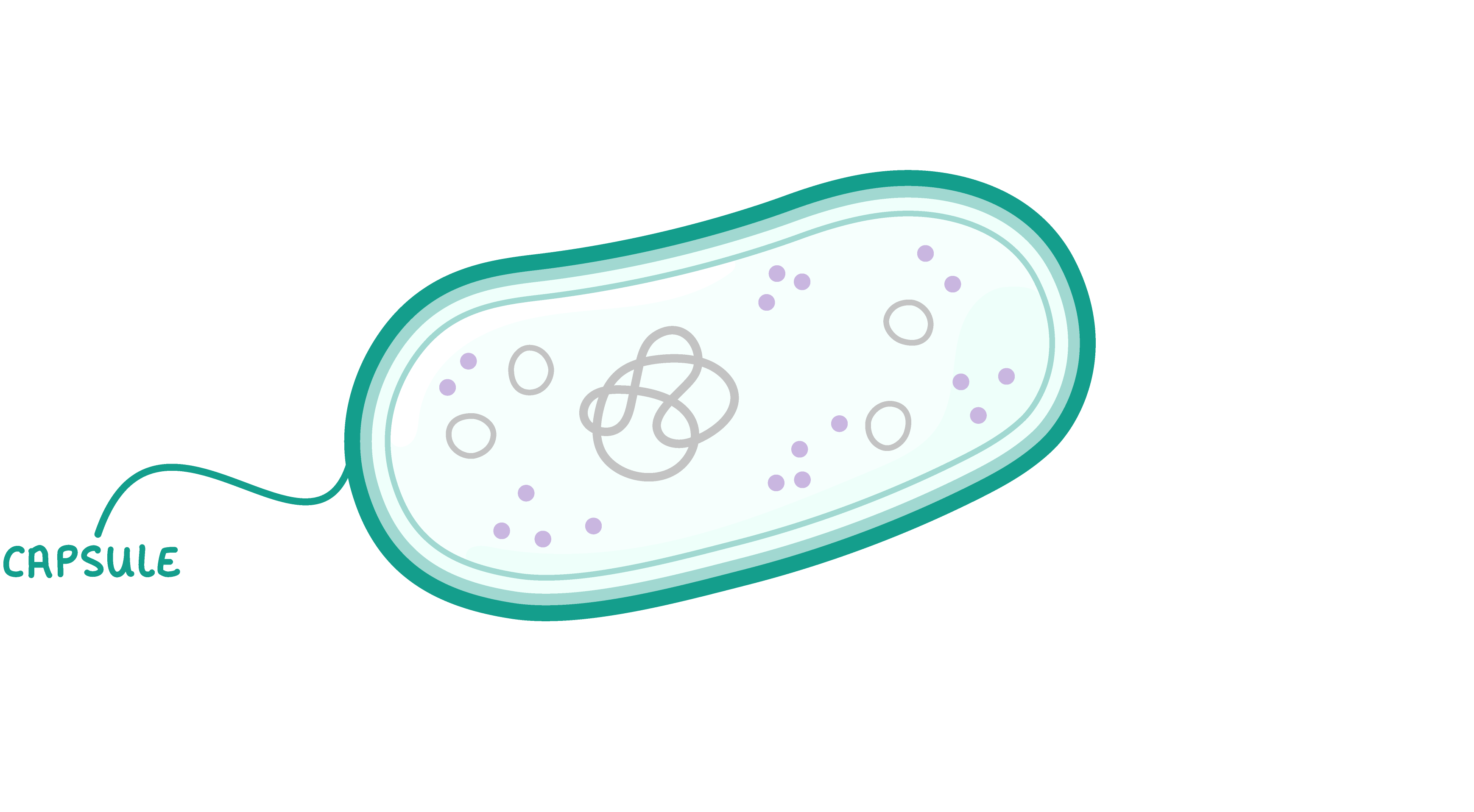
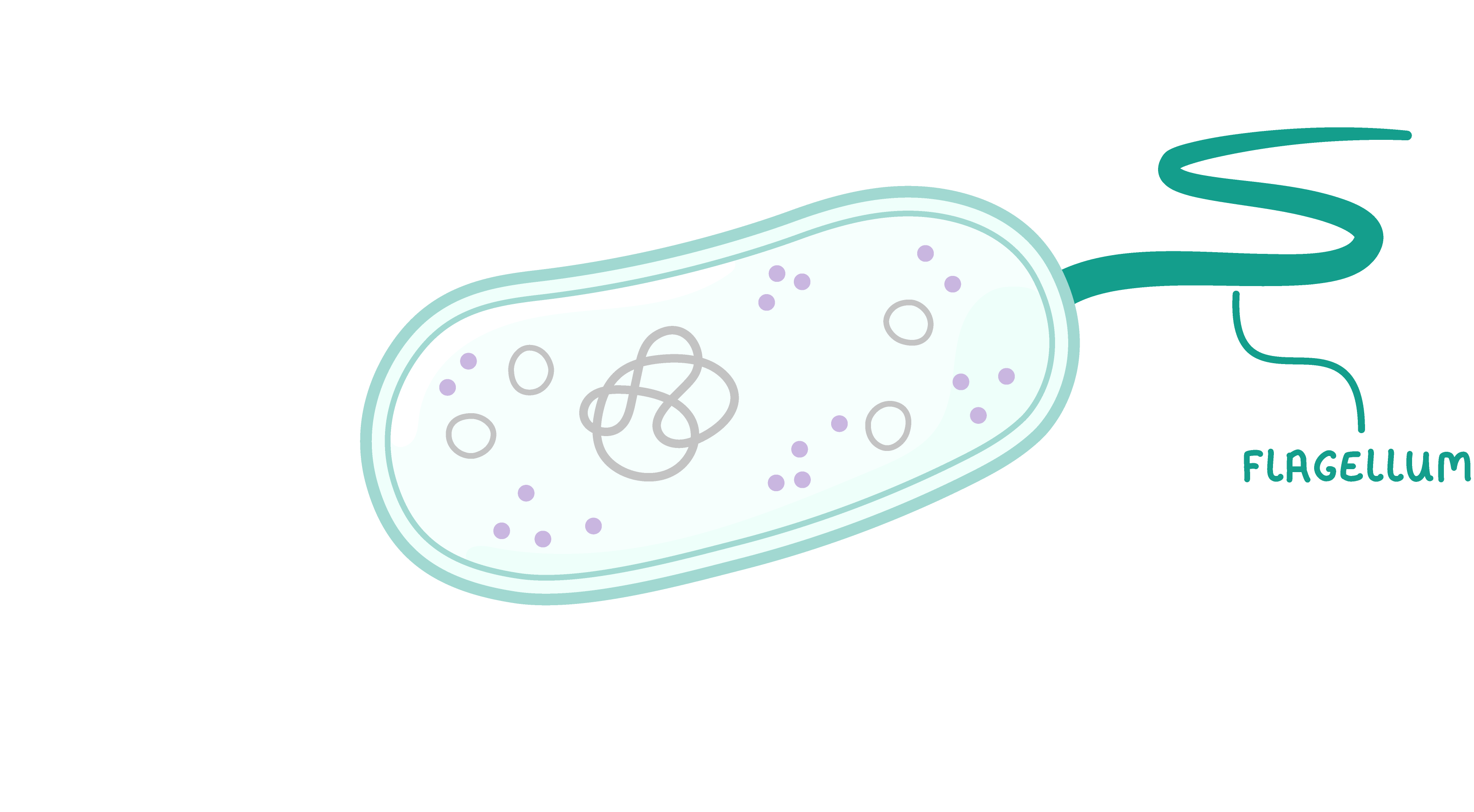
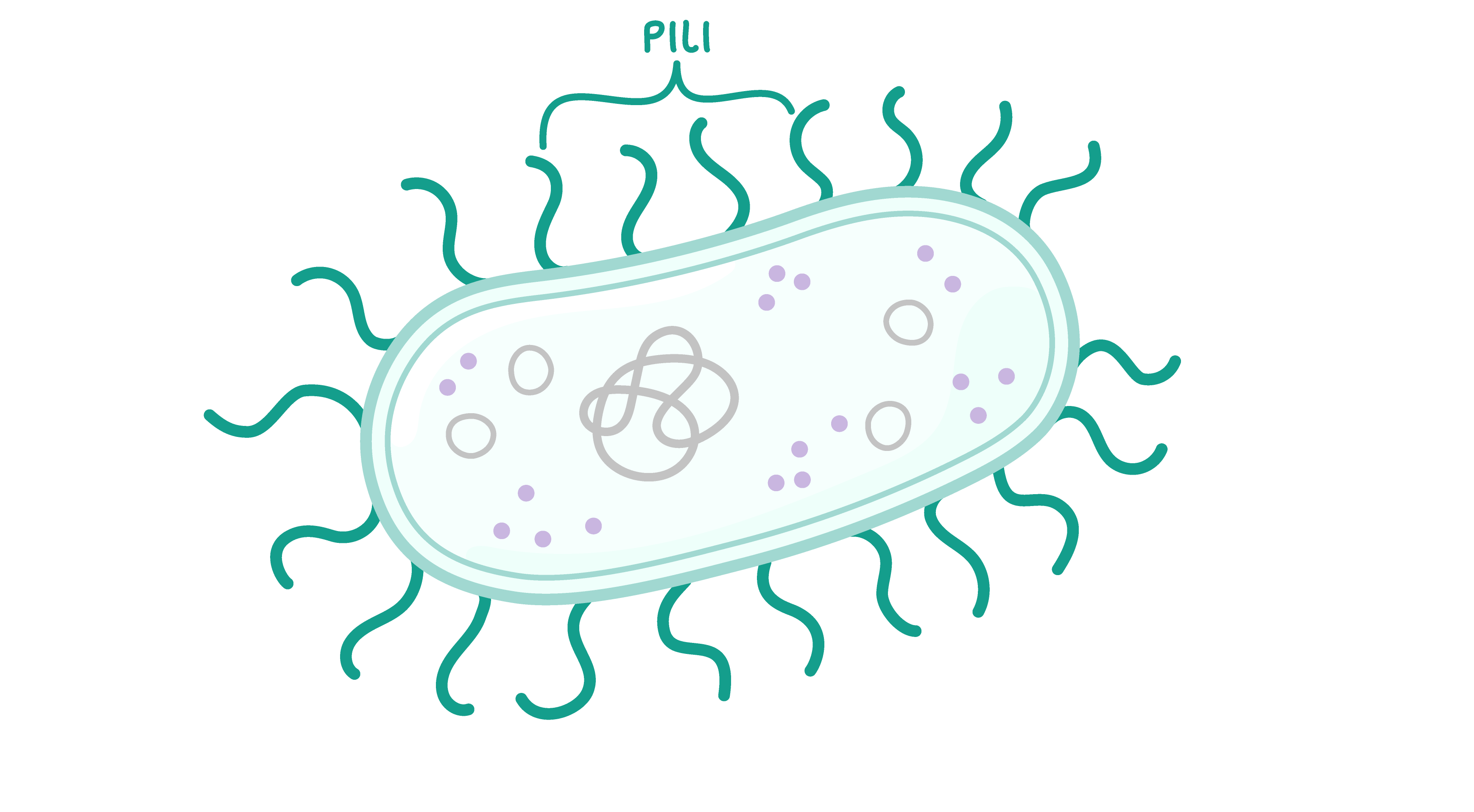
Prokaryotic cells may also contain additional organelles such as capsules, flagella and pili.
Image 1 of 4: Some prokaryotes (e.g. bacteria) have an extra layer around the cell wall known as a capsule. This structure is made up of polysaccharides and protects the cells from attack by antibiotics or white blood cells.
Comparing eukaryotes and prokaryotes