5.3 - Diffusion
- 1
The process of simple diffusion
- 2
The process of facilitated diffusion
- 3
How different factors affect the rate of diffusion
Diffusion
Diffusion is the net movement of particles from an area of higher concentration to an area of lower concentration.
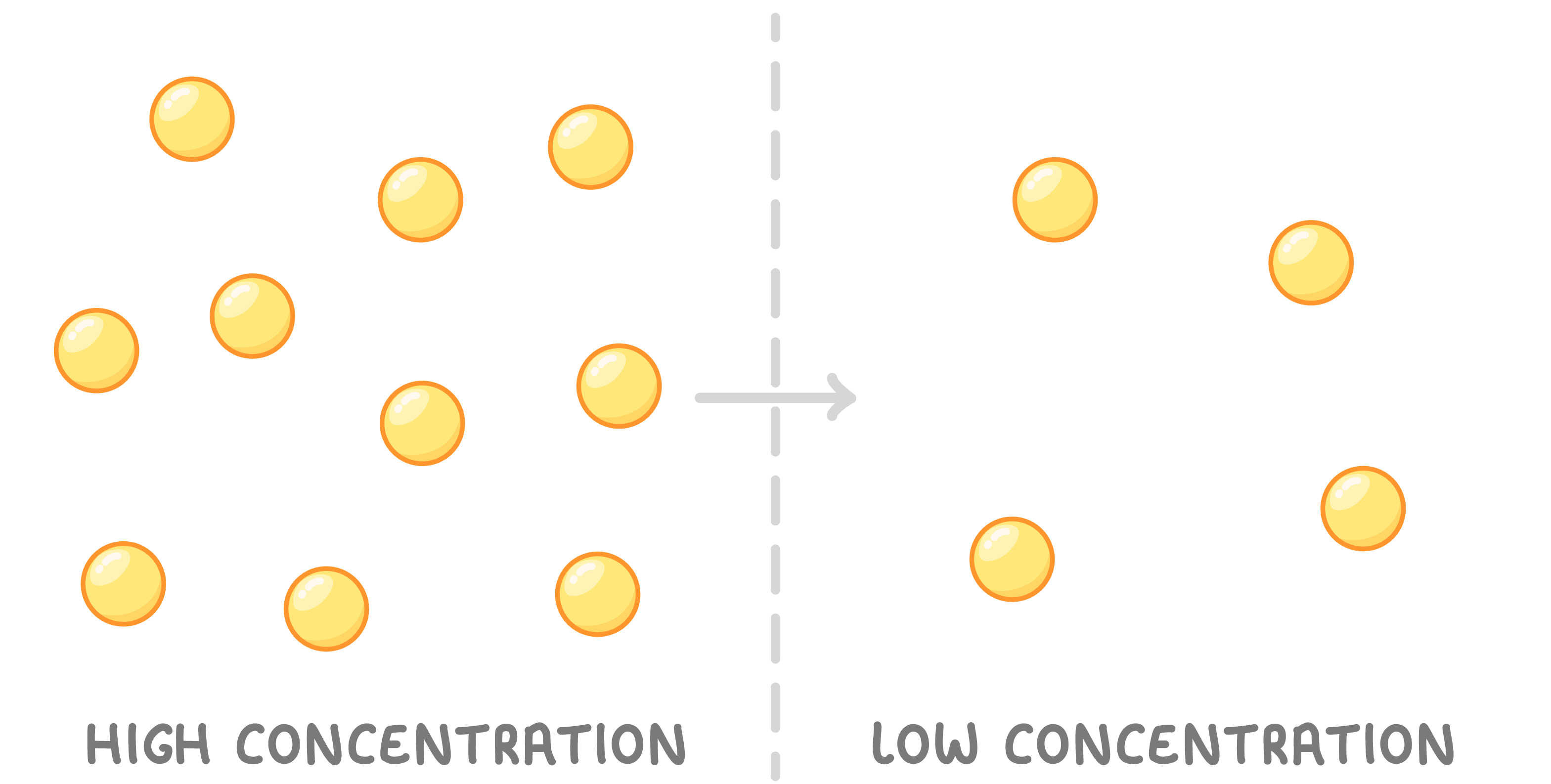
Particles diffuse down a concentration gradient and eventually reach equilibrium in which all particles are evenly distributed (but still moving).
Diffusion does not require energy and so is described as a passive process.
You need to know about two types of diffusion:
- Simple diffusion
- Facilitated diffusion
Simple diffusion
Some molecules can diffuse directly across cell membranes in a process known as simple diffusion.
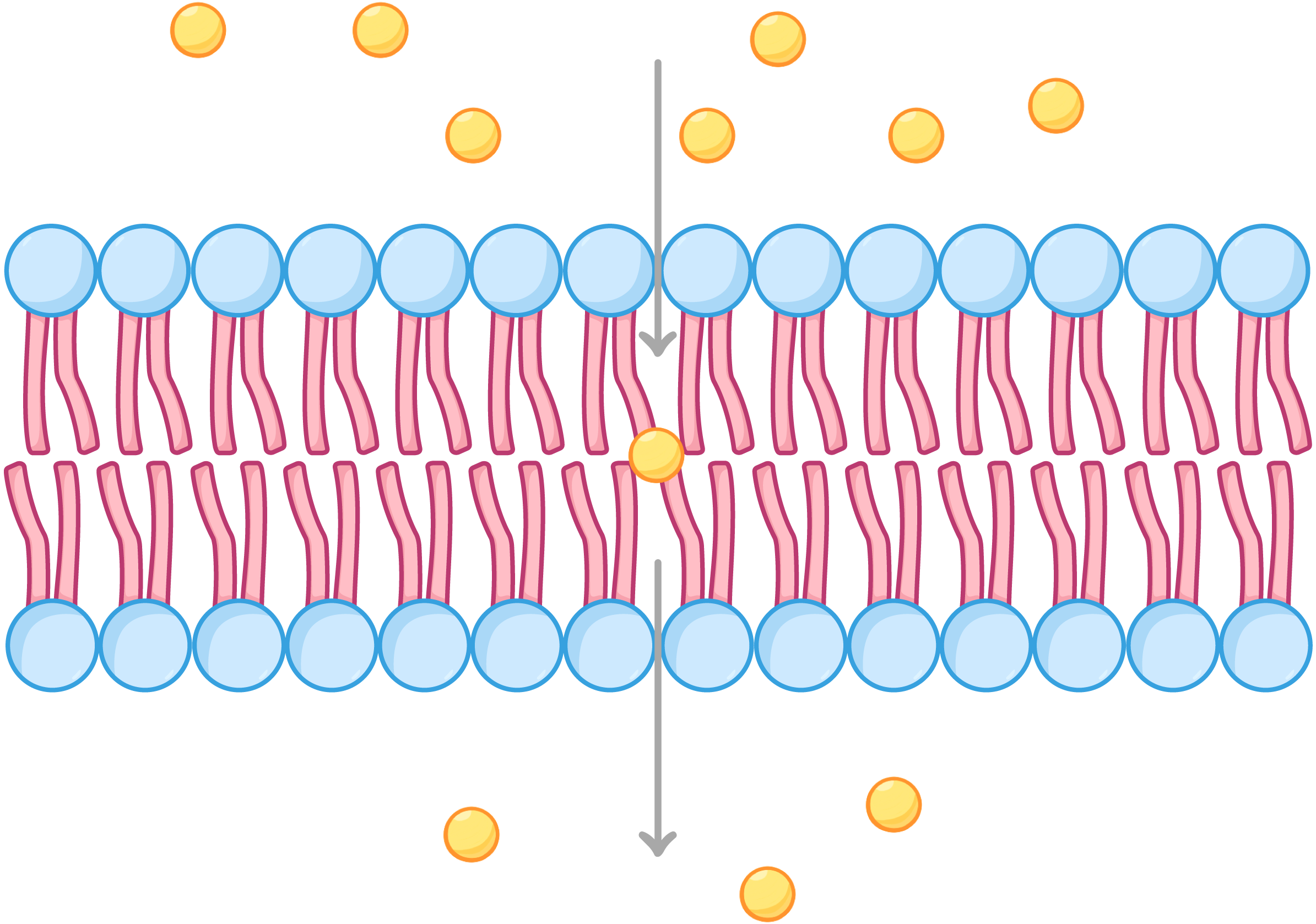
Oxygen and carbon dioxide can diffuse into cells via simple diffusion.
This is because they are:
- Small - This means that they can pass through the spaces between phospholipids.
- Non-polar - This means that they can dissolve in the hydrophobic core of the cell membrane.
Facilitated diffusion
Large or polar molecules can cross cell membranes in a process known as facilitated diffusion.
Facilitated diffusion involves two types of proteins:
- Carrier proteins
- Channel proteins
Each carrier or channel protein is highly specific, allowing only one or two types of molecule to pass through.
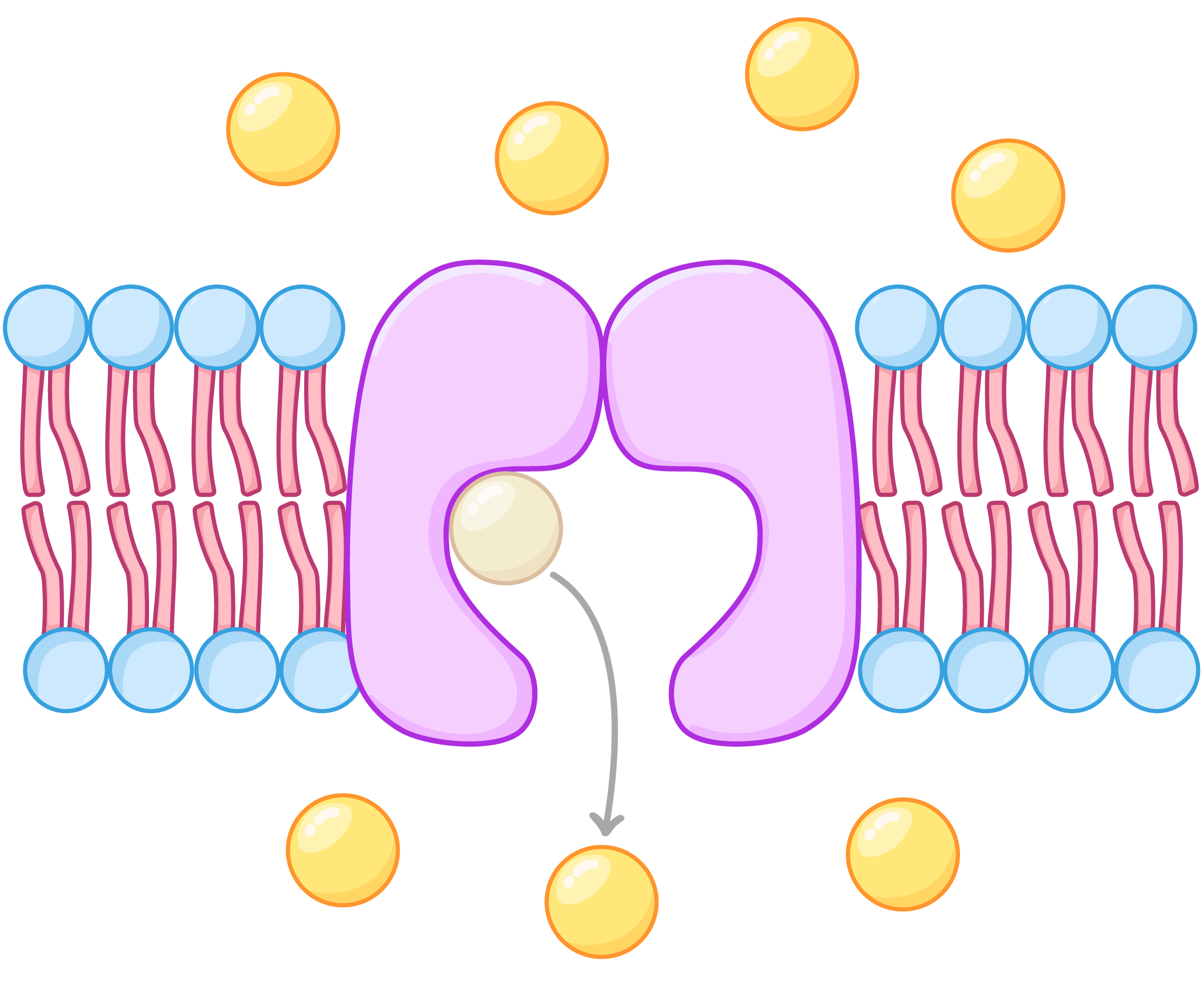
Carrier proteins
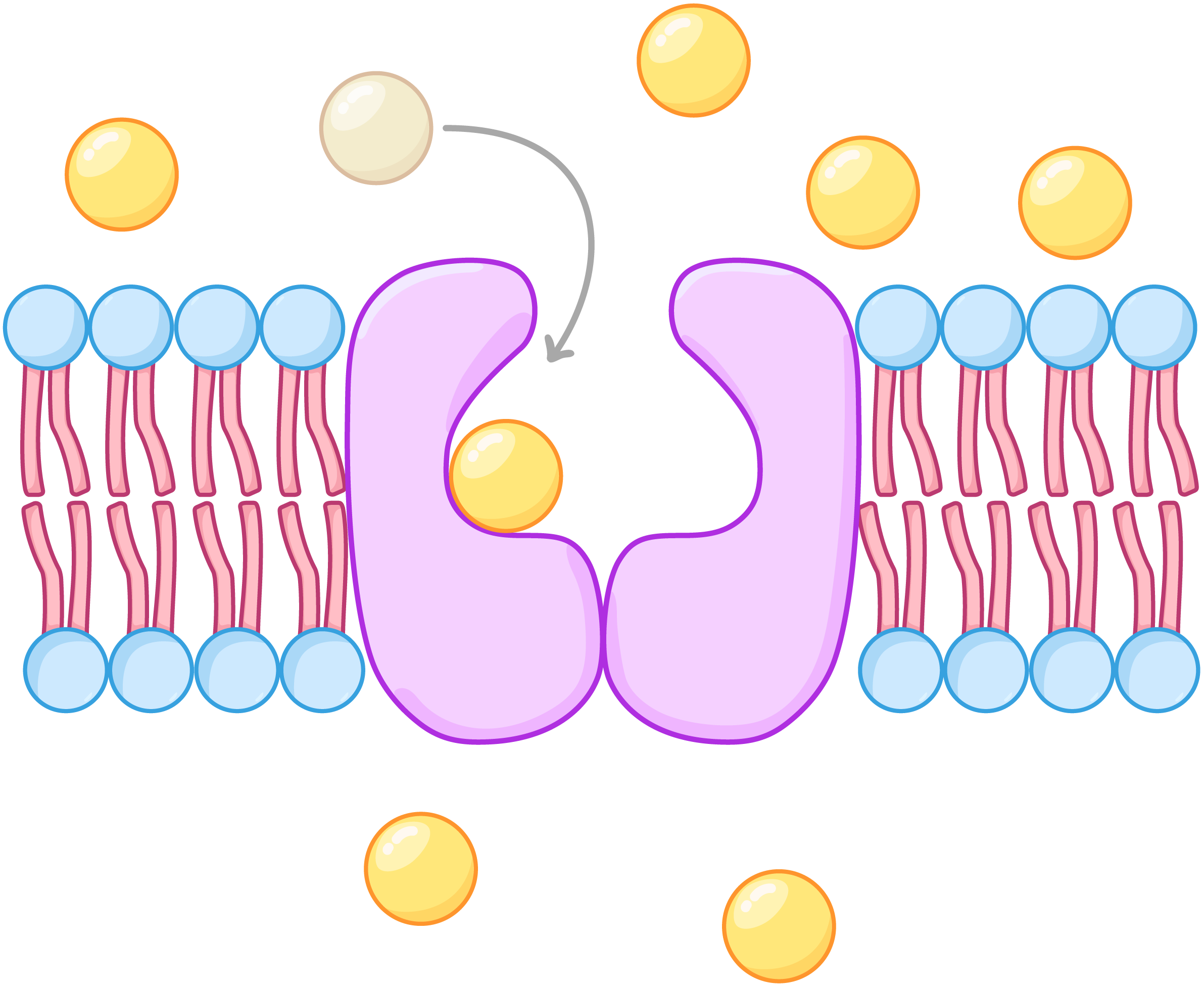
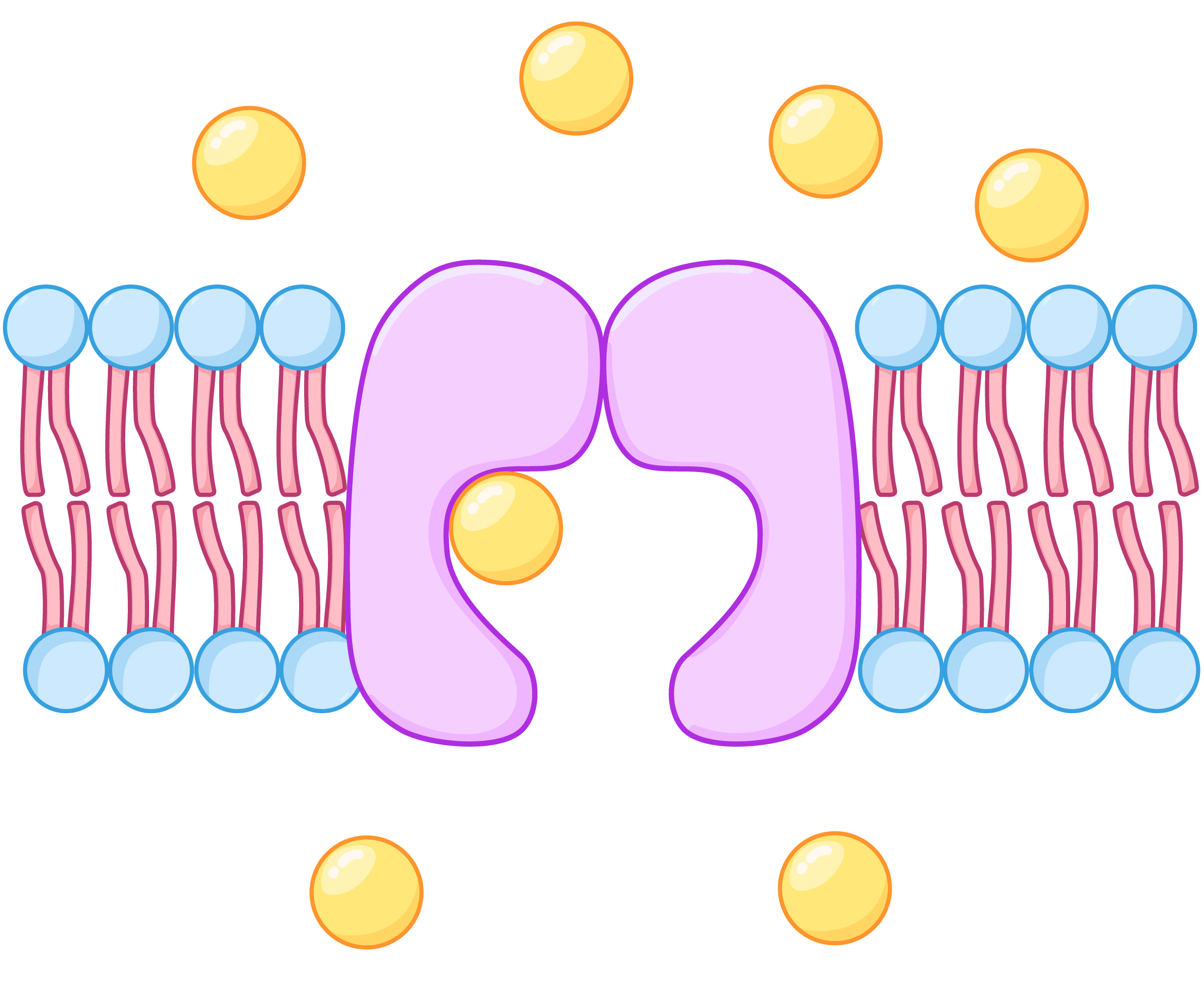
Carrier proteins mainly transport large molecules across the cell membrane.
They work in the following way:
Image 1 of 3: 1. A large molecule attaches to a carrier protein.
Channel proteins
Channel proteins mainly transport ions across the cell membrane.
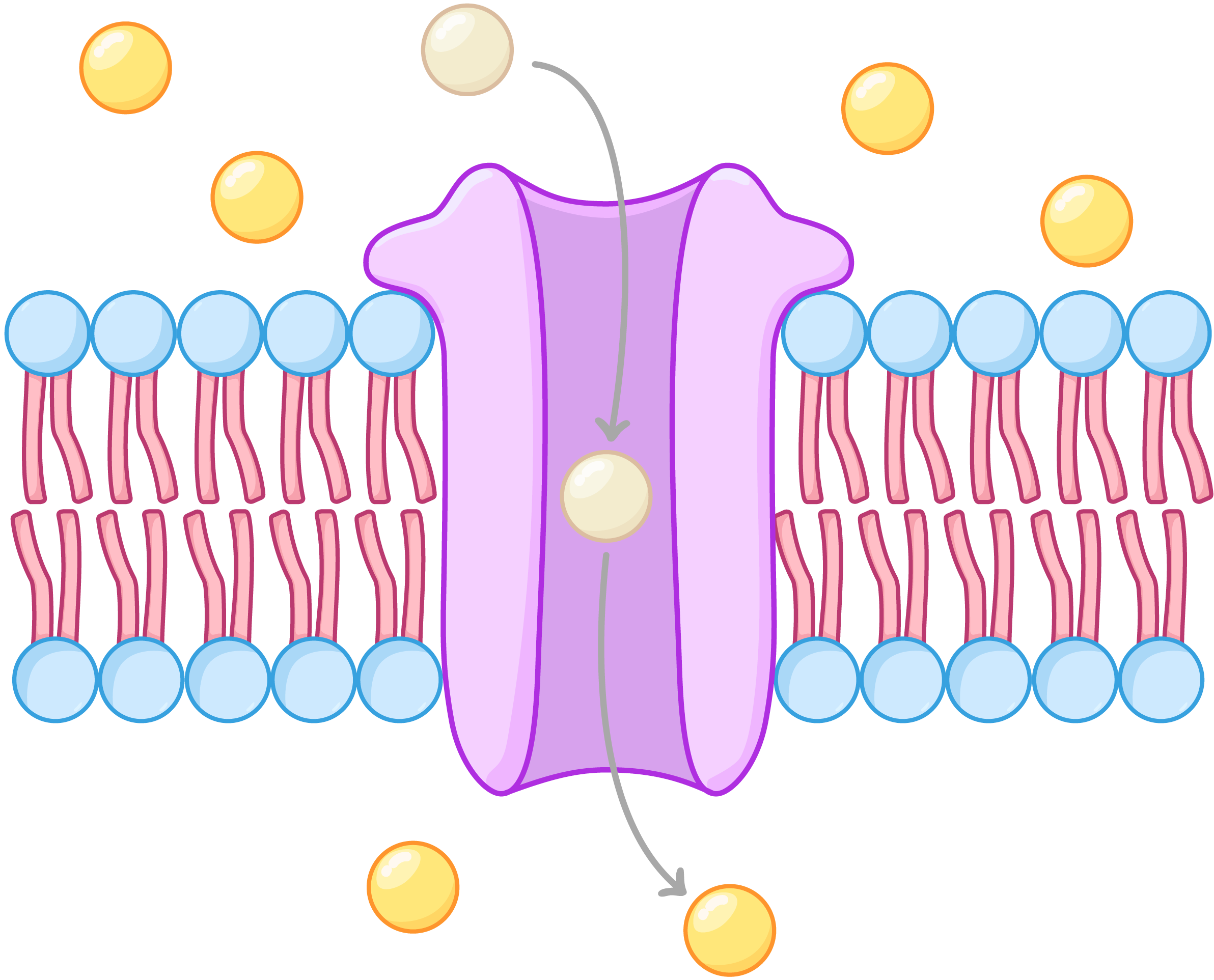
These proteins form pores in the cell membrane, which ions can travel through.
Factors affecting the rate of diffusion
- Temperature - At higher temperatures, particles have more kinetic energy and diffuse faster.
- Concentration gradient - The steeper the concentration gradient, the faster the rate of diffusion.
- Thickness of membrane - The particles travel shorter distances through thin exchange surfaces, so diffuse faster.
- Surface area - Larger surface areas mean more particles can cross the membrane at once, making diffusion faster.
- Number of carrier or channel proteins - The more of these proteins, the faster the rate of facilitated diffusion.