Animal Exchange Surfaces - exam practice
Animal Exchange Surfaces
Question 1 of 12
1 of 12
Which statements about bronchioles are correct?
1 - they have ciliated cells
2 - they have goblet cells
3 - they have muscle tissue
Question 2 of 12
2 of 12
Air moves in and out of human lungs through the trachea, which is lined with cells. The diagram below shows a section containing these cells.
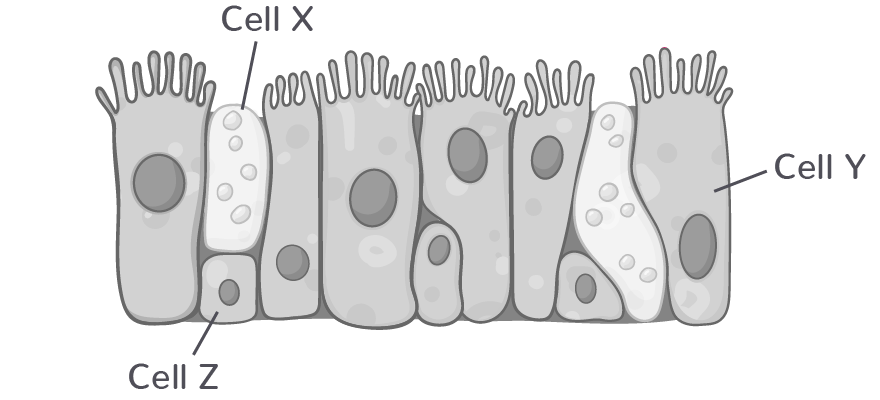
Which statement about tracheal cells is correct?
Question 3 of 12
3 of 12
Which characteristic of the human gaseous exchange surface and the lungs maintains the necessary concentration gradients for carbon dioxide and oxygen?
Question 4 of 12
4 of 12
Which tissues may be found in bronchioles?
Question 5 of 12
5 of 12
What would be seen in an electron micrograph of a bronchus wall?
1 - cartilage cells
2 - ciliated cells
3 - exocytotic vesicles
Question 6 of 12
6 of 12
Which does not increase the efficiency of gaseous exchange in the alveoli?
Question 7 of 12
7 of 12
Which statement correctly explains a feature of an efficient gaseous exchange surface?
Question 8 of 12
8 of 12
Ventilation is a process that involves various parts of the body.
Which option describes exhalation in a mammal?
Question 9 of 12
9 of 12
The diagram shows the volume of air breathed in and out while a person is breathing normally when at rest.
They breathe out the deepest breath they can and then breathe in as much as they can before breathing normally again.
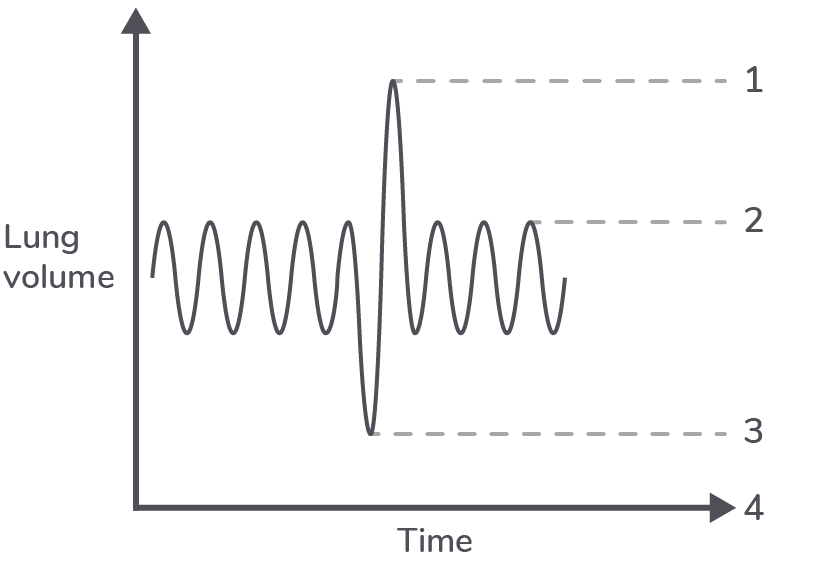
Which points would you use to calculate the vital capacity?
Question 10 of 12
10 of 12
The following spirometer trace shows the results of an experiment.
Soda lime was used to extract carbon dioxide from exhaled air.
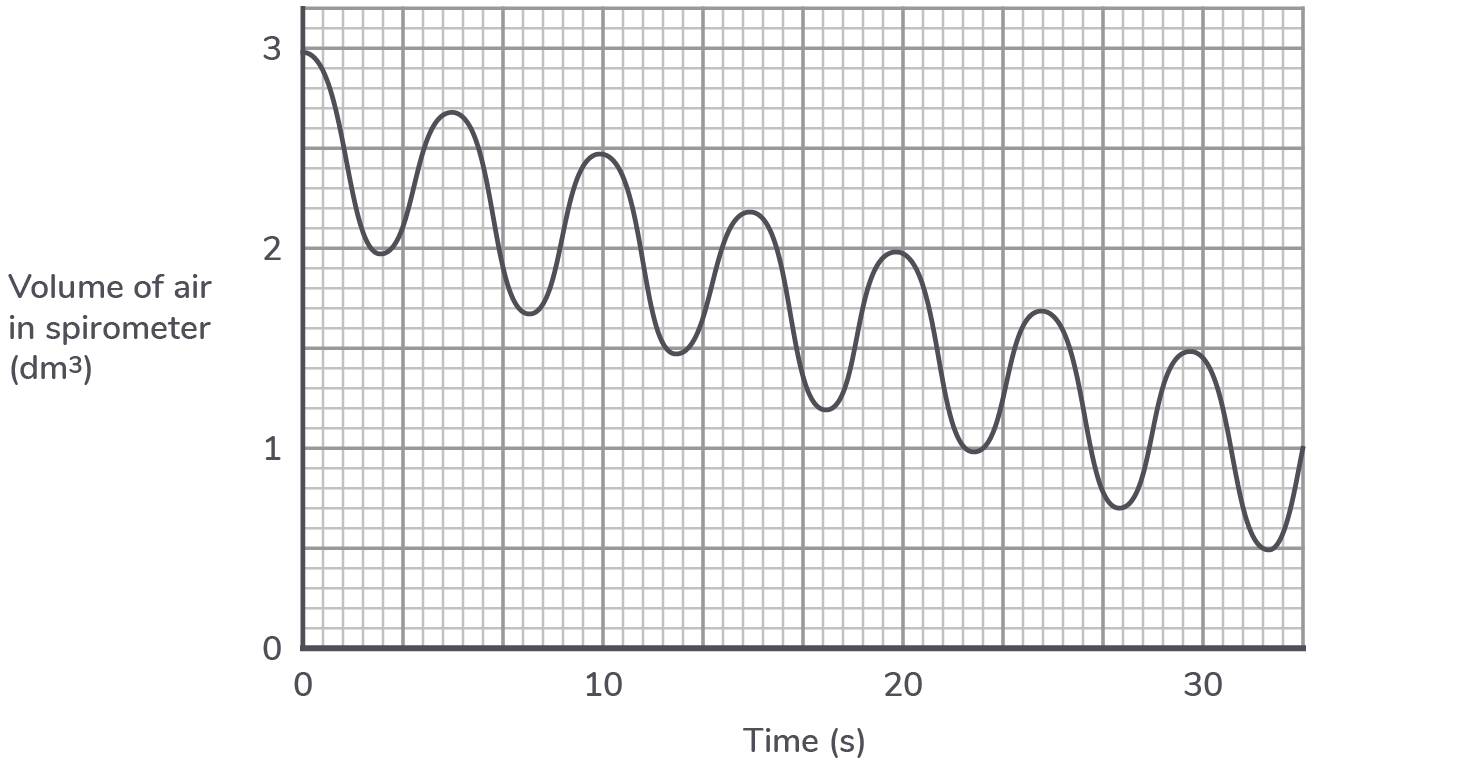
What is the rate of oxygen consumption in the experiment?
Question 11 of 12
11 of 12
Ventilation involves various parts of the mammalian respiratory system.
Which statement describes inhalation?
Question 12 of 12
12 of 12
Bony fish absorb dissolved oxygen from the water using gills. Water is passed through the buccal cavity and over the gill lamellae. The oxygen saturation of the blood and water changes as the water passes over the gills.
Which statement correctly describes the way oxygen is transferred into the blood at the gills?