Enzymes - exam practice
Enzymes
Question 1 of 10
1 of 10
Which statement is true of a competitive enzyme inhibitor?
Question 2 of 10
2 of 10
Which statements about enzyme inhibitors are correct?
1 - competitive inhibitors may be similar shapes to the substrate
2 - competitive inhibitors bind to the active site
3 - non-competitive inhibitors alter the shape of the enzyme
4 - non-competitive inhibitors bind to the substrate
Question 3 of 10
3 of 10
Why do large increases in the temperature or pH alter enzyme activity?
1 - they change the three-dimensional shape of the enzyme
2 - they disrupt hydrogen and ionic bonds in the enzyme
3 - they increase hydrophobic interactions in the enzyme
Question 4 of 10
4 of 10
What is the effect of an enzyme in an enzyme-catalysed reaction?
Question 5 of 10
5 of 10
Which of the bonds will be last to break as the temperature of an enzyme is increased?
Question 6 of 10
6 of 10
The effect of substrate concentration on an enzyme-catalysed reaction was measured in three different conditions:
1 - with no inhibitor
2 - with a competitive inhibitor
3 - with a non-competitive inhibitor
The graph shows the results.
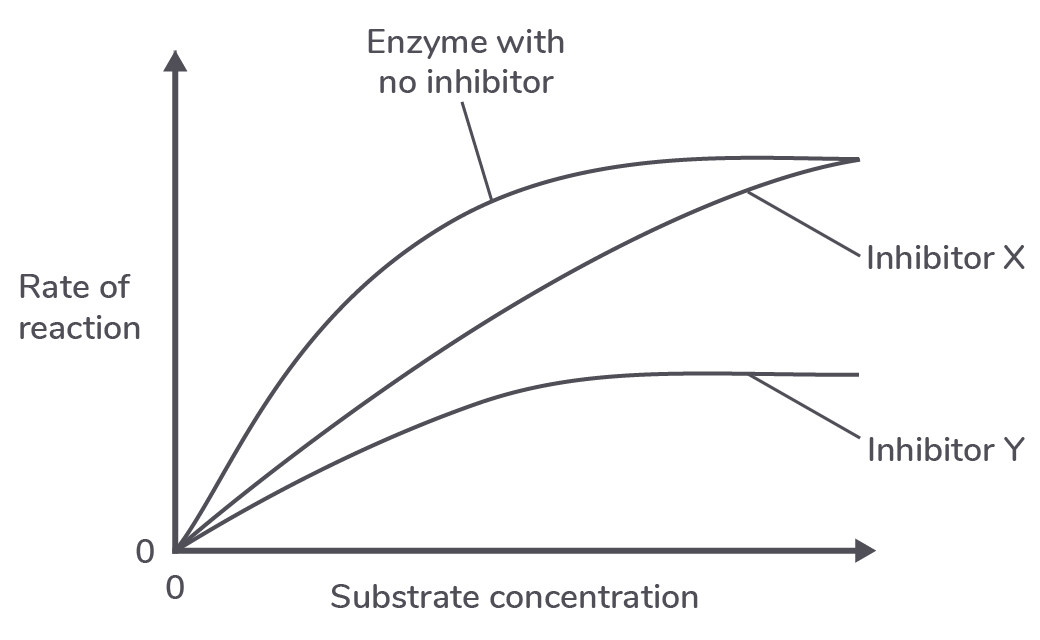
Which statement is correct?
Question 7 of 10
7 of 10
The graph shows the effect of temperature on the rate at which the enzyme in a biological washing powder digests and removes fruit juice stains.
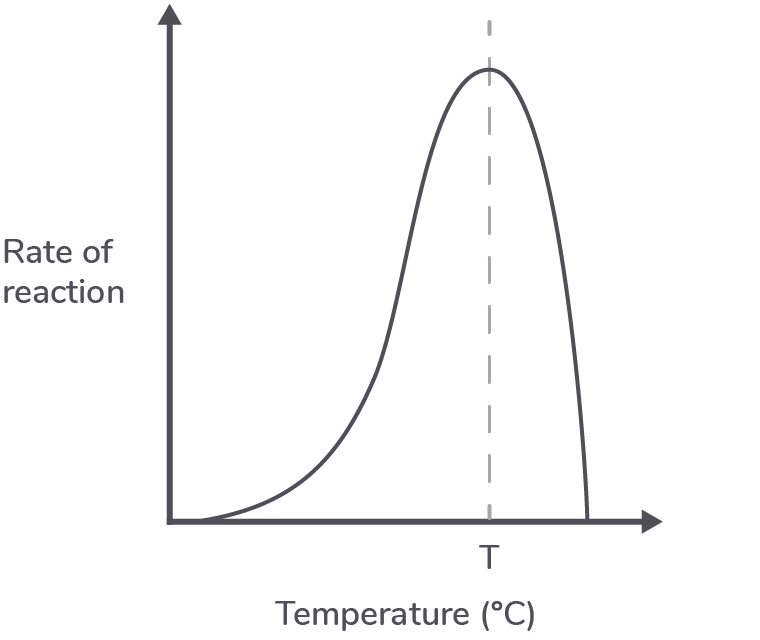
Which statements explain the shape of the graph at temperatures higher than T?
1 - bonds are broken between the R groups of the amino acids in the polypeptide chains of the enzyme
2 - there are more collisions between the enzyme and its substrate
3 - the tertiary structure of the enzyme is altered
4 - the shapes of the active site and the substrate are no longer complementary
Question 8 of 10
8 of 10
What determines the specificity of an enzyme?
Question 9 of 10
9 of 10
Which statements about the effect of all enzyme inhibitors are correct?
1 - change the shape of the active site
2 - denature the enzyme
3 - reduce the rate of the enzyme-catalysed reaction
Question 10 of 10
10 of 10
What is the correct definition of the term coenzyme?