Lipids - exam practice
Lipids
Question 1 of 11
1 of 11
The structure of phospholipids includes the following
1 - polar phosphate heads
2 - hydrophobic fatty acid chains
3 - saturated fatty acid chains
Which of these are essential for the formation of a phospholipid bilayer in a cell-surface membrane?
Question 2 of 11
2 of 11
Which formula(e) of fatty acids represents a saturated fatty acid?
1 - palmitic acid, C15H31COOH
2 - oleic acid, C17H33COOH
3 - linoleic acid, C17H31COOH
Question 3 of 11
3 of 11
Linseed oil is a polyunsaturated triglyceride that can be extracted from the seeds of the flax plant, Linum usitatissimum.
A diagram of a linseed oil molecule is shown below.
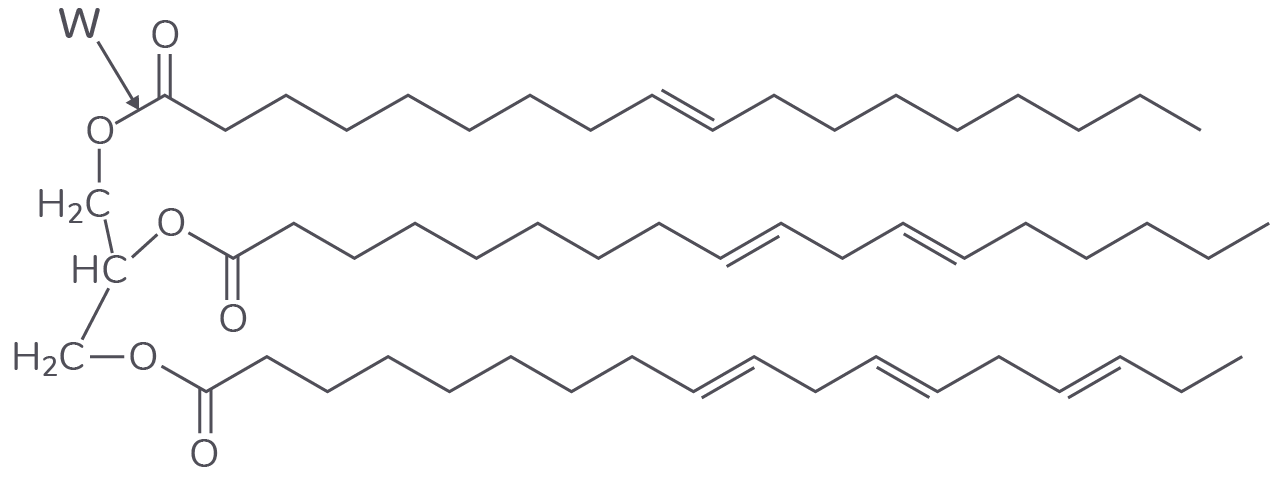
Which option correctly identifies the bond labelled W?
Question 4 of 11
4 of 11
Cholesterol is an integral component of the cell-surface membrane.
Which statement about cholesterol is correct?
Question 5 of 11
5 of 11
In unsaturated lipid molecules, where are double bonds located?
Question 6 of 11
6 of 11
The diagram shows a triglyceride molecule that has been partially hydrolysed.
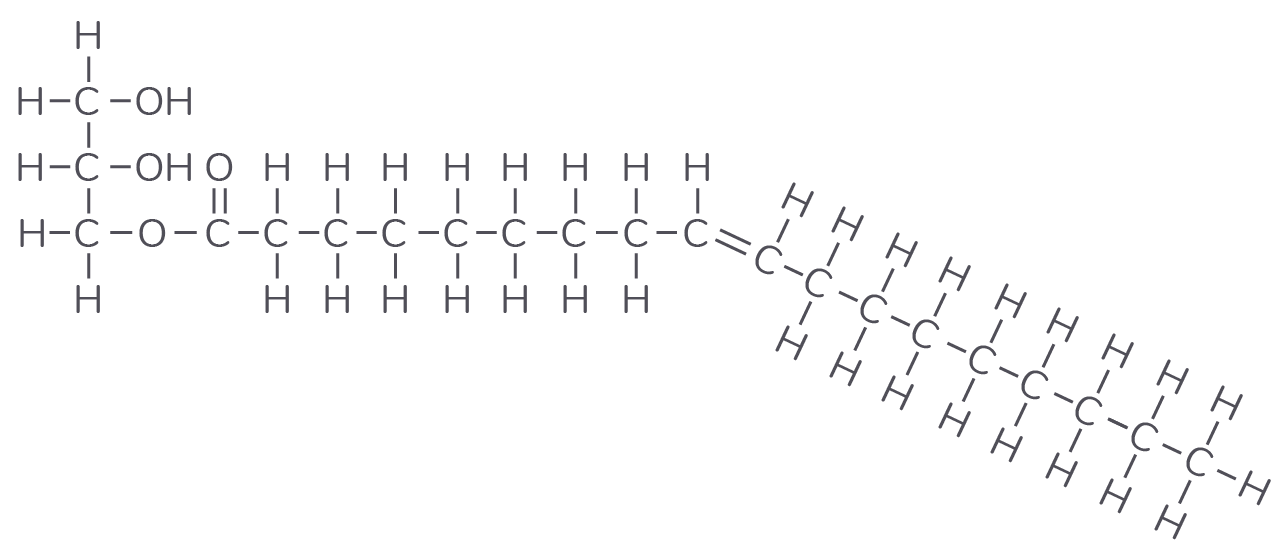
What will be the products of the total hydrolysis of the molecule shown?
Question 7 of 11
7 of 11
Which statement about triglycerides is correct?
Question 8 of 11
8 of 11
Which option is a type of reaction involved in the breakdown of a phospholipid?
Question 9 of 11
9 of 11
Which option is a property of the phosphate group in phospholipids?
Question 10 of 11
10 of 11
How many fatty acid residues are normally present in a phospholipid molecule?
Question 11 of 11
11 of 11
Some foods contain ‘hydrogenated vegetable oils’. These are unsaturated fats that have been
converted to saturated fats.
Which property of the fats will have changed?