10.1 - Infectious Diseases
- 1
The different types of pathogen
- 2
How pathogens are transmitted
- 3
Examples of communicable diseases
Pathogens
Communicable (or infectious) diseases are those that can be passed from one organism to another. They are caused by microorganisms known as pathogens.
There are four types of pathogen you need to know:
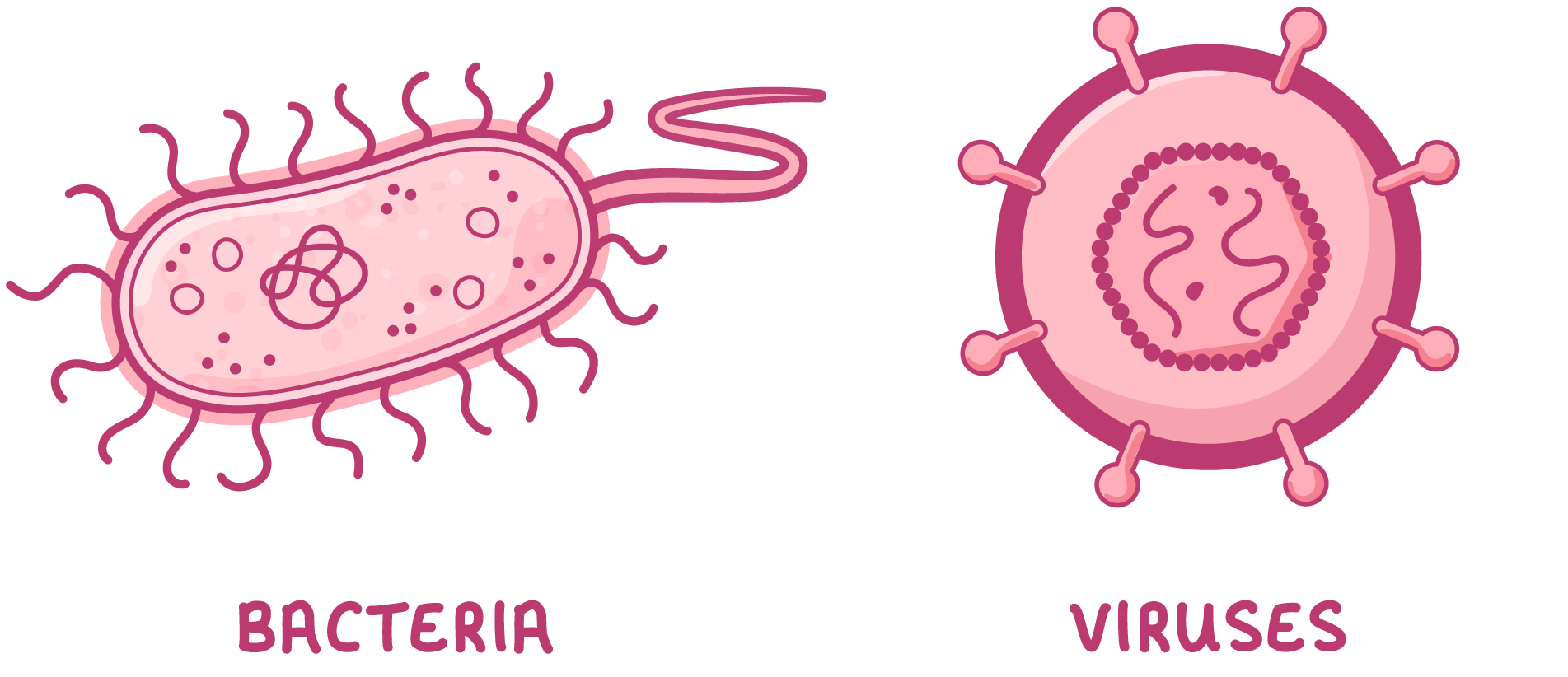

- Bacteria - Produce toxins that damage body cells.
- Viruses - Use host cells to replicate before bursting out and destroying cells.
- Protoctists (protists) - Take over cells and break them open.
- Fungi - Digest living cells to destroy them. Some also produce toxins.
Modes of transmission
Communicable diseases can be passed from one organism to another via direct or indirect transmission.
Direct transmission
Pathogens can be transferred directly from one organism to another.
This transfer can take place in several ways:
- Direct contact - Skin-to skin contact, kissing, or sexual intercourse.
- Airborne droplets - Coughing or sneezing tiny droplets of mucus or saliva onto someone.
Indirect transmission
Communicable diseases can also be passed from one organism to another using an intermediate (e.g. water or another organism).
This transfer can take place in several ways:
- Food and drinking water - Ingestion of contaminated food or water can cause disease.
- Vectors - These transmit pathogens from one host to another (e.g. mosquitoes transmit malaria).
- Contaminated objects - Pathogens from infected individuals can live on objects for a short time and infect others.
The risk of communicable disease is increased by certain factors:
- Living conditions - Overcrowded areas increase the risk of direct transmission.
- Climate - For example, warmer temperatures allow mosquitoes to breed and transmit malaria.
- Social factors - For example, a lack of health education and healthcare systems increase the risk of communicable disease.
Examples of communicable diseases
You need to be able to describe the cause, transmission, treatment, and prevention of the following diseases:
- Cholera
- Malaria
- HIV/AIDS
- Tuberculosis (TB)
Cholera
Cholera is a bacterial infection of the small intestine, causing severe diarrhoea. It usually occurs in areas where people do not have access to a clean water supply or uncontaminated food.
Cause:
- Bacteria - Vibrio cholerae
Transmission:
- Water that has been contaminated with faeces.
- Contaminated food which has been handled by infected individuals.
Treatment:
- Rehydration therapy, which uses salt and glucose solutions to rehydrate the body.
Prevention and control:
- Provision of clean water that has been chlorinated to kill bacteria.
- Using vaccination programmes where cholera is common.
Malaria
Malaria is a life-threatening disease caused by parasites transmitted to humans via infected mosquitoes.
Cause:
- One of four possible protoctist species - Plasmodium falciparum, Plasmodium vivax, Plasmodium ovale, or Plasmodium malariae.
Transmission:
- Vectors (female Anopheles mosquitoes).
- Blood transfusions or re-use of unsterile needles.
- Across the placenta from mother to fetus.
Treatment:
- Anti-malarial drugs such as quinine and chloroquine.
Prevention and control:
- Reducing the number of mosquitoes in an area by using insecticide.
- Reducing the chance of being bitten by using mosquito nets and insect repellents.
- Using prophylactic (preventative) drugs to prevent infection in pregnant women and young children.
HIV/AIDS
Human immunodeficiency virus (HIV) is a virus that damages the immune system and can lead to acquired immunodeficiency syndrome (AIDS).
Cause:
- Human immunodeficiency virus (HIV).
Transmission:
- Exchange of bodily fluids via sexual intercourse, blood donation, or sharing of needles.
- Across the placenta from mother to fetus.
Treatment:
- No cure, but antiretroviral drug therapy can slow down the onset of AIDS by stopping the virus replicating in the body.
Prevention and control:
- Blood donations can be screened for HIV and heat-treated to kill viruses.
- HIV-positive pregnant women can be treated to prevent infection of the fetus.
- Barrier methods of contraception such as condoms reduce the risk during intercourse.
- Education programmes to encourage the public to protect themselves and others.
Tuberculosis (TB)
Tuberculosis (TB) is a bacterial infection of the lungs, but can also spread to the glands, bones or brain.
Cause:
- One of two possible bacteria - Mycobacterium tuberculosis or Mycobacterium bovis.
Transmission:
- Unaffected individuals inhale airborne droplets containing the bacteria.
- Can be spread from cattle to humans in meat and milk.
Treatment:
- Antibiotics for 3 to 6 months.
Prevention and control:
- Contact tracing in which individuals who have been in contact with an infected person are screened and tested for TB.
- Vaccination using the BCG vaccine.
- Routine testing of cattle and destroying those that test positive.
- Milk pasteurisation to kill any TB-causing bacteria.