5.2 - Cell Cycle
- 1
The phases of the cell cycle
- 2
The processes that take place during interphase
- 3
The role of telomeres in DNA replication
Cell cycle
Organisms need new cells to grow and repair tissues in the body. Not all cells in the body are capable of dividing, but those that are follow a sequence of steps known as the cell cycle.
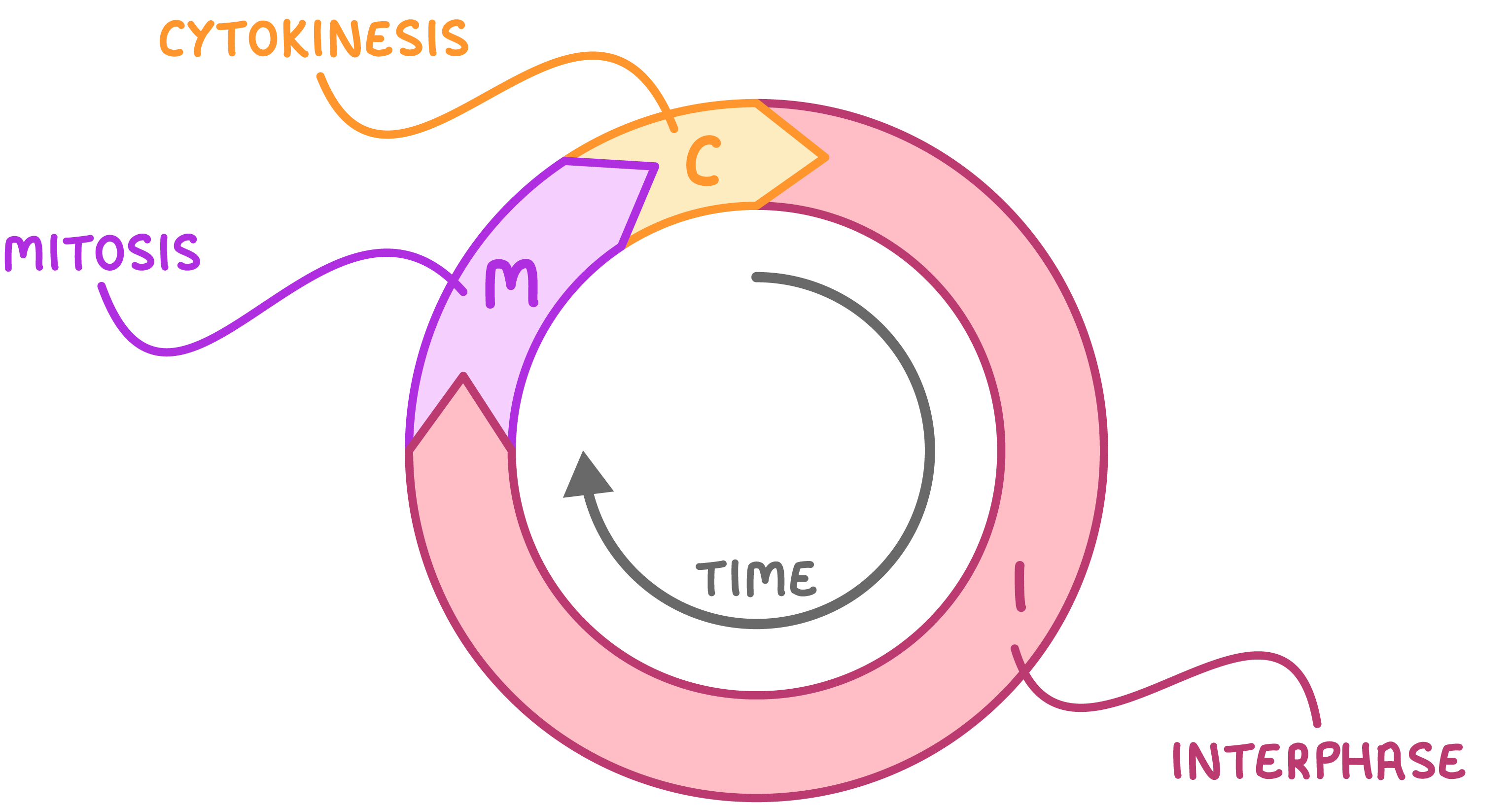
The cell cycle consists of three main phases:
- Interphase - This occupies the majority of the cycle as cells prepare for division.
- Mitosis - This is when the nucleus of the cell divides in two.
- Cytokinesis - This is when the whole cell and cytoplasm divides in two to produce two identical cells.
Interphase
During interphase, cells carry out their usual functions whilst also preparing for cell division. This involves replicating the DNA and organelles.
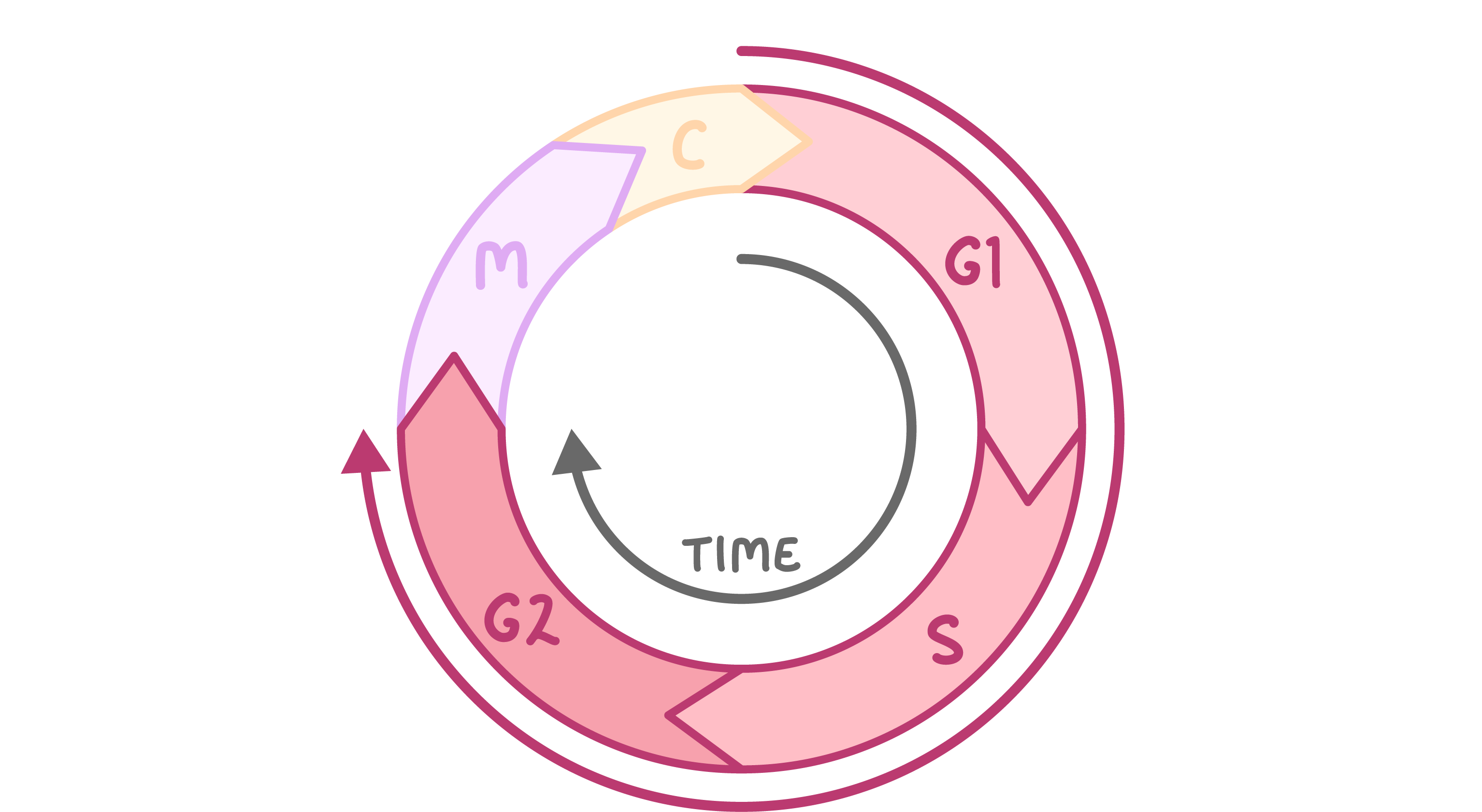
Interphase consists of three phases:
- G1 phase - This is when the cell grows and makes new proteins to replicate organelles.
- S phase - This is when DNA is replicated.
- G2 phase - This is when the cell continues to grow and replicated DNA is checked for errors.
The role of telomeres
Telomeres are short sections of non-coding DNA found at the ends of chromosomes. They are made up of short base sequences that are repeated many times (e.g. CAG CAG CAG).
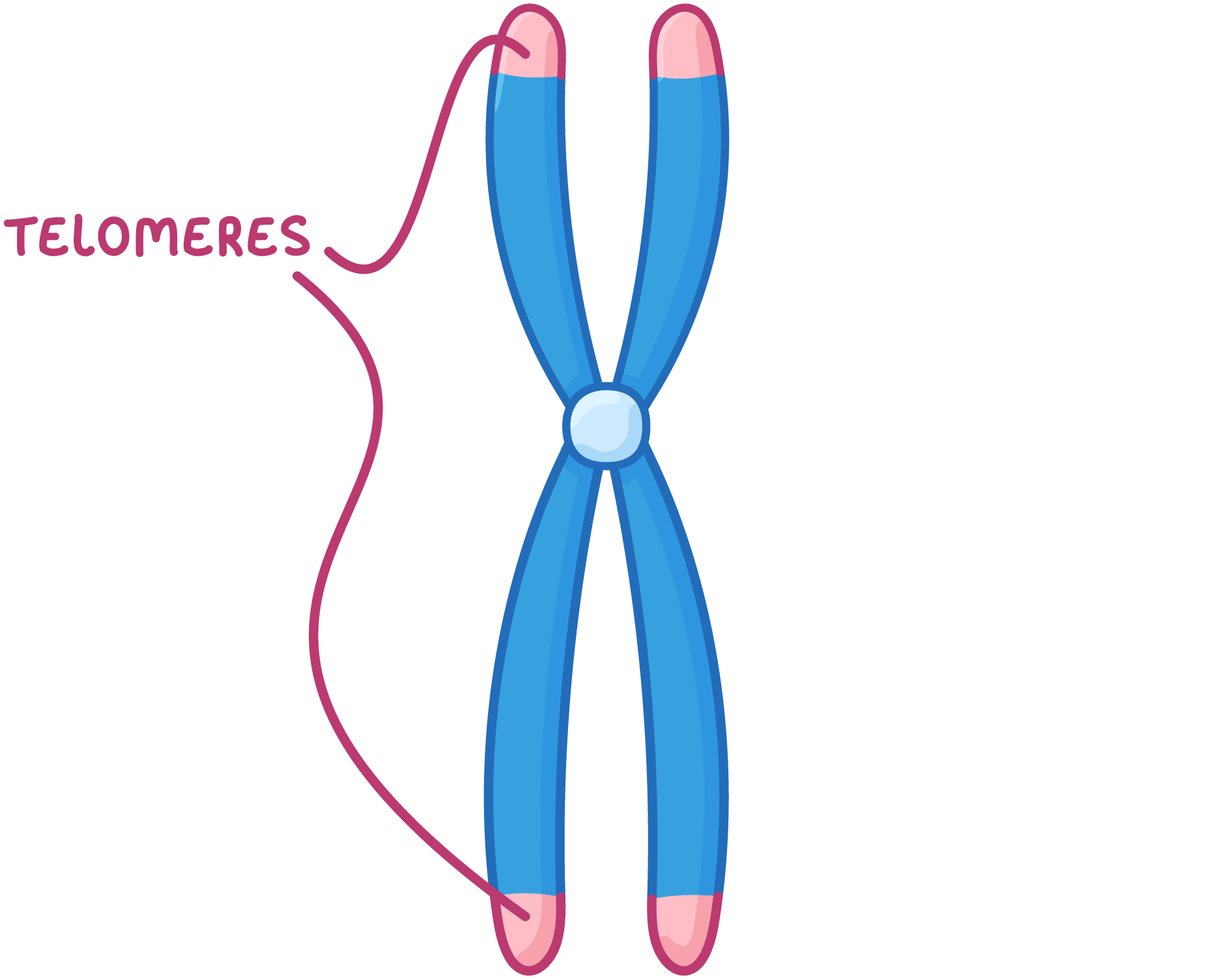
During DNA replication, DNA polymerase cannot transcribe all the way to the very end of the DNA strand. This means that DNA is lost from the end of each chromosome at every cell division.
Telomeres work by making each chromosome longer so that part of the telomeres are lost after every cell division rather than coding DNA. During each cell cycle, extra bases are added to the ends of chromosomes (the telomeres) by the enzyme telomerase. This allows cells to continue dividing successfully.
Overall, telomeres have three main functions:
- They prevent the loss of genes during cell division.
- They allow continued cell division.
- They prevent the shortening of chromosomes.