1.4 - Eukaryotic Cells: Animal Cells
- 1
The difference between eukaryotes and prokaryotes
- 2
The structure of animal cells
- 3
The functions of their cell parts
Eukaryotes and Prokaryotes
Living organisms can be divided into two main groups:
- Eukaryotes - These are (mostly) multicellular organisms made up of eukaryotic cells like animals, plants, fungi, and protists.
- Prokaryotes - These are single-celled organisms made up of prokaryotic cells like bacteria.
Eukaryotic cells are more complex, contain membrane-bound organelles, and have their DNA in the form of chromosomes within a nucleus.
Animal cells
The diagram below shows all the organelles found in a typical animal cell.

Nucleus
The nucleus is the largest organelle within an animal cell.

Structure:
- Contains genetic information in the form of chromosomes.
- Contains a structure known as a nucleolus.
- Surrounded by a nuclear envelope (double membrane) containing pores.
Functions:
- Controlling the cell's activities - It contains DNA with instructions to produce proteins.
- Synthesis of ribosomes - The nucleolus makes ribosomal RNA.
- Exchange between nucleus and cytoplasm - Substances can enter or leave the nucleus via the nuclear pores.
Cell-surface membrane
The cell-surface membrane is also known as the plasma membrane.
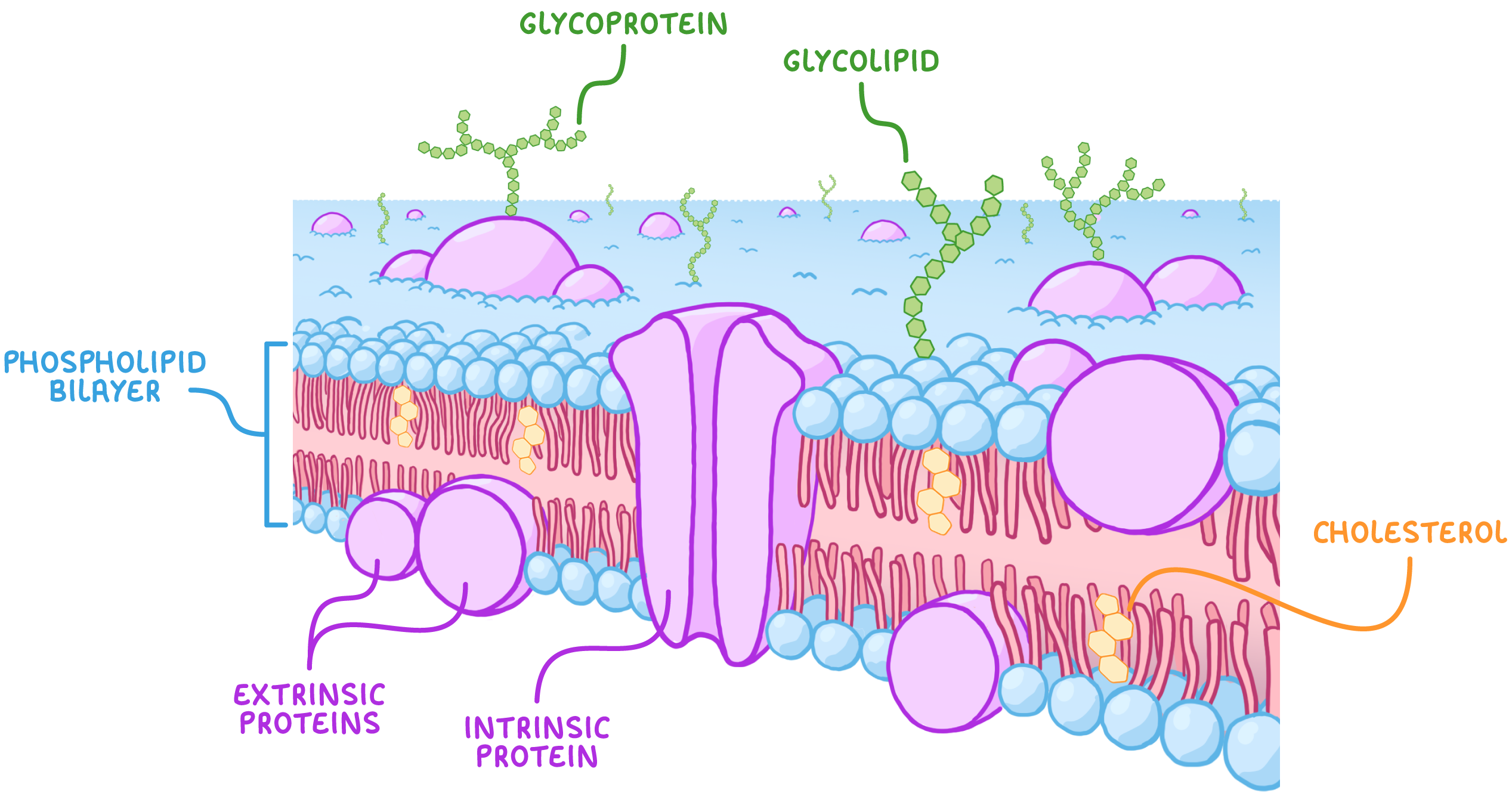
Structure:
- Found on the surface of animal cells.
- Mainly made up of lipids and protein.
Functions:
- Controls movement of substances into and out of the cell - The membrane is partially permeable.
- Cell signalling - Receptors can detect signals from other cells.
We cover the structure in more detail in our lesson on the phospholipid bilayer.
Mitochondria
Mitochondria are found in large numbers in cells that requires lots of energy.
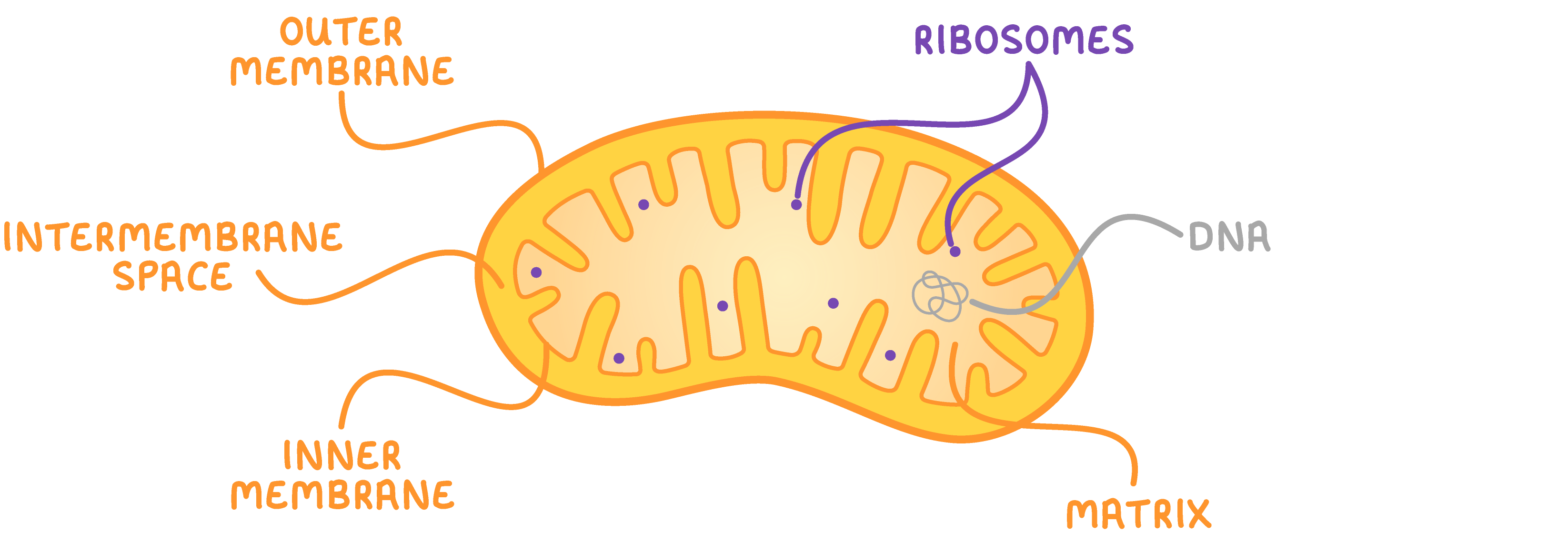
Structure:
- Contain an enzyme-rich liquid known as the matrix.
- Surrounded by a double membrane in which the inner membrane is folded to form structures known as cristae.
- Contain their own DNA (mtDNA) and ribosomes.
Function:
- Site of aerobic respiration - Produces ATP.
Ribosomes
Ribosomes are very small organelles found in the cytoplasm or attached to rough endoplasmic reticulum.
The size of ribosomes are measured in S units. Eukaryotic cells contain 80S ribosomes.
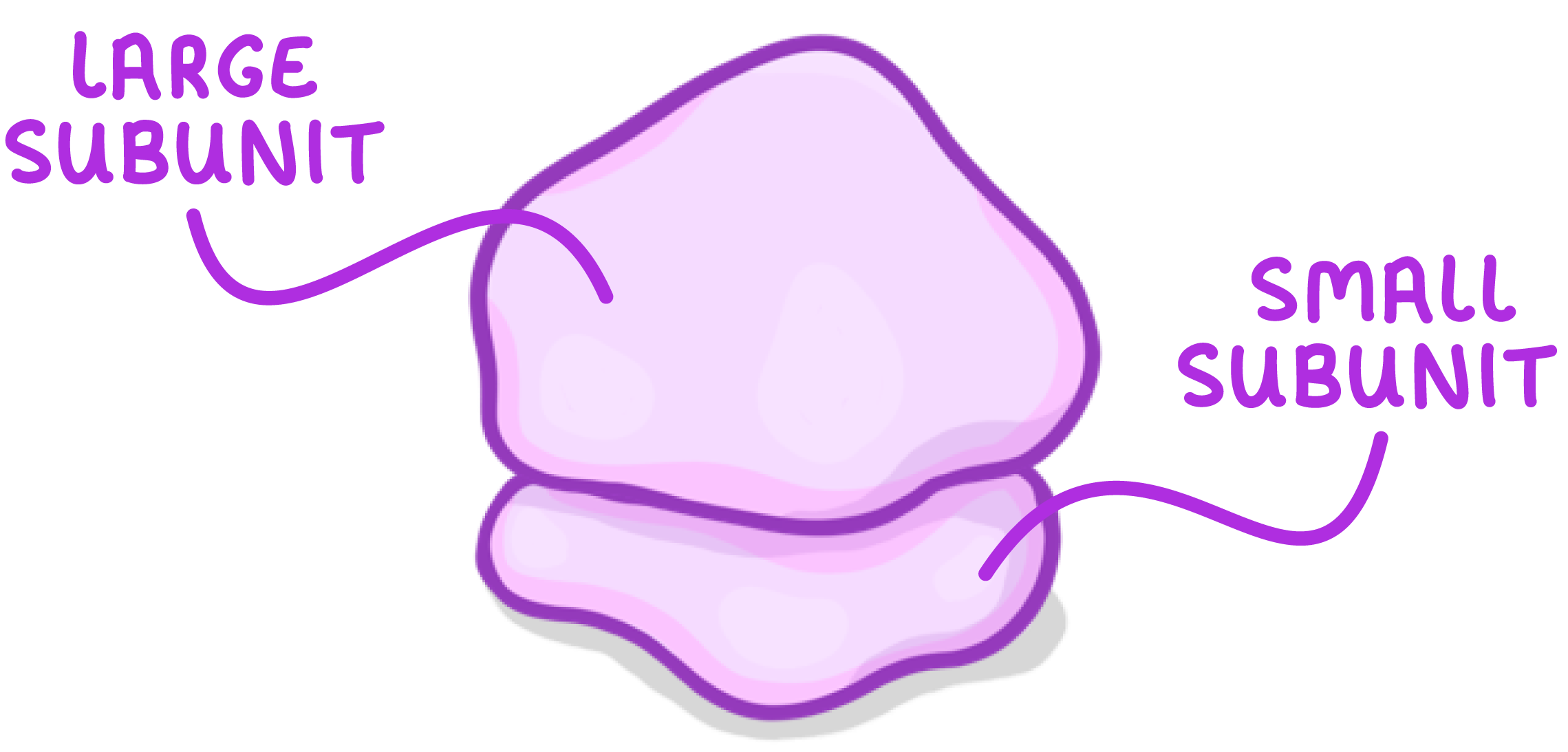
Structure:
- Made up of proteins and rRNA (ribosomal RNA).
- Consist of a large and a small subunit.
- Not surrounded by a membrane.
Function:
- Site of protein synthesis - Involved in the process of translation.
Golgi apparatus
The Golgi apparatus, sometimes called the Golgi body, consists of cisternae and vesicles.
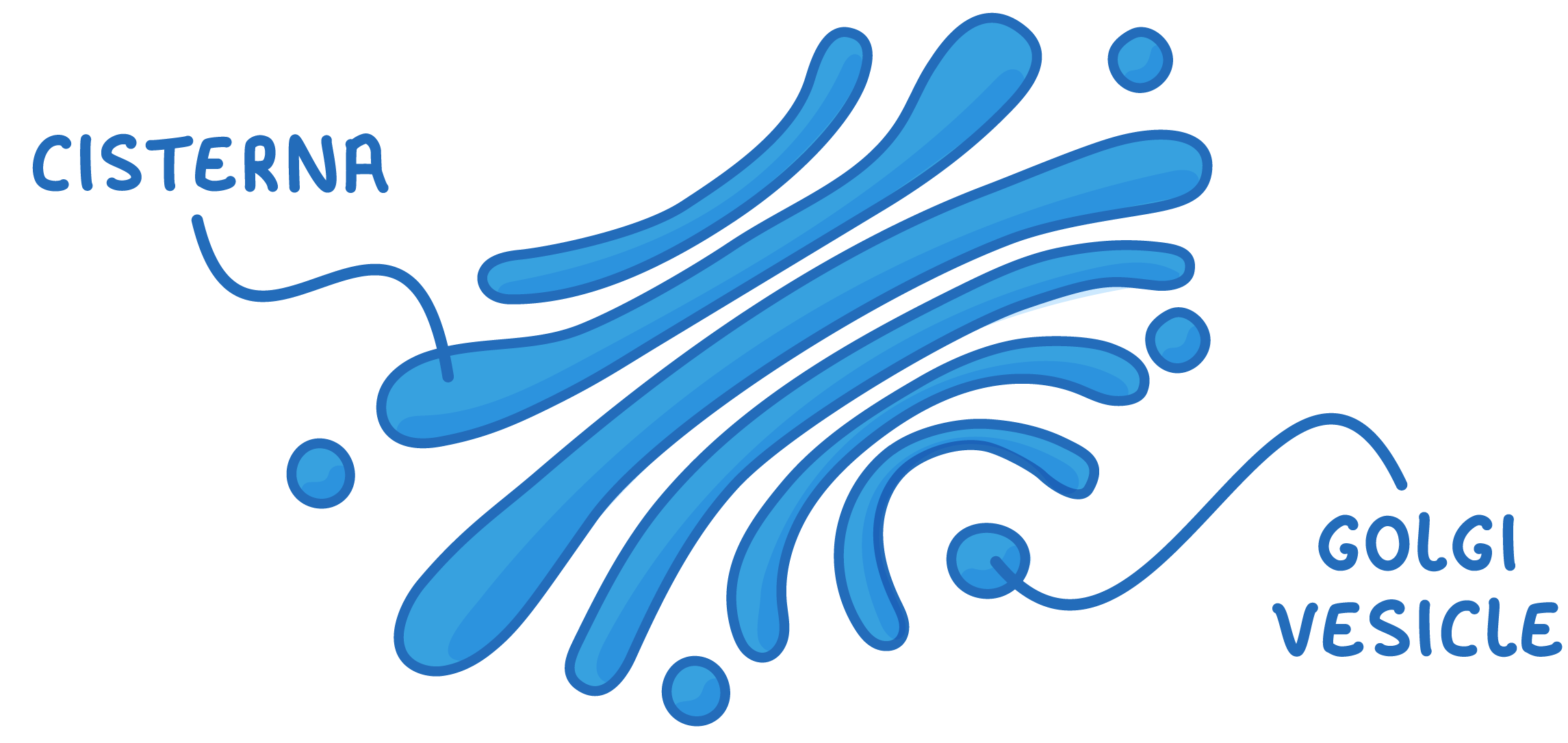
Structure:
- Contain fluid-filled, membrane-bound sacs known as cisternae.
- Contain smaller vesicles.
Functions:
- Process and package lipids and proteins - Carried out by the cisternae.
- Store and transport lipids and proteins - Carried out by the vesicles.
- Synthesise lysosomes - Specialised vesicles.
Rough endoplasmic reticulum (RER)
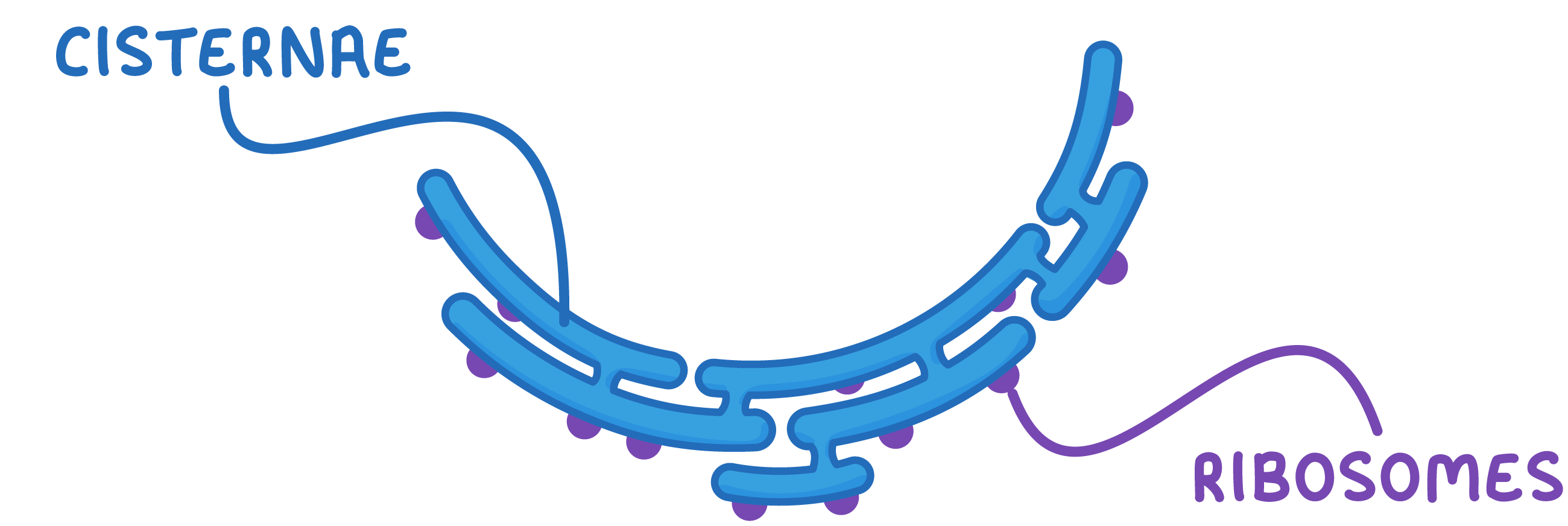
Rough endoplasmic reticulum is covered with ribosomes (that's why it's rough - the ribosomes cause the little bumps).
Structure:
- Contains a network of membranes enclosing a fluid-filled space, known as cisternae.
- The surface of the cisternae is covered with ribosomes.
Function:
- Synthesis and transport of proteins - The proteins are made using the ribosomes.
Smooth endoplasmic reticulum (SER)
Smooth endoplasmic reticulum lacks ribosomes.

Structure:
- Same as the rough endoplasmic reticulum without the ribosomes.
Function:
- Synthesis, storage, and transport of lipids and carbohydrates - For example, cholesterol and steroid hormones.
Lysosomes
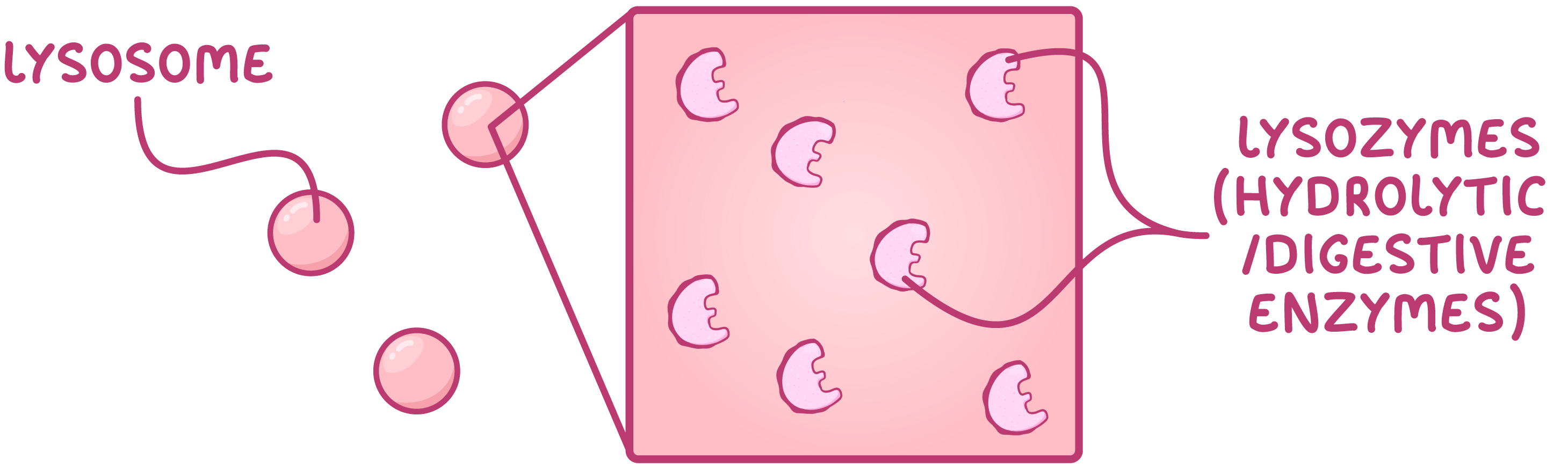
Lysosomes are round organelles with no clear internal structure.
Structure:
- Contain hydrolytic enzymes.
- Surrounded by a membrane to keep enzymes separate from the cytoplasm of the cell.
Functions:
- Digest pathogens - This process uses enzymes.
- Break down waste material - This material includes old organelles and cells.
Cytoskeleton
The cytoskeleton is present throughout the cytoplasm and provides structure and support to the cell. It consists of 3 main components: microfilaments, microtubules, and intermediate filaments.
Microfilaments:
- Made of the protein actin.
- Involved in cell movement and locomotion, such as crawling and muscle contraction.
Microtubules:
- Made of the protein tubulin.
- Form a scaffold-like structure throughout the cell.
- Form the main component of the mitotic spindle, used for cell division.
- Act as tracks for intracellular transport of vesicles and organelles.
Intermediate filaments:
- Maintain the position of organelles within the cell.
- Responsible for the mechanical strength of certain tissues, such as the skin and hair.