2.1 - Introduction to Biological Molecules
- 1
The different types of biological molecules
- 2
The difference between monomers and polymers
- 3
The difference between condensation and hydrolysis reactions
Types of biological molecules
The cells of all living organisms primarily consist of four types of molecules: carbohydrates, lipids, proteins, and nucleic acids. These biological molecules are organic, meaning they contain the element carbon.
These molecules also contain additional elements:
- Carbohydrates - Carbon (C), hydrogen (H), and oxygen (O).
- Lipids - Carbon (C), hydrogen (H), and oxygen (O).
- Proteins - Carbon (C), hydrogen (H), oxygen (O), and nitrogen (N).
- Nucleic acids - Carbon (C), hydrogen (H), oxygen (O), nitrogen (N), and phosphorus (P).
Monomers and polymers
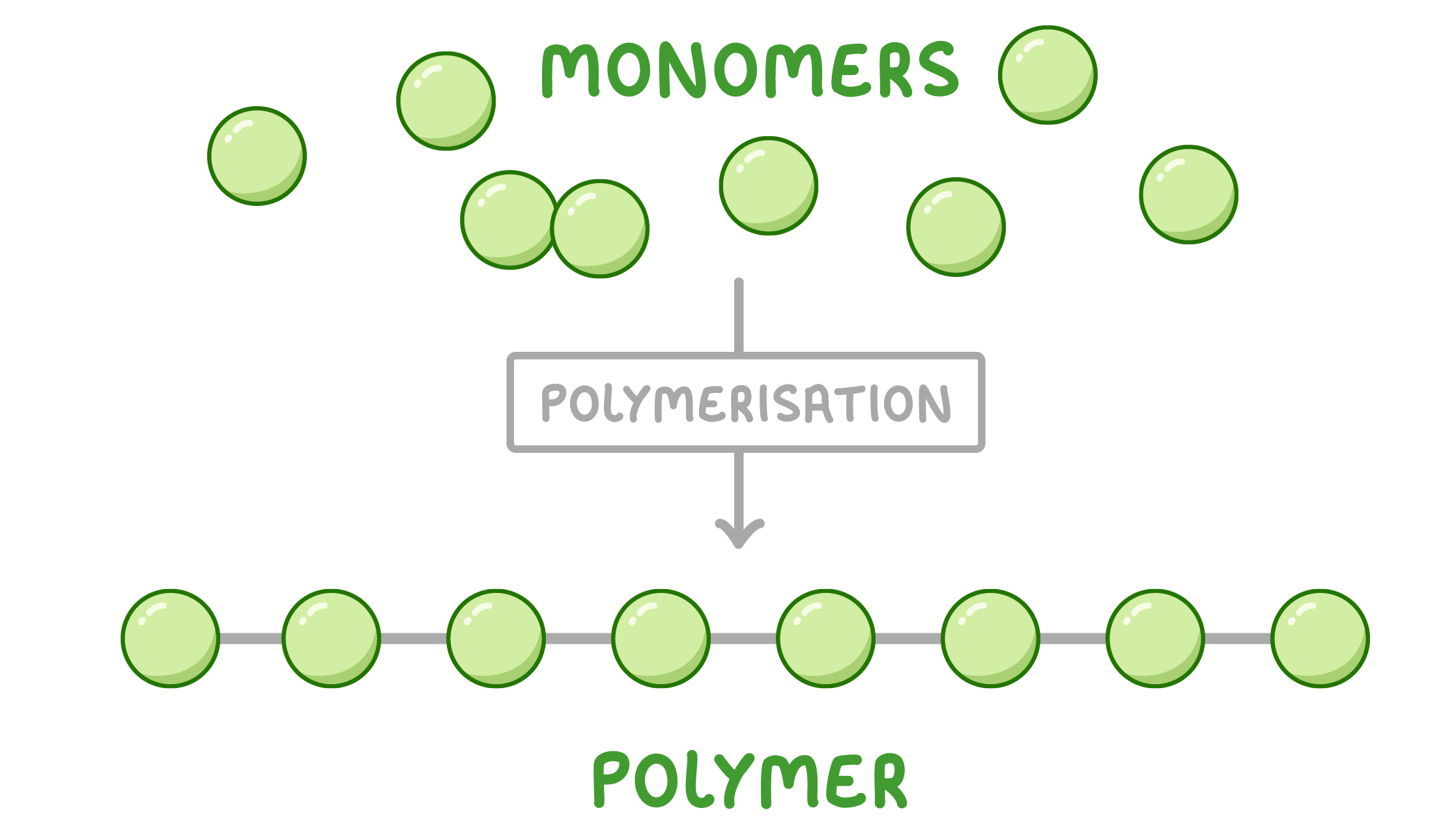
Most carbohydrates, proteins, and nucleic acids are polymers made up of small units known as monomers.
- Monomer - Smaller units that combine to make a large molecule (polymer).
- Polymer - Large molecule made up of many repeating units of monomers joined together by chemical bonds.
The process by which monomers join to form a polymer is known as polymerisation.

Condensation and hydrolysis reactions
Most polymers are synthesised via a condensation reaction and broken down via a hydrolysis reaction.

Condensation - The removal of water to form a chemical bond between two molecules.

Hydrolysis - The addition of water to break a chemical bond between two molecules.