6.5 - mRNA & tRNA
- 1
The structure of mRNA
- 2
The structure of tRNA
- 3
The similarities and differences between mRNA and tRNA
mRNA
Messenger RNA (mRNA) is a type of RNA synthesised during the process of transcription.
Its role is to carry genetic information from the DNA to the ribosomes (where proteins are made).
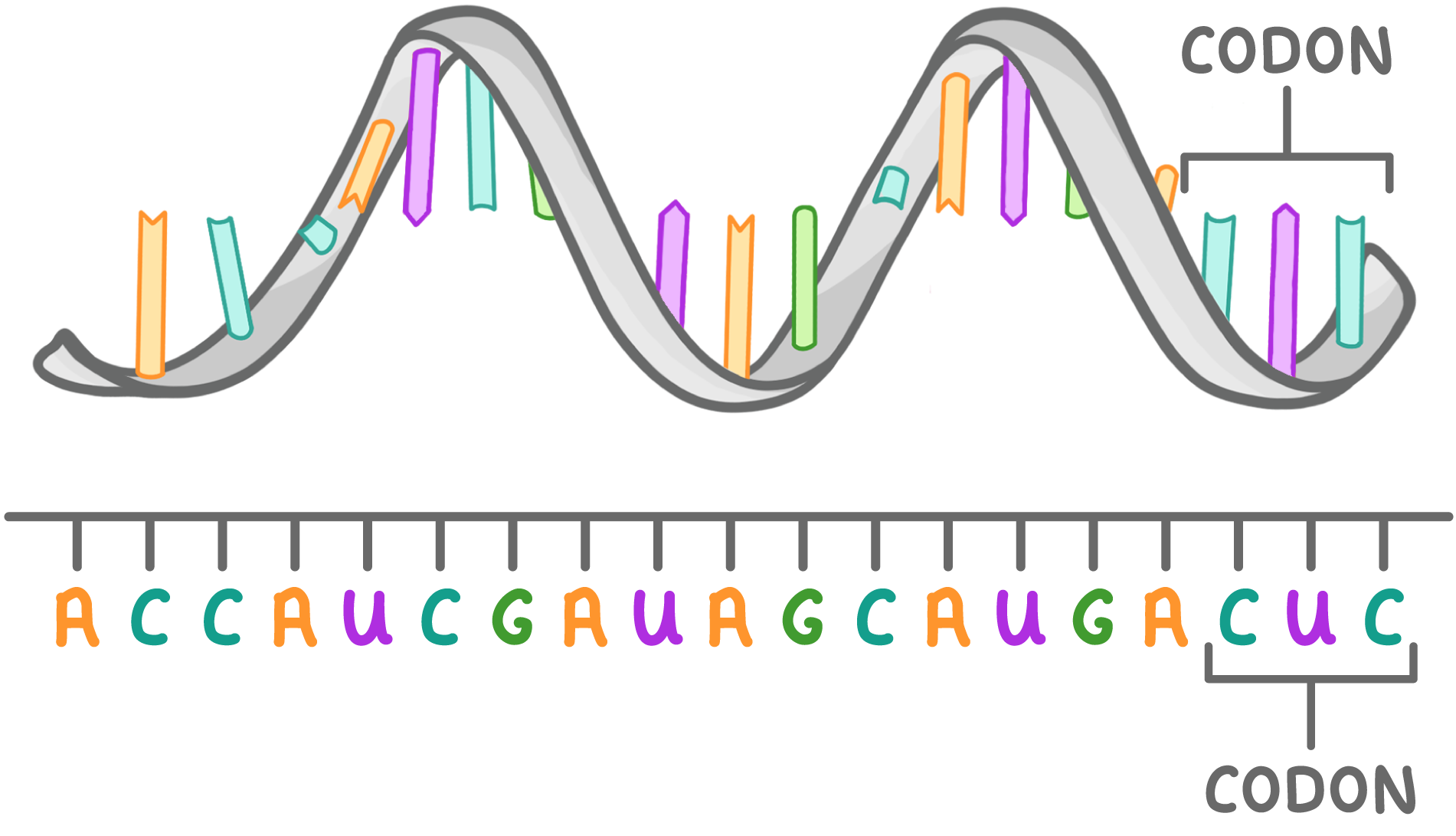
Features of mRNA:
- Single-stranded, linear molecule.
- Contains a base sequence complementary to a DNA sequence.
- Contains codons, which are sets of three bases that code for an amino acid.
- Small enough to leave the nucleus.
tRNA
Transfer RNA (tRNA) is a type of RNA used in the process of translation.
Its role is to transport amino acids to ribosomes to build up a polypeptide chain.
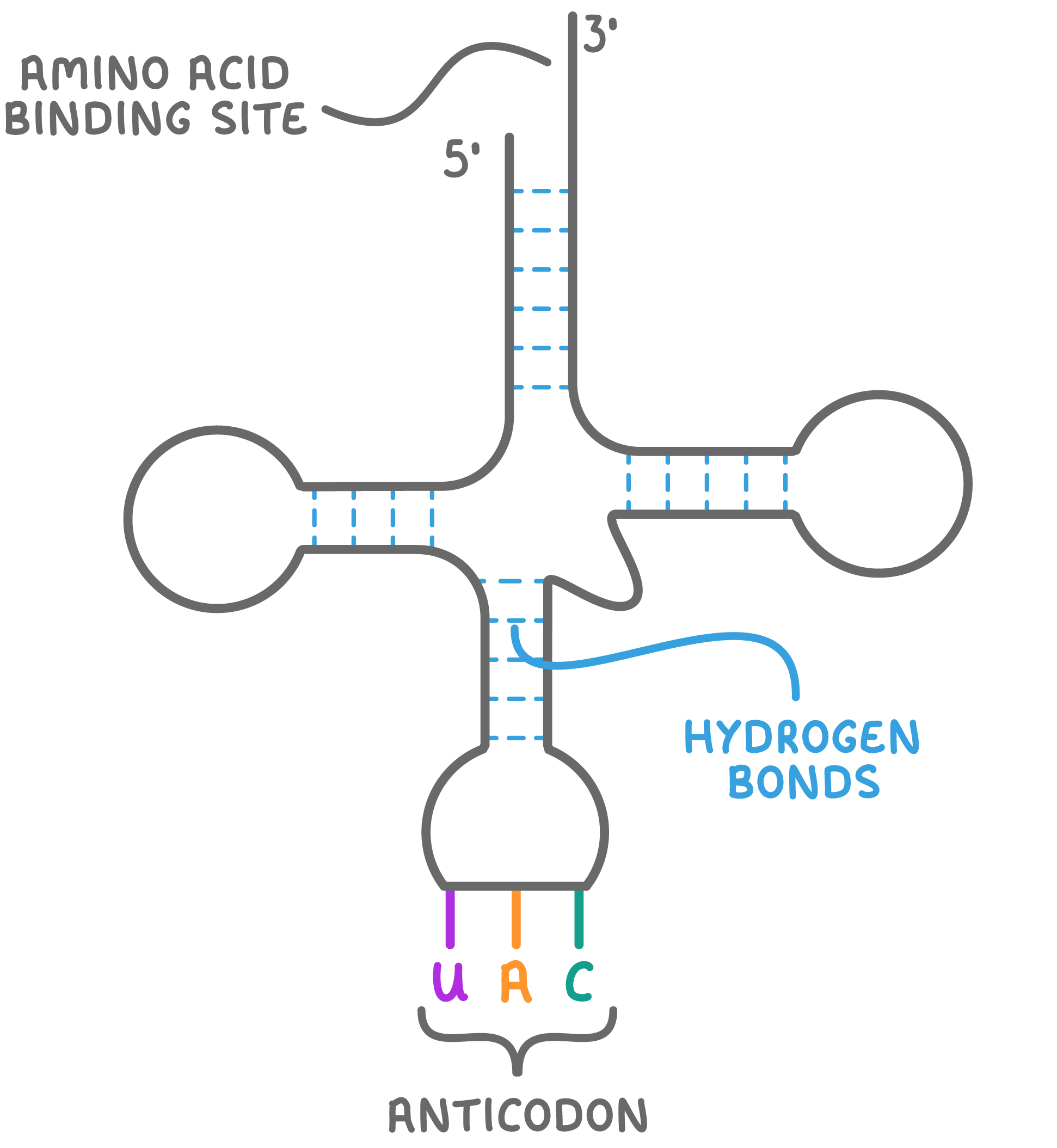
Features of tRNA:
- Single-stranded molecule folded into a clover-leaf shape.
- Uses hydrogen bonds between complementary base pairs to hold it in shape.
- Contains a specific sequence of three bases at one end, known as the anticodon.
- Contains an amino acid binding site at the opposite end.
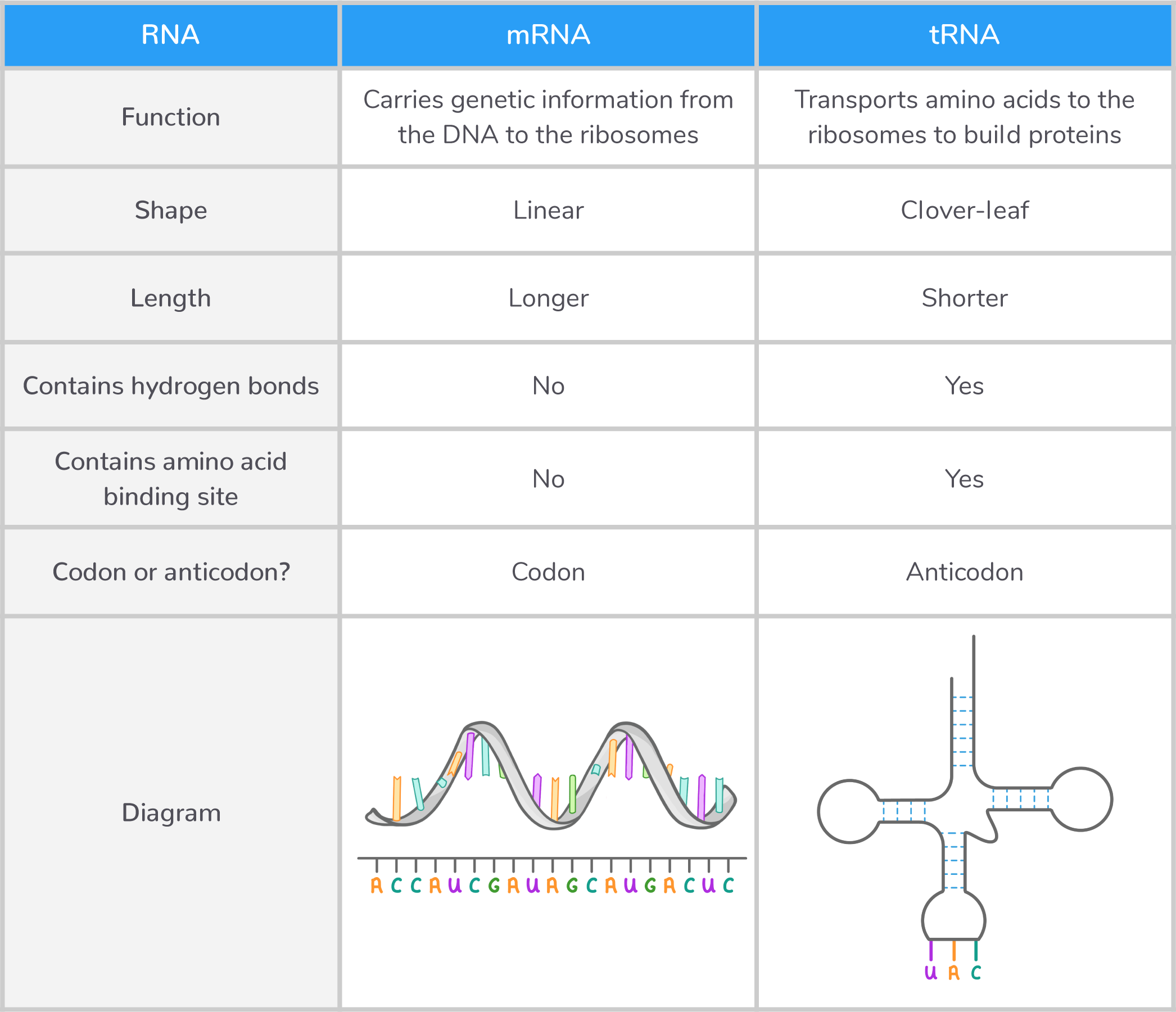
Comparing mRNA and tRNA
6.6 - Protein Synthesis: TranscriptionNext up
How were these notes?