19.3 - Gene Editing
- 1
What gene editing is
- 2
The mechanism of gene editing using endonucleases like CRISPR/Cas9
- 3
Advantages and applications of gene editing using CRISPR/Cas9
What is gene editing?
Gene editing is a form of genetic engineering that involves altering the genome by deleting, inserting, or replacing DNA sequences at specific sites.
Unlike traditional genetic engineering methods, which offered limited control and precision, recent advancements have led to gene editing technologies that are highly targeted, efficient, cost-effective, and accurate.
These advancements have made it possible to remove, replace, or edit genes with unprecedented precision.
The mechanism of gene editing using endonucleases like CRISPR/Cas9
CRISPR/Cas9 is a tool in gene editing, capable of altering DNA across various organisms, including humans, by removing, replacing, or adding segments of DNA sequences.
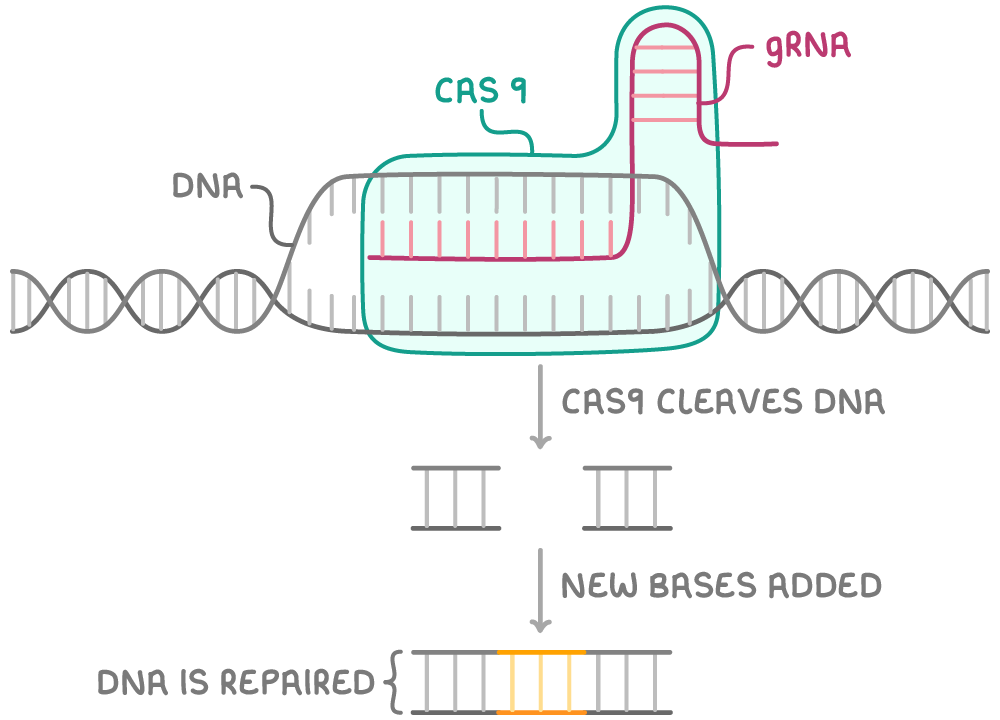
Mechanism of CRISPR/Cas9 gene editing:
- A custom guide RNA (gRNA) molecule binds to the target DNA sequence.
- gRNA directs specific endonuclease enzymes, such as Cas9, to cleave (cut) the DNA at precise base sequences.
- The enzymes create a double-stranded break in the DNA.
- Following this cut, the cell's natural DNA repair mechanisms may (or may not) add or replace nucleotides at the cut site.
- This process can be used to disable faulty genes or introduce new DNA sequences.
Advantages and applications of gene editing using CRISPR/Cas9
Using endonucleases like CRISPR/Cas9 in gene editing has numerous benefits and various applications in biology and healthcare.
Advantages of CRISPR/Cas9 compared to previous gene editing methods:
- Precise - It can modify almost anywhere in the genome, as gRNAs can be designed to target any DNA sequence.
- Efficient - CRISPR/Cas9 can target and edit multiple genes simultaneously by using multiple gRNAs.
- Cost effective - The technology is both technically simple and inexpensive to use.
- Broad targeting - It is effective across many cell types and organisms.
Applications of CRISPR/Cas9 technology:
- Treating diseases - e.g. Editing human cell DNA to study diseases or develop precise cancer therapies.
- Preventing disease transmission - e.g. Altering mosquito genomes to control malaria spread.
- Industrial applications - e.g. Creating genetically edited crops or protecting industrial bacteria against viruses.