Immunity - exam practice
Immunity
Question 1 of 8
The diagram below shows the structure of an antibody.
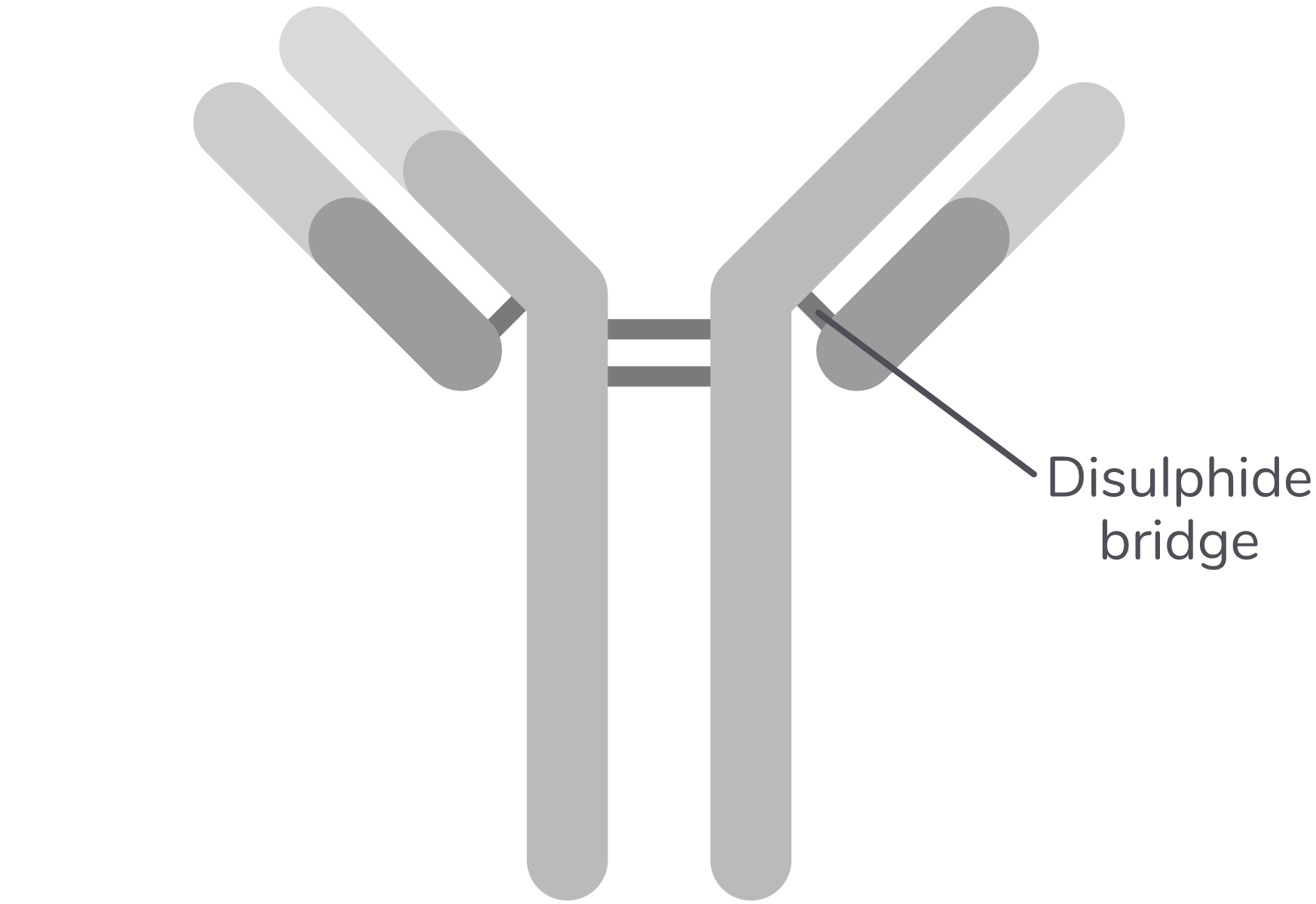
Using the diagram above, describe the evidence that this antibody has a quaternary structure.
Describe the role of the disulfide bridge labelled in the diagram above.
Explain why antibodies will only bind with specific antigens.
One type of cell involved in the immune response is known as a phagocyte.
Describe how phagocytes destroy pathogens.
The immune response involves the identification of antigens on invading pathogens.
What is an antigen?
Other than pathogens, give two types of cell that may stimulate an immune response.
During the immune response, phagocytes present a pathogen’s antigens on their cell surface.
Describe how presentation of antigens leads to the release of antibodies against these antigens.
Explain how the release of antibodies stimulates the process of phagocytosis.
Antibodies are used in the immune response to defend the body against pathogens.
What is an antibody?
Explain how vaccines can be used to protect people against disease.
Vaccination triggers individuals to develop active immunity to a disease.
Explain the difference between active and passive immunity.
When a person is stung by a venomous jellyfish, the jellyfish releases a potent venom into the person's skin.
Antivenom is used as a treatment for such stings.
Antivenom contains antibodies that neutralize the jellyfish venom, acting as an example of passive immunity.
Explain how the treatment with antivenom works and why it's crucial to use passive immunity, rather than active immunity, in this scenario.
Antivenom is produced by injecting small amounts of venom from jellyfish into animals such as donkeys, then extracting antibodies from the donkey’s blood.
Explain why it is beneficial to inject the donkey with jellyfish venom on more than one occasion.
Suggest a possible issue with injecting people with antivenom produced by donkeys.
A mixture of venoms from several jellyfish of the same species are injected into animals when preparing antivenom solutions.
Suggest why several jellyfish are used rather than just one.
Norovirus is an infection caused by a virus that causes vomiting and diarrhoea.
Researchers wanted to investigate the effectiveness of a new vaccine against norovirus.
A doctor vaccinated a group of patients against norovirus. She gave each patient an initial dose and then a second dose three months later.
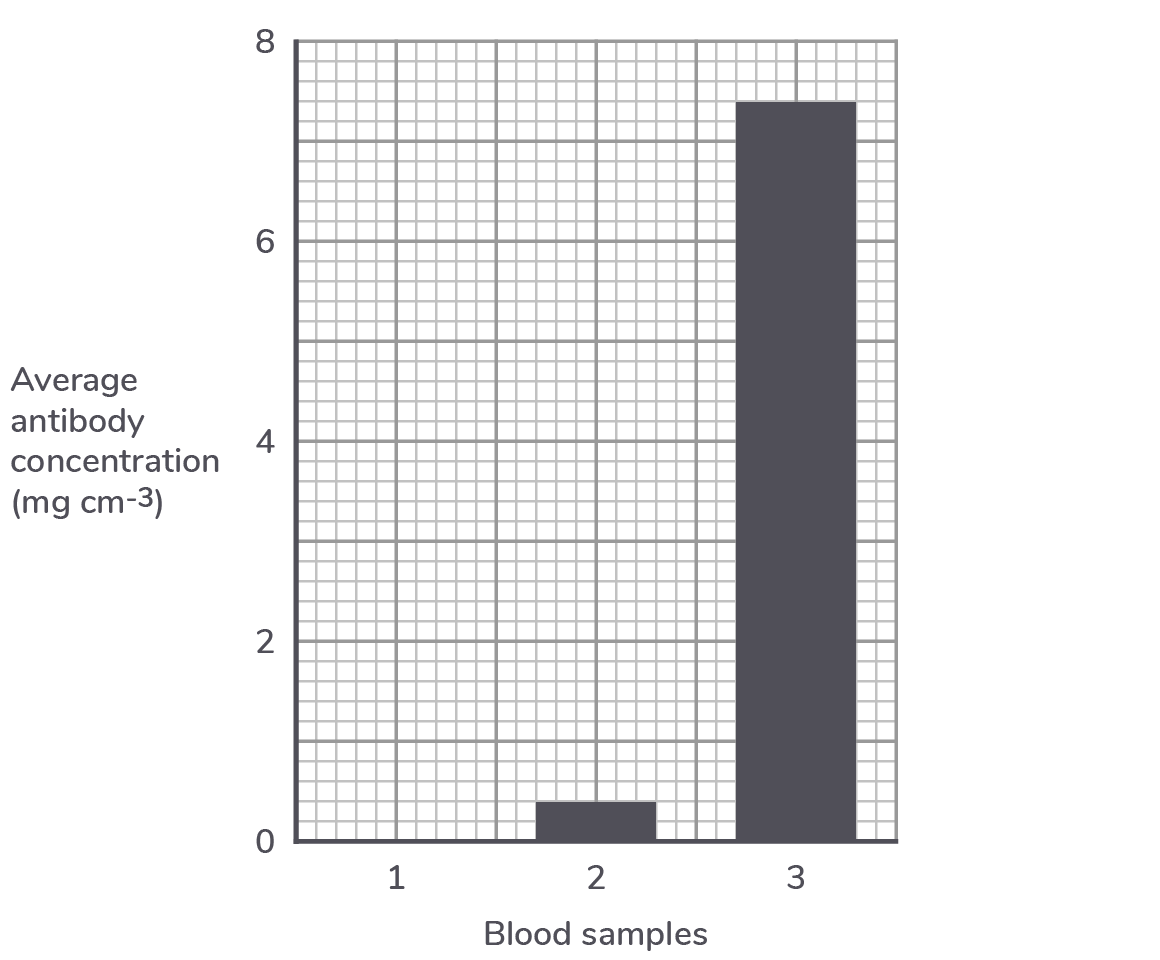
A scientist measured the concentration of antibodies in three samples of blood from each of the patients:
• Sample 1 was taken 1 week before the first vaccine.
• Sample 2 was taken 1 week after the first vaccine.
• Sample 3 was taken 1 week after the second vaccine.
The results are shown in the graph.
What is a vaccine?
Calculate the percentage increase in the average antibody concentration between samples 2 and 3.
Suggest one factor the scientist should have considered when selecting patients for this trial.
Explain why blood samples 1, 2, and 3 show different antibody concentrations.
The diagram below shows the structure of a human immunodeficiency virus (HIV).
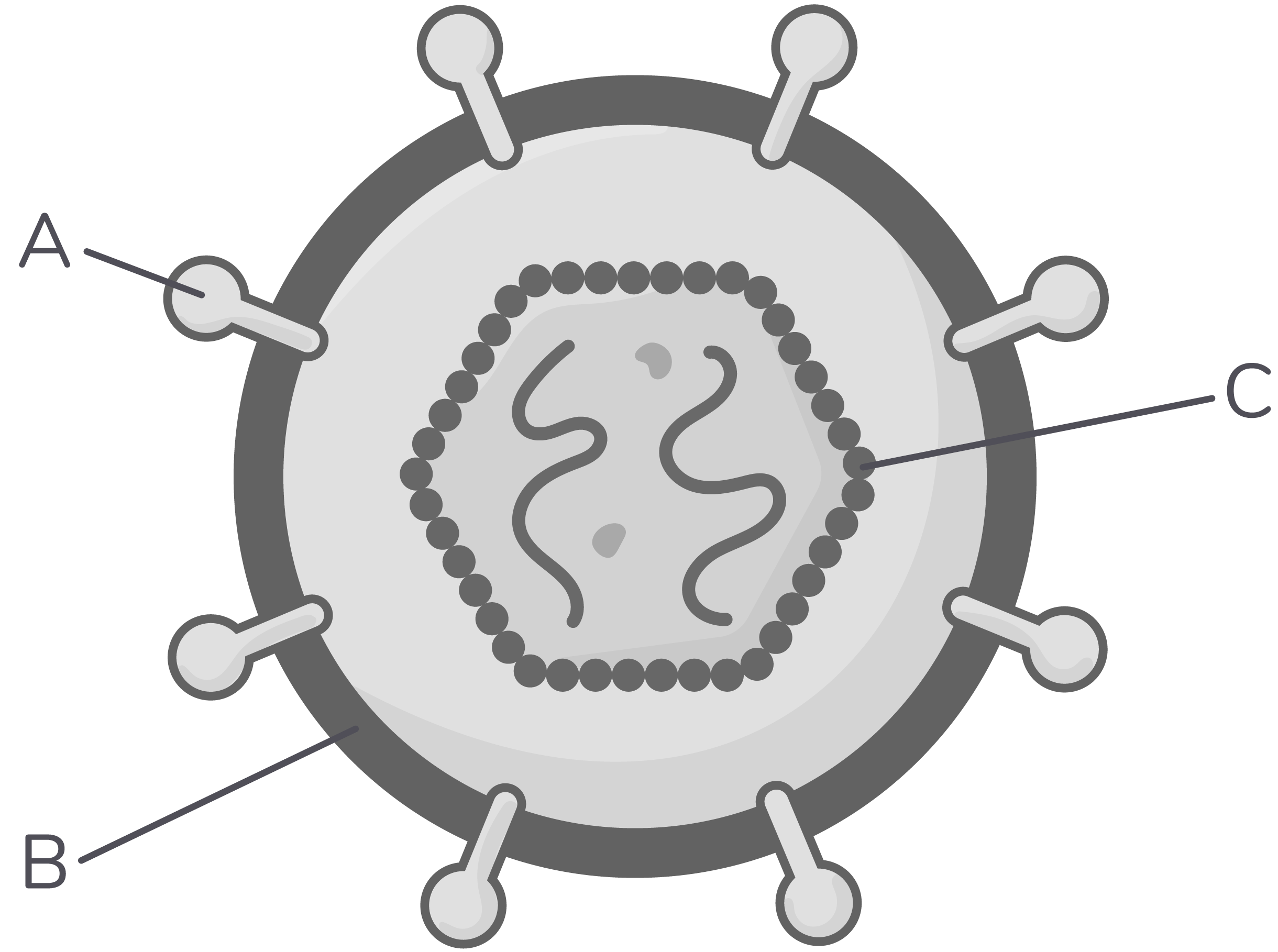
Name parts labelled A, B, and C in the diagram above.
Using the diagram above, describe the structure of HIV.
Viruses can only replicate once inside host cells.
Describe how HIV replicates inside helper T cells.
A vaccine has not yet been developed to protect people against HIV.
One of the reasons for this is because HIV rapidly enters host cells in the body.
Explain why the rapid entry of HIV into body cells makes it difficult to develop a vaccine.
Monoclonal antibodies can be used in the diagnosis and treatment of some non-infectious diseases.
What is a monoclonal antibody?
Describe how monoclonal antibodies are produced.
Monoclonal antibodies can be designed so that they bind to proteins on diseased cells, causing their destruction by the immune system.
Explain how the binding of a monoclonal antibody to diseased cells causes their destruction.
Monoclonal antibodies are also used in the diagnosis of certain diseases.
Suggest two advantages of using monoclonal antibodies in this way.
HIV is a disease caused by a virus.
The human immunodeficiency virus has a protein called gp120 on its surface, which binds to a specific receptor protein, CD4, on the surface membranes of human cells, particularly certain types of white blood cell. When it binds to this receptor protein, the virus can enter the cell.
Some individuals have a mutation in another receptor, CCR5, which HIV uses to enter cells. These people can become infected with HIV but are less likely to progress to full-blown AIDS.
The development of AIDS affects the number of antibodies produced by the immune system.
HIV has a high mutation rate, which helps it evade the body's immune response. This makes it difficult to develop a vaccine.
Suggest why individuals with a mutation in the CCR5 receptor can become infected with HIV, but are less likely to develop AIDS.
Explain why a high mutation rate makes it difficult to develop a vaccine.
Explain how HIV affects the production of antibodies when AIDS develops.
Explain how the destruction of T cells by HIV eventually leads to death of the affected individual.