Conservation - exam practice
Conservation
Question 1 of 6
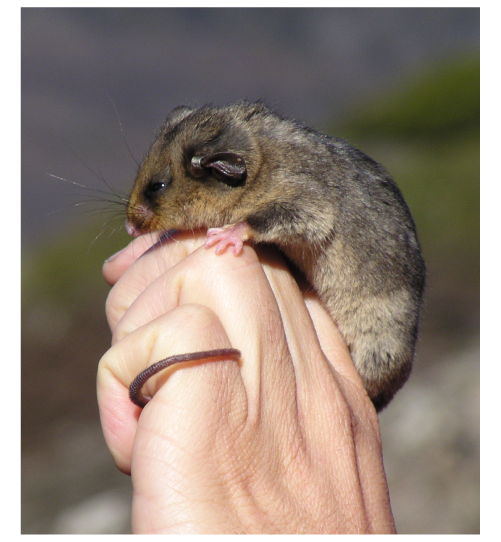
The mountain pygmy possum, Burramys parvus, is found in Australia.
The International Union for Conservation of Nature (IUCN) has categorised the mountain pygmy possum as critically endangered, which means it is nearly extinct in the wild.
The diagram below shows a mountain pygmy possum.
Suggest three reasons for the very low numbers of mountain pygmy possums in the wild.
Describe two ways in which zoos can get help in the protection of the mountain pygmy possum.
The population numbers of mountain pygmy possums have been decreasing over the past few years.
Explain the consequences a decreasing population has on the genetic biodiversity of mountain pygmy possums.
The black rhinoceros, Diceros bicornis, is protected by the treaty known as the Convention on International Trade in Endangered Species (CITES).
Give two reasons why the black rhinoceros is critically endangered in the wild.
Describe one aim of CITES.
The approximate number of black rhinoceros in 1970 was 65,000.
In 2018, it was estimated that there were 5,360 black rhinoceros left in the world.
Calculate the percentage decrease in numbers of black rhinoceros between 1970 and 2018.
Give your answer to 2 decimal places.
The remaining populations of black rhinoceros are small and scattered in isolated areas.
Suggest why these factors may speed up the extinction of this species.
Orangutans are large primates found in the forests of Borneo and Sumatra.
They are considered to be a critically endangered species and many breeding programmes in zoos play an important role in their conservation.
Explain how breeding programmes can maintain the genetic diversity of captive populations.
Zoos often choose orangutans from different regions to be used in breeding programmes.
Explain why this practice increases the genetic diversity of the captive orangutan population.
Some endangered species are conserved within national parks.
One example is the Madidi National Park which is home to many humans who support themselves by means of cattle-farming and timber production.
Conservationists work with the local people and the government to promote sustainable use of resources and to manage the national park.
Explain why this national park is an example of conservation rather than preservation.
The large-leaved lime, Tilia platyphyllos, was once a common deciduous tree throughout Europe.
Its numbers have decreased over the years due to fungal disease.
State the genus to which the large-leaved lime belongs.
Species such as the large-leaved lime contribute to the biodiversity of England.
The Royal Botanic Gardens at Kew are involved in the conservation of the large-leaved lime.
Suggest three reasons why the conservation of the large-leaved lime is important.
Many botanic gardens also include seed banks which store seeds from different plant species.
Give three advantages of conserving plant species as seeds rather than as adult plants.
The Millennium Seed Bank (MSB) at the Royal Botanic Gardens in Kew stores an underground collection of over 2.4 billion seeds from around the world.
Suggest two conditions for keeping seeds in a seed bank.
When the MSB receives new seeds, they are washed with disinfectant and allowed to dry.
Explain the advantage of washing seeds with disinfectant.
Explain the advantage of allowing seeds to dry.
When scientists collect a new seed species to be placed in the MSB, they make sure to collect seeds from several different sites in the wild.
Suggest and explain why.
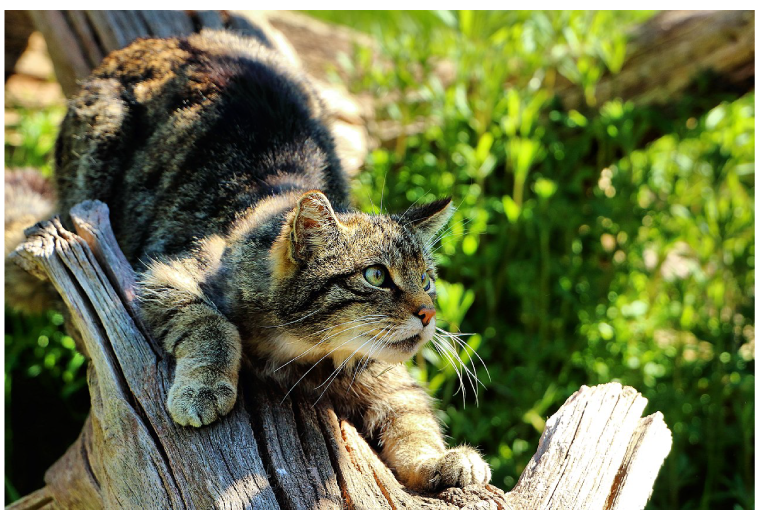
The Scottish wildcat, Felis silvestris, is a European wildcat population in Scotland.
The diagram below shows a Scottish wildcat.
State the genus of the Scottish wildcat.
The Scottish wildcat can successfully interbreed with domestic cats.
Explain the effect this interbreeding would have on the genetic diversity of Scottish wildcats.
In the West Highlands of Scotland, all domestic cats, wild cats, and Scottish wildcats in the area have been neutered.
Suggest why.
Describe how the breeding and release project by the Scottish Natural Heritage and Chester Zoo could prevent the extinction of the Scottish wildcat.