Homeostasis in Mammals: Kidneys - exam practice
Homeostasis in Mammals: Kidneys
Question 1 of 13
1 of 13
The kidneys of a healthy individual filter 178 dm3 day-1 of fluid from the glomeruli into the renal capsules. However, only 1.5 dm3 day-1 of urine is produced.
What percentage of the filtrate is reabsorbed back into the blood?
Question 2 of 13
2 of 13
The image below shows the structure of the nucleotide base guanine.
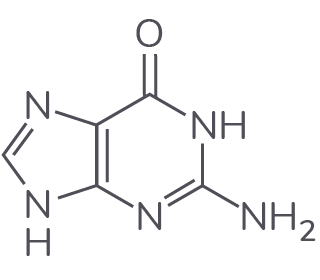
Bird droppings are known as guano because they contain a high proportion of guanine. Unlike mammals, birds excrete nitrogenous waste as guanine instead of urea. Guanine is synthesised from ammonia in the liver.
The statements below relate to guanine, which of the statements correctly explains why birds excrete guanine?
1 - ammonia is more toxic than guanine
2 - urea is more soluble in water than guanine
3 - guanine has a high proportion of nitrogen
Question 3 of 13
3 of 13
Damage to the hypothalamus results in lower water potential of the blood.
What explains these observations?
Question 4 of 13
4 of 13
Antidiuretic hormone (ADH) is required for osmoregulation.
What is a region of the nephron that is responsive to ADH?
Question 5 of 13
5 of 13
The diagram below shows the structure of an amino acid. Four regions are labelled A to D.
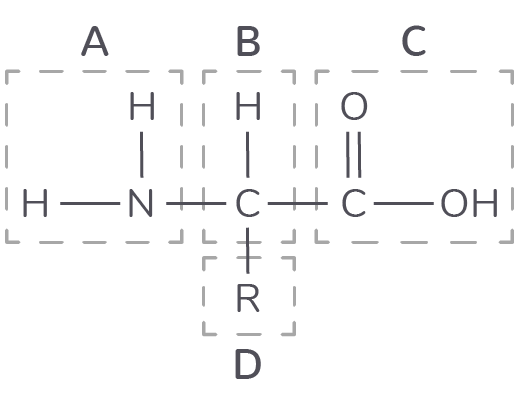
Which region is removed from the amino acid to produce urea?
Question 6 of 13
6 of 13
What process occurs at the proximal convoluted tubule (PCT)?
Question 7 of 13
7 of 13
Which substance is not normally found in urine due to being reabsorbed in the nephrons?
Question 8 of 13
8 of 13
What effect does dehydration have on urine concentration?
Question 9 of 13
9 of 13
What is the outcome when the blood ADH level is high?
Question 10 of 13
10 of 13
What triggers the release of ADH from the posterior pituitary gland?
Question 11 of 13
11 of 13
What does the loop of Henle establish in the medulla to aid water reabsorption?
Question 12 of 13
12 of 13
Excess amino acids are metabolised in the liver. What is this process called?
Question 13 of 13
13 of 13
What is a primary waste product of metabolism that the liver is responsible for processing?