5.5 - Antibodies
- 1
The structure of antibodies
- 2
The function of antibodies
Antibody structure
In the previous lesson, we saw that the humoral response involves the production of antibodies to help destroy pathogens.
Antibodies are Y-shaped glycoproteins made up of four polypeptide chains, two heavy chains, and two light chains.
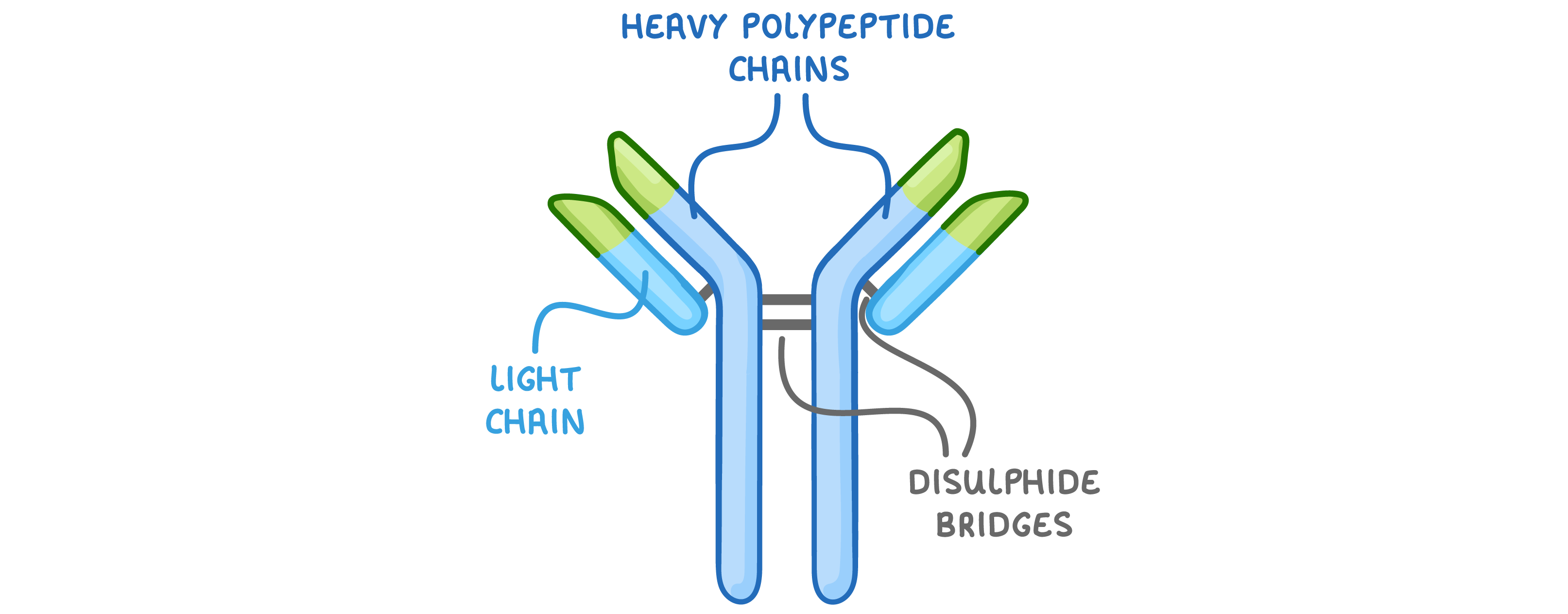
The polypeptide chains are held together via disulphide bridges.
Antibodies are made up of various regions:
- Constant region - This is the same for all antibodies and binds to receptors on cells such as B cells.
- Variable region - This is different for each antibody as its shape is complementary to a specific antigen. This is the part of the antibody that binds to antigens.
Antibody functions
The main function of antibodies is to bind to specific antigens on a pathogen's surface.
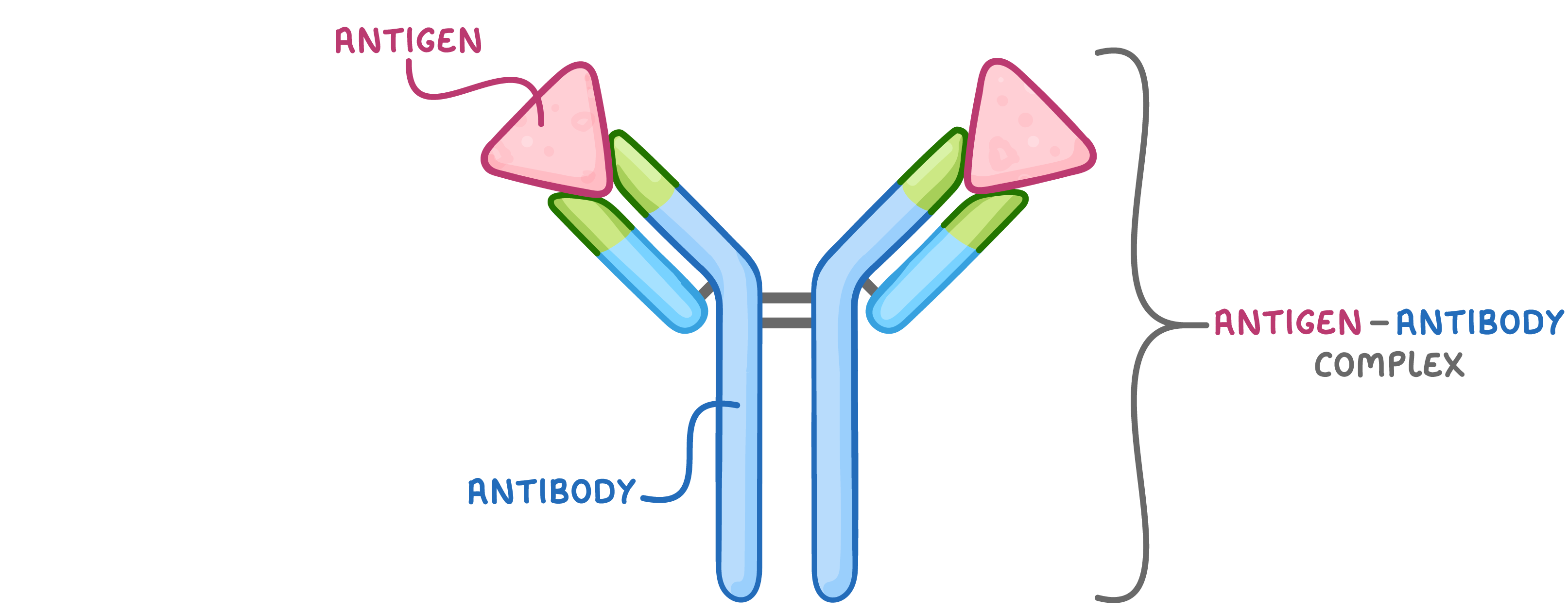
Each antibody has a unique binding site (in the variable region) that fits onto a specific antigen. When an antibody binds to an antigen, they form an antigen-antibody complex.
Antibodies carry out three roles to help destroy pathogens:
- Agglutination of pathogens - This involves clumping pathogens together to enable easier phagocytosis.
- Neutralisation of toxins - This is when antibodies bind to toxins to inactivate them.
- Preventing pathogens from binding - This is when antibodies bind to pathogens to stop them from infecting body cells.
Agglutination of pathogens
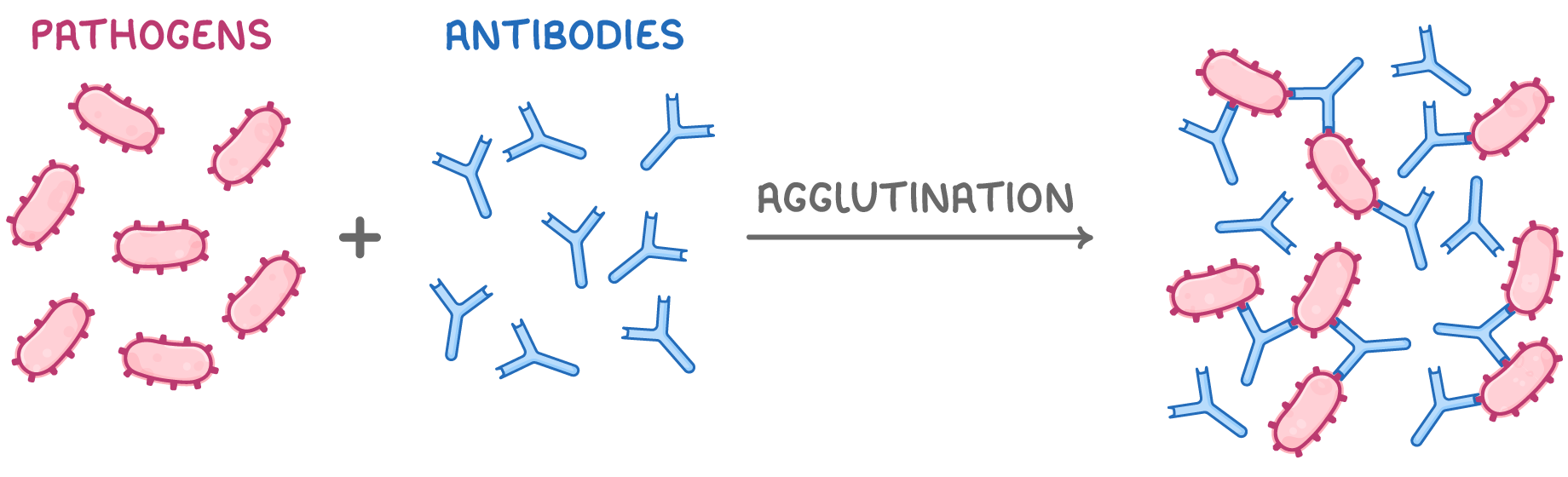
Antibodies act as agglutinins, causing pathogens to clump together. This makes it easier for phagocytes to locate pathogens and allows them to engulf a number of pathogens at once.
Neutralisation of toxins
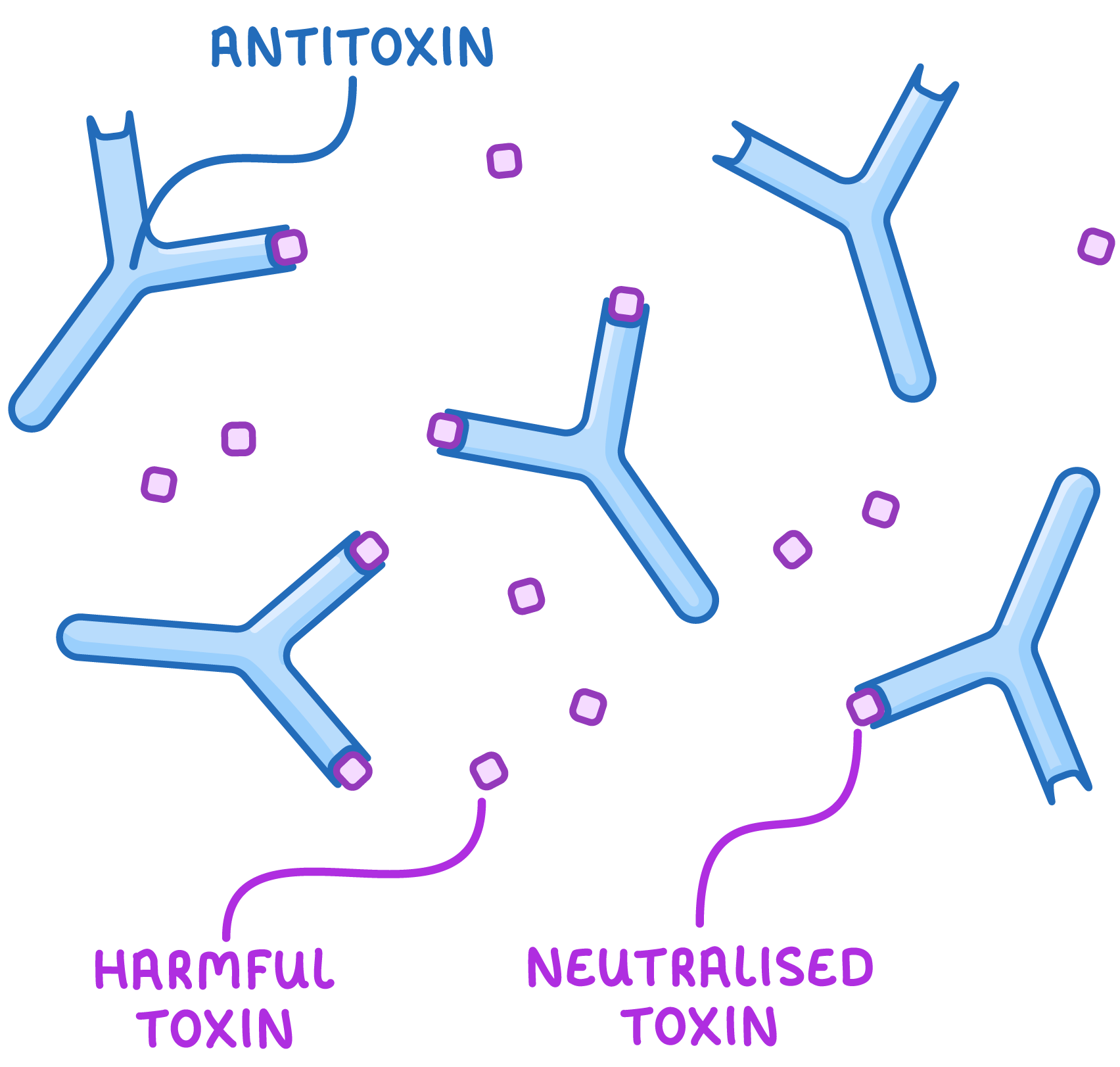
Antibodies can act as antitoxins where they bind to toxins produced by pathogens. This binding neutralises (inactivates) the toxins to prevent them from damaging body cells.
Preventing pathogens from binding to cells
When antibodies bind to a pathogen's antigens, they block cell-surface receptors needed to bind to host cells. This means that the pathogen cannot bind to or invade host cells.