19.4 - Random Sampling
- 1
What random sampling is
- 2
How to prevent sampling bias and reduce the effects of chance
- 3
Random sampling techniques for plants and animals
Random sampling
It is often impractical or impossible to measure every single individual when investigating population traits. Random sampling is important to avoid bias and ensure the samples are representative of the whole population.
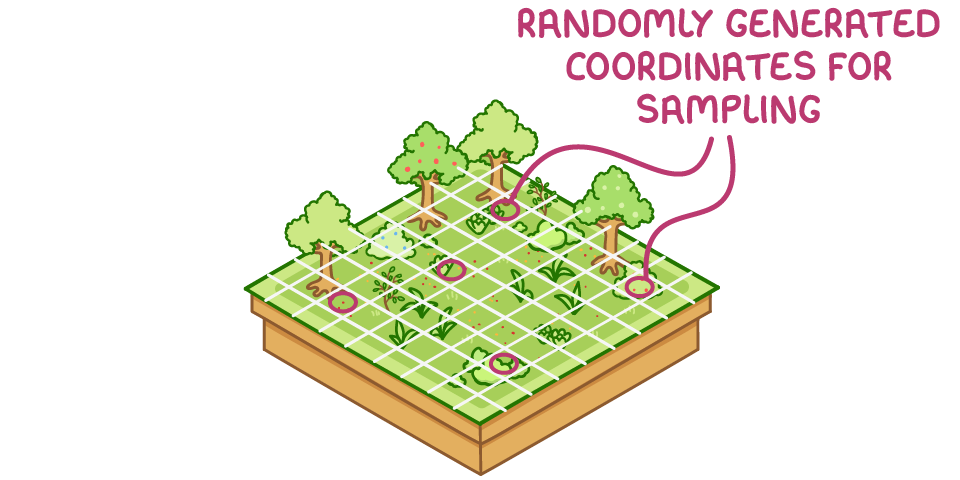
How random sampling works:
- Choose an area.
- Randomly generate coordinates across the area - This prevents sampling bias by removing human involvement in choosing samples.
- Collect samples from random coordinates - This gives us samples that are representative of the population.
- Repeat this several times - This gives us a large sample size and minimises the effects of chance.
- Analyse the data collected - This lets us identify any relationships.
Random sampling techniques
Once you have generated random coordinates, there are are a few different techniques you need to know that can be used to collect samples of plants and stationary or slow-moving animals.
Quadrats
A quadrat is a frame used to sample the organisms in an area.
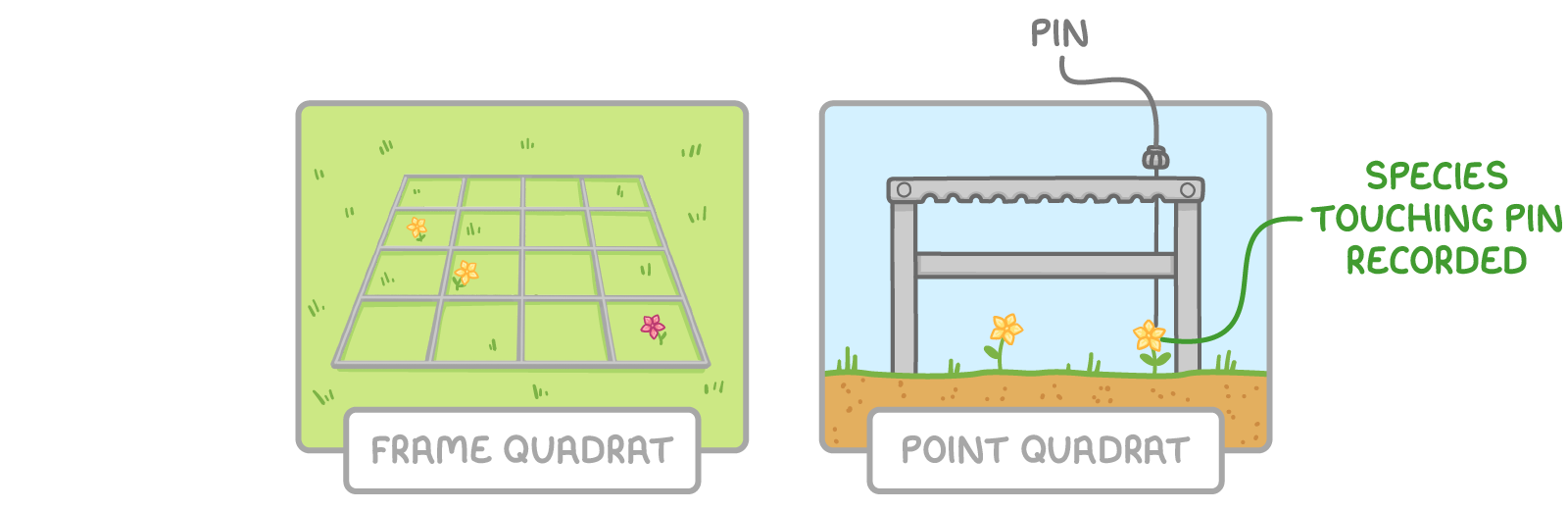
There are two types of quadrat that you can use:
- Point quadrat - This is a frame with a horizontal bar, and pins are pushed through at set intervals to touch the ground. Each species the pin touches is recorded.
- Frame quadrat - This is a square frame divided into a grid. The type and number of species within each section of the quadrat is recorded.
Methods of estimating the number of individuals using a frame quadrat:
- Species frequency - Calculated as .
- Percentage cover - An estimate of the area within a quadrat that a species covers.
19.5 - Non-random SamplingNext up
How were these notes?