5.8 - HIV
- 1The structure of HIV
- 2The stages of HIV replication
- 3How HIV causes the symptoms of AIDS
HIV structure
The human immunodeficiency virus (HIV) is a virus that weakens the immune system.
The structure of this virus is shown in the diagram below.
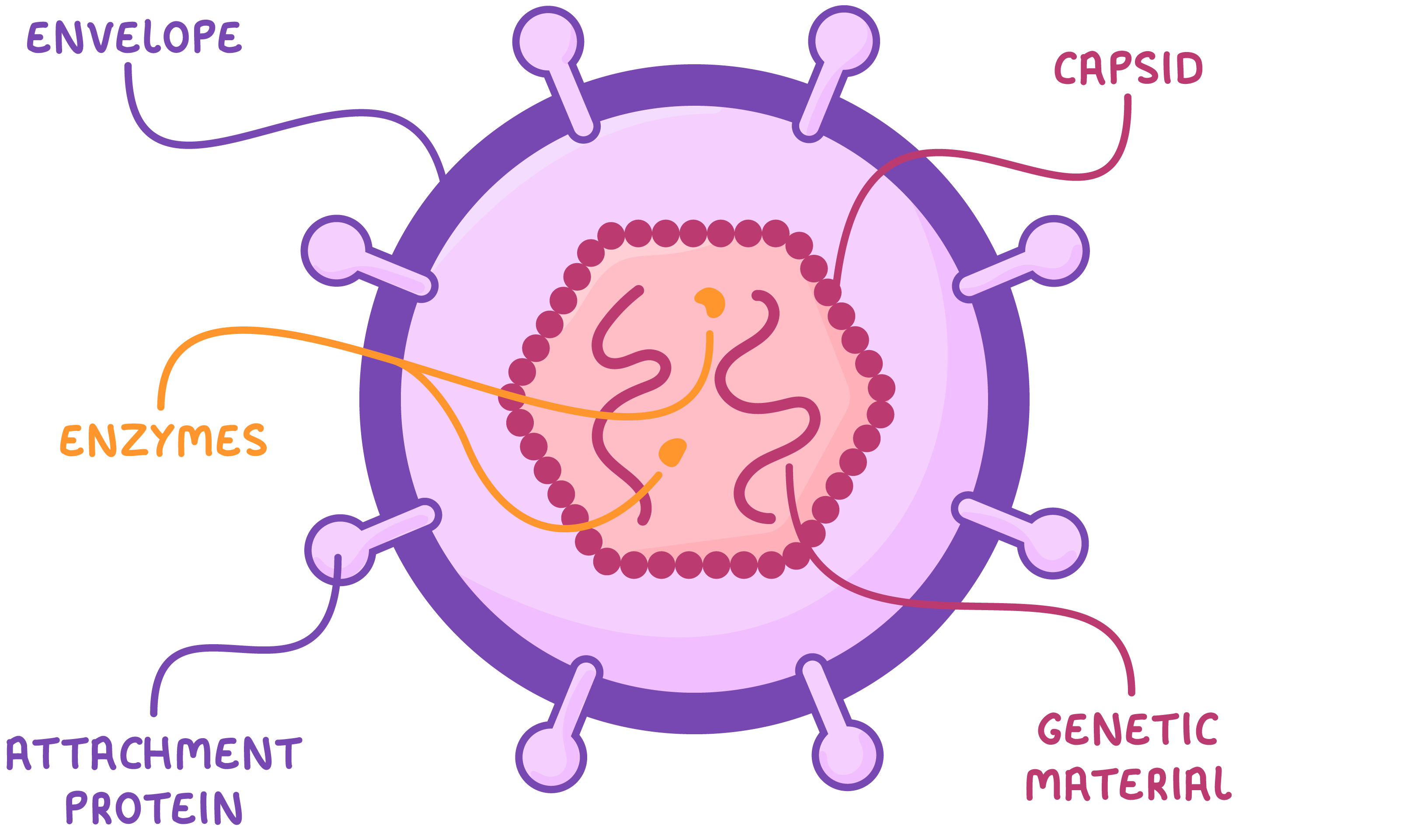
The virus contains the following components:
- Genetic material - Two single strands of RNA.
- Enzymes - One of these enzymes is reverse transcriptase, which allows the virus to convert RNA into DNA.
- Capsid - A layer of protein molecules that surrounds and protects the genetic material.
- Envelope - An outer layer made up of phospholipids.
- Glycoproteins - Also known as attachment proteins or envelope proteins, these help the virus to bind to host cells.
HIV replication
As HIV is a virus, it cannot replicate itself and instead must use a host cell to produce new virus particles. HIV uses helper T cells as host cells, damaging the immune system of the infected individual.
Their replication process is outlined below:
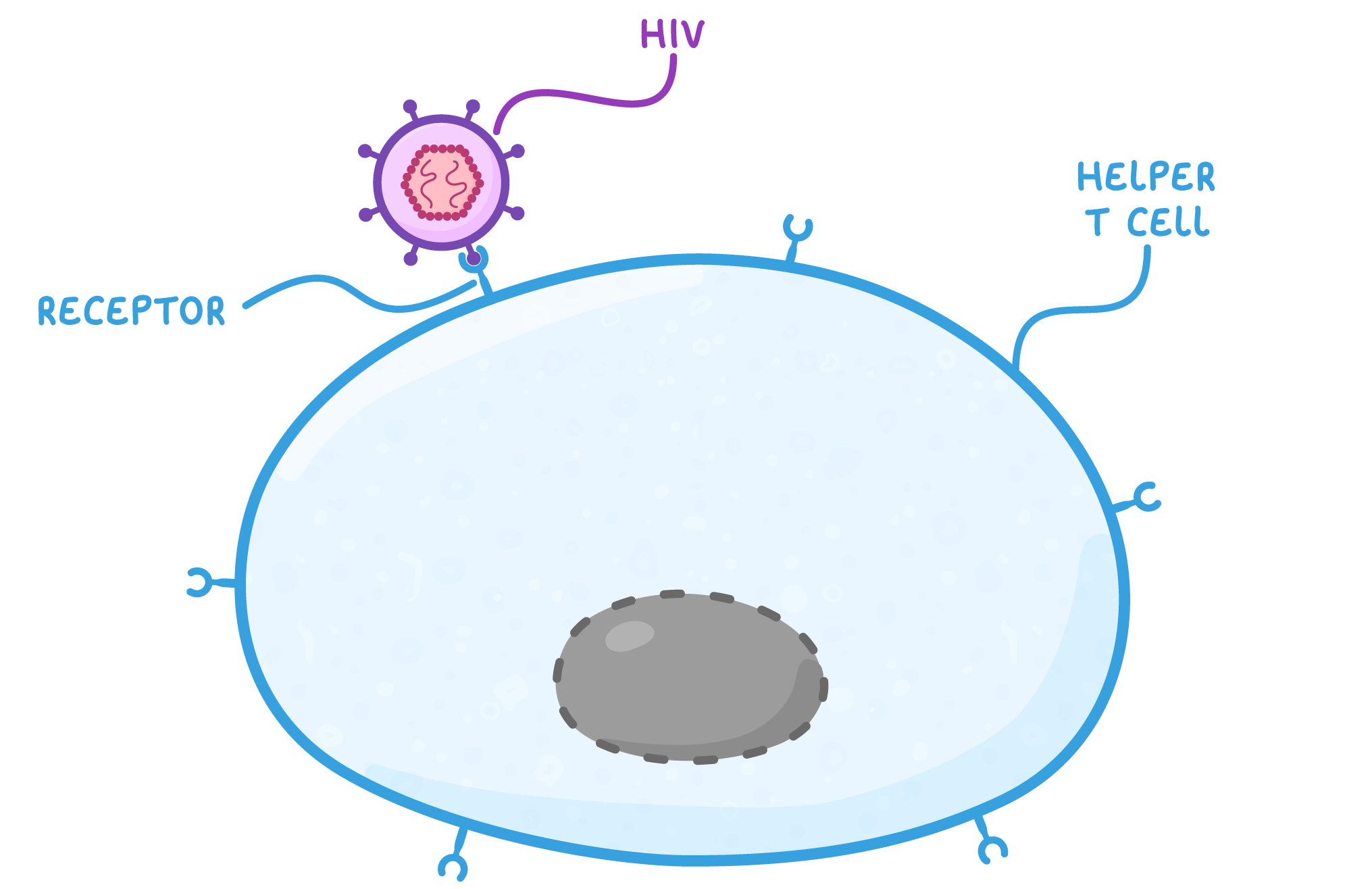
Attachment proteins on the HIV attach to receptors on a helper T cell.
HIV and AIDS
HIV infection progresses through multiple stages that may ultimately lead to the development of AIDS (acquired immunodeficiency syndrome).
Stage 1 - Transmission
- HIV is transmitted via direct contact with bodily fluids (e.g. blood or sexual fluids) from an infected individual.
Stage 2 - Acute infection
- Once HIV enters the body, it rapidly replicates.
- This causes flu-like symptoms for 2 to 4 weeks.
Stage 3 - Latency period
- HIV replication drops to a low level for several years or decades.
- During this time, the individual usually experiences few or no symptoms.
- Antiretroviral therapy (ART) can prolong this stage for many years.
Stage 4 - AIDS Development
- After some years, HIV reactivates and destroys helper T cells.
- As the number of T cells in the body drops over time, the immune system begins to fail.
- At this point, we classify the person as having 'AIDS'.
Individuals with AIDS have a higher likelihood of developing various serious infections, and eventually, an opportunistic infection (e.g., pneumonia) can lead to death. AIDS also increases the risk of developing cancers.
Treatment:
- HIV/AIDS is currently incurable.
- However, antiretroviral therapy (ART) can reduce viral replication to such low levels that most infected individuals don't experience any symptoms and can't transmit the virus.