Digestion & Absorption - exam practice
Digestion & Absorption
Question 1 of 6
The breakdown of starch in the diet leads to an increase in blood glucose concentration.
Describe how you could test a food sample for the presence of starch.
The digestion of starch begins in the mouth.
Describe the role of enzymes in the breakdown of starch in the mouth.
Explain how digestion of starch in the small intestine causes an increase in the blood glucose concentration.
Describe the process by which glucose is absorbed from the small intestine into the blood.
Gallstones are small stones, usually made up of cholesterol, that form in the gallbladder.
Sometimes gallstones block the pancreatic duct, causing inflammation and pain in the pancreas.
When the gallstones block the pancreatic duct, digestion of starch is affected. Explain why.
When the pancreatic duct is blocked, amylase can be released into the bloodstream.
Explain why this is not dangerous for the body.
When the pancreatic duct is blocked, protease enzymes can be released into the bloodstream.
Explain why this is dangerous for the body.
Describe how proteins are digested in the small intestine.
A scientist studied the digestion of lipids.
A volunteer ate a meal containing triglycerides and the scientist removed two samples from the small intestine:
- Sample 1 – taken 50 minutes after the meal.
- Sample 2 – taken 80 minutes after the meal. The results for this investigation are shown below.
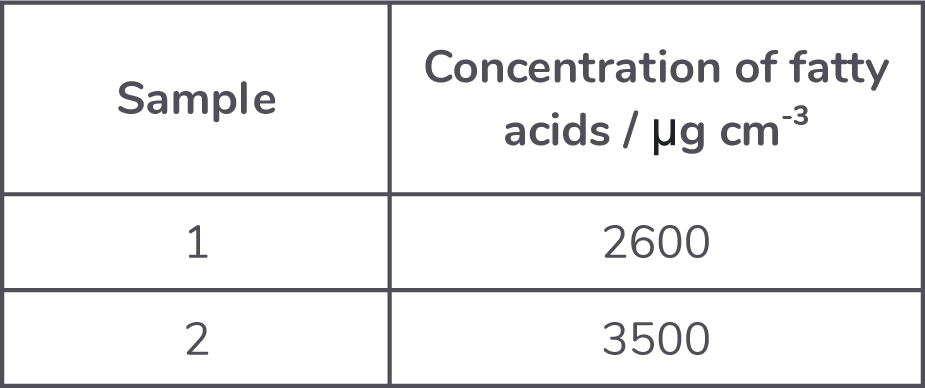
Explain the difference in the concentration of fatty acids between samples 1 and 2.
Once samples were collected, they were quickly added to a water bath at 75°C.
Suggest why.
Lipids form droplets and micelles during digestion.
Explain the advantages of lipids forming droplets and micelles.
Explain how the Golgi apparatus is involved in the digestion of lipids.
Some cells produce membrane-bound dipeptidases.
Describe the role of these enzymes and explain why they are important in digestion.
Exopeptidases and endopeptidases are also involved in protein digestion.
Describe their role in the digestion of proteins.
Some mammals such as rabbits eat their own semi-digested droppings.
Suggest how this action helps mammals to digest and absorb protein.
The epithelial cells lining the small intestine are specialised for the absorption of glucose.
Explain how adaptations of this lining allow rapid absorption of glucose.
Some students investigated the effect of the enzyme lipase and a bile salts solution on the digestion of triglycerides.
They added the enzyme and a bile salts solution to a mixture of triglycerides and measured the pH of the mixture every 10 minutes.
The graph below shows their results.
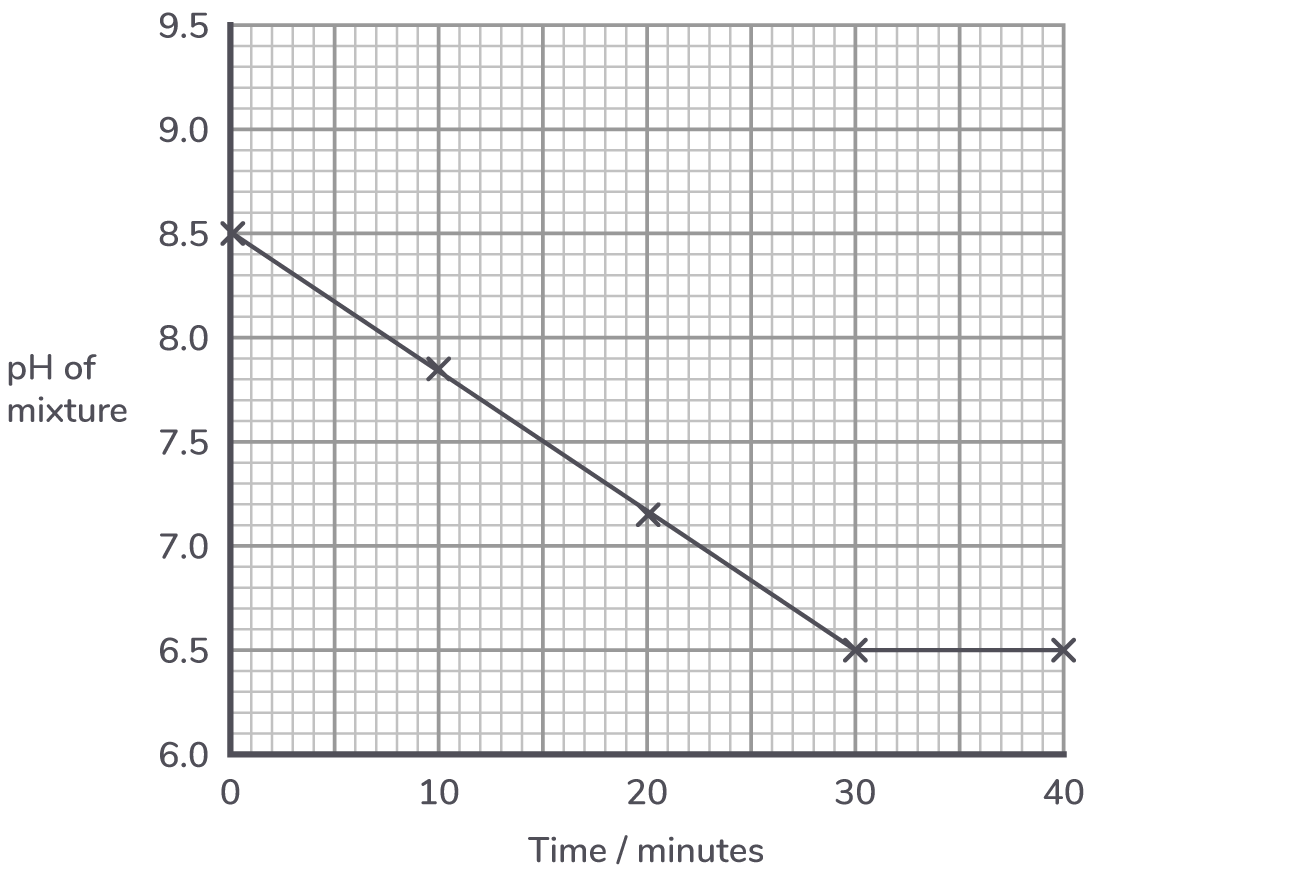
Describe and explain what the diagram above shows about the effect of lipase and bile salts on the pH of the triglyceride mixture.
The concentration of lipase remained the same throughout the investigation.
Explain why.
Describe the role of micelles in the absorption of lipids into the cells lining the ileum.
Digestive enzymes are important to break down food into smaller, soluble molecules.
Describe the role of digestive system enzymes in the breakdown of starch.
Describe the role of enzymes in the digestion of proteins.
Describe how digested lipid molecules are absorbed and transported from the ileum to the lymph vessels.